
A Looming Lily: Making Clothes For The Old World
Craft tends to conjure up images of, say, artisans moulding ceramic vessels or whittling down wood. In Singapore today, though, a growing number of creatives are carving out pockets of space in which the essence of craft – as something that takes time, skills, passion and intentionality – extends beyond an analogue aesthetic. Here, we meet A Looming Lily, the artisanal label making the case for a ultra-considered way of garment-making that’s all but vanished in today’s world.
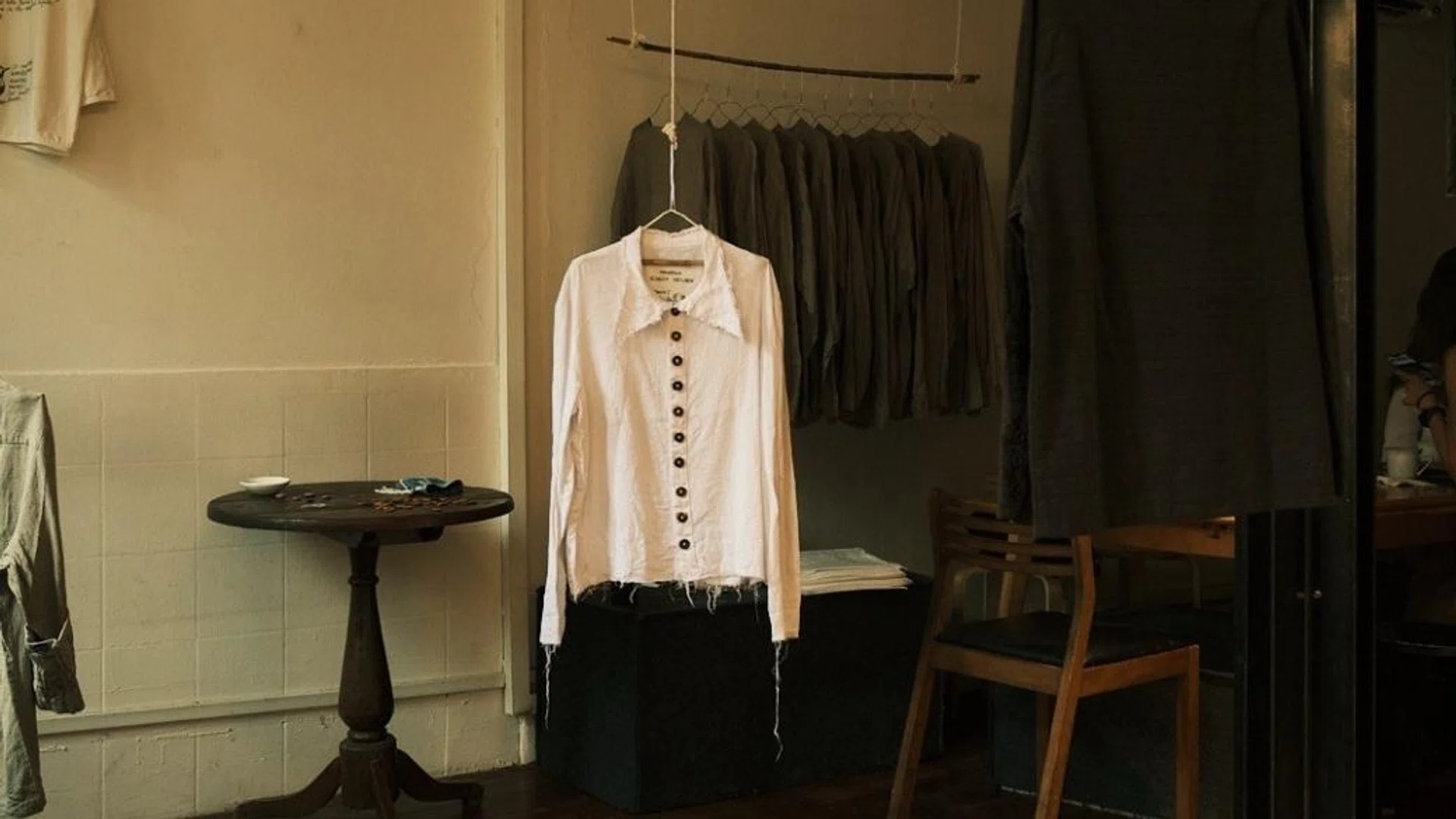
Started in early 2025 by Timothy Ho and Reinard Risman – fresh graduates of the Design Practice course at the Nanyang Academy of Fine Arts – Singapore-based clothing label A Looming Lily is a cut above with its artisan’s approach to garment‑making.
With an unflinching focus on the most minute details, the founders even sculpt their own buttons using materials such as ceramics. Other experimental variations include buttons hand-carved from 925 silver and even bog oak (oak that has been naturally buried in a peat bog for hundreds or sometimes thousands of years).
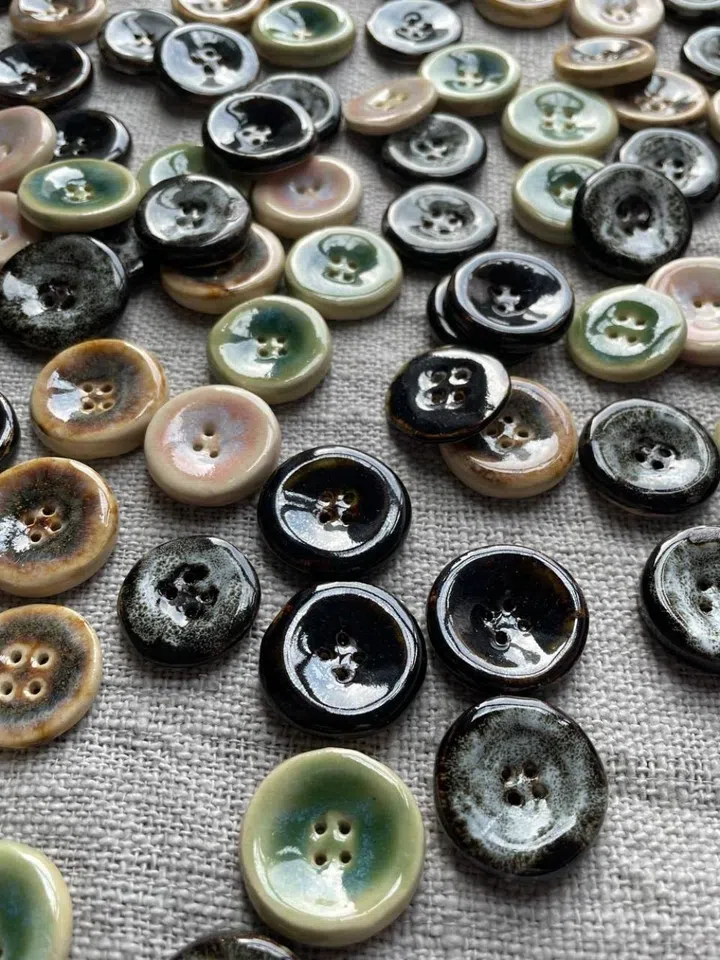
Nothing, it seems, is too small a detail, right down to the buttons – these are crafted from ceramic and glazed by Timothy Ho and Reinard Risman, the duo behind slow-craft label A Looming Lily.
Yes, their mode of working is one not much in practice by most brands in recent decades; one might say it aligns more closely with the Arts and Crafts movement of the late 19th century, which argued against mass industrialisation and emphasised making objects with more (human) integrity. At A Looming Lily, items are made in small-batches - some designs feature no more than 10 pieces, and even when they need external help on certain garments, the duo still insist on hand-stitching the buttonholes themselves.
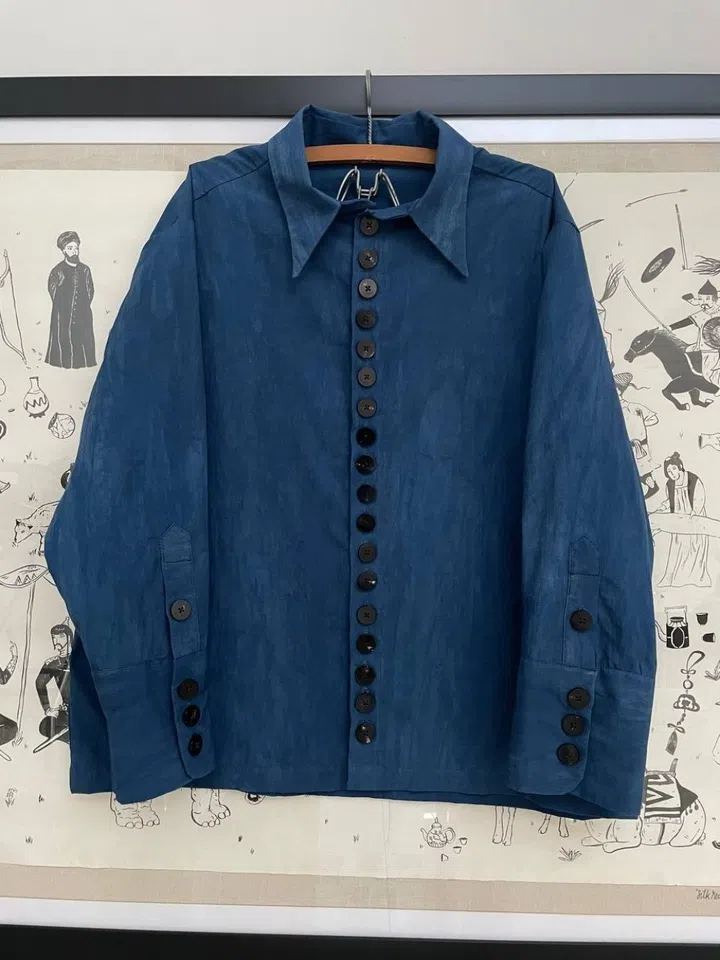
A custom shirt for a friend, crafted using a Japanese crinkled cotton with horn buttons (26 in total), and they also enlisted an Indonesian indigo specialist to dye the garment.
“We used to use the machine for everything, but it sparked a kind of rage inside me; it makes you want to work too fast,” says Risman. “By hand stitching, you can actually take your time and enjoy the process.”
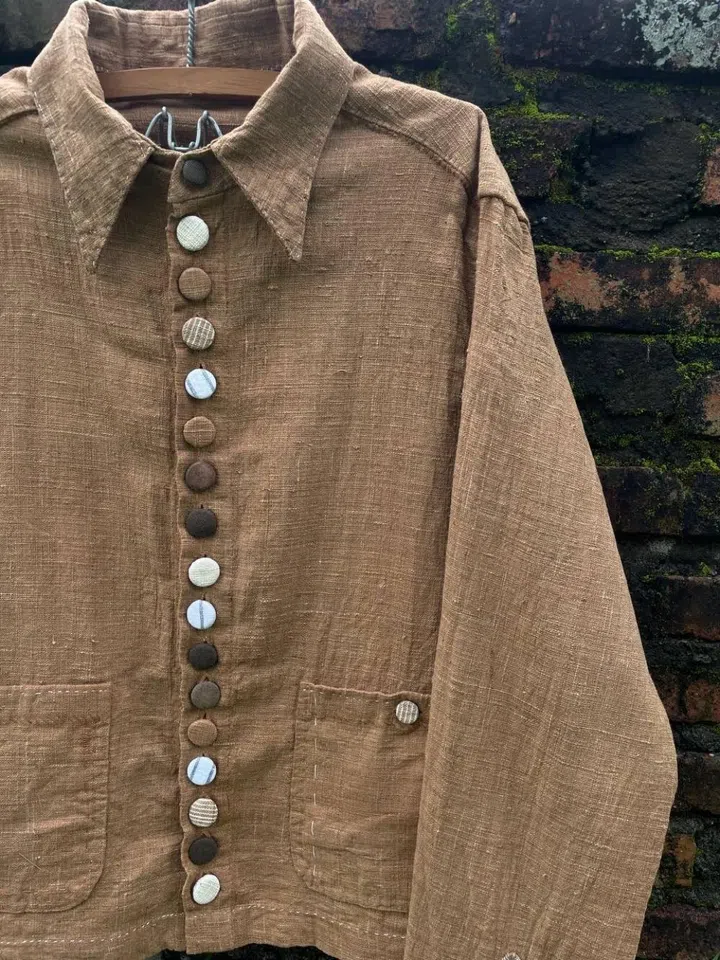
A shirt featuring a variety of clothe-covered buttons. The artistry of buttons have long been forgotten, say Ho, stating they used to be seen as ornamental and status-signaling embellishments for one’s attire.
This month, they’ll be putting on an exhibition titled The Scholar’s Gathering at independent design space Tokonoma, where you can expect to be immersed in an old world setting replete with curiosities like hard-carved wooden chess sets made by the duo for instance.
In a world that has become too conglomerate-d, A Looming Lily finds its resonance in the ancient, suggesting that the most progressive way forward might just be a return to ways of working we have forgotten, especially in the mad rush towards embracing all things new (looking at you, AI).
Hi Timothy and Reinard, what prompted you guys to start the label?
Timothy Ho (TH): “It actually came about through our shared interests in certain garments. Around that time, we were also thinking about changing up our wardrobes, and we happened to come across each other. It started quite simply — I’d bought a shoe from (the Italian artisanal fashion label m.a+), and I shared it with him because he had actually been eyeing the same shoe for about two months on (resale platform) Grailed... From there, we started talking more about the kinds of things we really liked — handmade, raw, and well-crafted pieces using good materials. I think we both agree that a lot of what we bought in the past from brands didn’t quite live up to the quality we expected. So in a way, that one shoe really paved the way for the starting of this brand.”
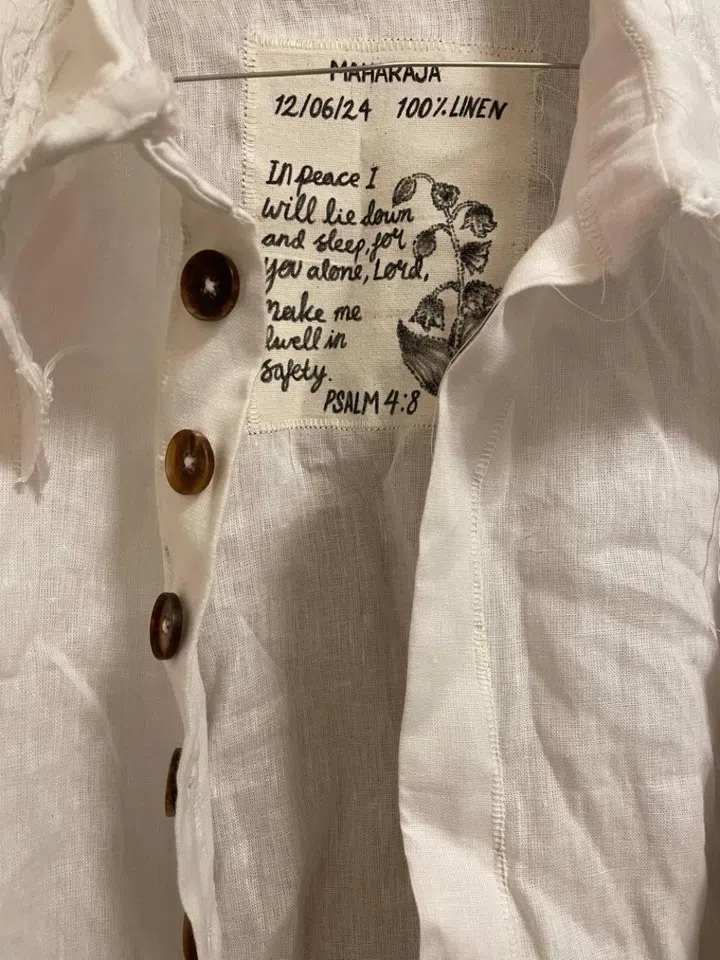
Up close with their garments: plenty of considered details (each buttonhole is hand-stitched for instance), as well as label tags with hand-drawn illustrations.
You guys seem to focus a lot on old or even antique fabrics. Why the fascination?
TH: “The patina, the wear and tear. Mainly for me, it’s the adrenaline — you have to find this kind of thing, and they’re not easy to find (due to their limited quantity). It’s like the love for hunting. You’ve got to search for this kind of fabric.”
Reinard Risman (RR): “I mean, I do have some antiques from my mum as well, but when you have it in your hand and it’s so expensive and hard to find, you don’t feel like cutting it up into a shirt — you might mess it up somehow. I think antique fabrics, especially the good ones from the early 1900s, were made using methods that you can’t find today. If someone were to do that now, it would be more expensive to reproduce something like that. Very few artisans or labels can do that.”
Where are you guys sourcing your materials from?
RR: “All around the world. China, Japan, India, sometimes the UK, but the price can really be quite bad for the pocket. Hence we are trying to source local fabrics from Indonesia too, since I live there. Their textile history is very crazy.”
Why do you think this kind of craft isn’t common in Singapore?
TH: “Singapore’s landscape is very focused on commercialisation and profit. Understandably so, because we are a small country, and everything is about economic growth and global ties. But craft isn’t something that is part of our history in the same way. A lot of these crafts aren’t innately Singaporean, so there isn’t the same need to focus on it.”
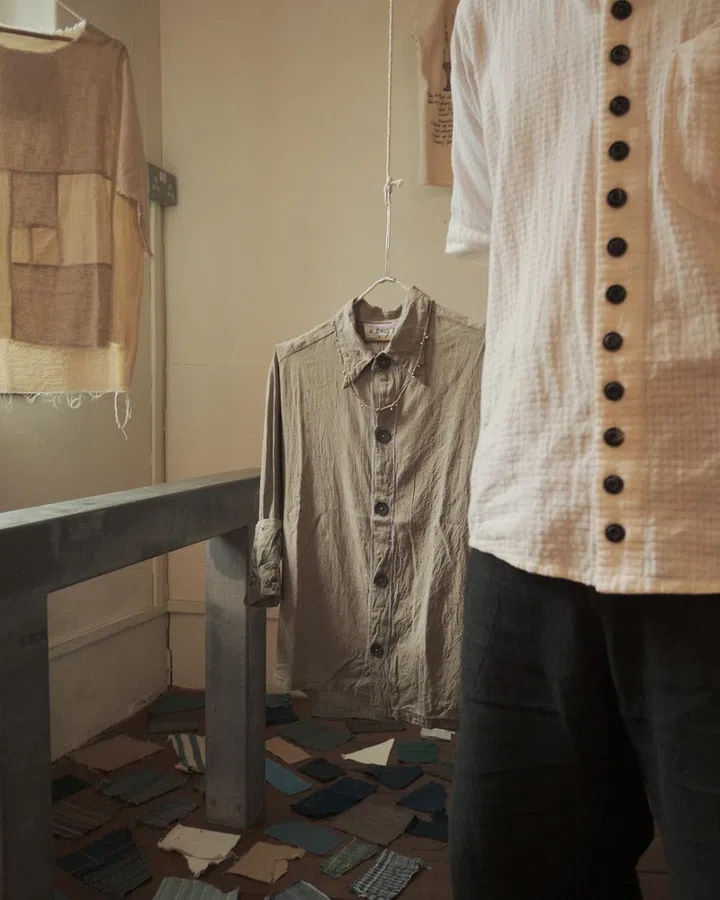
A scene from an exhibition they held last year at Ceres cafe and wine bar.
RR: “Indonesia, for example, has weaving traditions passed down through generations. In Singapore, there isn’t really that kind of tradition. Everything is very accessible, including luxury goods, because taxes aren’t as heavy. We import a lot.”
How’s the reception been for A Looming Lily with customers?
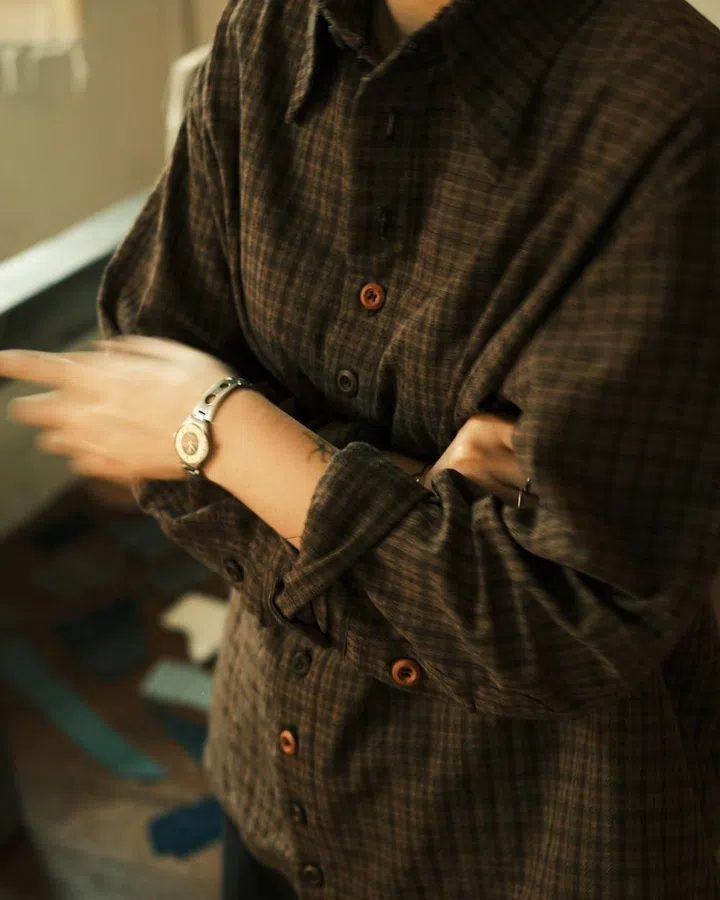
A Japanese yarn dyed hand woven checked cotton, sewn using an antique cotton thread.
TH: “Honestly speaking, our stuff isn’t cheap (prices start at $150 to over a thousand, depending on the complexity of a garment, while custom pieces previously have costed around $600). If I were someone else, and I saw our shirt next to Comme des Garcons or other designer brands, I’d probably spend my money on them instead because they are more well-known...
Sometimes we’re not even making profit for the amount of work we’re putting in. Each carved button we use for example, takes a very long time because I cut it from a square, shape it into a circle, bevel, hand-sand it, before concaving it.. A lot of people ask how we get sales when we don’t even actively market the label. I think a lot of it has been word-of-mouth from people who have a love for the craft.”
An adapted version of this article first appeared in Volume 8 of F ZINE.