
Who Says Ballet Isn’t for Boys?
Singapore’s creative pulse isn’t waiting for permission. Across studios, stages and unexpected corners of the city, a new wave of young makers is building in real time, guided less by old formulas than by passion, instinct and a genuine curiosity to do things differently. Here, we spotlight the award-winning ballet star Leo Cheng, who’s out to lead the next generation of male ballet stars.
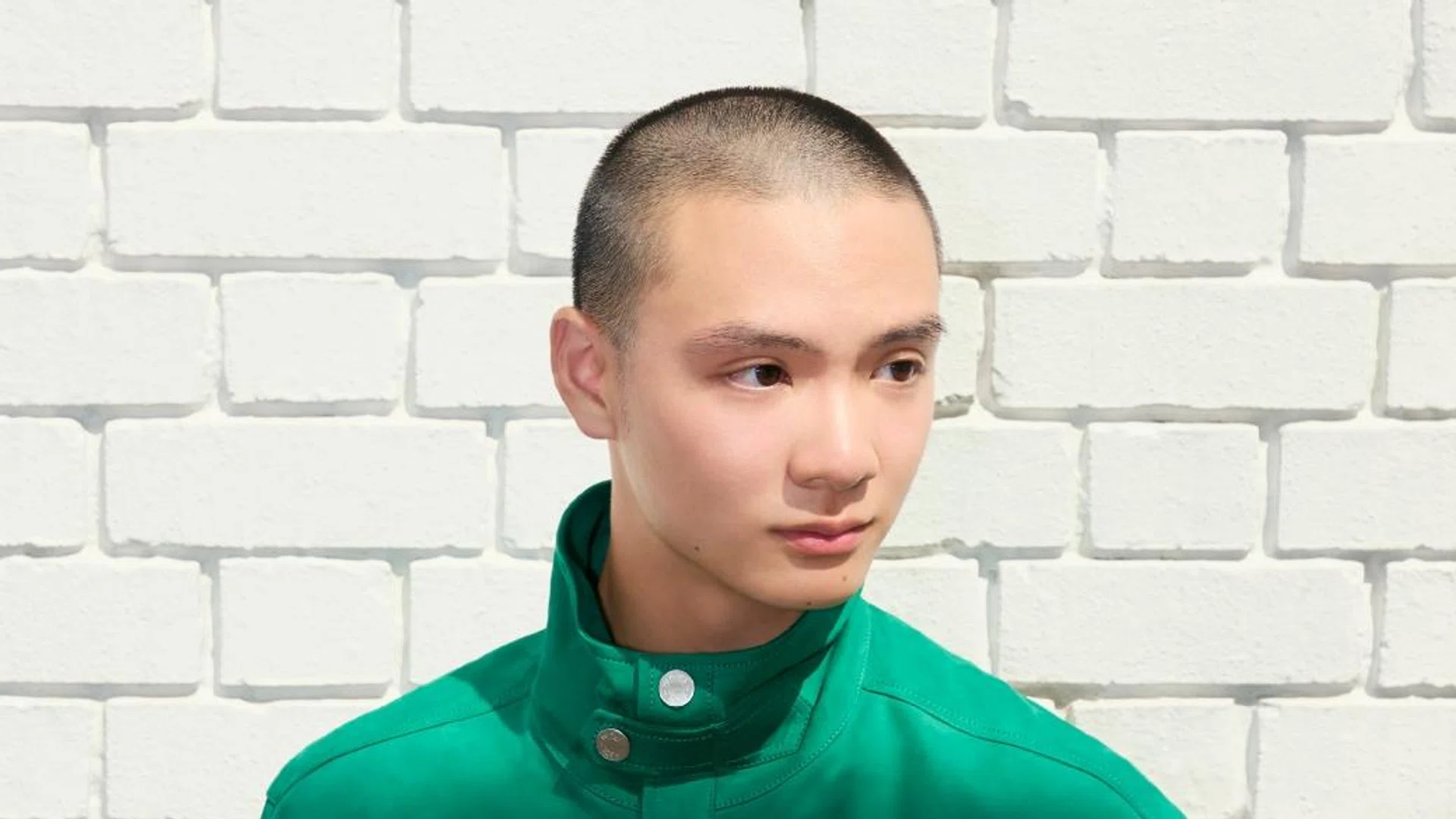
Ballet began as an art form performed largely by men in the courts of the Italian Renaissance, but by the 19th century, female dancers had overtaken the men in visibility and stardom, leaving male dancers often stigmatised as feminine or queer.
The 18-year-old Cheng is determined to change this. He’s one of Singapore’s most decorated ballet dancers and is leading the next generation of males who want to dance without shame. It’s an important narrative arc for him, having faced negativity over his chosen career during his younger years.
So while he has swopped plies for push‑ups, having enlisted for National Service (he received the conscription notice on the same day he was offered a two‑year contract from Britain’s prestigious Birmingham Royal Ballet), he’s still training every time he books out of camp.
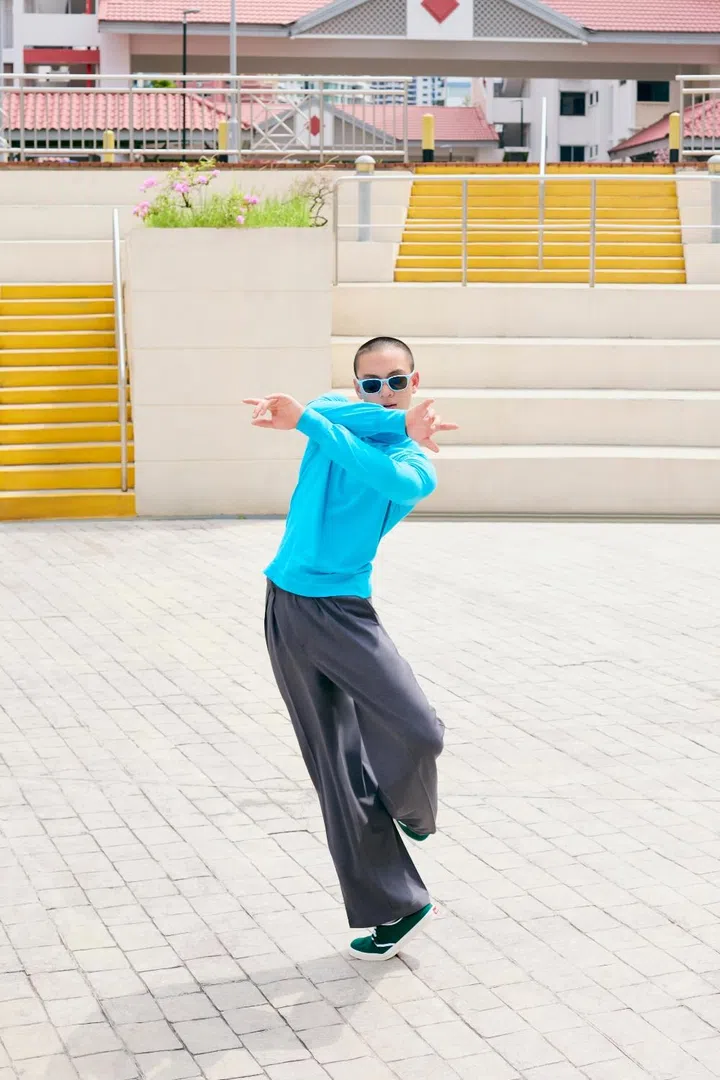
Cheng in motion. Here, he wears cotton turtleneck sweater, canvas sneakers and acetate sunglasses, Prada. All other clothing and accessories, his own
After all, discipline is an intrinsic principle of both the military and ballet, and something thoroughly ingrained into his body. He also continues to speak up against the stigma of male dancers and has the glittering cred to back it up. Last year, he nabbed the only Grand Prix awarded in the Asia‑Pacific region at the Youth America Grand Prix in Manila, proving that strength, grace and masculinity aren’t mutually exclusive concepts.
Here, he shares more:
Hey Leo! Your parents are also ballet dancers, correct? Did you feel like you had to go into ballet?
“I grew up around the studio. It’s my parents’ school, so it was natural for me. I saw people dancing and I would follow suit. I just enjoyed moving around. Then my parents were like, why not take a ballet class? And that’s when I started.”
When did ballet start to feel more serious for you?
“When I was around seven, I entered my first ballet competition, and that’s when it started getting more competitive. But I didn’t really think I would pursue it seriously until I was around ten or eleven.
I went to New York for a very big competition — the Youth America Grand Prix — and that’s when I placed in the top six. It was my first big award, and I was very happy. I thought maybe going down this path wasn’t such a bad idea. Slowly, the passion grew, and I chose to stay on this path.”
How do you see the perception of ballet today, especially for male dancers?
“I think the culture has changed a lot since I started. Obviously, in Asia, it’s not a very big thing for guys to do ballet, so there’s definitely some curiosity — sometimes negative thoughts. But I definitely don’t think a lot of people still say, “Oh, ballet is for girls,” or that boys who do ballet are girly. I think it’s really the opposite.
And we’d do well to remember that ballet was created by men. It was created by a king, and later on it developed and girls started dancing more. But initially, it came from men, and it was actually very militarised. There were a lot of army drills in ballet at the very beginning.”
What was the response like from people around you when they found out you were a ballet dancer
“In the beginning, I kept quiet. I wasn’t very sure how they (his army mates) were going to react. But I guess the news travelled faster than I did — people recognised me, even my superiors, from social media and the news. I thought there might be some negative thoughts, but to my surprise, a lot of people really respected my decision and supported it. I think that’s great — my career needs support.”
What’s something about being a professional ballet dancer that people might not realise?
“A lot of people underestimate ballet. They think dance isn’t that hard, but ballet is actually very unnatural for the human body. You have to train your body into positions it’s not accustomed to. The training phase, especially when you’re young, can be very painful — stretching, conditioning. Some people even call it torture. It’s a very hard process to reach a high standard. There’s also the mental aspect. Especially for guys, we face criticism and judgement. You have to learn to accept it and move on without letting it affect you too much. That’s something I want to change in the future.”
I heard you were also interested in modelling — how did that come about?
“I’m not sure how I got into it, but I like fashion a lot. My mother studied fashion design for a while, so I grew up seeing both my parents being very stylish. Growing up between Europe and Asia, I always observed the styles in different cities. I like to pick out what works and research fashion — read books, learn more about it.”
What kind of designers or styles are you drawn to at the moment?
“Currently, I’m really into minimalism — simple colours. I like very clean, minimal looks. I’m also into vintage fashion, especially Americana, so I lean more towards that side.”
If ballet hadn’t come into the picture, what do you think you might have pursued instead?
“To be honest, ever since I was young, I wanted to be a fighter pilot. I’m an old soul — I watched documentaries about the Second World War and became obsessed with aeroplanes. I thought they were really cool. I started collecting model planes and had a whole set when I was young. I thought, how nice would it be to become a fighter pilot in the future? But my eyesight has gone bad, so I don’t think that’s possible anymore.”
What are you still hoping to achieve in your career?
“I’ve always wanted to be a star — to make a difference in the ballet world for the next generation. Since young, I’ve seen negative comments about boys doing ballet, and I don’t think that’s right. I want to prove that it’s okay for boys to do ballet, that it’s respectable, and that boys don’t have to feel ashamed.”
Is that something you’ve experienced personally?
“You encounter it everywhere. It’s not always severe, but I’ve seen people go through a lot, and I think it’s unfair.”
What’s next for you this year?
“I just want to serve my country well, stay healthy, and keep training.”
An adapted version of this article first appeared in Volume 7 of F ZINE.
PHOTOGRAPHY ISABELLE SEAH ART DIRECTION JONATHAN CHIA
HAIR AND MAKEUP SARAH TAN