
10 Beautiful, Tranquil Destinations In Japan to Escape The Crowds
A Tokyo-born writer shares her wishlist of dream destinations in Japan for those looking to escape the crowds and discover something truly special.
There are often two conflicting impulses at play when it comes to trip planning: the desire to venture somewhere far-flung and new, with all the excitement that entails, and the longing to return to a beloved favourite place, with all the comfort and nostalgia that brings in turn. It’s a conundrum, really, even if it mainly consists of a pleasant sort of grappling.
In a post-Covid world, I’ve tended to favour fresh horizons when choosing my next international destination. But when it comes to my country of birth, Japan, where I’ve returned annually for the last 15 years or so, it’s almost always been to Tokyo. It’s where I was born and grew up during my first decade, as well as where my mother’s family is from.
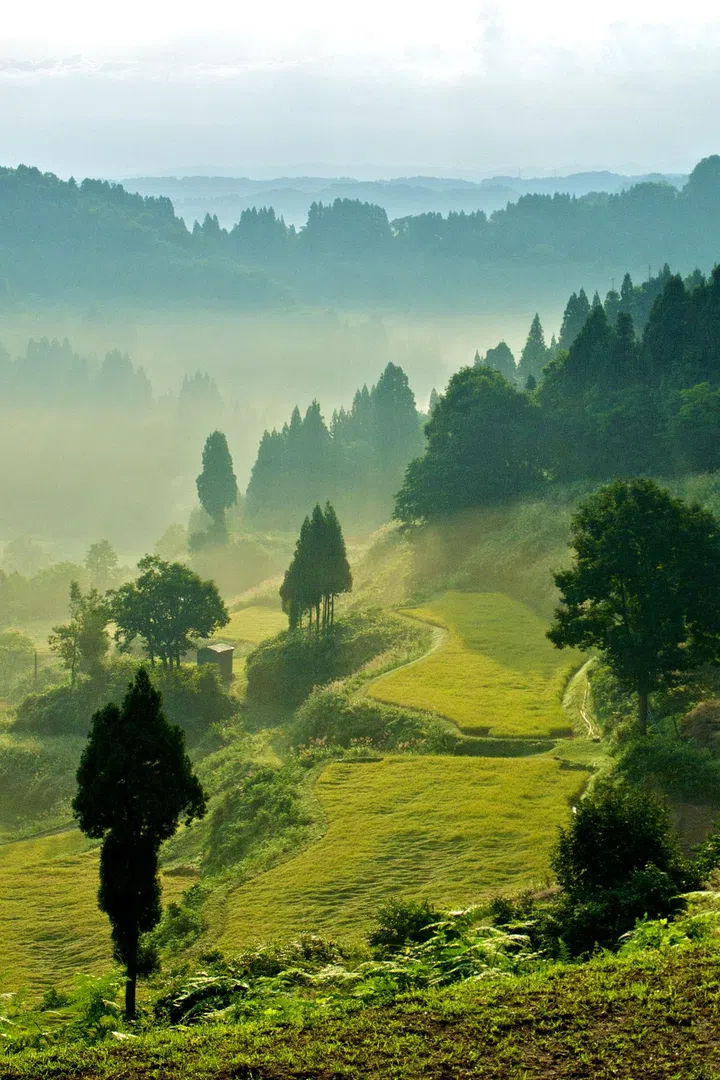
The scenic hills of Matsuda in Niigata. Matsudai is one of the sites of the Echigo-Tsumari Art Triennale, first held in 2000.
More than that, though, it’s a city that seems to be constantly changing, bringing with it novel delights on every visit. I’m not alone in recognising its appeal. The Japan National Tourism Organization recently announced that the number of international visitors in 2024 hit an all-time record of 36.9 million. From Singapore alone, there were a whopping 691,100 visitors last year. A lot of that, I suspect, is concentrated in the major cities of Tokyo, Kyoto, and Osaka, especially for first-time visitors. They’re the usual suspects. But with that comes growing issues of overcrowding, strain on infrastructure, and local backlash.
This is a good reminder that the wonders of Japan extend easily beyond the sights illuminated by bright city lights. With its vertical geography, the archipelago is home to a diversity of landscapes. It’s easy to forget that 70 percent of the country is mountainous. It’s just the push necessary to compile this list of dream destinations in Japan beyond Tokyo.
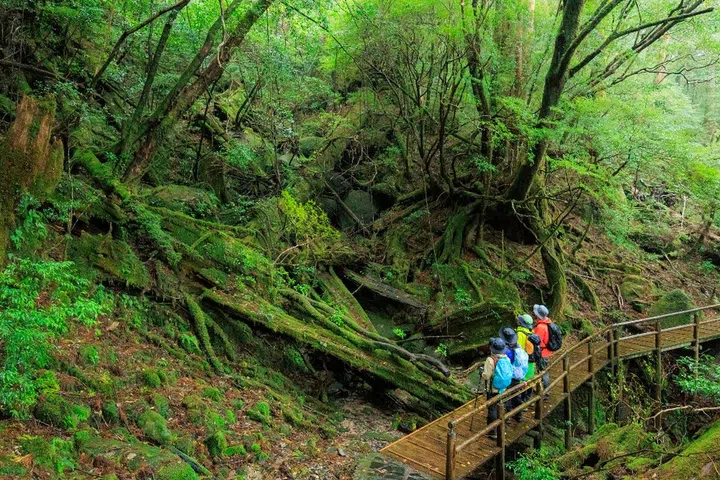
The landscape of Yakushima Island is said to have inspired the ancient forest in the Studio Ghibli film, Princess Mononoke.
All of these places take some effort to get to — whether that’s in distance, labour, or finances involved. Not quick and easy trips, mind you. But they’re dream destinations, in my opinion, because they transport you to extraordinary spaces and mindsets. Travelling somewhere special, even otherworldly? It’s enough to make this tried and true city girl venture beyond to parts unknown.
Disclaimer: While information is accurate at this time, opening times, etc may be subject to change. Please check prior to visiting.
UNKAI TERRACE (HOKKAIDO)
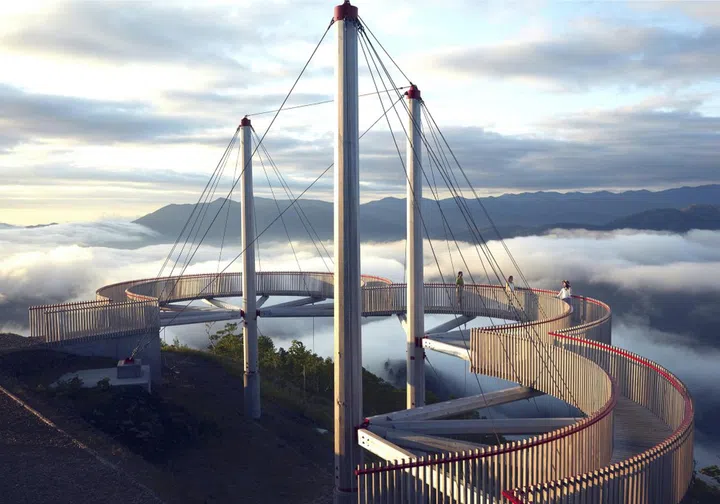
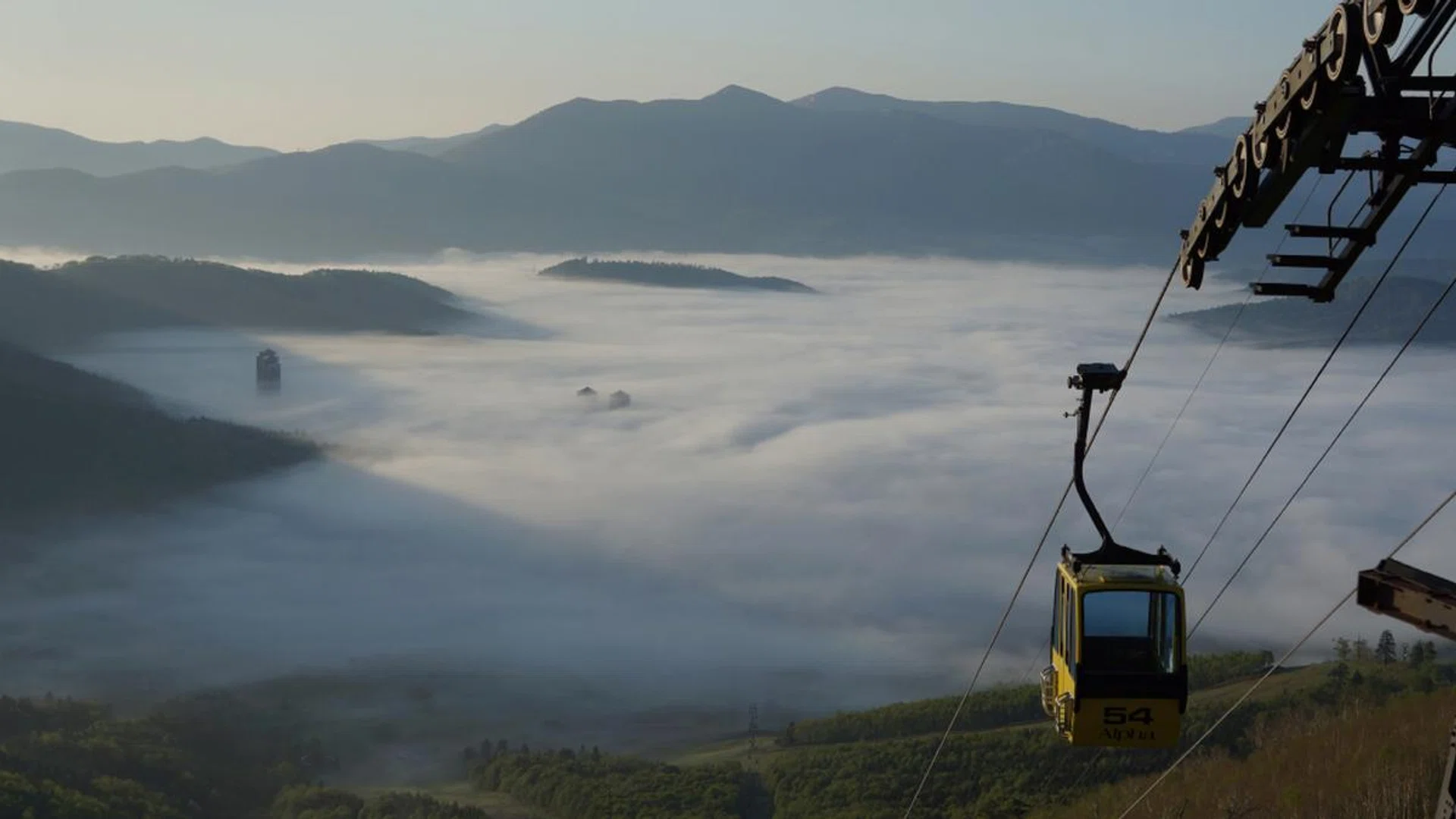
Years ago, I came across an image that left me utterly transfixed. People gathered, gazing out over a sea of clouds. I later learned that this otherworldly scene was of the Unkai Terrace at Hoshino Resorts Tomamu in Hokkaido. Located about 1,088 metres above sea level, this elevated lookout offers visitors the chance to witness the low cloud inversions that flow across the valleys at sunrise during summertime. It’s a natural phenomenon that occurs under the right conditions of light, temperature, humidity, and more. But it also feels like so much more – a wondrous sight that would make those present feel as though they’ve stumbled into a realm of gods, myth, and legend.
Address: Naka-Tomamu, Shimukappu, Yufutsu, Hokkaido Japan 079-2204
Website: www.snowtomamu.jp/summer/en/
SIMOSE ART MUSEUM (HIROSHIMA)
In this day and age, a museum’s architecture is as much a draw as the art it houses. Simose Art Museum, which opened in March 2023 in Otake, Hiroshima, is exactly that kind of establishment. Its collection largely consists of Japanese dolls and glasswork by Emile Galle. But the bigger draw lies outside. Designed by Japanese starchitect Shigeru Ban, the exhibition halls feature eight movable galleries encased in colourful glass and set in a basin. The water reflects its serene surroundings, echoing the islands of the nearby Seto Inland Sea. The galleries – almost reduced to pure cubes of neon – appear to float at the intersection of sky and sea. A striking combination, indeed. The museum even won the “World’s Most Beautiful” Prix Versailles award in the museum category from Unesco in December 2024.
Address: 2-10-50 Harumi, Otake, Hiroshima Japan 739-0622
Website: simose-museum.jp/en/
YAKUSHIMA ISLAND (KAGOSHIMA)
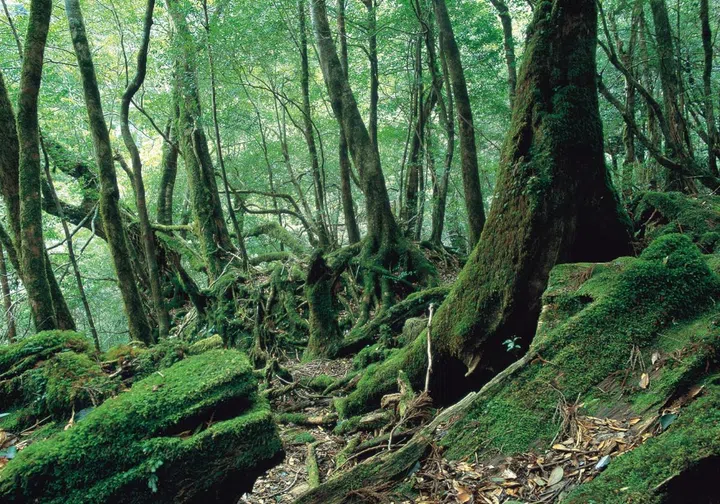
One memorable aspect of Shintoism, the indigenous religion in Japan, is its belief that kami reside in all living things. The sacredness of the natural world can be keenly felt in beautiful, remote places like Yakushima Island, located 60 kilometres from the southern tip of Kyushu. For Studio Ghibli fans, it may be evocative enough to know that Yakushima was supposedly the inspiration behind the ancient forest in the film Princess Mononoke. The dramatic surroundings are lush and green, thanks to the mists and high humidity, and are dotted with cedar groves, mossy trails, and waterfalls. Ohko-no-taki and Senpiro-no-taki are two famous examples of the latter. Enlisting a local guide could also help with navigating the island, with its subtropical climate, high rainfall, and unique flora and fauna.
Address: Yakushima Island, Kagoshima Japan
Website: www.japan.travel/en/destinations/kyushu/kagoshima/yakushima/ or www.kagoshima-kankou.com/for/highlights/yakushima_island
STAR VILLAGE ACHI (NAGANO)
When you grow up in densely populated cities, you don’t quite realise how much constant illumination soaks into and affects the darkness of the night sky. It wasn’t until I went to university in a cold, remote area devoid of such distractions that I truly saw stars. This nocturnal beauty is the calling card of Achi village, a quiet town in southwestern Nagano. With low levels of light and air pollution, thanks to its remote location surrounded by mountains, Achi was named the best place for stargazing in Japan by the Ministry of the Environment in 2006. What a brilliantly picturesque title to earn. Millions have since passed through to enjoy the views from the village’s main stargazing facility at Heavens Sonohara ski resort.
Address: (Inside Heavens Sonohara Ski Resort) 3731-4 Chisato, Achi, Shimoina, Nagano Japan 395-0304
Website: www.japan.travel/en/spot/2050/ or sva.jp/ (Japanese only)
GUNTU CRUISE (SETO INLAND SEA)
As the pace of the world quickens, slow travel feels like the most exquisite indulgence. Guntu cruise, which calls itself a little floating hotel, takes this to luxurious heights. Designed by architect Yasushi Horibe, the ship resembles a tranquil ryokan, with its clean lines, wood-panelled cabins, and seascape-framing views. It even has hinoki cypress communal baths, so you can be immersed in water, on water. Fine dining made to order, sauna and spa treatments, and a small passenger count – Guntu offers all the amenities you might expect for a high-end experience (and the eye-watering prices to boot). Its efforts have been duly recognised, with accolades including a spot on TIME magazine’s ‘World’s Greatest Places’ list in 2019.
Address: (Departs from Bella Vista Marina) 1364-6 Urasakicho, Onomichi, Hiroshima Japan 720-0313
Website: guntu.jp/en/
ECHIGO TSUMARI ART FIELD (NIIGATA)
When artworks with impact meet breathtaking backdrops, the result can be something greater than the sum of its parts. Open between April and November, the Echigo-Tsumari Art Field showcases a collection of more than 200 works scattered across 760 square kilometres in Niigata. It includes pieces by household names like Yayoi Kusama and James Turrell. Similar to how Naoshima was transformed into an art destination, the concentration of art here imbues the Echigo-Tsumari area with new energy by repurposing existing structures. The notable ‘Tunnel of Light’ installation, for example, transforms a 750-metre underground passageway into a site of light-based works, opening up to a gorgeous view of the valley. More works are added to the rotation during the Echigo-Tsumari Triennale, held every three years.
Address: 3743-1 Matsudai, Tokamachi, Niigata Japan 942-1526
Website: www.echigo-tsumari.jp/en/
TOGAKUSHI SHRINE (NAGANO)
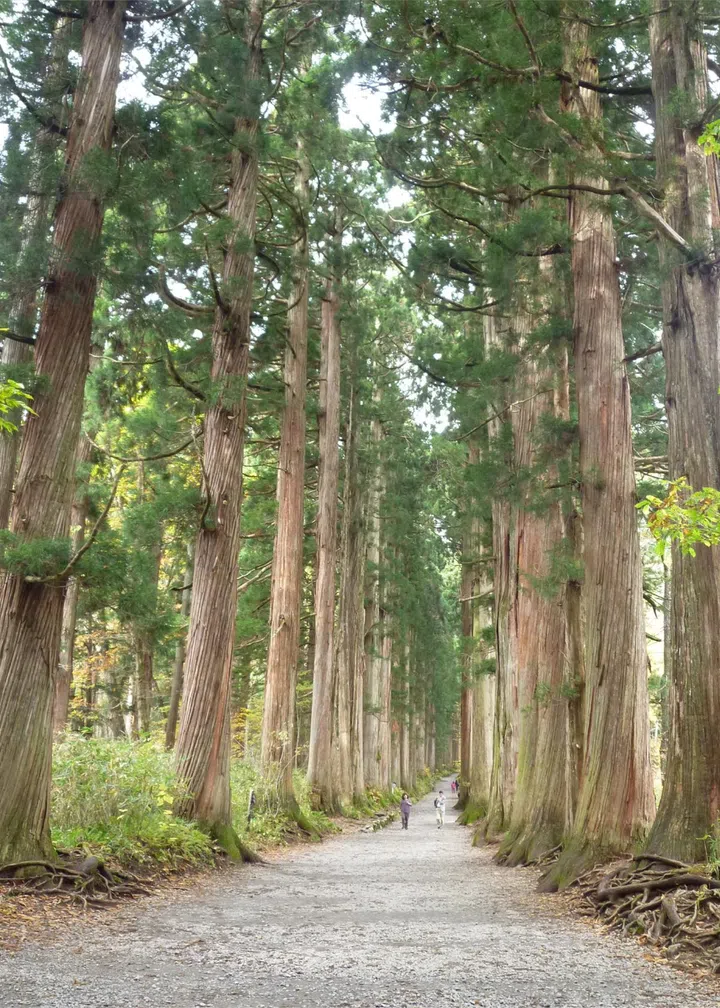
There are countless Shinto shrines that dot the countryside in Japan. Often tucked away in mountains, their green surroundings reflect the religion’s deeply held reverence for nature. Togakushi Shrine, located at the foot of the sacred Mount Togakushi in Nagano, is no exception – and offers an intriguing interpretation, compositionally speaking, as well. It does not consist of a single structure but is made up of lower, middle, and upper shrines at various elevations. I would imagine that walking from shrine to shrine, ascending the mountain in turn, would encapsulate a kind of meditation in motion. The ancient path from the Zuishinmon gate to the upper shrine, Okusha, in particular, is flanked by towering kumasugi cedar trees that are over 400 years old. Suitably majestic and easily breathtaking for the passing pilgrim, to say the least.
Address: 2412 Togakushi, Nagano Japan 381-4101
Website: www.togakushi-jinja.jp/english/
ENOURA OBSERVATORY (KANAGAWA)
Listen, it should be clear by now that I’m a big fan of beautiful spaces that encourage quiet contemplation and highlight natural splendour. Enoura Observatory, a sprawling art and culture facility set up by Japanese photographer and artist Hiroshi Sugimoto’s Odawara Art Foundation in 2017, definitely delivers on those fronts. Located near Hakone, it consists of a gallery, outdoor museum with rock sculptures, and an observatory that overlooks the ocean. But really, the natural environment is the star. Accordingly, the architecture is designed to exist harmoniously with the landscape, and the buildings are even supposed to align with the sunrise. The views from the observatory, which feels like a man made distillation of line, light and poetry - also opens for classic Japanese moon viewings.
Address: (Inside Odawara Art Foundation) 362-1 Enoura, Odawara, Kanagawa Japan 250-0025
Website: www.odawara-af.com/en/enoura/
SITE OF REVERSIBLE DESTINY (GIFU)
A name like ‘Site of Reversible Destiny’ evokes grand, bombastic visions. It’s accurate, and it’s not. Built in Yoro Park in Gifu in 1995, the iconic installation by Shusaku Arakawa and Madeline Gins exists at the intersection of art, architecture, and philosophy. The colourful and quirky structures, which largely eliminate straight lines, are designed to encourage exploration, challenge physical conventions, and leave people feeling off-kilter. It’s grand in its ambitions, you could say, aiming to get people to find new ways of seeing the world to increase their lifespan. But rather than bombastic, it is playful in approach – a tactile new gymnasium for those willing to engage. The bold hues, unexpected pathways, and disorienting spatial changes are also signatures present in Arakawa + Gins’ The Reversible Destiny Lofts in Mitaka, Tokyo.
Address: (Inside Yoro Park) 1298ー2 Takabayashi, Yoro, Gifu JAPAN 503-1267
Website: www.yoro-park.com/en/facility-map/hantenchi/
SEVEN STARS IN KYUSHU (MULTIPLE LOCATIONS)
Sometimes, the dream of a place alone can make it worthwhile. That’s how I feel about Seven Stars in Kyushu, an ultra-luxurious sleeper train that passes through various prefectures, including Fukuoka, Oita, Miyazaki, Kagoshima, and Kumamoto. What a classic, romantic, time-slipping way to take in the changing Kyushu scenery. The elegant seven-car passenger train, which also offers excursions and local stops along the way, is an homage to Japanese craft, with kumiko woodwork, aritayaki ceramics, and seiroku pottery on display. The pricing and exclusivity (a ticketing lottery is involved) make this an admittedly aspirational rather than accessible adventure, but what fun would it be if everything were so easily attained?
Address: (Departs from Hakata Station) 1-1 Hakata Station Chuo-gai, Hakata, Fukuoka JAPAN 812-0012
Website: www.cruisetrain-sevenstars.jp/english/ or www.japan.travel/en/luxury/detail/seven-stars-in-kyushu/