
Dainasaurs Is Proof That Obsessive Stan Energy Can Pay Off
Singapore’s creative pulse isn’t waiting for permission. Across studios, streams, and unexpected corners of the city, a new wave of young makers is building in real time, guided less by old formulas than by passion, instinct, and a genuine curiosity to do things differently. Meet Daina Arrifin, aka Dainasaurs: the K-pop stan turned singer-songwriter who’s flipping fandom into global hits.
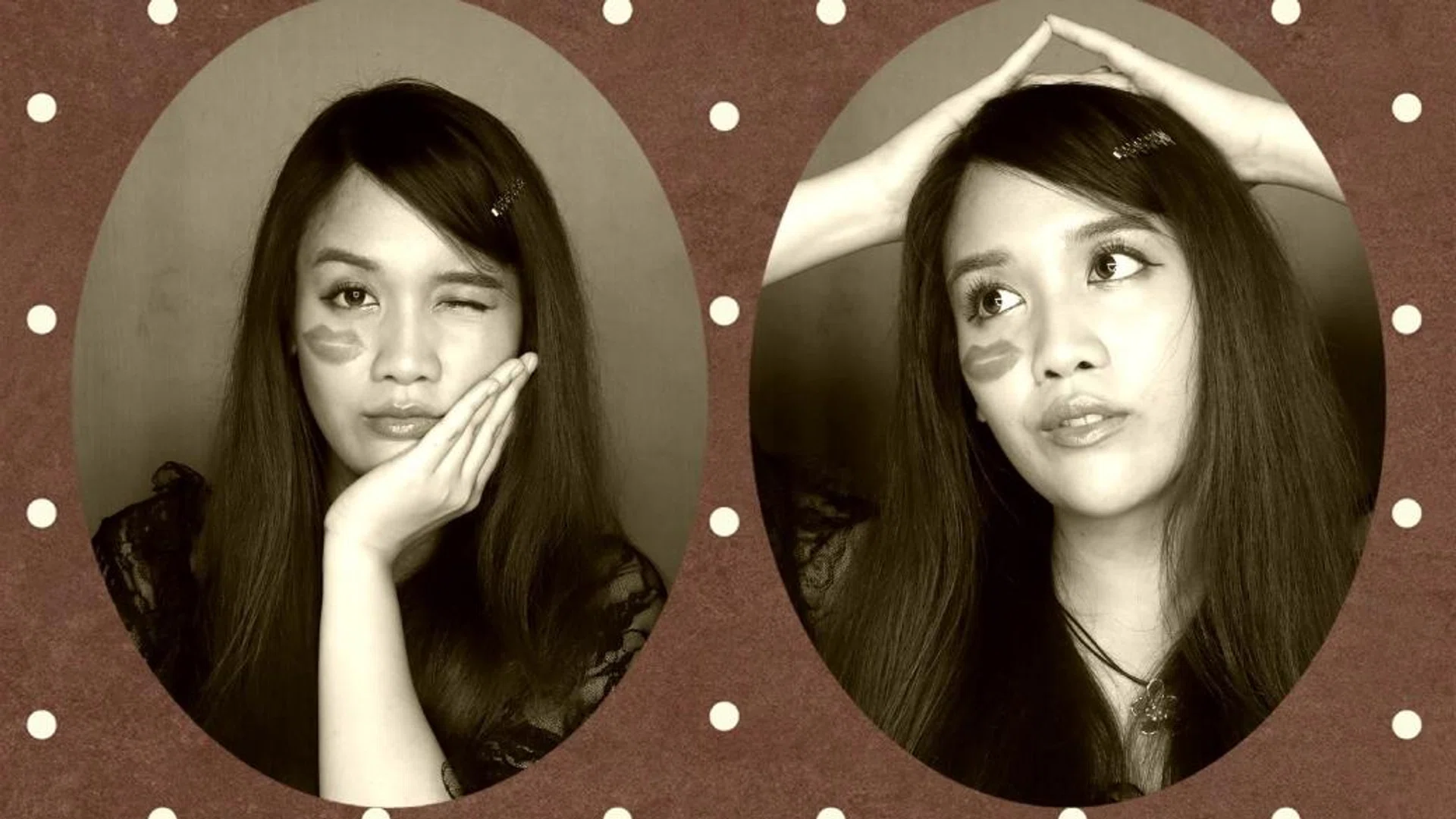
This K‐pop megastan, who’s better known as Dainasaurs online, has turned stan culture into the ultimate fan‐to‐architect success story. Like everyone else during the Covid‐19 pandemic, she was stuck at home, but the experience gave her clarity on what she really wanted to do: write music – and not just as a hobby.
While others were posting covers, this 25-year-old studied algorithms, rewrote lyrics from new perspectives and dropped multi‐language verses within 24 hours of a release, ensuring that her version would appear among the first results whenever someone Googled said song (hey there, SEO queen).
To think she’s entirely self‐taught. “Music evolves quickly and innovation matters more than rigid rules,” says Daina. “Formal training can be a great foundation, but sometimes, it can limit creativity. Many of the greatest artists weren’t formally trained. There’s something powerful about creating from instinct!”

Her calculated moves paid off, catching the attention of global producers and essentially engineering her breakout. She has since gone from reimagining hits to crafting them for A‐listers, including Sana from Twice (she co‐composed her solo track Mirage) and ITZY (the chart‐topping Rock & Roll).

Her days now are split between Seoul and Singapore, but staying behind the scenes isn’t her final act. This year, she’s stepping out from the credits to launch her own music independently: Expect a romantic, R&B‐tinged world steeped in 2000s and 2010s nostalgia (think early Ariana Grande and JoJo) – and more hits to come.
Here, Daina shares more on her journey:
Daina! You started by posting covers online — what made you decide to put yourself out there in the first place?
Hey! Yes, well, it was 2020, I’d just graduated from poly, and the world basically shut down because of Covid. During lockdown, I spent a lot of time thinking about what I wanted from my life. I’d always known I wanted to do music, but I never had the courage to take a real step. I realised I owed it to myself and to my inner child to at least try. Singing is something I can’t imagine my life without, and I knew I’d regret it if I didn’t give myself a real shot. If not now, then when?
Since I didn’t know anyone in the music scene, the only thing I could do was cast a big net by putting myself on the internet. I kept thinking, there are no real consequences now because we’re all stuck inside anyway. I started studying what worked. At the time, POV song concepts were blowing up. One of my first covers that really reached people was Conan Gray’s Heather. I rewrote the lyrics to show three different perspectives: Conan’s, Heather’s, and his crush’s. It was quite fun for me to write as an empath lol…
After that, I did a lot of open-verse/multi-language covers for K-pop songs I loved. I’d learn the song and write my own verse within 24 hours of its release so my video would be one of the first results. That eventually got me noticed by producers, which led to demos, publishers, songwriting camps, and building my catalogue.
I was determined to be seen and heard, and it turned out the way I hoped. There’s this Singaporean meme: “If you really want me right, you should chase after me.” We joke about it, but it’s very real in all aspects of life.”
You went on to do songwriting camps in Seoul. What actually happens at a songwriting camp?
“Songwriting camps are usually organised by publishers or labels. They invite a select group of producers and writers, shuffle us into different teams each day, and put us in studios for a week to create songs for specific artists.
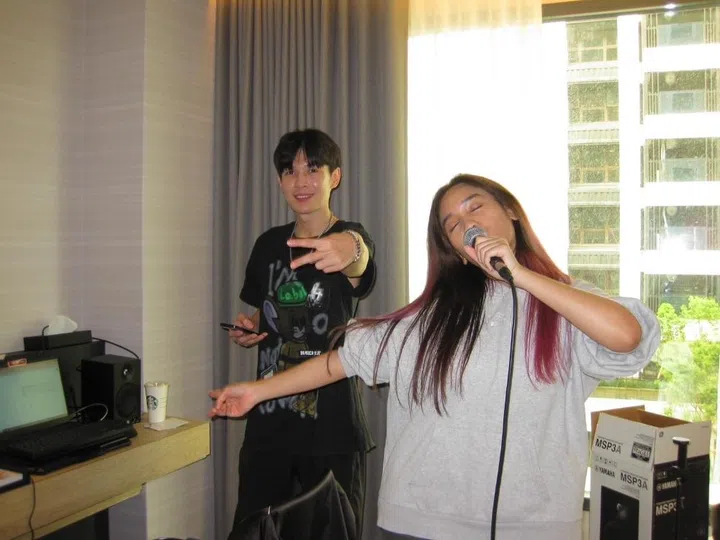
Daina at one of the songwriting camps.
At the end of the week, there’s a listening party where everyone involved, sometimes including label A&Rs (Artist and Repertoire, the people at record labels who discover talent, help shape an artist’s sound, and decide which songs get recorded and released), comes together to celebrate the music we’ve made, which will later be pitched to artists.”
You’ve written songs in various languages. Does switching languages or markets change the way you write?
“When writing K-pop-style songs, language doesn’t really change how I write. I usually write in English, which labels generally prefer, and then lyricists adapt the lyrics into the final language. My role as a topliner focuses on melodies, hooks, and concepts. Because songs are later translated, the process is very collaborative. Producers, topliners, and lyricists, all specialising in what they do best, work together to achieve the highest quality final product.
In terms of markets, for K-pop, traditionally there are more sections, so for example verse 1 and verse 2 will sound completely different (because you need different moments in the song for different members to shine and to keep listeners hooked). But there’s definitely a shift now that K-pop is more global — generally, verse melodies can stay the same, etc.
But when writing my own music in English, I am more detailed with storytelling and lyrics, rather than having sonically different sections in my songs.”
What first drew you to K-pop and why do you remain obsessed with this genre?
“My best friend got me into K-pop in 2018. Before that, I mainly listened to music from the West. I fell in love with not just the music and performance, but also the concepts, fan culture, and variety content — it’s the whole package! More than anything, it was fun and interactive as a music lover and a teenager/young adult! And that FUN, I believe at the time, was missing in global pop culture, so K-pop filled that gap.
Musically, I love K-pop because it’s innovative and unapologetic. The system, the production quality, the artist development — its excellence across the board. It pushes boundaries and breaks language barriers through music. K-pop really isn’t just a genre; it’s more of a culture. You can explore any genre within it or even create new ones through group lore and concepts. Creatively, it’s limitless.
At its core, K-pop brings together the best people at what they do — from producers, writers, and creative directors to A&Rs — all collaborating to create something bigger than just a song. That level of dedication is really inspiring.”
What’s it like now being on the inside of that K-pop system? Give us the real tea — what does your day-to-day routine look like?
“It’s pretty surreal. My 18-year-old self would be really proud. When I’m in Seoul (usually for weeks or months at a time), I’m usually in studios every day. We’ll write, cut vocals, and finish a song within the same day. In Singapore, I work remotely with producers and writers from all over the world. The process is slower and more solitary, but it allows me to refine my craft and build stronger melodies, which really prepares me for the intensity of Seoul sessions.
Because I’m not based in Seoul full-time (yet?), I usually don’t get to record with the artists directly. They know my voice more than my face, which I find kind of beautiful. Somewhere in Seoul, my demo vocals are playing on repeat while they learn the song or choreography.”
You’ve spoken about how the music industry isn’t always glamorous. What are some things that people don’t realise about being a songwriter?
“The rejection. There’s an overwhelming amount of rejection before you ever get a release. One released song represents hundreds of songs that didn’t make it. But those songs aren’t wasted! They build your taste, experience, and catalogue. In K-pop especially, having a strong catalogue is essential because a song that doesn’t find a home now might find one later.
Another big issue is fair pay. With streaming, songwriters are often undervalued, and this affects everyone, from newcomers to the biggest names in the industry. Without songwriters, there are no songs, and I think that value needs to be recognised more.”
Is songwriting something you can realistically make a living from?
“Yes, I believe with anything in life, if you really want it badly enough, you’ll make it happen! Diversifying helps a lot: vocal producing, recording yourself, stacking harmonies, creating content. These skills make you more valuable and increase your chances of sustaining a career.
For me, working a full-time job in marketing while songwriting as a side hustle gave me financial stability and the freedom to invest in my dreams. I only considered making the jump once I had momentum and projects in the pipeline. Freelancing will always come with anxiety, but having your own system makes it manageable.”
What advice might you have for others who are thinking of going into songwriting?
“Put yourself out there and network, but also work relentlessly on your craft. Build a catalogue you’re proud of. The more songs you write and pitch, the higher your chances of getting a release, and the more people hear your work, the more opportunities can come from it.”
Favourite song of all time?!
“This question is impossible because it changes all the time, but maybe “Thank You for the Music” by ABBA. It perfectly captures how I feel about music, and its earnestness makes me cry sometimes haha.”
What’s your dream gig?
“Ariana Grande. She’s more than capable of writing, recording, and vocal-producing her own music, but more than anything, I’d love to be in the room and witness her process. She’s truly a modern legend.”
What other plans might you have for this year?
“Apart from continuing to write songs for K-pop, I’m also releasing my own music. I’m slowly building my world and introducing myself not just as a songwriter, but as an artist. I’ve spent years writing for other people, and now feels like the right time to share my own voice and story with the world.”
An adapted version of this article first appeared in Volume 7 of F ZINE.