
The Eight Indie Mom & Pop Shops You Should Know
These old-school general stores are probably the same age as your grandparents.
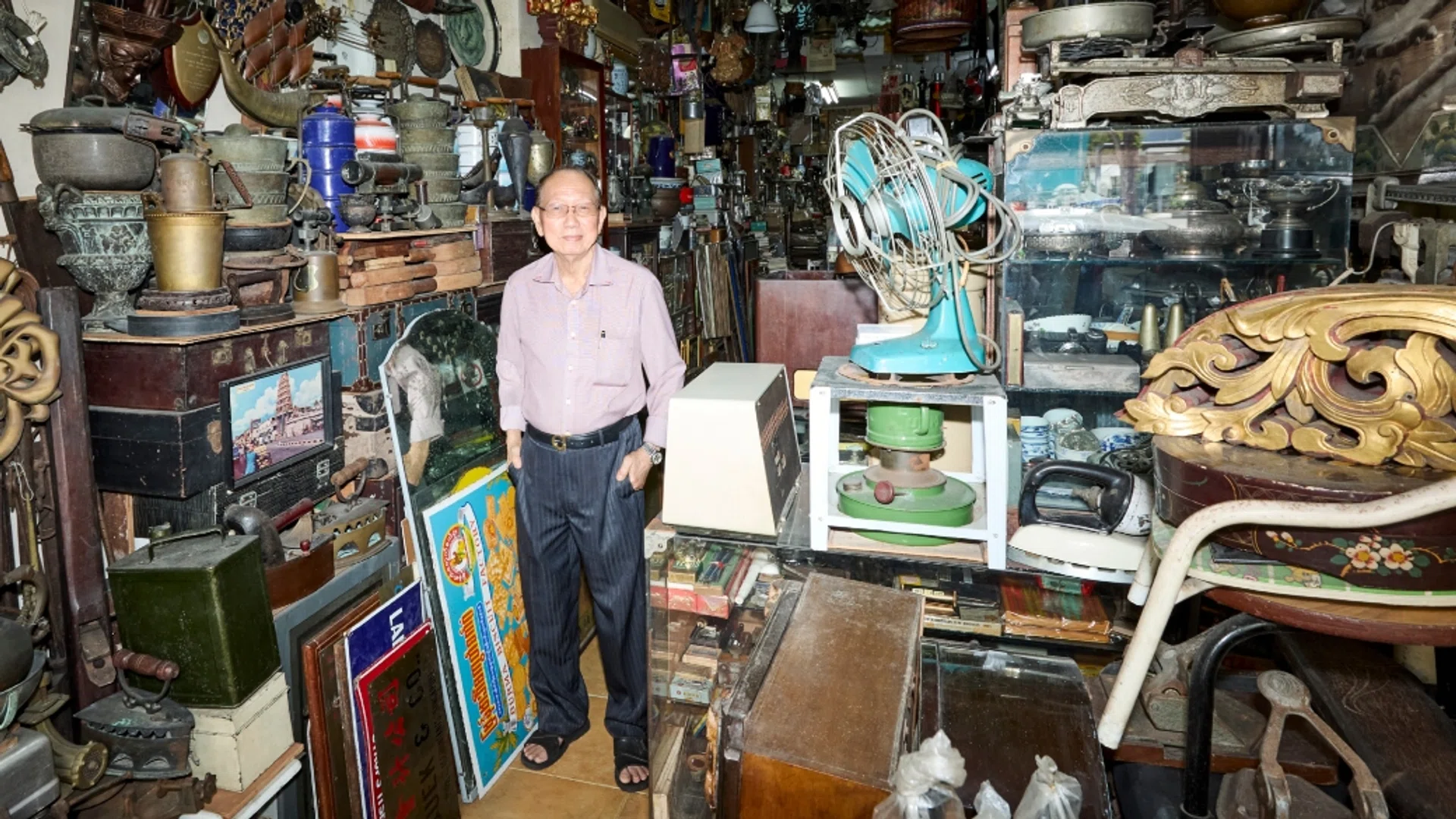
They’re small and independently run, often located in obscure corners of Singapore, and have been around for decades – basically, IYKYK. Their wares, which range from leather jackets to records and handcrafted clocks or costume jewellery, have likewise stood the test of time, inadvertently finding favour with a new generation of customers who are enamoured by nostalgia and novelty. In normal times, each of the eight stores featured here are what TikTokers would call a hidden gem. In a year that has seen a bumper crop of business closures, they’re iconic. Kelly Janine explores them and finds out their secret to longevity.
CHEONG ANN WATCH MAKER
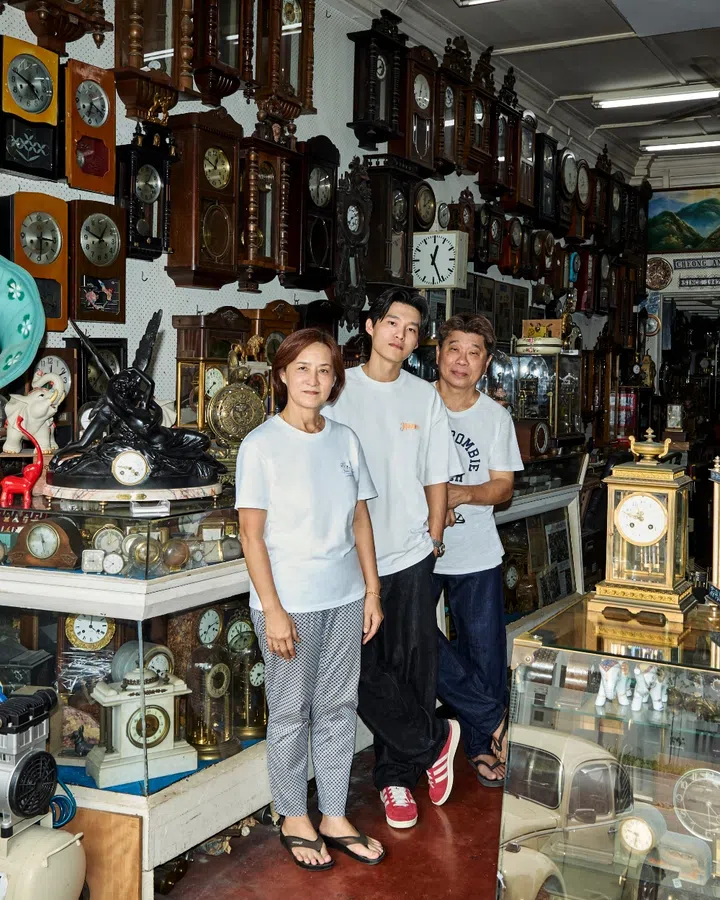
Thanks to third‑gen horologist Shawn Lim (middle), the 78‑year‑old antique clock repair business Cheong Ann Watch Maker continues to run like clockwork. Helping him are his mother Sally Neo (left) and father David Lim (right), who taught him the tricks of the trade and had inherited the store from his father.
“Growing up, I saw how much care and pride my father and grandfather channelled into every restoration … It wasn’t just about fixing clocks, but preserving memories and history. That sense of purpose drew me in,” says the younger Lim. “What motivates me today is knowing that each clock we restore connects people to their past. When a family clock starts ticking again after decades, it’s a powerful and emotional moment.”
WHERE IT’S LOCATED: 4 Lim Tua Tow Road in Upper Serangoon
WHEN IT WAS FOUNDED: 1947
HOW IT STARTED: It began as a small workshop repairing clocks for local families and businesses, and over time gained a reputation for its extra‑fine craftsmanship. It is now known as the go‑to place to get rare and antique clocks repaired (commissions have included work on a grandfather clock from the 1700s).
WHO RUNS IT TODAY: It’s mostly run by third‑gen horologist Shawn Lim, 32, who learnt the tricks of the trade from his father David (the man still helps out). Shawn’s late grandfather founded the business.
WHY IT HITS: Enter Cheong Ann Watch Maker’s quaint shophouse space, and you’ll be hypnotised by the euphonic sound of ticking clocks and lulling chimes. Coupled with the intricate craftsmanship needed to bring each timepiece in‑store to life, this is a wonderland that captures the spirit and beauty of analogue living from a bygone era.
HOW IT HAS KEPT GOING: “With patience, perseverance and integrity … In Singapore’s fast‑paced environment, it’s easy to chase trends, but sustainability comes from consistency and quality. As my father always says, good work speaks for itself,” says Shawn. “To adapt, we’ve made sure to manage our costs, focus on quality and build an online presence. Through Instagram and TikTok (@theclockmakerson on both platforms), we share time‑lapse videos and insights into our restorations and how mechanical clocks function, and this has helped us to both connect with youths who are drawn to authenticity and spark their curiosity.”
ABOUT THE FUTURE: “I want Cheong Ann to be a place where people can experience the history of clocks and learn the artistry behind them,” says Shawn. “I hope to introduce workshops to pass down these skills to future generations – just like how my grandfather had
NGEOK GHEOK
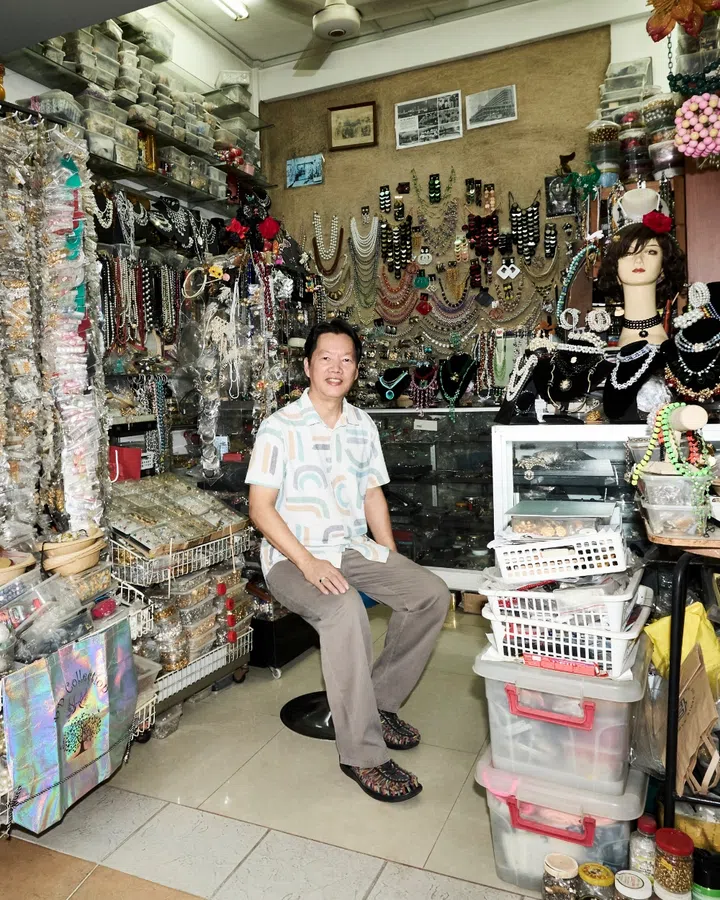
From custom charm bracelets to elaborate necklaces commissioned by costume designers for films, Ngeok Gheok is a treasure trove of trinkets designed and hand‑crafted by present‑day owner Edward Ong (pictured here) and his wife Ann (she was unable to make it for this shoot). The business was founded by Ong’s father in 1968 and has built a cult following thanks to loyal customers who spread about its eclectic and well‑made designs through word of mouth.
WHERE IT’S LOCATED: #03‑1072 People’s Park Food Centre
WHEN IT WAS FOUNDED: 1968
HOW IT STARTED: The jewellery store began life as a street market stall located close by to its current premises – the complex it now calls home was not built till mid‑1969 (it moved in soon after construction was completed). What did it hawk? The same brand of extra‑fun and eclectic costume jewellery that it still specialises in today – nearly all of which are designed and hand‑crafted in‑house.
WHO RUNS IT TODAY: At the helm is the 65‑year‑old costume jewellery designer Edward Ong, whose father started the business, and his wife Ann. Out of three children, Ong was the one who spent the most time in the store growing up and joined it full‑time after completing national service.
WHY IT HITS: Equal parts quirky, retro and fashion‑forward, Ngeok Gheok’s wide range of jewellery is made for those who aren’t afraid to experiment with their style. Bonus: Many are made from scrap materials that Ong collects and repurposes in a bid to reduce waste. The shop is known largely by word of mouth, and its clients range from art school students working on their final‑year projects to fashion designers and costume designers in film and television, all of whom trust it for custom pieces or repairs. Oh, and there’s a selection of vintage designs that had been imported from Europe in the 1960s.
HOW IT HAS KEPT GOING: Despite the plethora of ready‑made designs in‑store, Ong focuses on creating one‑off, custom pieces. For one, it’s pragmatic, considering how hard it is to keep up with trends these days. There’s also the fulfilment Ong gets from pushing design boundaries. As he shares: “The satisfaction of completing a custom order that challenges me to be creative and repurpose old materials is what motivates me.”
ABOUT THE FUTURE: Ong intends to keep Ngeok Gheok as a family business. “Maybe my grandchildren will take over,” he says.
FOR THE RECORD
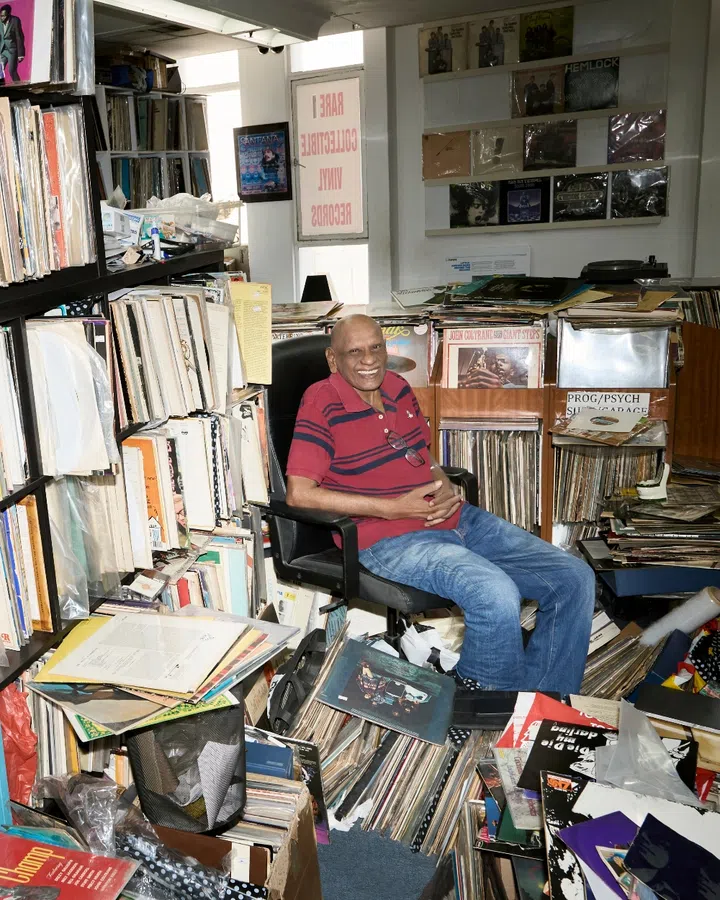
There are plenty of gems at For The Record – including founder Alagiry Alagirisamy (pictured above). Founded 14 years ago to help reduce his 25,000 album‑strong personal collection, it’s only open to those who pass his vibe check (as he puts it, no to “posers, clueless hipsters and speculative buyers”). Once inside, visitors are bound to find collectibles, as many of the records are first or early pressings, while music‑related facts and stories from Alagirisamy complete the experience.
WHERE IT’S LOCATED: #04‑28 Peninsula Shopping Centre
WHEN IT WAS FOUNDED: 2011
HOW IT STARTED: Founder Alagiry Alagirisamy opened this casual joint 14 years ago in a bid to shrink his personal collection of vinyl records: 25,000 albums spanning pop, psychedelic, jazz, rock and classical sounds dating from the 1950s to ’90s. He had started it in the early ’70s, making annual pilgrimages to major record fairs in Europe and buying only first or early pressings (these are considered to be of better sound quality and more precious). Says Alagirisamy: “I sold my records on eBay UK from 2006 to 2011 before opening For The Record in Peninsula Shopping Centre – a central location near The Adelphi where the high‑fidelity shops are.”
WHO RUNS IT TODAY: Now a 76‑year‑old retired civil servant, Alagirisamy is still the main man behind the business.
WHY IT HITS: One is almost always guaranteed to find gems combing through the shelves and stacks of vinyls in‑store. Think signed box sets by The Beatles or first pressings of Stevie Wonder albums. Interacting with the idiosyncratic Alagirisamy is also part of the experience: Expect nuggets of band trivia, music history and good deals – if you pass his Berghain‑style vibe check, that is.
HOW IT HAS KEPT GOING: The store has endured on Alagirisamy’s own terms. “I choose who I want to sell my records to,” he explains. “I prefer dealing with customers who know about my kind of music and really want to listen to it instead of posers, clueless hipsters and speculative buyers. And even though the rent is increasing, I’ll continue operating as long as I can cover costs and my health keeps up.” Respect.
ABOUT THE FUTURE: “No concrete plans yet, but I’ll go on until my albums find a good home,” he says.
HOCK SIONG & CO.
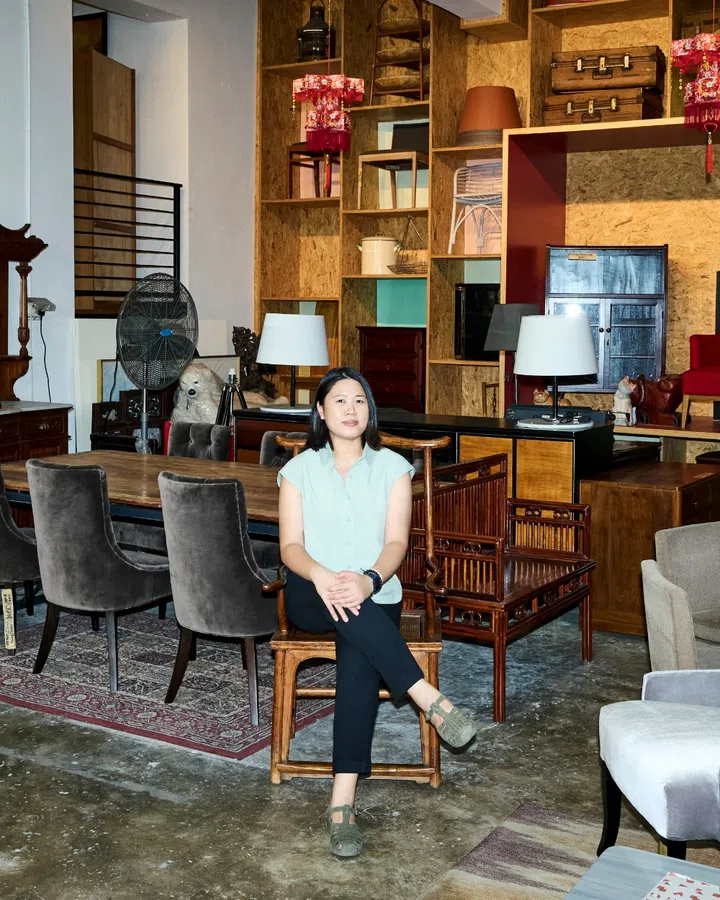
Arguably Singapore’s most famous vintage furniture store, Hock Siong & Co. has been making generations see the beauty and value of discarded or unwanted objects since the 1990s, when it was founded by company patriarch Toh Chin Siong. In fact, this was what prompted Toh’s eldest daughter Brillyn (pictured here) to join the family‑owned business.
Currently its managing partner, she shares: “I was around seven or eight years old when I once followed my father after his official working hours to do his final round of collecting items, and I found a packet of unfinished mixed vegetable rice discarded into the recycling bin that we were contracted to collect from. That experience deeply impacted me because it revealed my father’s resilience – he had no qualms in doing what others might deem dirty – and it made me wonder why people consider used items rubbish.”
WHERE IT’S LOCATED: #01‑02 and #01‑03 Junjie Industrial Building in MacPherson
WHEN IT WAS FOUNDED: The early 1990s
HOW IT STARTED: Founder Toh Chin Siong grew up helping his parents, who were in the rag‑and‑bone trade. When he hit adulthood, he expanded the business, so to speak, formally starting Hock Siong & Co. – or Hock Siong for short – and buying items first from other karang guni collectors, then furniture from hotels, restaurants and the like. The latter has become what the company is best known for.
WHO RUNS IT TODAY: Toh’s eldest daughter Brillyn, 37, is the managing partner and is often the face of the brand. She makes clear, though, that Hock Siong is a family‑run business, with her father and sisters all involved in it.
WHY IT HITS: A household name among fans of vintage furniture and the mid‑century modern aesthetic, Hock Siong has been a go‑to sourcing spot for interior designers and those in film production. From opulent crystal wares to intricately carved teak wood cabinets, the eclectic assortment of refurbished second‑hand objects never fails to pique curiosity, and every corner of the store is Instagram gold. Prepare to be visually stimulated.
HOW IT HAS KEPT GOING: Brillyn has been credited for taking Hock Siong into the social media age, but that’s just one part of her vision. The biggest turning point came in 2017, after she attended a summer programme in interior design at Parsons School of Design in New York. “It made me consider how every space that we step into can become even greater through the things we put in it,” she recounts. However – up till then – the wares at Hock Siong had not been presented in a way that showed off this potential. This prompted her to transform the company’s warehouse into a showroom, which today also forms the backdrop to all of Hock Siong’s social media content. Says Brillyn: “It’s easy to be inspired when you’re surrounded by beautiful objects.”
ABOUT THE FUTURE: True to her style, Brillyn directs us to Hock Siong’s social media accounts (@hocksiong on Instagram and @hocksiongco on TikTok). “Akan datang (Malay for ‘coming soon’),” she says
LIM SEAH SENG OPTICAL
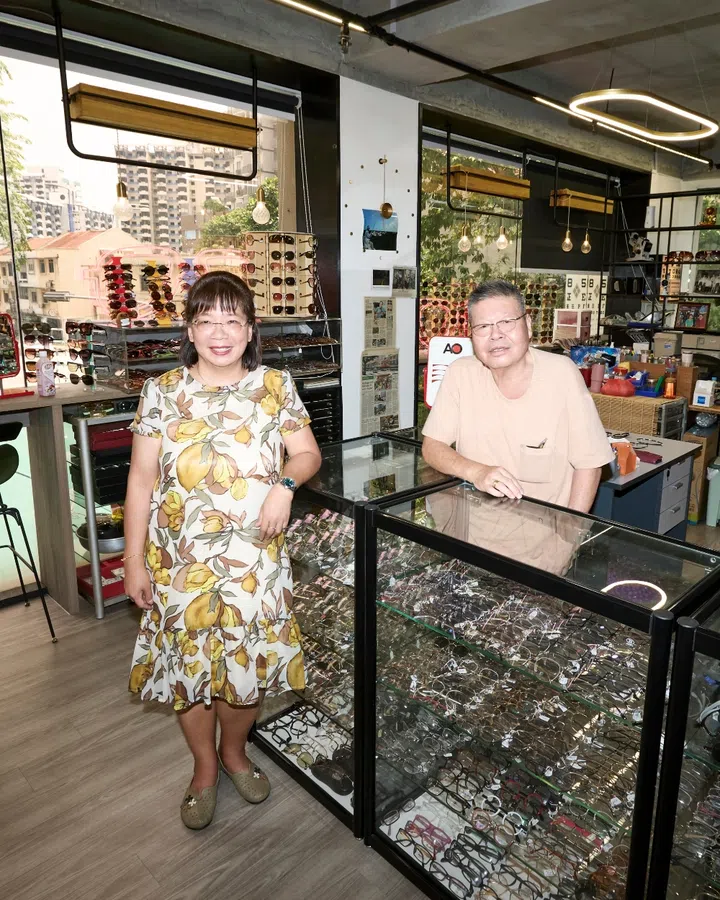
Could Lim Seah Seng Optical be Singapore’s most vibey optical business? Its current second‑gen owners Lim Seah Seng (pictured right) and his sister Karen (she was unable to make this shoot), who run the shop with their sister‑in‑law Lily Loh (pictured left), have made sure to continue the trade of customising and making glasses by hand that their parents started back in the 1940s. Its collection of ready‑made frames from Europe that hail from the ’60s to the early 2000s makes it all the more a vintage wonderland.
WHERE IT’S LOCATED: #02-01 Balestier Point
WHEN IT WAS FOUNDED: 1946
HOW IT STARTED: It began life as Great China Trading Co, a wholesaler founded by the late Lim Kay Khee, but pivoted into an optical shop after Lim helped to fix a pair of glasses for a soldier during the Japanese Occupation here. It was renamed Lim Kay Khee Optical House in the 1970s.
WHO RUNS IT TODAY: The optical business – which rebranded to Lim Seah Seng Optical last year, coinciding with its relocation to its current premises from the Balestier Road shophouse it had been residing in since 1960 – is now run by Lim’s youngest son Seah Seng, his sister Karen and his sister-in-law Lily Loh. Seah Seng, who is 70, grew up watching his father work and learnt how to reshape spectacle frames by hand from his mother, making him a natural fit for the role.
WHY IT HITS: Besides exposing customers to the old‑school way of doing opticals (fun fact: the store has even set up a ’60s-era vision test that can be used as a photo backdrop), Lim Seah Seng Optical boasts a variety of statement shades that are a vintage lover’s dream. Think designs from cult brands such as Menrad and Esprit, all produced between the ’60s and early 2000s. Seah Seng is also known for his deft hands that have allowed him to come up with his signature product: glasses with different frame shapes and coloured lenses on each side.
HOW IT HAS KEPT GOING: The shop has partnered with local production houses and influencers to create content for Instagram (@limseahsengoptical), but good old hard work is ultimately what matters most, says Seah Seng. “My advice to anyone starting a retail store today is to be prepared for minimal time off … Don’t expect rent freezes or landlords who’ll tolerate delayed payments either. You’ve got to be financially savvy, hard‑working and adaptable to change.”
ABOUT THE FUTURE: “I’ll carry on working as long as there’s no pressure – or I’ll retire,” says Seah Seng. “Though quitting is also a problem because staying at home is boring! Running this business with my sister and sister‑in‑law gives me joy.”
ASHITAGAARU
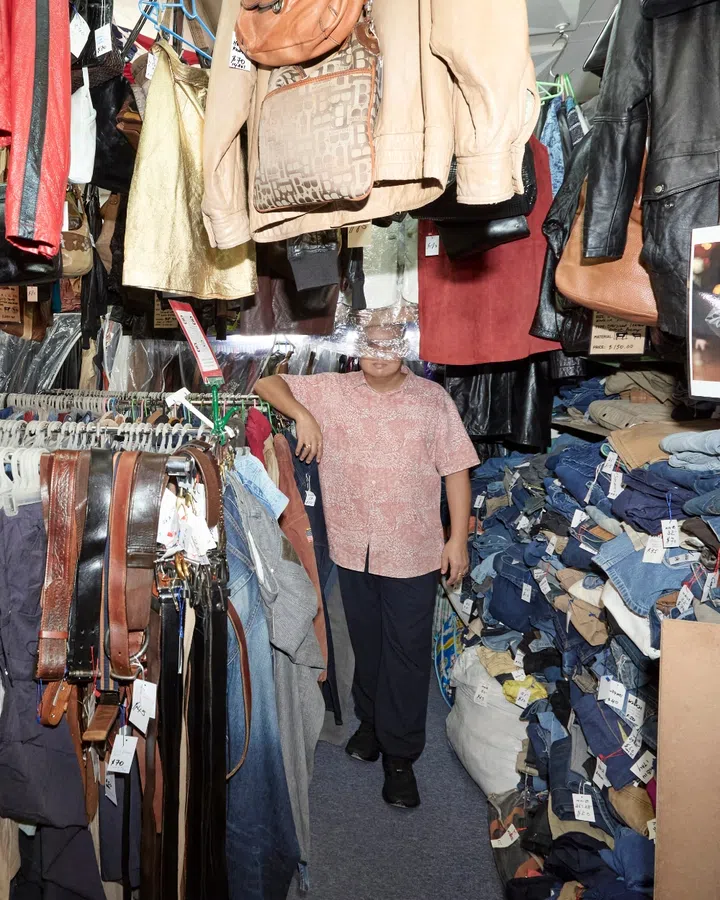
Although Ashitagaaru co‑owner David Pan (pictured above) prefers to keep a low profile, he has cultivated a loyal following for the store’s tightly curated selection of leather‑forward vintage clothes and accessories. With every piece hand‑picked, restored and ready to wear, the densely packed boutique, which was founded in the early 2000s, makes a strong case for skipping synthetic leathers for the real thing.
WHERE IT’S LOCATED: #02‑45 Peninsula Plaza
WHEN IT WAS FOUNDED: The early 2000s
HOW IT STARTED: Long before “circular fashion” became the buzzword it is today, co‑owner David Pan (he prefers to keep details about the other shareholders under wraps) began running Ashitagaaru in his 20s as a practical alternative to fast‑fashion chains. His goal: offer well‑made vintage pieces at accessible prices. The store name references a Japanese phrase that translates to “There’s always tomorrow”, reflecting Pan’s belief that vintage pieces deserve a new life.
WHO RUNS IT TODAY: Pan, who keeps a low profile (he declines to reveal his age – or have his face revealed in full for our photo), is the main curator and operator.
WHY IT HITS: Fans of distressed denim and colourful leathers will not be disappointed. The densely packed store carries a range of Levi’s jeans and sling bags that won’t break the bank (denims usually don’t go beyond $120, while bags start from $70). Its impressive selection of leather outerwear is equally affordable ($300 max usually) and all pieces are thoughtfully inspected by Pan before they hit the racks. “Each piece is carefully selected for quality, condition and hygiene, making sure it can be worn with confidence the moment it leaves our store,” he says.
HOW IT HAS KEPT GOING: “Staying focused, being adaptable and maintaining strong relationships with loyal customers are key to sustaining a retail store in Singapore,” says Pan. Besides the physical store, he has extended Ashitagaaru’s presence to Instagram and TikTok (@ashita_ga_aru for both) as well as Carousell (@ashitagaaru), sharing not only products, but also style inspo.
ABOUT THE FUTURE: Ask Pan about this and he’s only got this advice: “Focus on what you do best, curate with honesty, stay relevant and deliver excellence consistently. Passion and integrity will always speak for themselves.”
JAMAL KAZURA AROMATICS
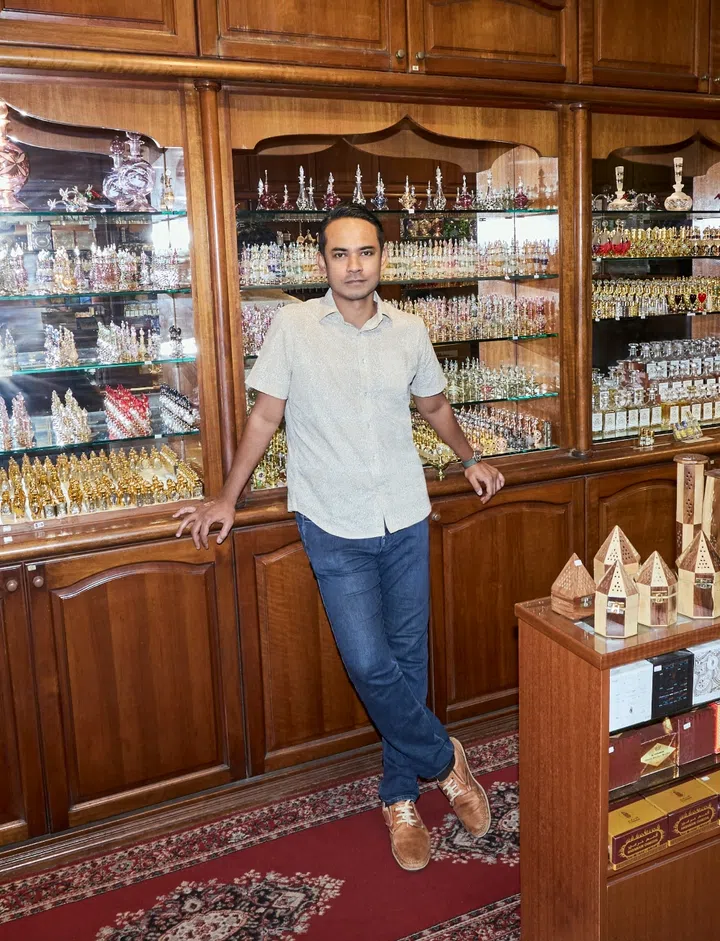
Steered by third‑generation perfumer Samir Kazura (pictured above), Jamal Kazura Aromatics continues the scent‑making tradition its founder – Hanifa Kazura, Samir’s grandfather – began in 1933. Known for its hand‑blended oils and personalised approach, the store remains one of Singapore’s most enduring fragrance institutions.
WHERE IT’S LOCATED: 728 North Bridge Road, 21 Bussorah Street and 39 Bussorah Street
WHEN IT WAS FOUNDED: 1933
HOW IT STARTED: Established by present‑day owner Samir Kazura’s late grandfather as Kazura Company, the store originally sold a variety of general merchandise, including books, clothes and perfumes. When Samir’s father Jamal took over in 1979, he rebranded it as Jamal Kazura Aromatics and shifted the focus entirely to perfumery.
WHO RUNS IT TODAY: Third‑gen perfumer Samir, 42, who joined the company after a stint in finance and is officially its general manager
WHY IT HITS: There are few places in Singapore where you can learn about traditional perfumery so intimately. Whether you’re here to create your own personalised blend or to learn about the origins of essential oils, Samir makes for a passionate guide (he made it a point to study the trade, even travelling to Europe and the Middle East to meet suppliers and master perfumers when he came on board). The signature scents in‑store are also a treat to discover – take Samir’s fave, White Amber, a mild fragrance with a woody and amber base that, in his words, “smells like nostalgia”.
HOW IT HAS KEPT GOING: Key to the business’s perseverance is a shared belief among those involved that perfumery is a craft, a heritage and a form of storytelling. In 2010, Samir and his brother Johari launched Sifr Aromatics, branching out into more contemporary, design‑forward scents. While each generation brings its own strengths to the family business, Samir stresses that its core values remain. “Whether it’s hand‑blending oils for a customer’s signature scent or sharing the history behind our fragrances, we’re always guided by the same purpose of creating something personal and enduring.”
ABOUT THE FUTURE: The likes of a stronger social media presence, curated in‑store experiences, limited‑edition fragrances, and even refining operations to improve sustainability and the customer experience are in the works, reveals Samir. “And all without compromising the artisanal nature of our work,” he assures.
THE HERITAGE SHOP
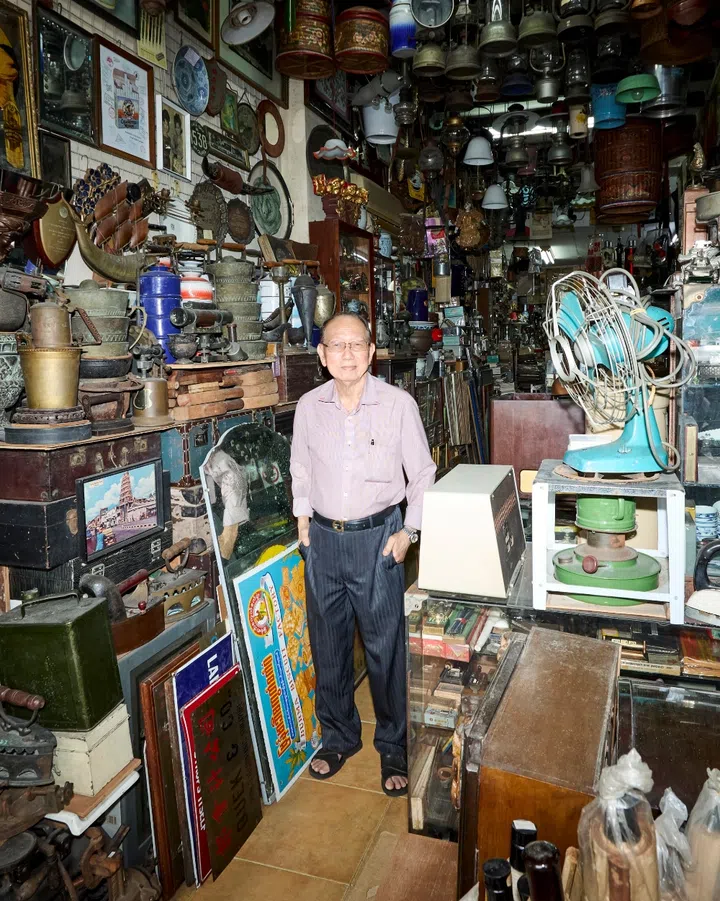
A fixture of Kampong Glam for 25 years, The Heritage Shop is the life’s work of proprietor Patrick Phoa (pictured above). Packed from floor to ceiling with everyday relics of Singapore’s past, his narrow shophouse remains one of the neighbourhood’s most distinctive cultural time capsules.
WHERE IT’S LOCATED: 93 Jalan Sultan
WHEN IT WAS FOUNDED: 1990
HOW IT STARTED: A lifelong collector, proprietor Patrick Phoa began with stamps at age 12 before moving on to historical documents and everyday objects tied to Singapore’s past. After years of garage‑sale trading, he opened the antiques and collectibles store – then called The Old Curiosity Shop – 35 years ago. A decade of relocations followed due to tenancy changes, until he finally settled at his current Kampong Glam address in 2000.
WHO RUNS IT TODAY: Phoa, 74, continues to be the one‑man‑show behind the business.
WHY IT HITS: Whether you’re a collector or a curious passer‑by, this richly decorated store is a maximalist’s dream with its mixture of highbrow and lowbrow objects that offer snapshots into Singapore’s history. Listed in the 2014 Singapore edition of Louis Vuitton’s City Guide series, this humble store has seen its fair share of private collectors, local celebrities and prominent figures wandering through in search of a collectible.
HOW IT HAS KEPT GOING: For all his wares, Phoa is a pragmatic businessman. “When the economy isn’t doing well, I’ll be selective and forgo some things from my personal collection to an interested buyer if the offer is reasonable,” he reveals. “Antiques and collectibles aren’t necessities, but collectors will still be keen to acquire certain valuable pieces … And it’s important to have loyal customers who pay on time and are respectful of the heritage items.”
ABOUT THE FUTURE: “Passion comes first, not making money,” says Phoa when quizzed about his plans. “You’ve got to know what to recommend to customers, where your sources are from and what’s worth collecting. I live by this Hokkien saying that translates to, ‘It’s better to endure short‑term pain instead of long‑term suffering’.”
ALL INTERVIEWS HAVE BEEN EDITED FOR BREVITY AND CLARITY.
This article first appeared in Volume 5 of F ZINE.
ART DIRECTION JONATHAN CHIA PHOTOGRAPHY LAWRENCE TEO