
Eat, Hex, Love: So, Everyone’s a Witch Now?
From tarot readings to witchy dressing, Gen Z is getting into witchcraft. But is it spiritual awakening, a search for control, or just another internet aesthetic?
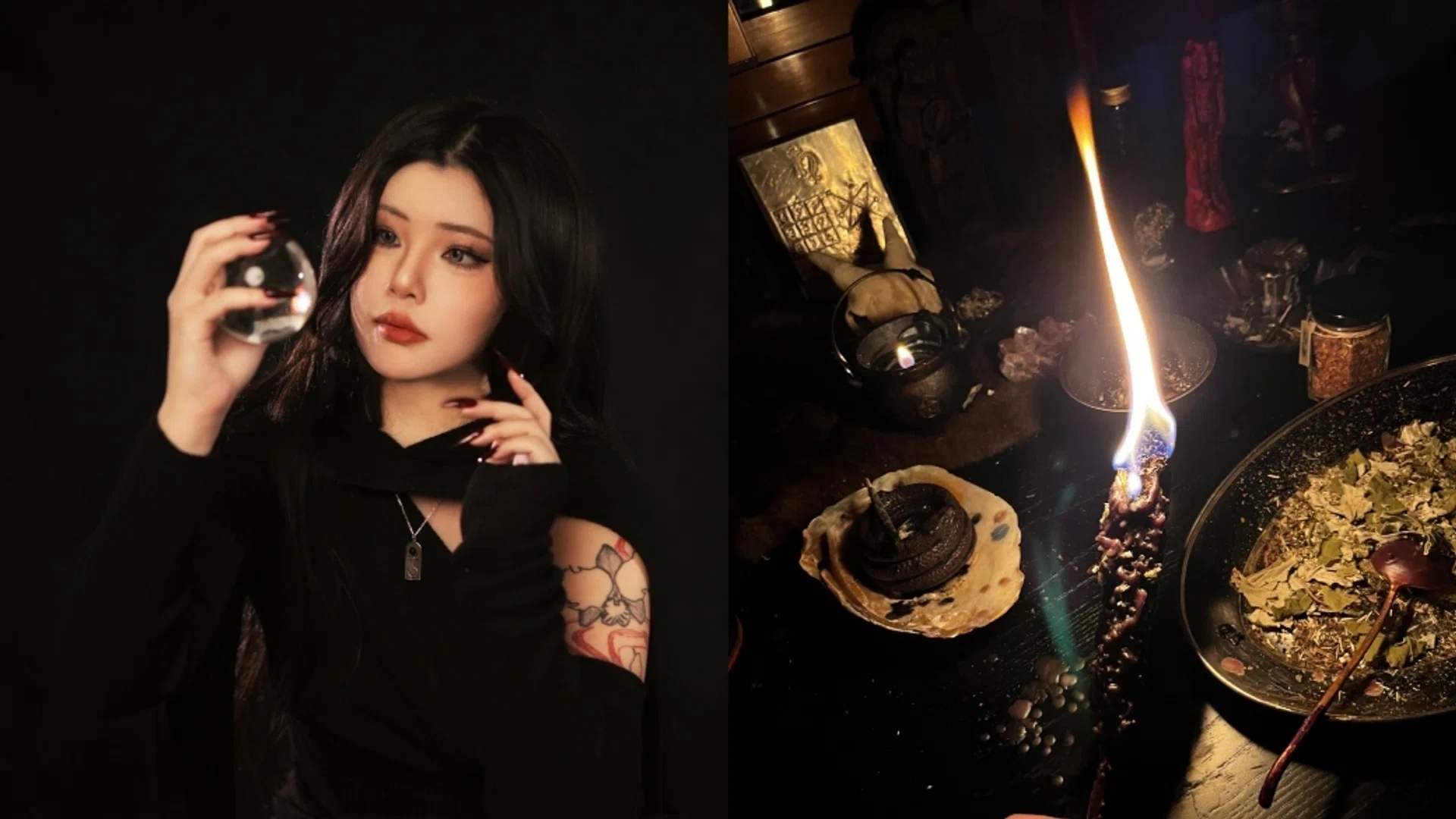
One TikTok creator recently demonstrated a supposed love spell: write your beloved’s name on a piece of paper, write your own over it, kiss the paper and spritz it with perfume. The ritual, which claims to attract someone’s affection, has already amassed over a million views.
You can find more spells on #WitchTok. From attracting money and success to making your avoidant boyfriend obsessed with you, there are spells that proclaim to do pretty much anything. (We all saw how an obsession spell worked out in the biggest horror film of the year, right?)
Through #babywitch, seasoned practitioners offer tips to beginners, while #etsywitch videos point viewers towards witches-for-hire offering their services, claiming to help you secure a job to ensuring good weather on your wedding day. And if you don’t want to do the spellwork yourself, there’s always manifestation. Think Dua Lipa’s approach to making dreams come true, or the popular motto of “delulu is the solulu”.
The fascination with witchcraft extends beyond TikTok. In its 2026 Hobbies Trend Report, Pinterest says that searches for “learn astrology” have increased by 733 per cent in the past year. Searches for “crystals and meanings” and “tarot cards for beginners” are up by 606 per cent and 558 per cent, respectively.
So what’s behind Gen Z’s growing interest in the occult? For some, it’s about finding guidance in an uncertain world. For others, it’s a way to explore their identities, connect with like-minded people or simply have a little fun.
“Gen Zs are growing up in a time when information about spirituality, tarot, and witchcraft is much more accessible,” says Geeta Sreevardhanan, founder of Maya, a spiritual wellness studio in Kampong Bahru. Having offered tarot readings and energy healing in Singapore since 2024, she has noticed a growing openness among younger clients. “There is less hesitation about exploring something that might once have been considered taboo or unconventional.”
Narayanee Singaram, founder of divination business My Grandmama’s Secret, which offers tarot readings, mirror scrying and custom creations made with herbs, crystals and oils, has noticed a similar shift. She says younger clients are increasingly turning to these practices for comfort amid climate anxiety and global instability.
But the questions they bring to their readings are hardly otherworldly. “Love and career are still the two biggest topics!” says Sreevardhanan, who often fields questions about relationships, post-graduation uncertainty and whether it’s time to leave a job.
Singaram gets asked about dating, too, although she refuses to cast spells that manipulate or harm other people. “For me, love spells are reimagined entirely as self-love rituals,” she says.
Pearlyn Siew, founder of Transmission Wellness, which offers intuitive guidance, energy work and aura readings, finds that younger clients are often looking for a better understanding of themselves. But she also cautions against treating witchcraft and divination as shortcuts to getting what you want.
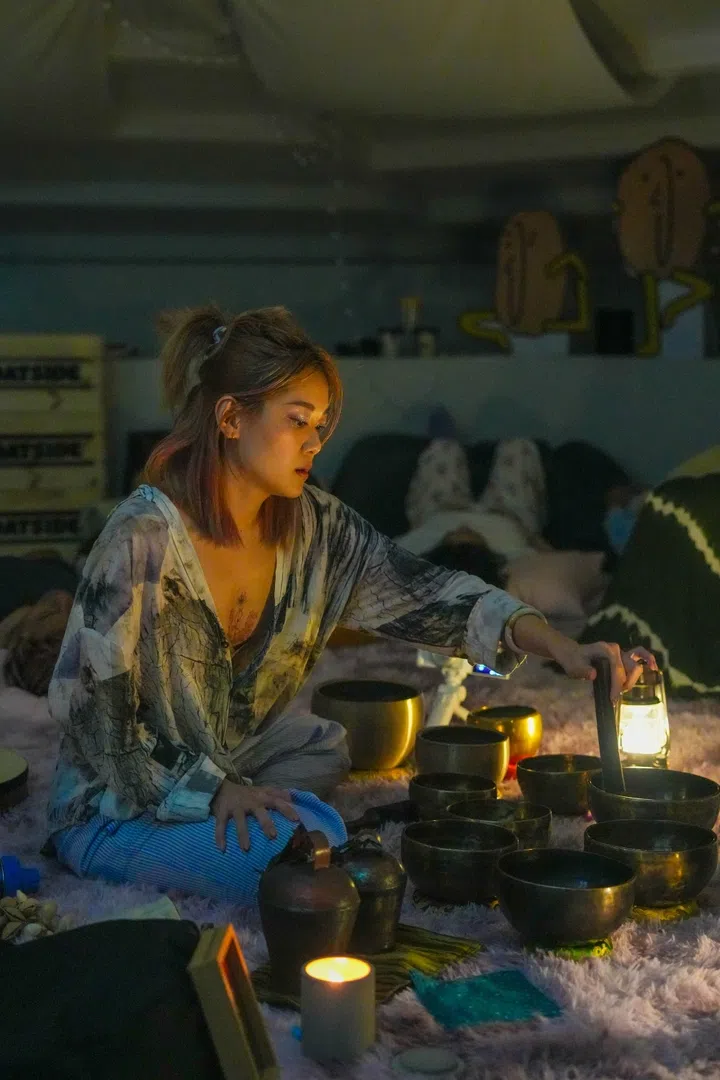
Spiritual practitioner Pearlyn Siew
“Gen Zs are a little more naive in their understanding of the craft,” says Siew, who is also an artist and yoga teacher. Many turn to these practices for quick solutions, she observes, without necessarily considering the intentions behind them.
For 26-year-old Aeri Khuoron, however, witchcraft is less about finding quick answers than taking control of her own destiny. She practises “chaos magick”, or what she sees as a personalised form of witchcraft that rejects fixed rules and traditions.
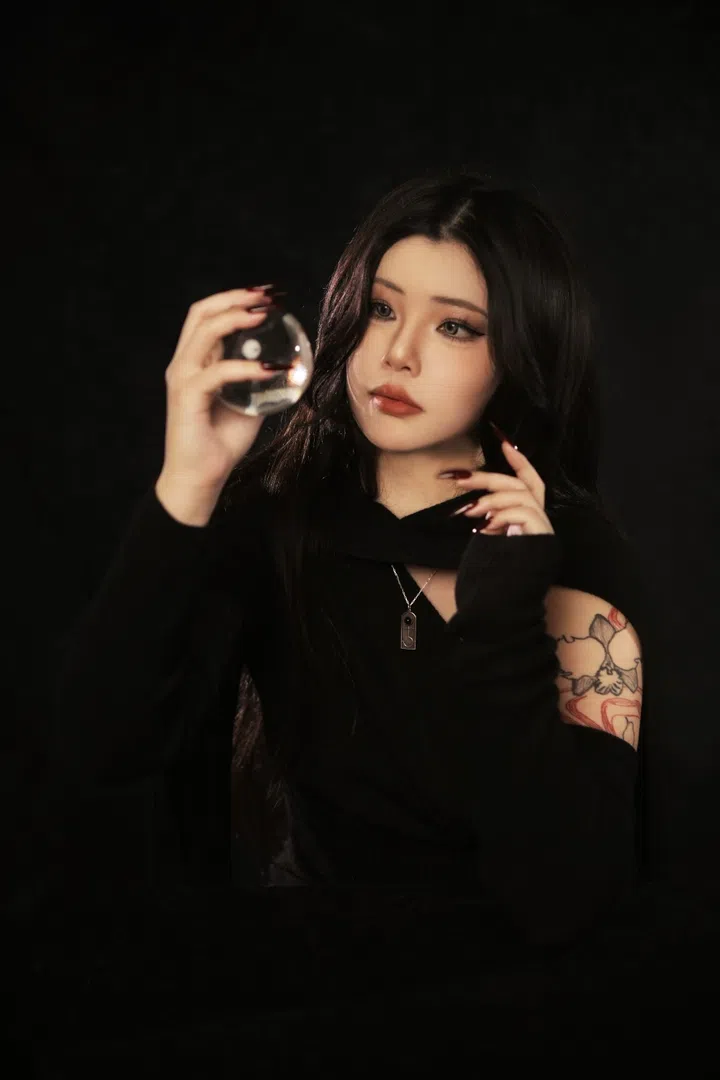
Aeri Khuoron, who describes herself as a witchcraft consultant
“Witchcraft is neither evil nor good... after all, we do not call a knife evil simply for its potential to be used for harm,” she says.
Khuoron’s interest began when she was 11, after discovering Rhonda Byrne’s spirituality book The Magic. In 2023, she launched The Kroven, initially a witchcraft supplies store that has since evolved into an online community offering workshops, rituals and book club. Although currently on hiatus, it has over 270 members.
For Khuoron, part of the appeal lies in finding like-minded people. But she also sees a difference in how younger practitioners approach their identities. “Gen Zs see the performance of their identity as a larger factor in their lives, and this is definitely more apparent when it comes to witchcraft,” she says. This can extend to dressing like a witch or curating social media profiles to appear more “witchy”.
Indeed, witches have never been more fashionable. There’s Internet’s favourite model Alex Consani who just made her TV debut as new witch Morwenna on the 13th season of American Horror Story, while Nicole Kidman and Sandra Bullock are back as sister witches after 28 years in Practical Magic 2.
Not to mention fashion power players increasingly embracing adjacent practices like tarot readings (after all, none other than Dior’s creative director Jonathan Anderson has publicly got his cards read by tarot reader Trevor Ballin).
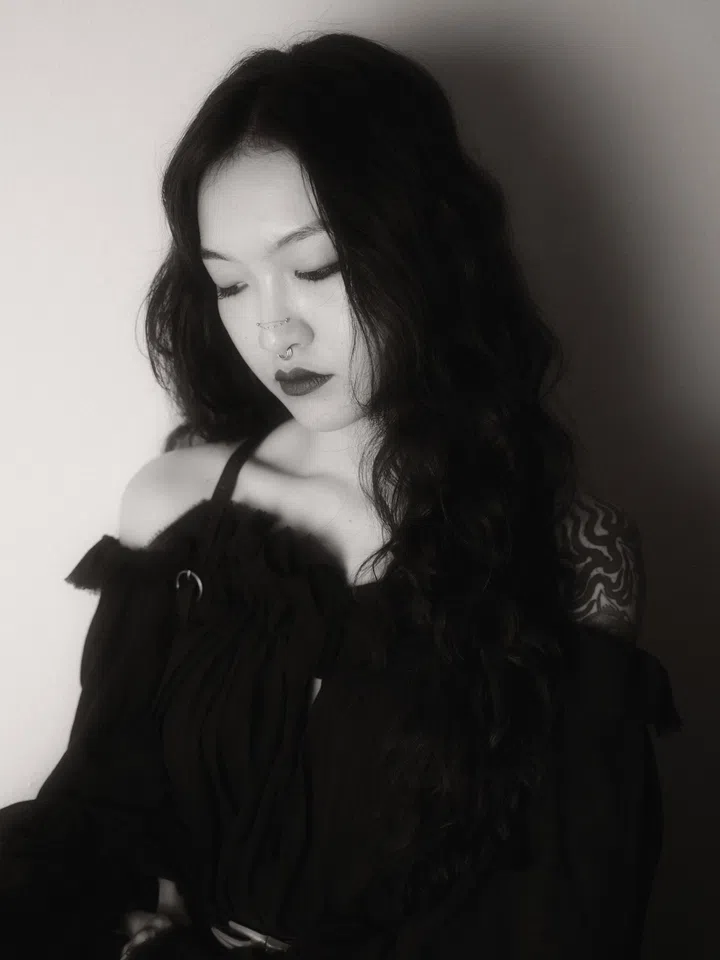
Jewellery designer Brandi Foo
For tattoo artist and designer Brandi Foo, however, witchcraft is more than an aesthetic. Through her label Thecrimsonfingers, she creates handcrafted chainmail jewellery inspired by Victorian jewellery and Gothic architecture, which she sees as a form of protection.
“When it comes to my chainmail jewellery, I see my creations as a form of armour for the body,” says the 29-year-old. “I like the idea of jewellery being more than just an adornment but something that serves as a talisman or tool for protection.”
Foo’s fascination with the craft began in her teens, when she started reading about witchcraft and learning tarot from a friend. Although she initially practised Wicca, a pagan spiritual tradition defined by a reverence for nature, her beliefs have since evolved.
“Over time, my beliefs and practices evolved as I realised I could carve out my own path rather than label myself under a particular religion or tradition,” she says.
Unlike the spellcasters on #WitchTok, Foo prefers to keep her practice private. Still, she sees the platform’s popularity as a positive development, helping to make witchcraft more accessible and less stigmatised.
Not everyone is convinced that greater visibility is necessarily a good thing. Singaram believes the trend risks reducing a complex spiritual practice to an attractive aesthetic, while Sreevardhanan wonders whether social media has created a simplified picture of witchcraft.
“There’s so much more to it than beautiful altars, crystals, and aesthetically pleasing rituals,” says Sreevardhanan.
Khuoron, meanwhile, appreciates the impact of #WitchTok, even if she thinks it has made witchcraft less likely to be taken seriously. “I would rather we be laughed at than feared. It’s the lesser of two evils,” she says.
For practitioners who grew up facing judgement, this shift matters. Singaram recalls experiencing loneliness and “intense societal judgment” for being a witch when she was younger. She sees the figure of the witch as a symbol of female independence, particularly given the historical persecution of women accused of witchcraft.
Khuoron, for her part, wants to dispel lingering fears surrounding witchcraft here. “What I really want is to make witchcraft unstigmatised in Singapore, and turn it into a recognised practice,” she says. “But to do so, I don’t want to just open up a normal witchcraft store. What I want is to open up a cafe lounge alongside that, so that people can come in and make it their third space.”
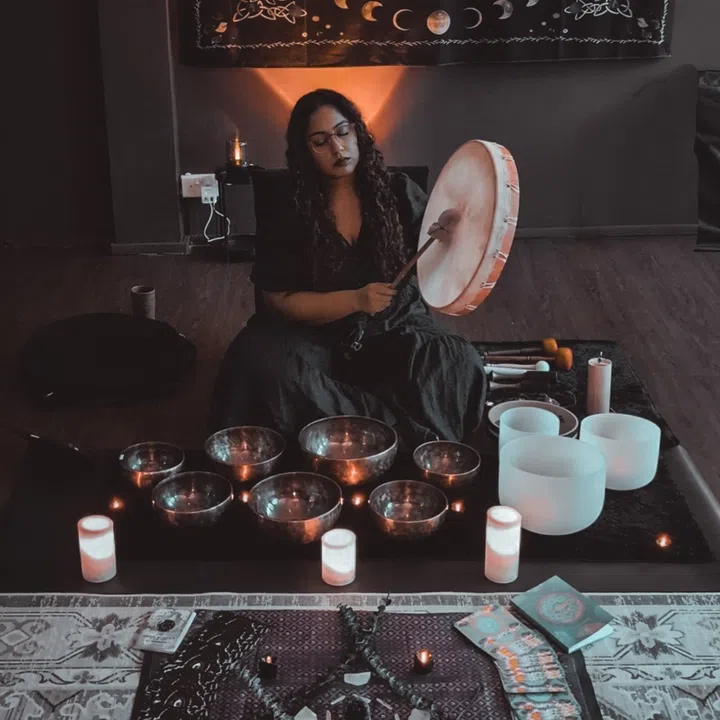
Inside Sreevardhanan’s spiritual wellness studio Maya, where she hosts meditative gatherings centred on the full and new moons
At Maya, Sreevardhanan is cultivating that sense of community by hosting meditation sessions and gatherings during the new and full moons. “A big part of what I do is creating a welcoming, non-judgmental space where people can explore spirituality, reconnect with themselves, or simply take a moment to slow down,” she says. \
Singaram, too, encourages taking the search for life’s answers offline. “When you let an online video make your choices, you rob yourself of the growth that comes from navigating life’s difficulties,” she says.
“My advice for beginner witches is to balance your online consumption with offline reality,” she continues. “Use social media as a tool for inspiration, but do not let Internet algorithms dictate your life. Focus on grounding, building a relationship with nature, and most importantly, building a deep relationship with the self.”