
This Artist Makes Objects From What She Finds In Nature
Artist Jean Low crafts objects from what she finds in nature, using foraged and discarded materials to shape a practice that values process over product.
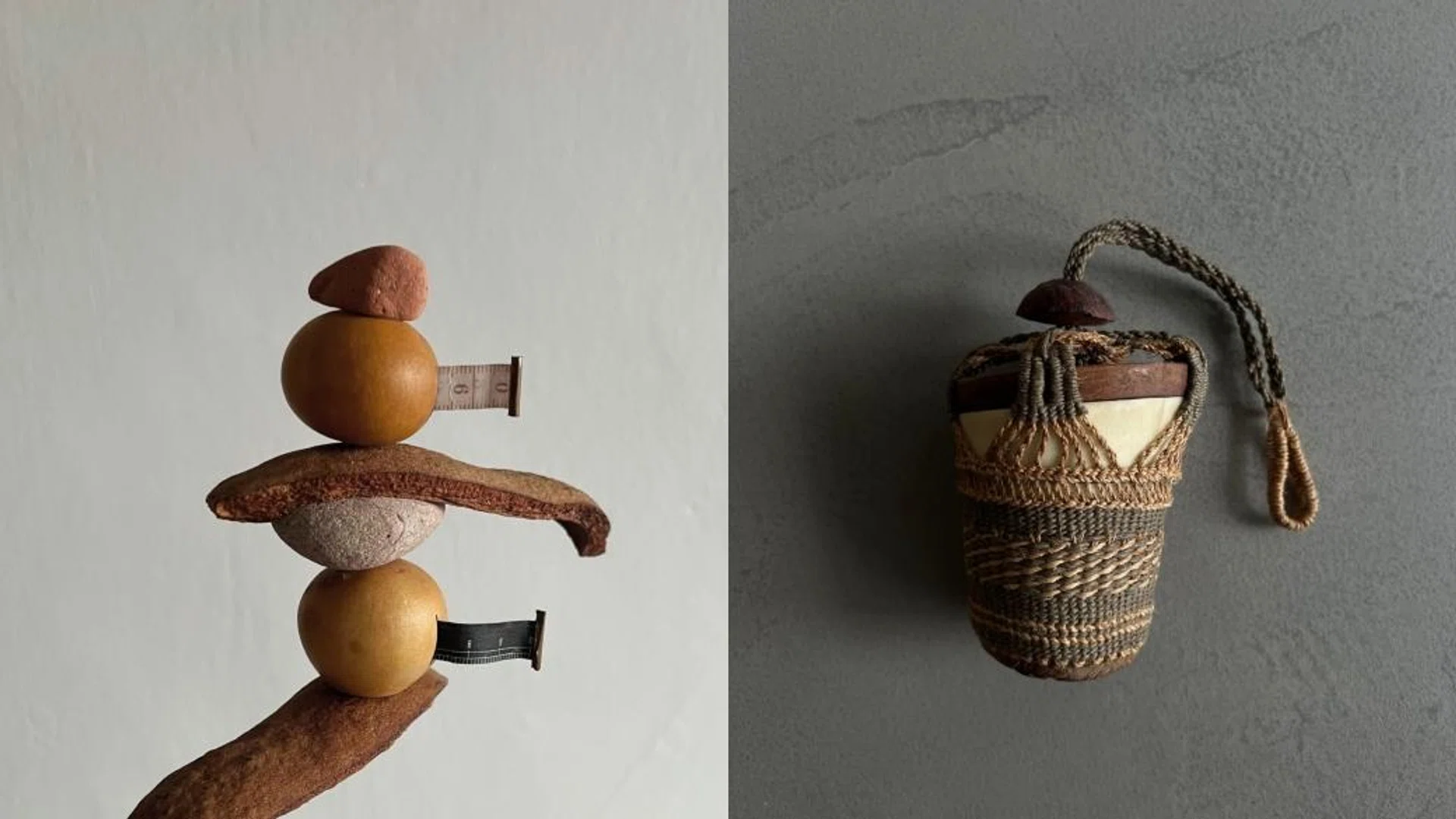
Materials found in nature are a common denominator in Singapore artist Jean Low’s work – fitting, given that she started on her craft journey in 2022 when she took up a bamboo joinery apprenticeship in Bali and found that she enjoys making things by hand.
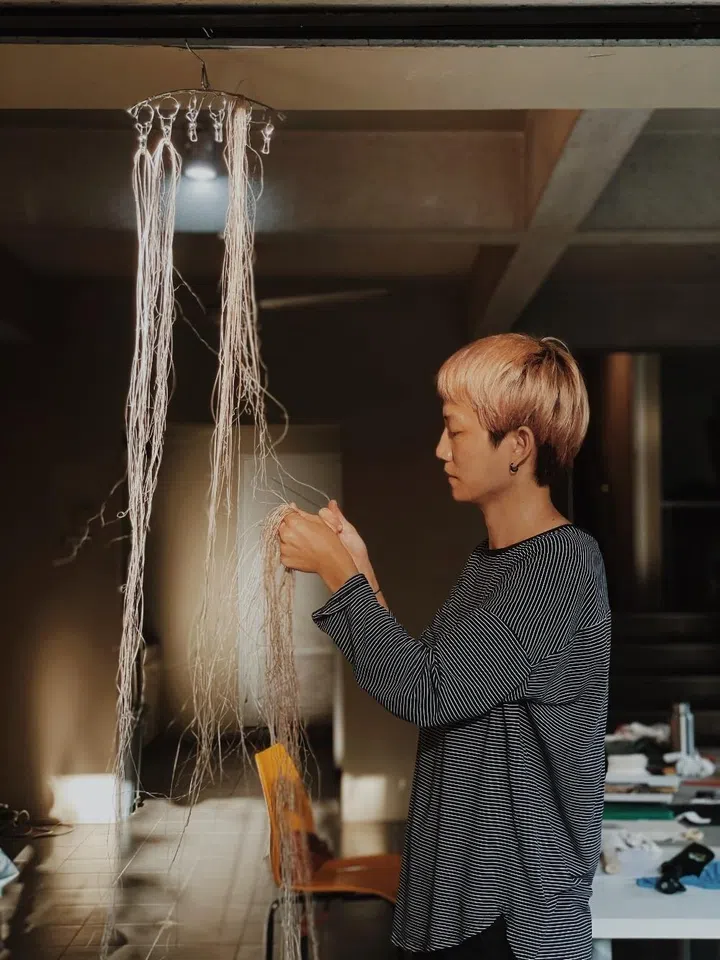
Artist Jean Low
Documenting her making process on the Instagram account Dying Trades, she has created the likes of acorn‑shaped measuring tapes out of salvaged teak and earthy pouches fashioned out of palm sheath. The natural quirks of the materials – mostly foraged from Singapore’s parks and beaches, or donated by friends – guide her creative process, and she even uses a home‑made blend of pine sap, beeswax and charcoal to glue things together.
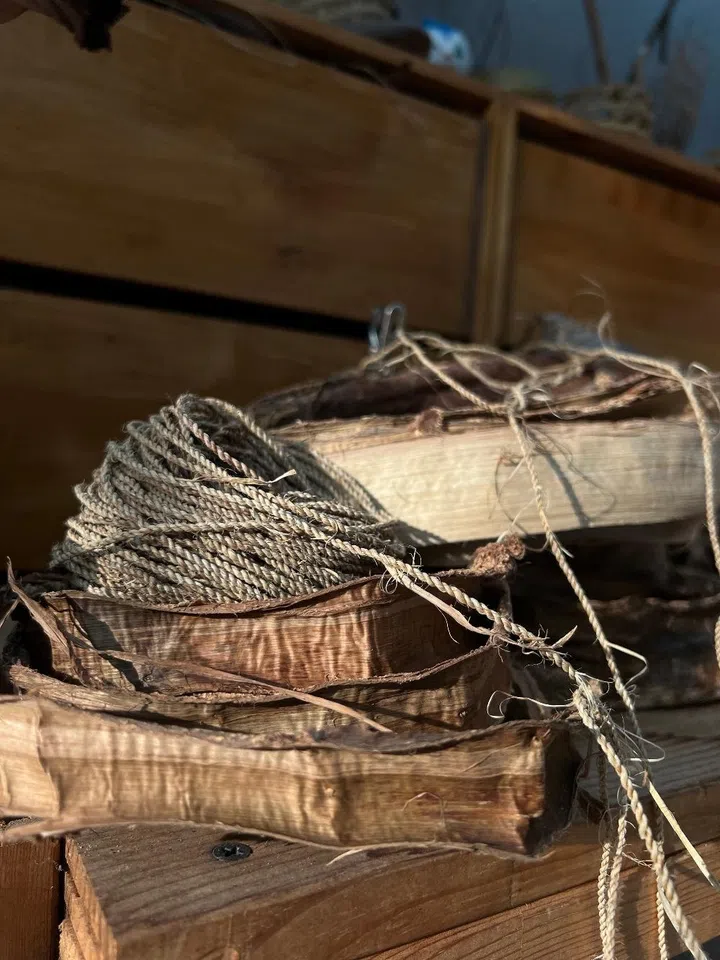
A look at some of the raw materials she works with: in this case, acacia bark, which Low eventually turned into cord
To her, this vernacular approach to craft is restorative for both her mental well‑being and the environment, and fosters empathy for the craftsman. “I think that’s what people have lost: the understanding of what it’s like to make your own things,” she says.
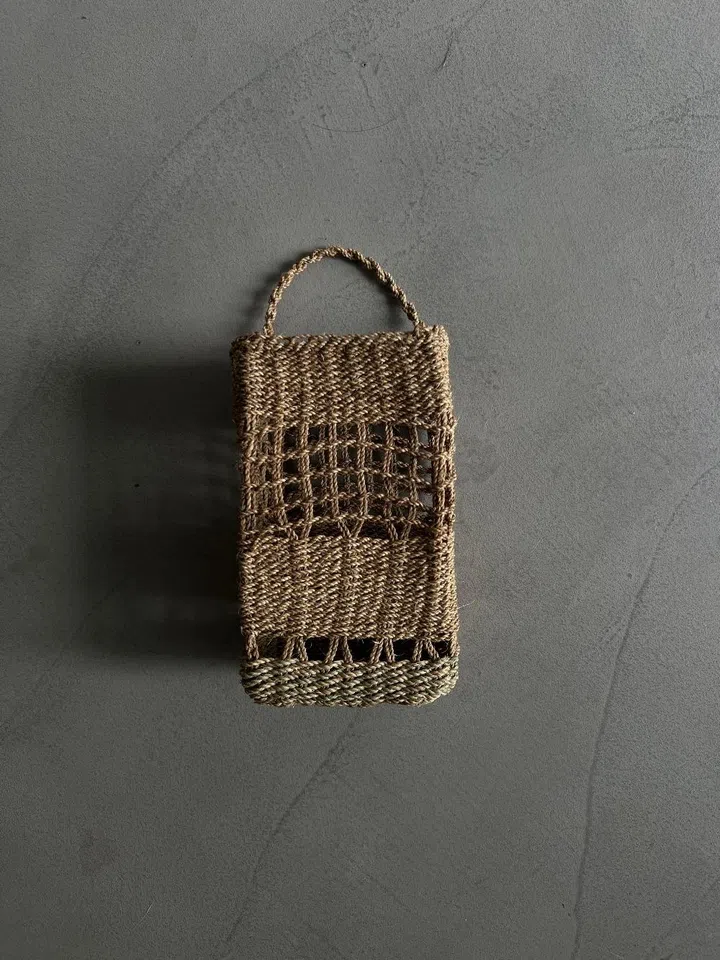
From acacia bark to a woven basket
It’s why she refuses to put a dollar value on her creations despite multiple enquiries. Instead, those interested in her work are invited to workshops in which she’ll walk them through how they’re made. The way she sees it, the real worth of an object lies in not what one takes home, but this sharing of knowledge and time – and the connections made through it.
Here, Low shares more on her process:
Hi Jean! You describe your practice as vernacular craft. What does that mean to you?
“Vernacular craft is essentially things made by people, for people—rooted in daily life. Not ‘art’ in a formal sense. A lot of modern ideas of craft came after industrialisation. Traditionally, if you made a chair or basket, it was just part of life. It wasn’t about external validation or value systems. For me, experiencing that kind of making was profound. Before this, I was a musician, designer, artist—everything is always measured in some way, or performed under an external gaze. But in vernacular craft, making is just a way of being. I make because I enjoy making. That’s it.”
On your Instagram page, you talk a lot about working with local materials. Why is that so important to you?
“Partly it started from curiosity, but also from thinking about colonial histories and how we tend to look to the West for benchmarks—even in art and performance. But there is so much here in Southeast Asia already. The level of craft and artistry is incredible, but often undervalued. That made me curious about what actually grows or exists in Singapore itself. What materials are around us that we overlook?”
So you mostly work with found materials?
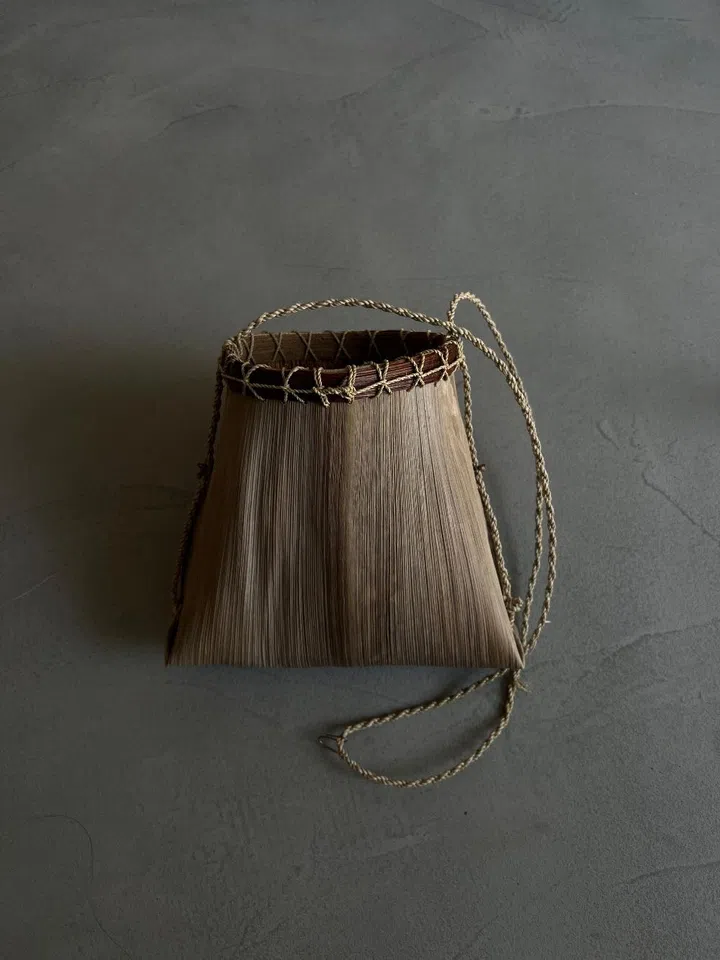
A container made out of palm sheath, found on walkabout sessions in Geylang East
Yes, primarily found materials. At first it was necessity—at places like parks I couldn’t harvest freely, so I started working with what no one pays attention to: weeds, discarded plants, materials people don’t care about. Over time, it became a conscious practice. Singapore clears its greenery so quickly that there’s a constant cycle of removal. But that also means there’s abundance—if you know where to look.”
Do share!
“I frequently check this Facebook group called ‘Art Don’t Throw’, where people post materials they’re discarding. Singapore produces a lot of waste, but that also means there’s a lot of material available for reuse. Sometimes I also do dumpster-diving, or collect materials when people trim trees, or leftovers from construction and landscaping work.”
What’s your creative process like?
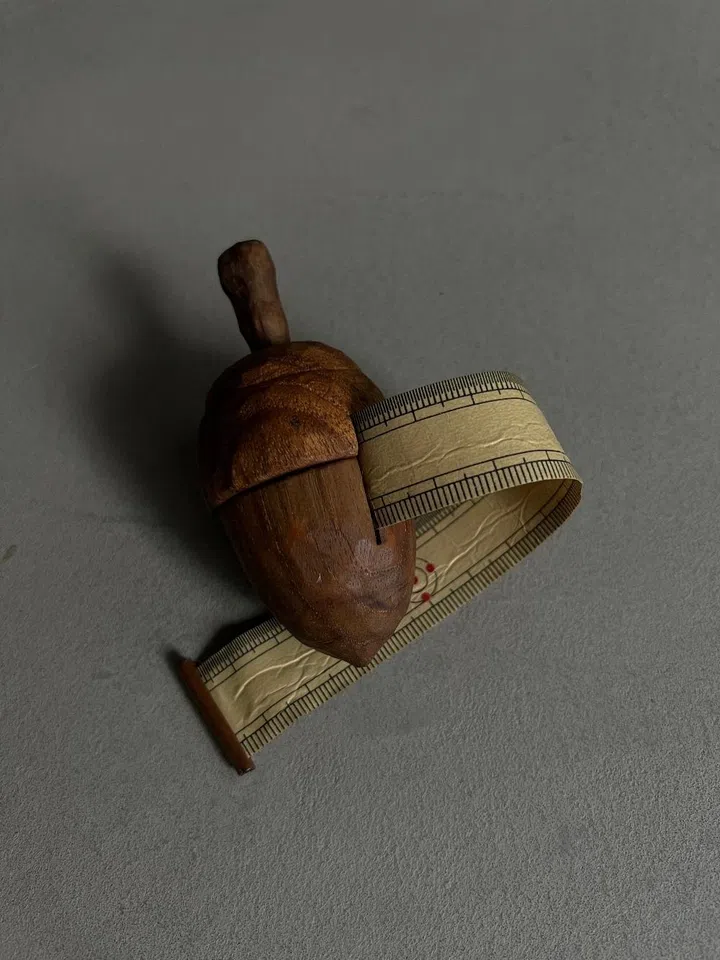
Low’s signature measuring tape, this one made with upcycled teak.
It depends. For the acorn measuring tape, I was inspired by Victorian bone measuring tools—but I didn’t have bone, so I used upcycled teak instead. I got the teak from a lady here who was renovating her house and getting rid of her wooden staircase. Sometimes I start with an idea, but often I step back and let the material lead. I try not to force a vision onto it. It’s a back-and-forth process really—observing, responding, and letting the material guide the outcome.”
What do people misunderstand about craft?
People generally appreciate craftsmanship, but many don’t understand the actual cost of making things. They see the object, but not the labour behind it. I saw this clearly during my apprenticeship—how little artisans are often paid relative to the work involved.
One workshop participant once told me she didn’t realise how much effort went into something that looked so simple. That stayed with me. Beyond appreciating objects, I think it’s important to understand the lives behind them—the human labour, the rhythms of making. We are quite disconnected from labour in Singapore. Craft is one way of re-learning that connection.”
Your Instagram bio says “regenerative making is healing.” Is that what you mean?
“That is a personal experience for me. Traditional crafts have roots in indigenous practices. Working with nature requires ‘sensing’ and listening to the material, which I find incredibly healing for the mind. If we are open to listening, nature teaches us a lot. This practice restores social systems because the indigenous way of life subverts the transactional way the world currently operates on. I invite people into my process so they can experience the same transformation.”
How can people purchase your items? I imagine there must be many who are interested.
“I know I can sell the work, and I know there’s a certain demographic that can afford it. But what felt more important to me was helping people understand the process of making. I was recently invited to take part in a market, and I experimented with how I show up with the work. And even when people asked, ‘Are these for sale, how much are they?’, I found myself inviting them instead to exchange their time—by joining a fibre gathering, sitting with me, and learning to cord.”
What do you hope people take away from your work?
“I hope people feel less intimidated. People often treat materials as too precious to touch or waste. But I want people to play more. Tear things, experiment, make mistakes. If something doesn’t become what you thought, it can become something else. There’s no need to be so serious about it.”
An adapted version of this article first appeared in Volume 8 of F ZINE.