
Jemimah Wei On The Craft of Writing
The author of The Original Daughter shares some hard-won nuggets of wisdom.
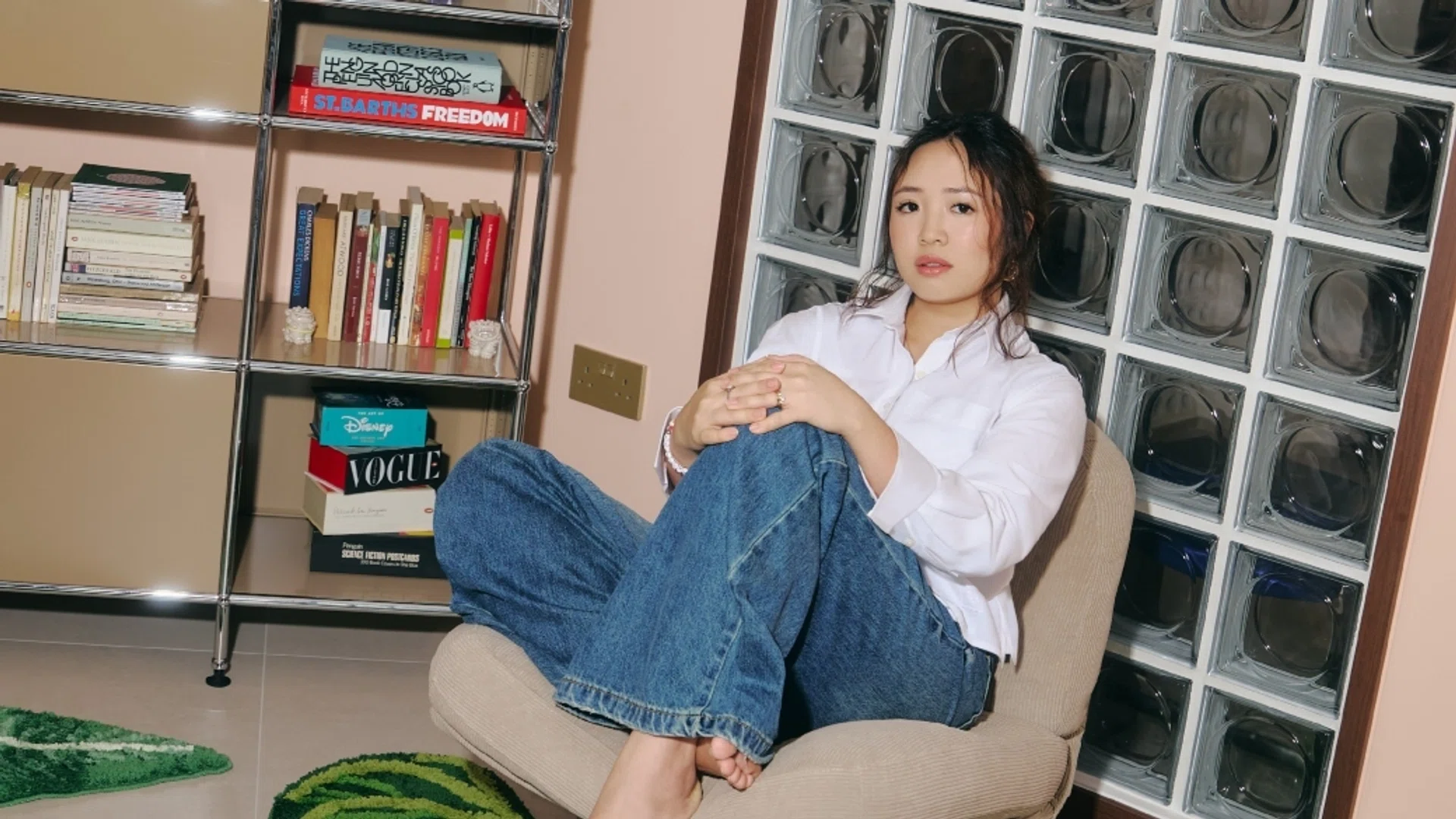
Singapore author Jemimah Wei spent 10 years writing The Original Daughter. A year and a half after its release, her unflinching debut about two sisters coming of age in working‑class Singapore continues to resonate with readers. A guest at the recently concluded Singapore Writers Festival, she talks Keng Yang Shuen through the craft – and the business – of writing a book.
HAVING A ROUTINE HELPS
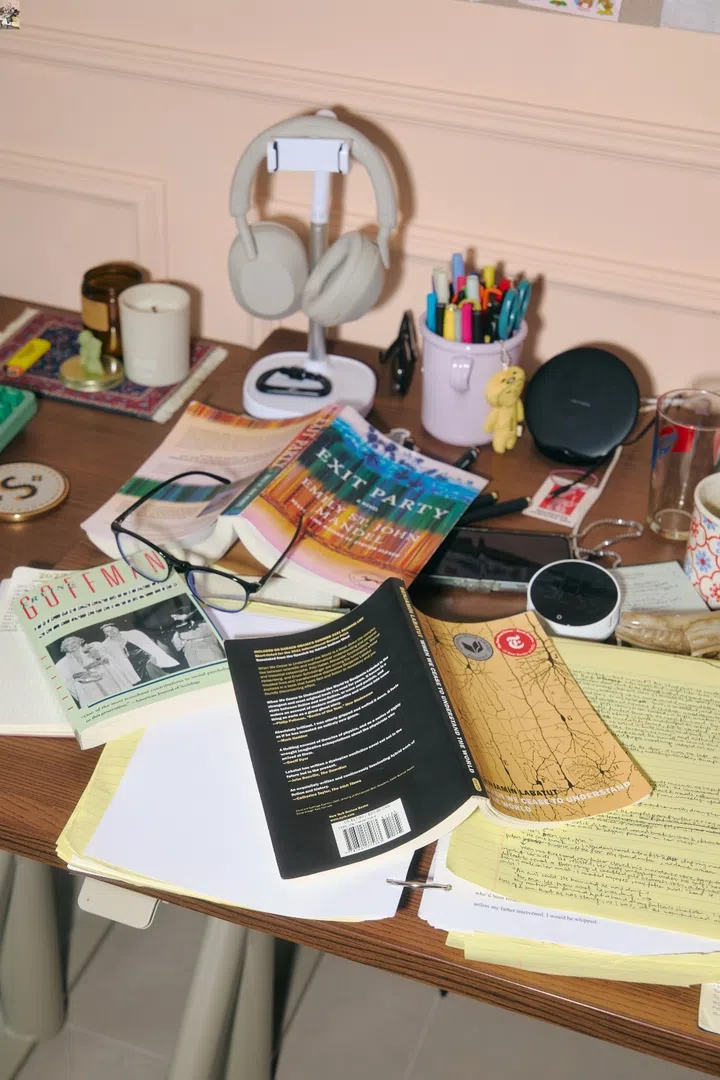
A voracious reader, Wei gravitates towards stories about people honing their craft, such as Benjamin Labatut’s When We Cease to Understand the World.
“I almost always start my day by reading either interviews or essays by other artists – writers, film‑makers, photographers, composers – or poetry, or non‑fiction, or scripts. I try not to read from the same form I’m working in, so, for example, if I’m working on a short story, I reserve reading short stories for after work.
Then I go over my work from the previous day, make notes for myself, and try to write for three or four hours, using a kitchen timer on my desk. I stop on and off to check on things, or to try and puzzle out something in the story in a separate document from my main manuscript, but the idea is not to switch tasks until either the time is up or my word count for the day is hit. I talk aloud to myself a lot and I find it difficult to write to any sort of music, so I either put on some brown noise or a YouTube video of someone else typing on a keyboard…
I give the first fruits of my day to writing, and only after that do I allow myself to check emails or deal with life‑slash‑work tasks. What I’ve described here, though, is my ideal writing day. In reality, because I live between Singapore and New York, and because where I am geographically depends on what opportunities are available to me – for example, at the point of this interview, I’m in a residency in Idaho – and because I’m often besieged by deadlines that I need to meet in order to get paid, make rent, be a functioning adult in the world, et cetera, it’s not always possible to have the exact same set‑up or routine throughout the writing process. I also don’t want to limit myself by thinking that I can only work best if I have X, Y or Z. I try to just make it work wherever I am.”
DRAW A LINE BETWEEN LIFE AND FICTION
“From real life, I tend to draw from the emotional atmosphere, tiny character traits, whether physical or relational, and beliefs or attitudes. For The Original Daughter, I tried to include specific things that I felt were slipping away from our present realities, that were precious to me – those ixora clusters, studying in McDonald’s.
The immense stress of being in a hyper‑competitive education system – I guess that bit isn’t slipping away. But I very rarely, if at all, use an actual event or detail from my real life. I find that kind of factual truth to be constraining rather than energising, so the line tends to draw itself.”
KNOW WHEN TO STOP TINKERING
“I’m not sure that you can ever really stop tinkering with your writing. Before anything is published, I do feel like it can still be infinitely better. And so I keep lingering in that space, trying to get it closer to that vision I have of a perfect piece. But at some point, you can’t look at it without feeling sick, I guess. And by that point, tinkering is really just that – tinkering. If you’re not doing structural, developmental edits, and you’ve spent six months moving a few commas around, it’s time to cut her loose.”
BEING A WRITER MATTERS MORE THAN EVER
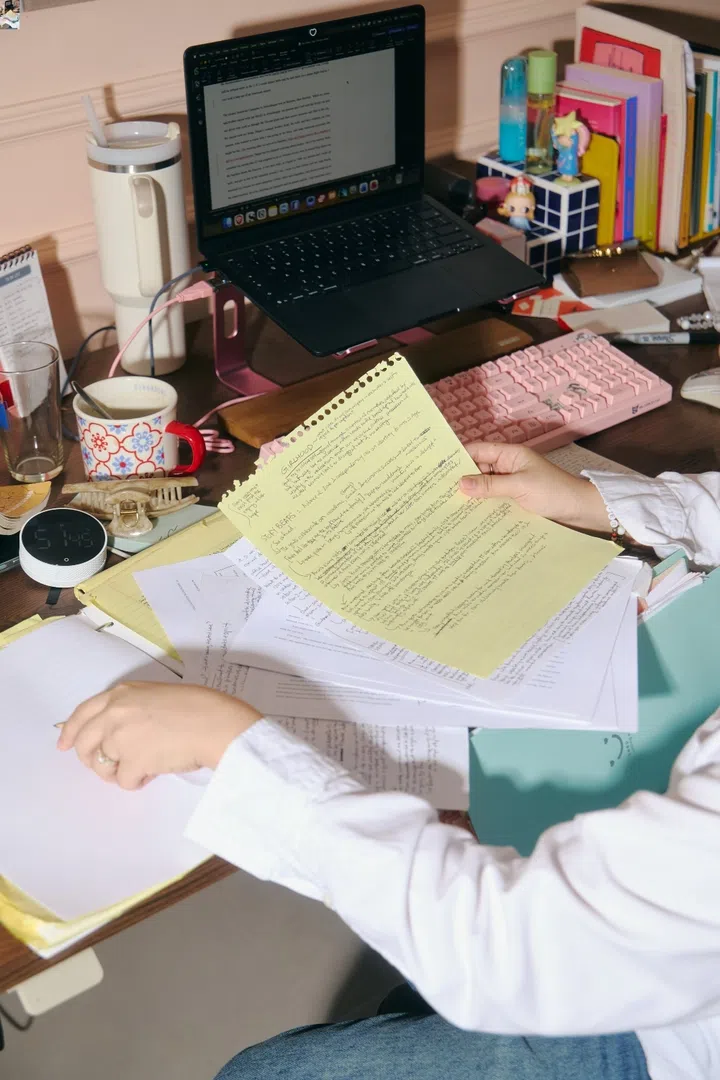
Wei poured years into her bestselling debut novel, The Original Daughter, which took on many lives before hitting shelves – as seen in early drafts seen here.
“I think being a writer makes you more vividly immersed in life. It’s like all your nerves are exposed and you’re flying with both eyes wide open on 15 cups of caffeine. I’ll tell you what makes it hard to live in the moment: big tech and artificial intelligence (AI).
Who hasn’t heard the sneaky siren call of their phones worming through their brains whenever they experience a moment of boredom or discomfort? Who isn’t familiar with the sea of bowed heads craning over their phones in a train cabin? But that’s a distraction on the micro, daily level… The times we’re living in – of geopolitical crisis, of global despair – this is our moment too. And I think that’s why AI is so dangerous – specifically generative AI, or AI chatbots – because I think it limits the framework of your thoughts and habituates us to a kind of instant emotional salve.
It’s bad enough when you can tell someone used AI to write their Instagram captions, but sometimes I catch people talking out loud, in conversation, using reasoning models that come with being so immersed in LLM (Large Language Model) use – models geared towards affirmation and comfort – and it reminds me of (George) Orwell’s 1984, where control of vocabulary is the first step towards controlling one’s thoughts. Defaulting to the seductive mental comfort of doomscrolling or the easy solution‑oriented logic of AI is a way of turning away from wrangling with the complex, unanswerable problems of what it means to live today as a human in society. There is no easy answer to those things, it is ongoing and exhausting, but it is our moment.”
CUTTING MATERIAL IS NOT ALWAYS PAINFUL
“There was a princess cake scene I had in my early drafts of The Original Daughter, which I had purely for sentimental value… When I was a kid, I wanted one of those princess cakes where the top half is an off‑brand Barbie and the bottom half is a cake skirt, but they were kind of expensive, so I never had one. Now they’re out of fashion and I never see them in bakery windows anymore.
So I wrote it into the book, but ultimately, it wasn’t necessary so I removed it. I don’t know that it was painful to cut it though. Maybe what’s painful is knowledge of the time you spent working on an aspect of the book that now languishes unseen in your word grave, but cutting is also liberating. The best feeling is when I go cut, cut, cut, and I can see the draft becoming leaner and more muscular.”
PUBLISHING IS NOT THE SAME AS WRITING
“Writing the book is a solitary process, but publishing it takes a literal village. They’re fundamentally different experiences. The shape of your hope is also different. In writing, you’re coming up constantly against the limits of yourself. It’s very difficult, but the struggle, solution and potential are all located in an internal battleground. In publishing, your hope lies in someone else. You hope an agent understands your work. You hope a publisher says yes to your book. You hope booksellers carry it, you hope readers pick it up, you hope people engage with it seriously. All of that is outside your control. You learn, for better or worse, to navigate your relationship to control.”
THIS STORY FIRST APPEARED IN F ZINE VOL 11
PHOTOGRAPHY ANGELA GUO ART DIRECTION JONATHAN CHIA HAIR TAN EC/KIZUKI + LIM MAKEUP SARAH TAN