
The Next Wave Of Southeast Asia’s Cultural Architects Is Here
Meet the photographers, indie bands, and curators shaking up the landscape from Bangkok to Manila. As 2026 kicks off, these seven emerging talents are using their platforms to explore marginalised histories and the beautiful, messy complexity of Southeast Asian identities.
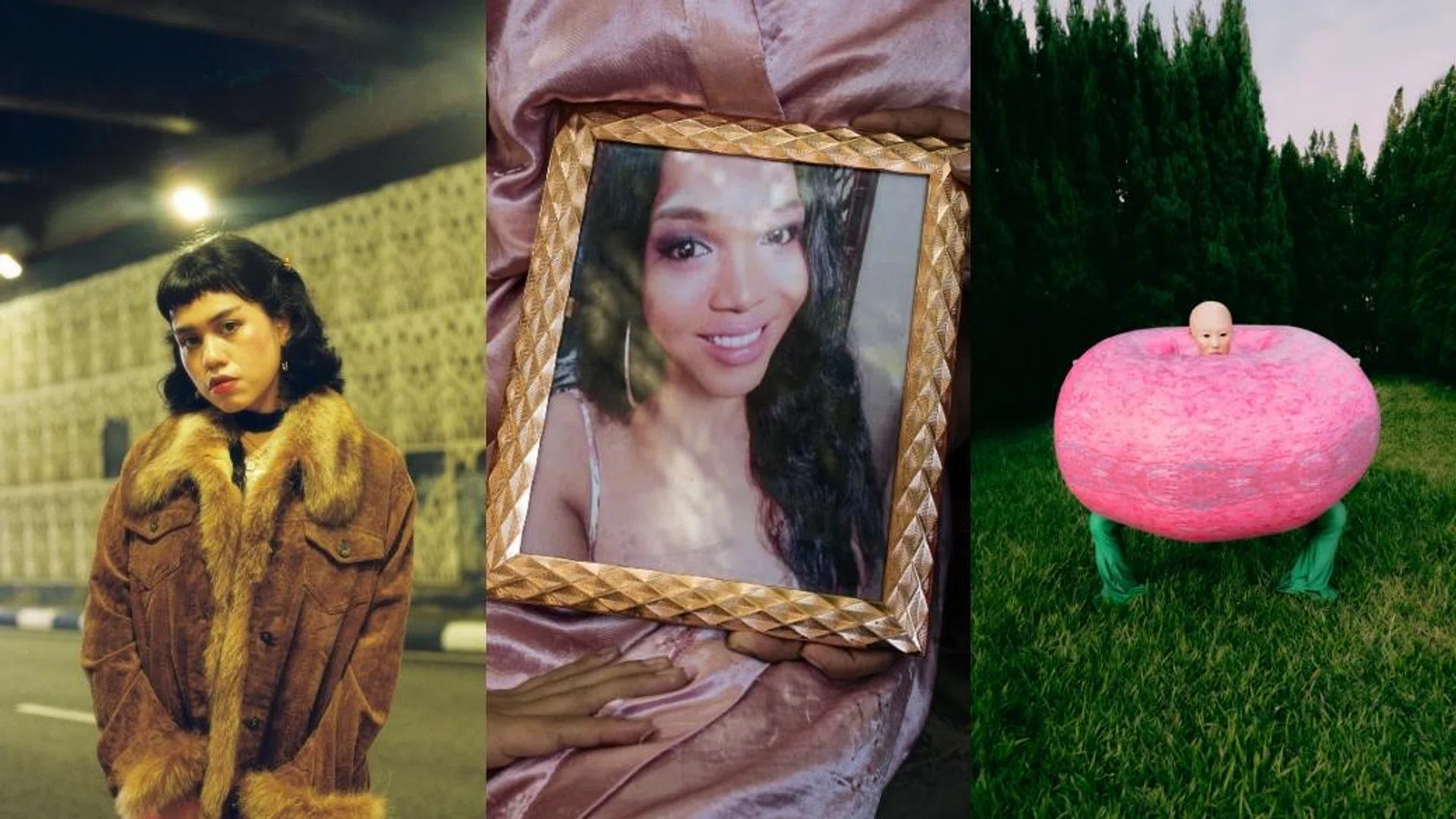
As the new year rings in, the time is ripe to consider the trends, changemakers, and hot-button topics that are going to shake up cultural scenes across the region. Creative practitioners from Southeast Asia—including the diaspora—are working across artistic mediums to reframe how we imagine the transnational cultural, religious, and linguistic diversities unique to this region.
From female-rage anthems by Malaysian indie band Hawa to Pau Villanueva’s photojournalism of ethnic communities in the Philippines, there’s a new wave of creatives using their platforms to engage with a spectrum of ideas: local concerns, marginalised histories, pressing global issues, and unexplored territories.
Below, seven emerging talents from our neighbouring countries share their work and sentiments on Southeast Asia’s creative landscape.
HAWA, ALTERNATIVE BAND
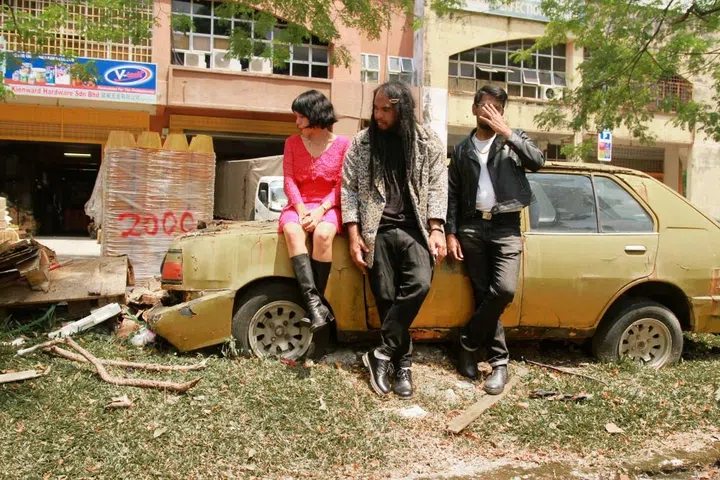
Malaysian alternative band Hawa is made up of singer Eff (left), drummer Ashraff (middle), bassist Tiinesh (right) and sound mixer Faiq (who’s unpictured due to unavailability)
Bursting onto Malaysia’s music scene is alternative band Hawa, the brainchild of multi-disciplinary artist Eff Hakim (who, for the record, is also an audio engineer, actress, and copywriter). While Eff leads the group’s creative direction and music production, she is joined by Ashraff (aka Acap) on drums, Tiinesh on bass, and Faiq as the band’s producer and sound mixer.
Formed in 2023, the four-piece emerged from a period of isolation and a desire for creative freedom after Eff left her previous label-signed band. The name “Hawa” stuck because, as Eff puts it: “It sounds like an unapologetic minah baddie rockstar who does what she wants and doesn’t care about what men or this country thinks of her.”
It follows, then, that Hawa’s sound is a femme-powered blend of high-energy influences, mixing the grit of 90s alt-rock band Hole and the poetic intensity of Mitski with the iconic spirit of Malaysian rock legend Ella. With their debut album, Terkuburnya Seorang Gadis Di Kuala Lumpur, now out in the world, the band is set to win over fans with raw, haunting tracks like “Aku Dah Mati” and “Mayat Hidup” as they head out on tour this year.
What’s Terkuburnya Seorang Gadis Di Kuala Lumpur (Hawa’s debut album) about?
“It’s an introduction to what Hawa sounds like for now: vulnerable feminine softness and hard-hitting alternative music narrated in the voice of a modern Malaysian girl who speaks of anger, sadness, and love. There are eight angsty songs that I’ve written in Bahasa Melayu and produced by myself. They declare the death of a former identity, and the setting is the streets of Kuala Lumpur. The album’s now available on all streaming platforms.”
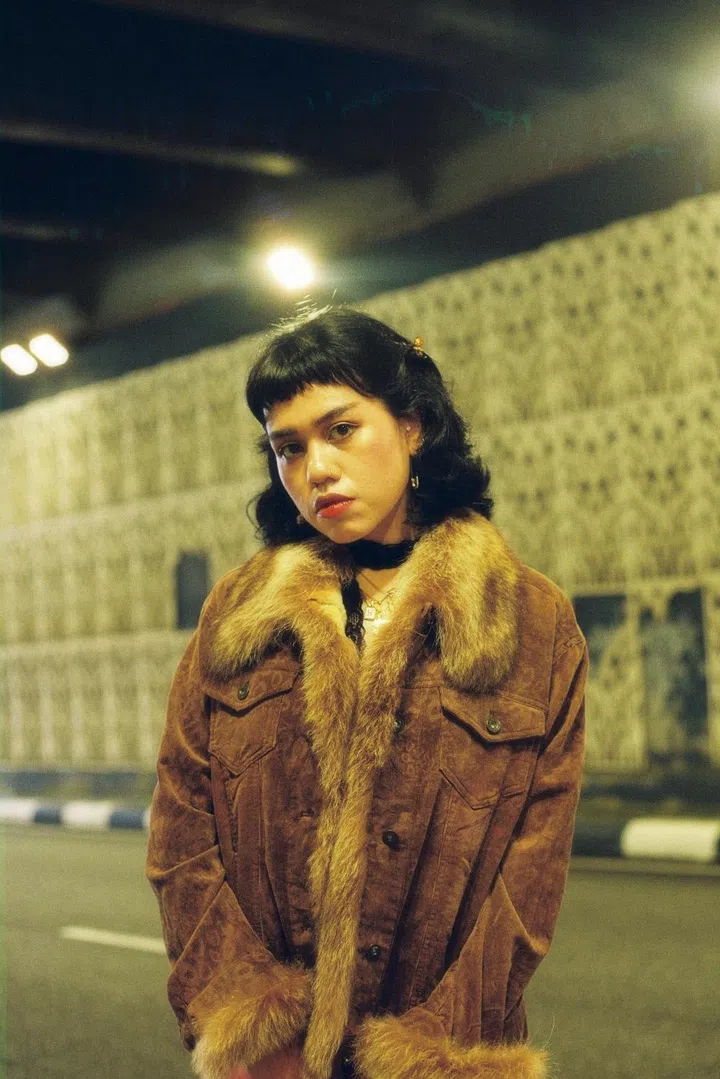
Eff’s creative solo project Hawa began as a “random side quest” in 2023 since musical expression was also a means of healing (as suggested by her therapist).
On Malaysia’s music scene:
“Right now, Malaysia has lots of amazing local acts. I think a majority of the world is sleeping on them due to the lack of exposure and local support. Our indie music community has been very passionate about giving these musicians a platform, and it shows in the rise of venue spaces as well as organisers. It truly does feel like a family here. But it’s bittersweet once you’re aware of how difficult it is to sustain ourselves as creatives in Malaysia. Honestly, everyone needs to check out more Malaysian artists.”
Her Malaysian music recommendations:
“Off the top of my head are Lurkgurl, Lunadira, The Filters, Wolgaja, Pleasantrees, The Fridays, Ava, Women and Children, Fictions, Fuad, Jetcetera, Straw, Disnoise, Judos, Bayangan, Commoderate, Islands, Solaris, Lucy in the Loo, Couple, Piri Reis, and plenty more.”
What she’s excited for in 2026:
“Watching the youth being more vocal about things that aren’t working for the country anymore. I also love seeing independent creatives just existing and advocating for their art despite the bleak reality of how hard it is to keep up creative work. Also, mental health is finally something that’s normal to talk about here in Malaysia, and it’s pretty amazing!”
WEEYANG, PHOTOGRAPHER

A fan of the unconventional, Weeyang prefers to stay behind cameras and be known synonymously with this striking shade of red.
Hailing from Kuala Lumpur, Weeyang is a self-taught photographer who, by the age of 23, has made a remarkable breakthrough in the region’s fashion industry. He has shot campaigns for Malaysian designers such as Dikson Mah, and celebrity photoshoots for the covers of some of the region’s top titles.
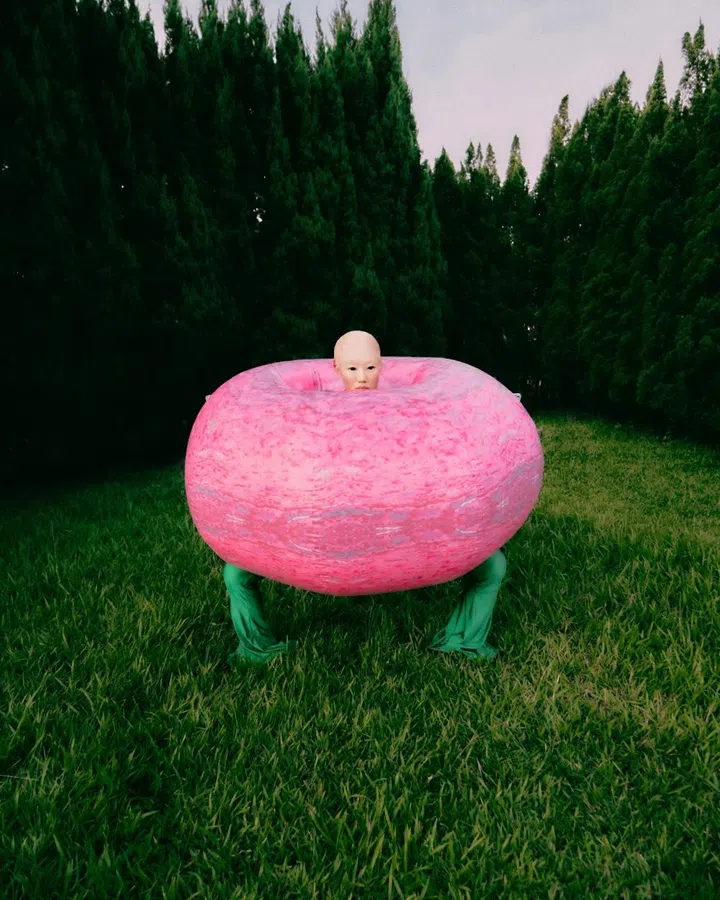
A particularly memorable shoot by the photographer.
Although formally trained in Fashion Design and Pattern Making at ESMOD Kuala Lumpur, Weeyang’s exploration of lens-based media began when he had to photograph his graduate collection. The experience of being on set and conceptualising such productions naturally drew him towards fashion photography, which quickly evolved from a hobby into a professional pursuit.
How he views his practice:
“My work is influenced by cinema and focuses on atmosphere, subtle emotion, and storytelling. I see my practice constantly evolving. I’m particularly interested in connecting cinema with fashion photography. I’m drawn to shooting on real locations, as environments play an important role in shaping the emotional tone of an image. I want to create a visual language that’s both contemporary and deeply rooted in the region’s culture.”
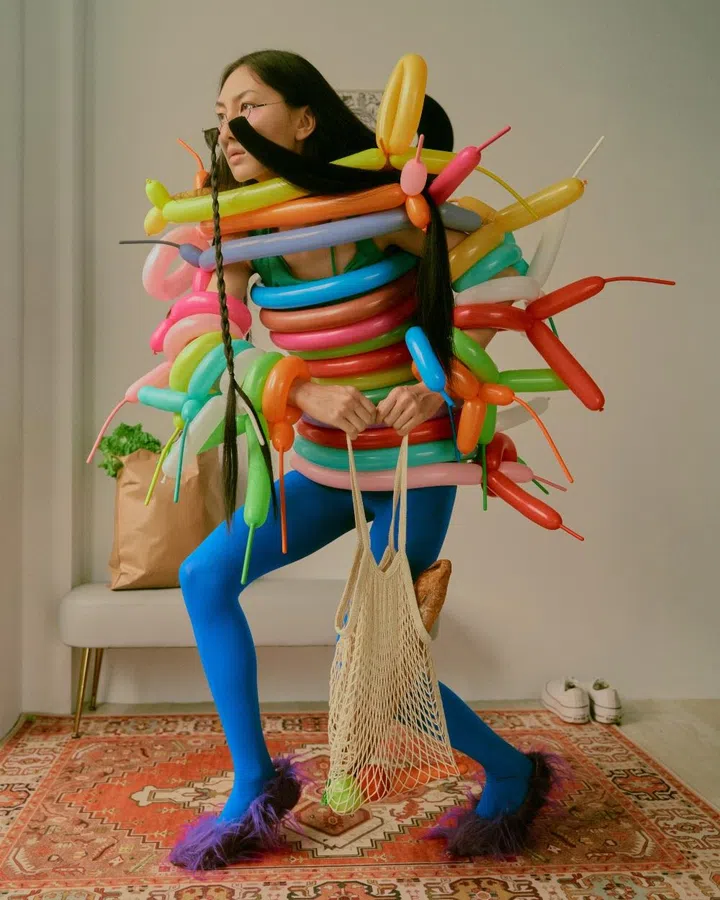
A series titled love, grocery 爱,买菜
What he’s working on now:
“At the moment, I’m scouting locations around Malaysia. I’m interested in discovering unexpected spaces—places we don’t usually shoot at. I often go on drives with friends to explore new areas, just to see if we can find hidden or unique spots. Locations are a big source of inspiration as they bring new ideas and visuals. I’m also experimenting with videos, expanding my practice from stills to motion pictures.”
Why the region’s creative scene is unique:
“Southeast Asia’s creative industries are growing fast, and one of the region’s greatest strengths is its cultural diversity—in terms of language, history, heritage, and everyday life. There’s a wealth of inspiration. In Malaysia, many still tend to play it safe and are hesitant to explore more experimental approaches in art. Yet, there’s a growing number of young creatives finding ways to reinterpret traditional practices in a modern context in their work.”
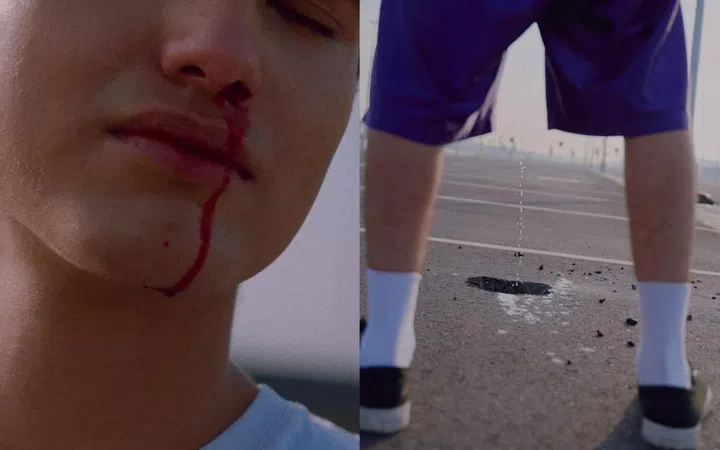
Weeyang’s photography for Tham Casting Kuala Lumpur
A regional shift he’s excited for:
“Seeing young people stepping forward to create work that’s fun, playful, and unapologetically themselves. I hope to be more experimental and risk-taking too. I feel that the world is becoming a little too serious, where many are hesitant to speak up or share their ideas because it seems easier to stay quiet and follow the crowd. It’s nice that a younger generation of creatives are pushing past fear and expressing themselves in authentic rather than performative ways. I also hope to see more interdisciplinary collaborations between creatives that exceed conventional categories. When people from different fields experiment together—while respecting each other’s roles and opinions—it often leads to projects presenting fresh perspectives.”
SETH CHEONG, FILMMAKER
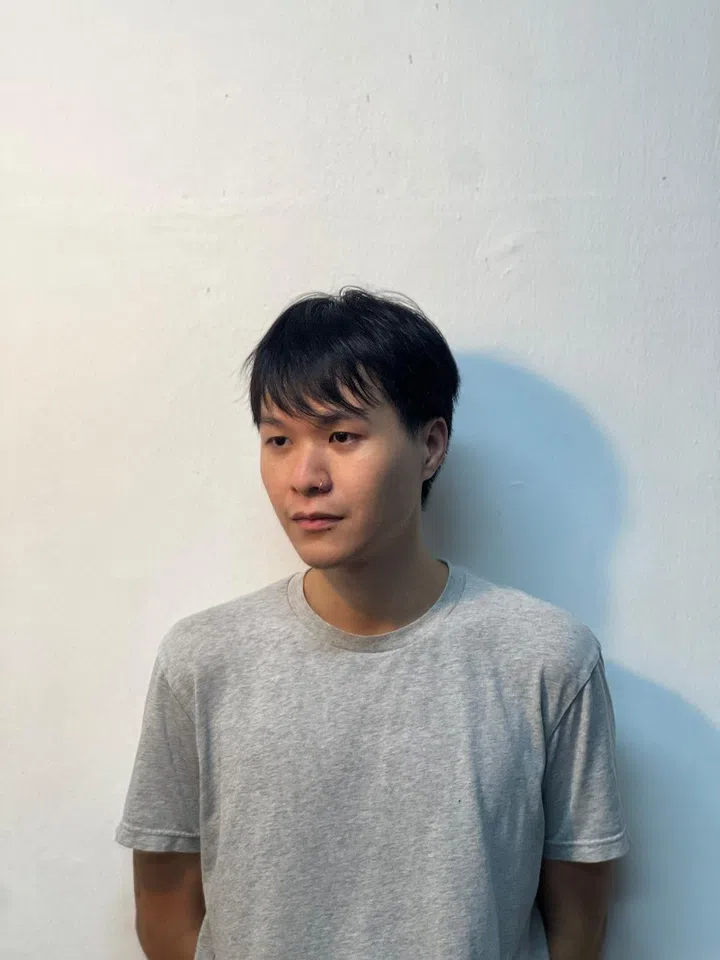
Filmmaker Seth Cheong
Contrary to the idea that Singapore’s film scene is “dying” amidst the closure of beloved theatres, directors like Seth Cheong are proving that young practitioners are eager to make local cinema thrive again. Since graduating from the National University of Singapore with a communications degree in 2021, the 29-year-old writer-director has been on a roll.
Three of his short films—Lay Over (2022), Late Twenties (2024) and Singaporeans on the Kamo River (2024)—premiered at the 33rd and 35th Singapore International Film Festival (SGIFF) respectively. His latest short, Dogma 65 (2025), has also screened at Kuala Lumpur’s SeaShorts Film Festival, and recently wrapped up at the International Film Festival Rotterdam.
How he became a director:
“Pre-pandemic, I never considered myself a filmmaker, just an avid film watcher. My final undergraduate year was in the middle of the pandemic, so activities had to be online or cancelled. A friend was leading our student hall’s annual theatre production and jokingly asked me if I wanted to make a film with the actors he had cast. That’s how I wrote and directed my first short, Is it Cold in Winter?, which was filmed during my final semester. It was later nominated in the student category at the 8th National Youth Film Awards for Best Film, Director and Screenplay in 2022. That got the ball rolling.”
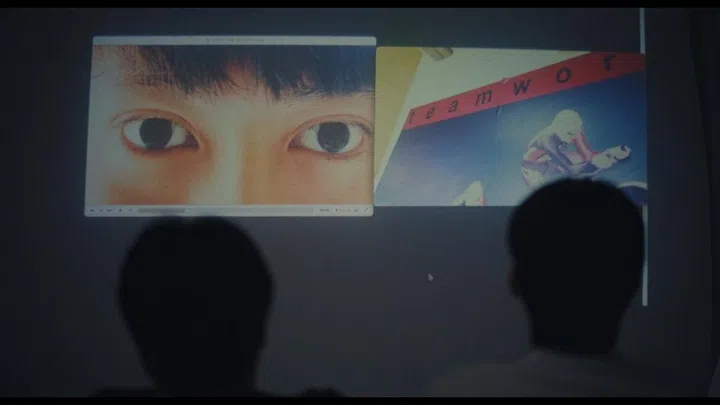
A still from Seth Cheong’s Dogma 65 (2025), which focuses on two amateur filmmakers who take part in a filmmaking challenge, only to have disagreements arise when both insist on directing.
What drives his filmmaking:
“I try to make something honest about the lived experiences of Singapore’s youth. The premises and scenes of my films often emerge from conversations I have with friends and peers: from deep existential worries that keep us up at night to humdrum chats about unserious things. Mundanity is just as important as moments of saturation. That’s reflective of our collective youth. It’s why my films are dialogue-heavy and naturalistic.”
On the region’s film industry:
“It’s amazing to see Southeast Asian stories shine on the global stage in recent years. The visibility brought to the region benefits all of us. I love how the region’s films explore culture, tradition, and myths through a lens that speaks to their respective socio-political issues, which can be widely understood. Having had the opportunity to interact with emerging filmmakers from the region, I’m curious to see what the next generation of young Southeast Asian filmmakers are up to and the kind of stories they tell.”
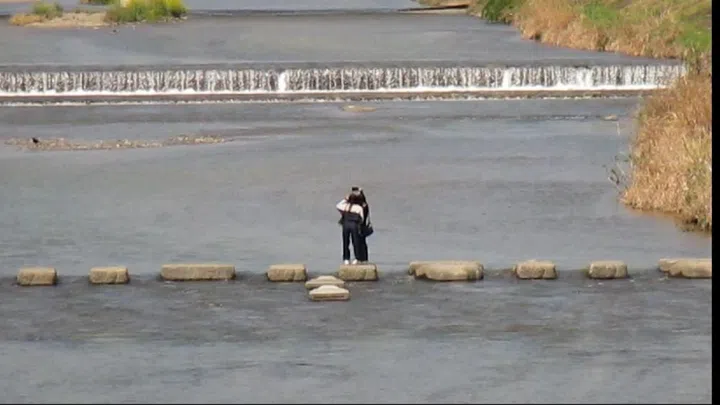
A still from Cheong’s short film Singaporeans on the Kamo River (2024), in which a filmmaker films passers-by going about their day along Kyoto’s signature river, wondering what their conversations would be if they were all Singaporeans like him.
His upcoming projects:
“A couple of short films are in post-production, so fingers crossed they’ll be able to premiere in 2026. I also have a feature film project that I’ve been loosely developing titled Blue Buildings, which is a film about a couple embarking on their first work together. It’s a portrait of two artists who make art not for fame or recognition but because they have something inside themselves they want to express, a feeling I think is quite relatable to many working in the arts. The project was presented at SGIFF’s Southeast Asian Film Lab 2023 and I’m hoping to continue working on that in the near future.”
NIBRAS ALI HUSNI (AKA ASTRO RUBY), ILLUSTRATOR
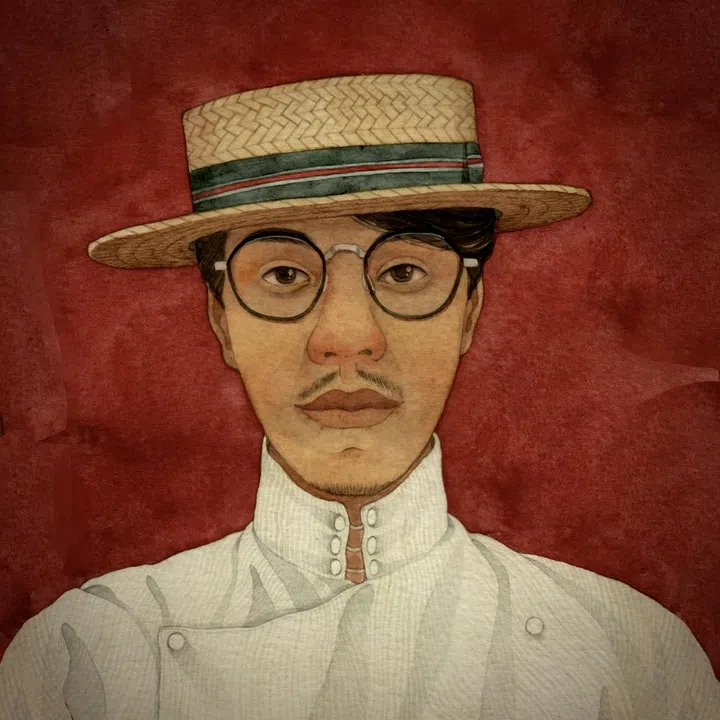
Portrait of Nibras Ali Husni.
Hailing from Bandung, Indonesia, 27-year-old Nibras Ali Husni is a freelance artist based in Yogyakarta, more popularly known as Astro Ruby online. His studies at the Yogyakarta Institute of the Arts (2017–2024) guided him towards illustration professionally, sparking his interest in creating fictional characters, and his graphic designs have gained widespread attention online for their socially engaged themes and celebration of Indonesia’s Nusantara heritage.
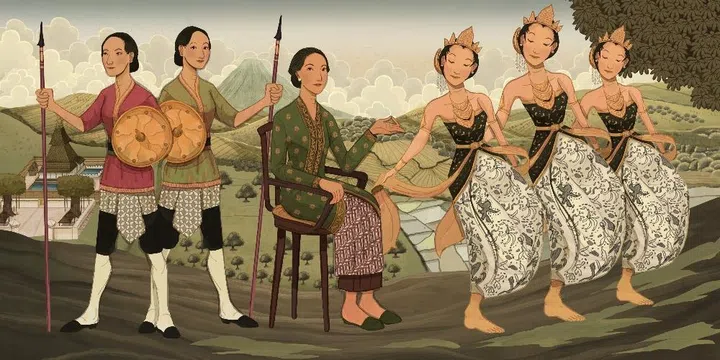
An illustration of Javanese women in the Yogyakarta Palace environment for the exhibition Parama Iswari: Mahasakti Keraton Yogyakarta.
From producing Covid-19 posters to his own merchandise, Nibras has gone on to take commissions from the likes of journalis like New Naratif to mega tech companies like Google and Netflix. His most ambitious project to date? Illustrating every Javanese queen for the Royal Palace of Yogyakarta’s exhibition Parama Iswari: Mahasakti Keraton Yogyakarta last year.
How he views his practice:
“Astro Ruby began as an experiment during high school. I wondered whether I could create a persona and pass off as a ‘real’ illustrator on social media. It gained some traction within a small creative community, but eventually I had to make myself publicly known after several commissions—especially when my Google Doodle of Indonesian music legend Chrisye garnered national attention. Since then, I’ve positioned Astro Ruby as a brand, with the original persona as the mascot and myself as creator and manager. Now, I want to focus more on creating my own artworks and merchandise.”
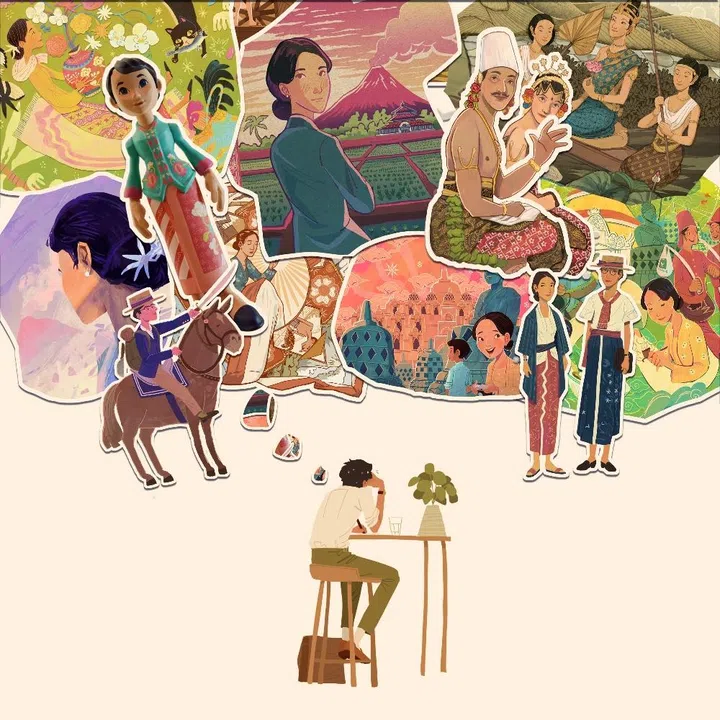
Astro Ruby’s Art vs Artist.
What he’s working on now:
“I’m currently working on my personal artworks. I’m also managing my merchandise account, ‘Sarekat Pekerdja Lepas Kendali’ [Union of Unruly (Creative) Workers]. Over the past few months, I’ve developed enamel pins, clothing, bags, and art toys—hopefully they’ll be available in 2026.”
A regional trend he’s excited for:
“There’s been a growing interest in revisiting retro and indigenous design traditions. Designers, illustrators, and artists are documenting and collecting old labels, packaging, and other indigenous design knowledge to better understand and redefine our identity. In a way, we’re true to our ancestors: diverse and deeply interconnected. Through ongoing interaction, borrowing, and sharing, we discover new expressions. I love seeing how our shared cultural identities are shaped by the visual arts.”
What he hopes for in 2026:
“Seeing the enthusiasm in the region’s art markets! There are so many creatives producing new and exciting things. Art fairs and festivals are spaces where artists can share and trade ideas, and I hope to participate in one sometime this year.”
PEARAMON TULAVARDHANA, CURATOR AND WRITER
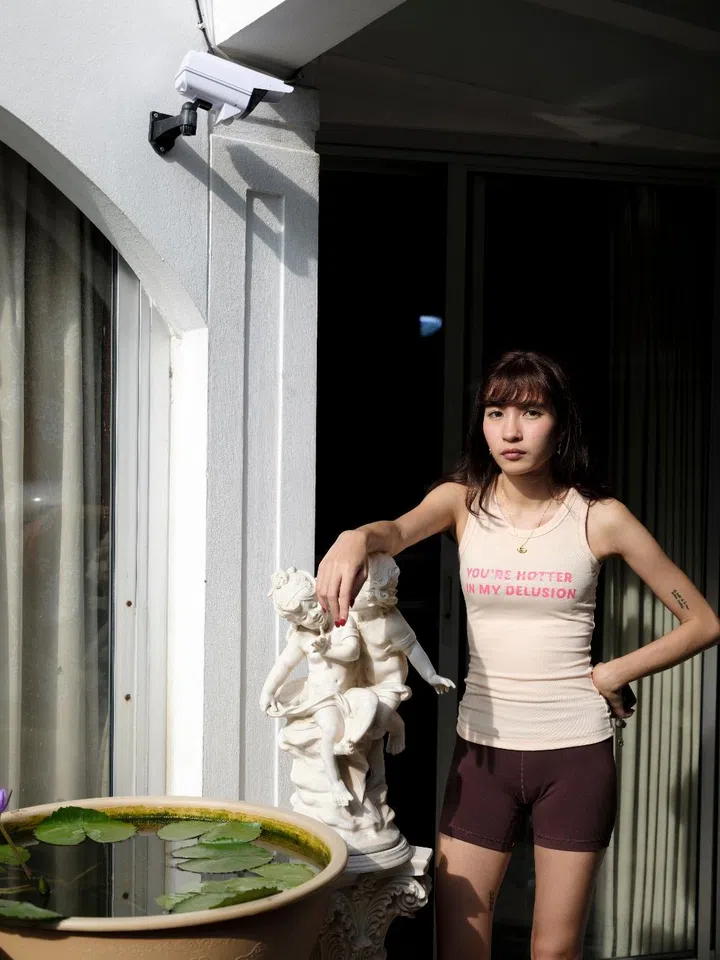
Curator and writer Pearmon Tulavardhana.
Born and based in Bangkok, 31-year-old Pearamon Tulavardhana is an independent curator and writer with a distinct social media presence. As the meme admin behind @Memeseum of Contemporary Art BKK on Instagram, Pearamon doesn’t shy away from critiquing her country’s art scene with humour. While working at Gallery VER in 2018, she started the account in 2020 as a space to anonymously share inside jokes and institutional criticism.
Virality followed unexpectedly when Thailand’s major art festivals, protests, and the pandemic converged, making freedom of speech a pressing topic—her humour resonated with a younger generation of Thais who recognised the cracks in a hierarchical, nationalistic system. By 2026, Pearamon’s meme page has amassed nearly 5,000 followers, and she has plans to expand it into a larger community. She recently spoke at the forum Mango Sticky Rice Forum: Memes, Dreams and Manoot Pa at SAC Gallery, following the completion of her MFA in Museum Studies and Curatorial Practice at Nanyang Technological University Singapore.
How she views her practice:
“While the media divides us into generations with different behaviours, there’s actually a lot in common when it comes to working in the art scene. At least we can laugh together. During the Mango Sticky Rice Forum, I shared examples of memes that are specific to local Thai audiences or age groups, so I said, ‘If you don’t know the meme, turn to your nearest Gen Z or Thai friend and have them explain it to you.’
It became a cute bonding session! It’s important that we show empathy towards each other when making online criticism. While I’ve made many friends through my account, it’s the in-person meetings that create the strongest sense of friendship and community at the end of the day. Art often requires you to be present to truly experience it, and I feel that applies to its community too.”
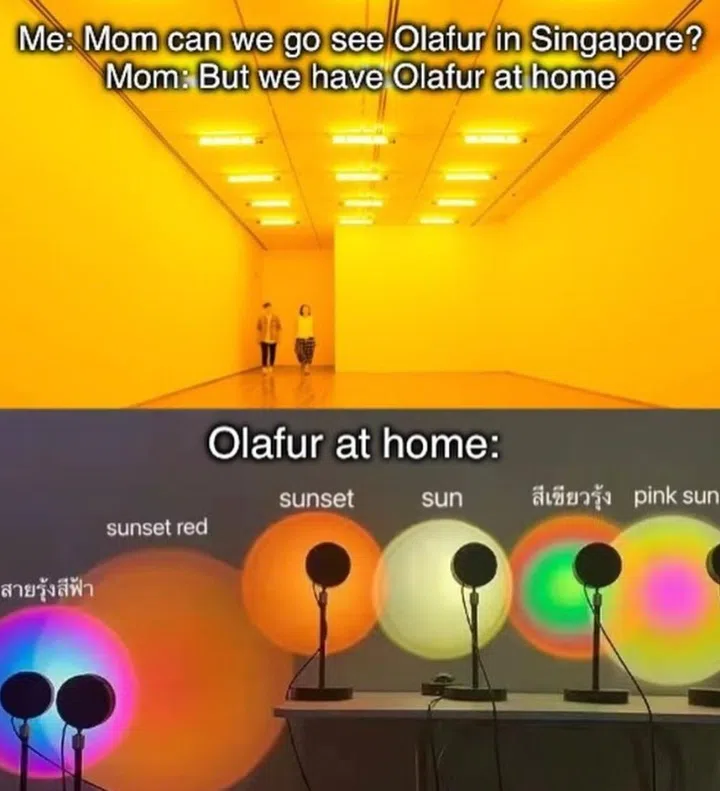
A screengrab of Memeseum of Contemporary Art BKK, the meme account she runs.
On the art scenes in Thailand and Singapore:
“Thailand is rich in cultural resources but lacks infrastructure and public funding, so we stick together and form tightly bonded communities across the scene. Meanwhile, Singapore is equipped with infrastructure such as public museums, art councils, funding, and academic institutions. However, it’s a small country, so the cultural resources aren’t comparable.
While I did experience some level of community among Singapore’s art students, it wasn’t the same as what I had back home. Singapore’s art scene felt more business-forward (a LinkedIn vibe, iykyk), while Thailand’s is more luk thung (ลูกทุ่ง), which reflects an organic way of living. You can be an outsider in Thailand and people in the scene will take you for Isan food or karaoke after openings, like you’ve been friends for ages. No one country is better, but I hope these two can learn from each other without trying to imitate one another.”
A regional shift she’d like to see:
“I wish we didn’t have to be defined by what’s considered ‘global’ anymore. We don’t need another MoMA (the Museum of Modern Art), another blue-chip gallery, or an exclusive Western-born club opening its doors in our city to make it the next art capital. I’d love to see our own Art Power 100, instead of being a token BIPOC (Black, Indigenous, and People of Colour) trophy on someone else’s list. We can do that with our own voices and figure out what works best for us. We’re learning more about each other and sharing solidarity too—Thais supporting Myanmar activists, Indonesian protests being featured in Thai media, Malaysia and Southern Thailand sharing resources during the recent floods. Social media is a good start, but I see it snowballing into something bigger across cultural sectors.”
Her upcoming projects:
“I’m planning a few collaborations with the @sg.museum.memes Instagram page and other Southeast Asian meme accounts. I want to turn my account into something where followers can contribute their own voices and thoughts on the art scene, making criticism fun and relatable for everyone. I’m currently curating a few exhibitions in Bangkok happening in January, May, and July. I’m also co-editing a book on the Thai art scene with Chroma Edition in Korea, which should be out in late 2026 or 2027. In addition, I’ll be working part-time with the Bangkok Art Biennale in October 2026.”
SARNT UTAMACHOTE, FILMMAKER, RESEARCHER AND CURATOR
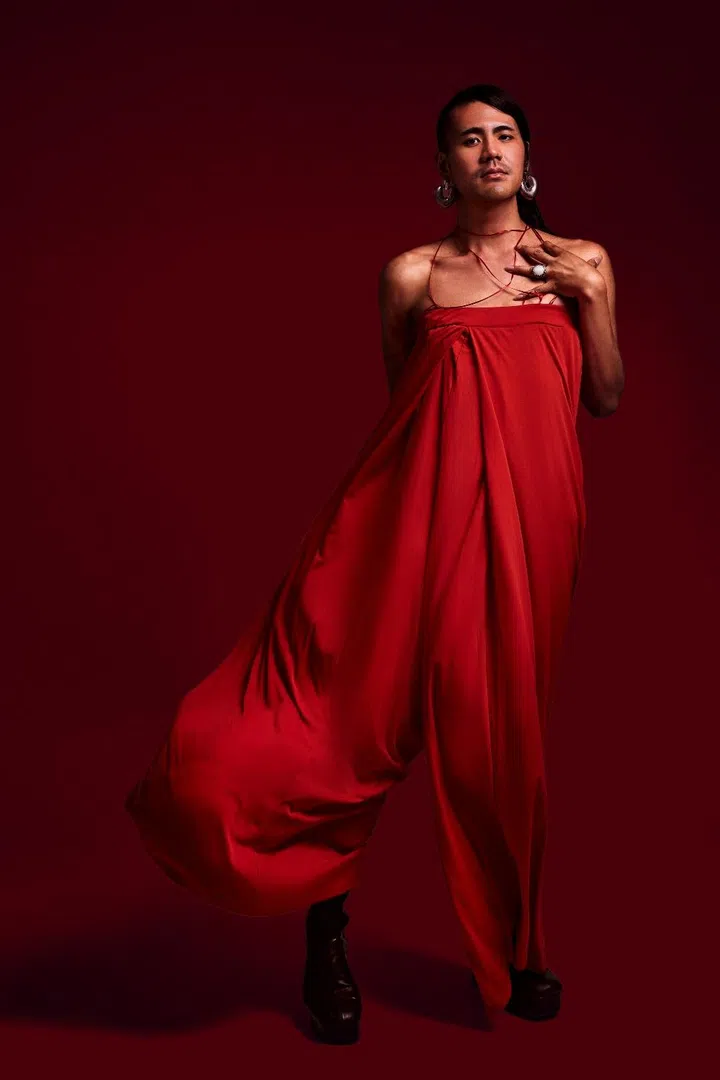
Filmmaker and curator Sarnt Utamachote
Born in Bangkok and based in Berlin, Sarnt Utamachote is a non-binary independent filmmaker, researcher, and curator. The self-taught practitioner has been bringing diasporic and queer Southeast Asian perspectives into Germany’s cultural scene over the past decade through their programming at XPOSED Queer Film Festival Berlin and Sinema Transtopia.
As the co-founder of un.thai.tled collective (a platform for Thai diasporic artists based in Germany), Sarnt’s work weaves together the visual arts, activism, and community care. More recently, Sarnt curated the exhibition “In Nobody’s Service” for the Thailand Biennale 2025 and participated in the “Dealing in Distance” art festival organized by the Goethe-Institut in Hanoi.
What “In Nobody’s Service” (the exhibition he curated for the Thai Biennale last year) is about:
“This pavilion at the Thailand Biennale 2025 examines the cliche of ‘wives and prostitutes’ projected onto Thai and Filipina bodies by immigration, racism, and sexism. Thai and Filipino artists explore various topics: Rosalia on the Orientalized backdrop of Thai Massage Industry; Natthapong on the intimacy of Frankfurt’s red light district; Raksa’s movement work shaped by her profession as masseuse in Hamburg; Wisanu’s photography retells stories Isaan women’s returning from the West; and Sisu on gendered aspect of culinary practices. It’s also connected to my research with Ban Ying, a Berlin shelter house and consulting center for women affected by trafficking. The project is no one’s propaganda. It doesn’t say Germany is open-minded towards immigrants, nor does it say Thailand is progressive.”
How they view their practice:
“Ultimately, I’m exploring whether we can write ‘German’ history through immigrant queer lives. My previous short film Sonic Reverbs and second documentary I don’t want to be just a memory revolve around chosen kinship in a city with tragic mental-health care. The latter premiered at Berlinale 2024 and it raised communal awareness for our friends in club scenes who passed away, more significantly during COVID-19. I feel the obligation to keep on recording and archiving my people on camera before it’s too late. I’m always searching for new de/postcolonial queer cinema that refuses conventions and cliched traumas.”
A regional trend they’re excited for:
“I believe in transnational collaboration, dialogues, and new worlds. It’s 2026 now, more people have transitioned from the gender assigned to them at birth, so let’s do the same with our countries: let’s transition beyond ideas of rigid heritage, fixed traditions, and nation-states.”
Their upcoming projects:
“There’s a forthcoming publication from Bom Dia Books about the first staging of ‘In Nobody’s Service’ at Galerie Wedding in 2024. The third exhibition will be part of Goethe-Institut Southeast Asia’s ‘Dealing In Distance’ festival in Manila later this year. I’m continuously expanding on “In Nobody’s Service” and venturing into other German towns’ archives, communities, stories. I’m focusing on the under-discussed histories of sex work and advocacy for its legalization and reform. I’m interested in the idea of ‘lived solidarity’ across races and genders, not in a superficial diplomatic sense.
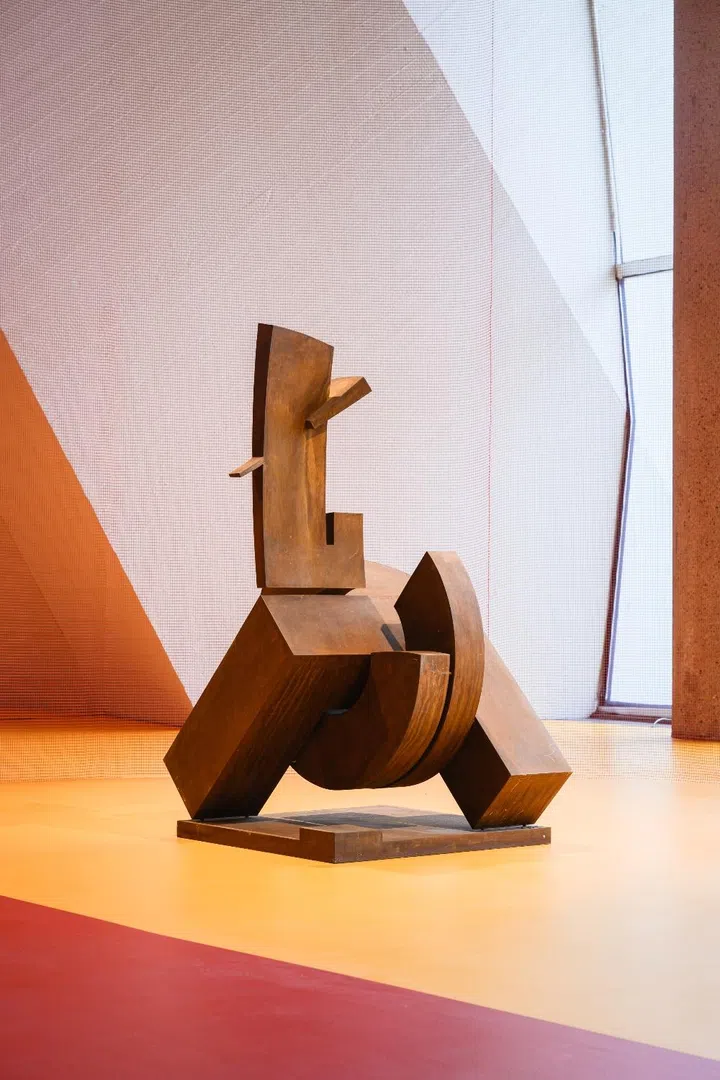
Sarnt is also researching works by the last Cambodian artist Songhak Ky, such as this sculpture at the HKW (Haus der Kulturen der Welt) exhibition ‘Echoes of the Brother Countries’.
Also, I’ve been trying to resurface the sculptural works of the late Cambodian artist Song Hak Ky. There’s another spin-off of my short films that aims to tackle the intertwined history of sex work and the LGBTQ+ coming out in 2026 too.”
PAU VILLANUEVA, DOCUMENTARY PHOTOGRAPHER
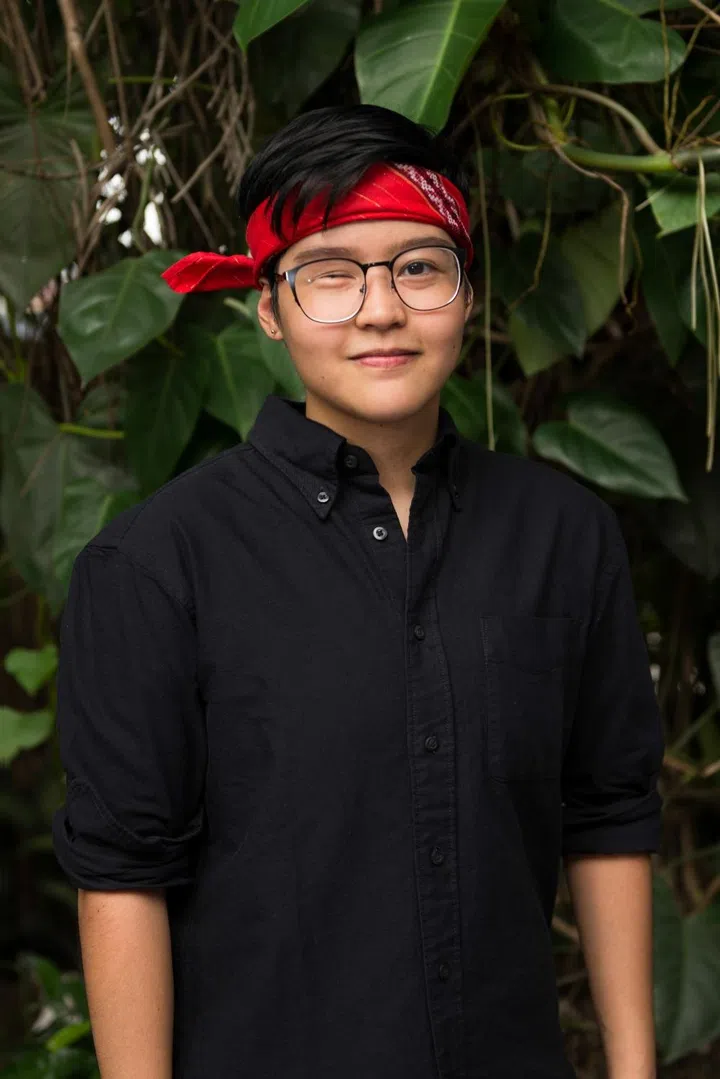
A self-portrait of the photographer Pau Villanueva.
Born and based in Manila, Pau Villanueva is a documentary photographer and photojournalist whose work explores the human condition. For him, photography is not only about representation but about presence, shared identities, and relational trust—ideas that shape his engagement with minority groups and society’s most vulnerable communities. In 2020, he collaborated with the National Geographic Society on a long-term documentary project centred on the Indigenous communities of Mindanao (an island in southern Philippines), which have endured displacement and conflict.
Formally trained at the Asian Center for Journalism, the 32-year-old photographer has since been a mentee of the 2023 Angkor Photo Festival and the 2021 Women Photograph programme. He now works as a freelance photographer for media outlets and research projects across Southeast Asia, including assignments for UNICEF and the EU Election Observation Mission.
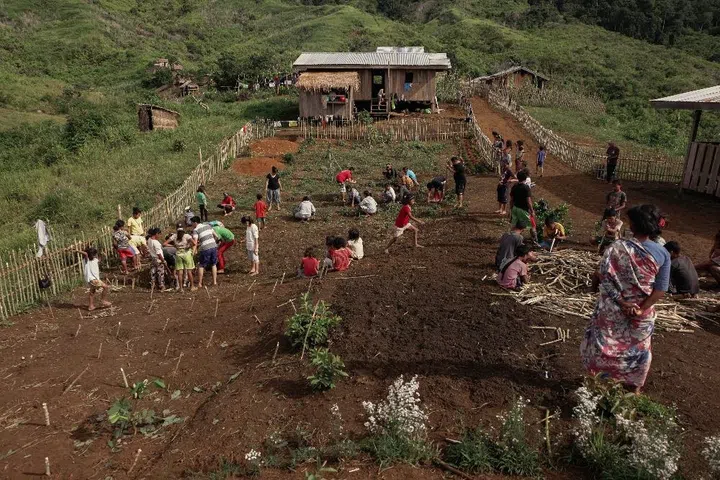
An image from Pau’s first encounter with the indigenous community in 2016 when he visited San Fernando, a municipality in the province of Bukidnon, Mindanao.
How he became a photojournalist:
“Early in my career, I was interested in travel and fashion photography. However, I pivoted towards documentary photography after experiencing cultural immersion with the Manobo Indigenous community in San Fernando, Bukidnon, Mindanao. That experience made me realise the power of photography in humanising stories from places often perceived as distant or unfamiliar, contributing to more grounded forms of social understanding and change. Not everyone speaks the same language, yet we’re able to communicate through the universal language of the camera.”
What drives his documentary photography:
“I’m intrigued by how identity, land conflict, and cultural traditions intersect, particularly among communities that are often rendered invisible or oversimplified by dominant narratives. My work explores ideas of gender and sexuality, environmental change, labour, and cultural continuity, often through everyday moments rather than spectacles of crisis. I’m drawn to slow, collaborative storytelling that allows complexity and contradiction to exist. As a trans and queer practitioner, I’m attentive to how bodies move through space—who is allowed to belong, who must negotiate visibility, and how people create safety and meaning under constrained conditions.”
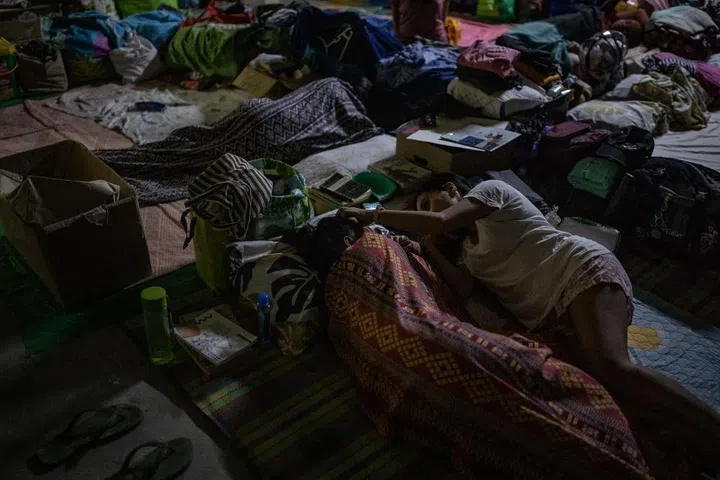
Pau’s photograph ‘Surviving pandemic in displacement’ as part of a project supported by National Geographic Society’s Covid-19 Emergency Fund in 2021.
On what makes Southeast Asia special:
“In the Philippines and Southeast Asia, photojournalism is rooted in strong traditions of community storytelling, resistance, and improvisation. Practitioners navigate limited resources with deep contextual knowledge and moral clarity. Teaching and mentoring in the region feels especially meaningful because learning is often reciprocal. Participants bring lived experience, local languages, and cultural frameworks that challenge dominant Western models of journalism. There’s a strong culture of collective care, which makes teaching less about authority and more about shared exploration.”
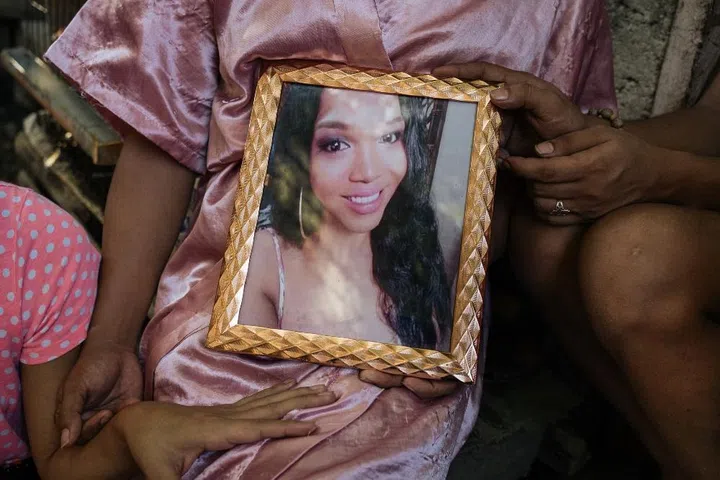
Pau’s photojournalism for a story on gender-based violence in the Philippines written by Corinne Redfern for The Fuller Project.
A regional shift he’d like to see:
“I’m interested in how this new generation of visual storytellers are turning the camera towards themselves and their communities, bravely documenting personal histories, identities, and intimacies that were previously marginalised or unseen. There’s a growing willingness to question inherited frameworks and to frame contemporary issues—such as climate, gender, and migration—through Indigenous and vernacular perspectives. I’m also hopeful for more equitable funding models, regional collaborations that don’t rely solely on validation from the Global North, and educational spaces that prioritise context, accountability, and imagination. These shifts point towards a creative future that is more productive, just, and sustainable.”