
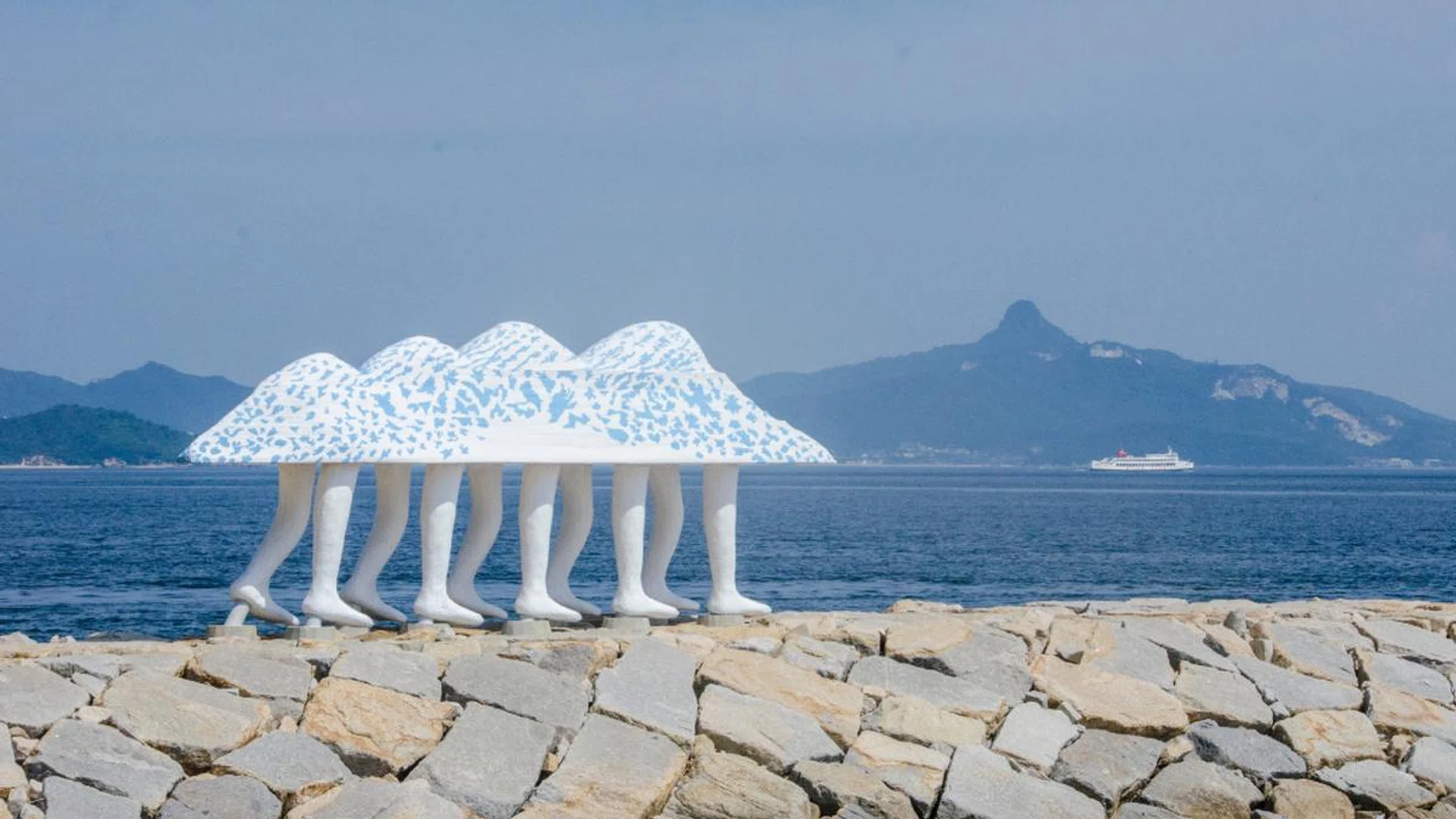
When you think of art, you probably picture museum halls and gallery walls. But what if the exhibition was an entire island – or 17 of them?
Welcome to the Setouchi region, home to a collection of remote ‘art islands,’ including Naoshima, famous for Yayoi Kusama’s iconic polka-dotted Pumpkin. Stretching across the western part of Japan, the region spans thousands of islands and the coastal areas of seven prefectures surrounding the Seto Inland Sea.
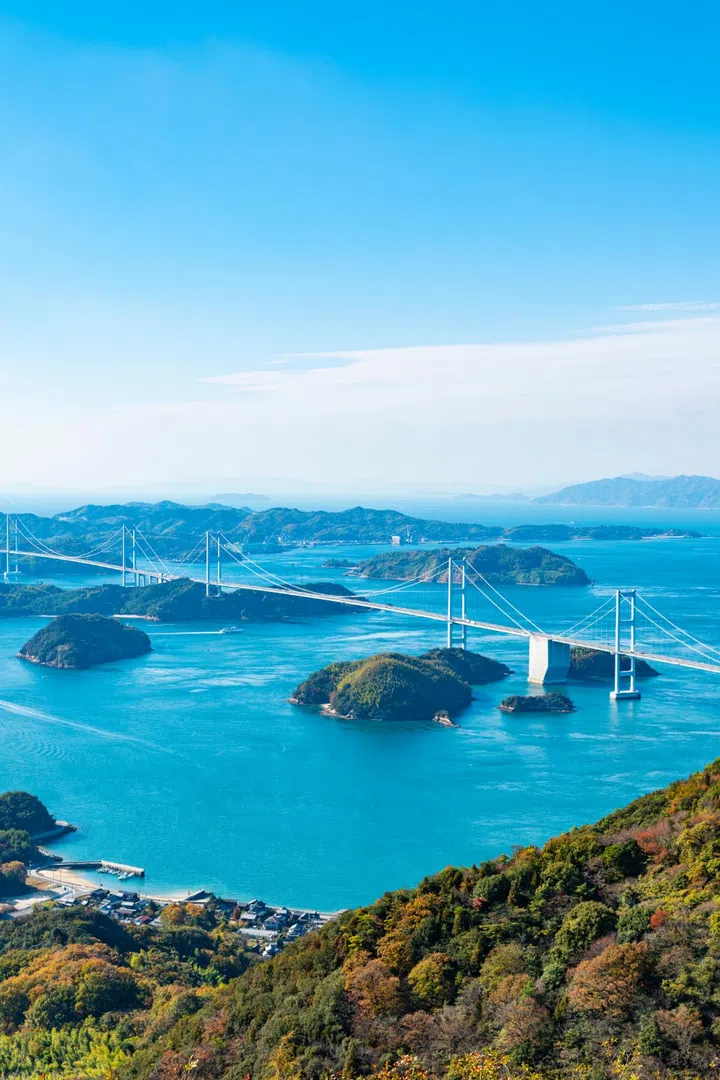
Tatara Bridge, an iconic highlight of the Shimanami Kaido, links visitors to the islands of Setouchi’s vibrant art scene.
Intrigued? Now’s the perfect time to visit: every three years, the region hosts the Setouchi Triennale, transforming 17 islands and coastal areas into open-air museums for a 100-day contemporary art festival. The 2025 edition – the festival’s sixth – which starts from April 18 to May 25 and places an even stronger focus on sustainability, social engagement, and cross-cultural exchange.
The festival unfolds across spring, summer, and autumn sessions, so you can experience the art and beauty of the region at a time that suits you best.
Here’s your guide to the Setouchi Triennale.
THE BASICS
What exactly is the Setouchi Triennale?
Since its debut in 2010, the Setouchi Triennale has become one of Japan’s premier art festivals, attracting around a million visitors each time. It’s a chance to experience contemporary art up close, in settings far beyond the usual gallery walls, and to explore these islands in ways you won’t find on a typical tourist map.
What’s happening this year?
For the 2025 Setouchi Triennale, the focus is on strengthening connections with Asian countries. Participating countries include New Zealand, Sweden, Russia, Vietnam, Thailand, Indonesia, Cambodia, Singapore, the Philippines, Laos, India, China, South Korea, and Taiwan.
More than 60 artist groups will take part, including notable names such as Sarah Hudson from New Zealand (winner of the 2024 Venice Biennale Golden Lion), Jacob Dahlgren from Sweden (known for his commentary on consumer society), and Russian artists Leonid Tishkov and Marina Moskvina, who document lunar objects around the globe.
The festival will also showcase prominent Asian artists like Jakkai Siributr from Thailand (exploring history through weaving and embroidery), Park Ji-hyun from South Korea (creating immersive light and space installations), and Taiwan’s Cloud Gate Dance Theater, a renowned contemporary dance group.
When does the Setouchi Triennale take place?
The Setouchi Triennale 2025 will run across three seasons, each offering a different atmosphere and opportunity to experience the islands in a new light:
- Spring: April 18 – May 25 (38 days)
- Summer: August 1 – August 31 (31 days)
- Autumn: October 3 – November 9 (38 days)
Spring brings cherry blossoms and lively opening events. Summer is hot but more laid-back, with chances to visit the beaches. Autumn offers mild weather, colourful foliage, and a quieter atmosphere.
THE HIGHLIGHTS
Each island hosts its own unique art pieces, with installations and performances scattered across the region. Here are a few standout highlights you won’t want to miss:
Naoshima
This island is arguably the heart of the festival. It’s home to the famous Benesse Art Site, featuring works by legendary artists like Yayoi Kusama and James Turrell. Don’t miss the Chichu Art Museum, built into the landscape, where the art seems to flow naturally from the environment itself. Read our full guide to exploring Naoshima here.
Teshima
Known for its outdoor installations, Teshima is a must-visit for fans of both art and nature. The Teshima Art Museum, designed by architect Ryue Nishizawa, is a space where the building itself feels like a work of art, interacting with its surroundings in an almost spiritual way.
Megijima & Ogijima
With names translating to “Female Tree Island” (Megijima) and “Male Tree Island” (Ogijima), these two smaller islands are just 20 minutes apart and offer more intimate, community-driven experiences. Expect art projects that blend with local culture, with installations found in unexpected places — from abandoned houses to local cafés. It’s a unique way to engage with art while connecting with the local community.
Shodoshima
Famous for its olive trees, Shodoshima is home to art installations that celebrate its agricultural heritage. Many works highlight the island’s history, from olive cultivation to the relationship between people and the land. The Shodoshima Olive Park is also known as the setting for the Studio Ghibli film Kiki’s Delivery Service, where you can borrow red-ribbon brooms for a whimsical photo op. While you’re there, be sure to try the island’s olive-based specialities, including olive oil, candy, cosmetics, noodles, and even ice cream.
If there are specific artworks you’re hoping to see on your trip, make sure to refer to the official Artworks Calendar to check their exhibition dates and times.
PLANNING YOUR VISIT TO SETOUCHI TRIENNALE
Getting There
Most visitors start from Takamatsu Port in Kagawa Prefecture, the main gateway to the islands. Ferries run regularly to key locations like Naoshima, Teshima, and Ogijima. Another option is Uno Port in Okayama, which connects to islands such as Naoshima and Inujima. If you're coming from Tokyo or Osaka, flying into Takamatsu Airport is the easiest route.
Getting Around
Once you’re island-hopping, expect to travel by ferry, bike, or on foot. Some islands have buses, but schedules can be infrequent, so renting a bike is often the best way to explore. Keep in mind that ferry routes vary by season – checking schedules in advance is essential.
Crowds & Best Times to Visit
The Triennale spans 100 days, but weekends and holidays can get busy, especially in spring and autumn. If you’d like to avoid the crowds and enjoy a more leisurely pace, weekday mornings are your best bet. The festival also releases a Congestion Forecast Calendar to help you plan around peak times.
What to Bring
- Comfortable shoes – many installations are spread out, and you'll be walking a lot.
- A portable charger – you’ll be snapping photos and using maps throughout the day.
- Sun protection – the summer sun in Setouchi can be intense, and even during other seasons, you’ll spend plenty of time outdoors.
PRO TIPS FOR MAKING THE MOST OF THE TRIENNALE
Tip #1: Get the Triennale Passport
The Triennale Passport grants one-time access to each artwork and facility, making it a more convenient and cost-effective option than paying for individual admissions. Discounts are available if you buy in advance for the 2025 edition. (Note that some artworks and museums require a separate entry fee.)
If you plan to visit across multiple seasons, the All-Season Passport (valid for the entire festival) is available at a discounted price until 17 April 2025. Once the Triennale begins, you can also purchase a Single-Season Passport (valid for spring, summer, or autumn) for 4,500 yen.
Tip #2: Download the Official App
The Setouchi Triennale 2025 app will be your best friend. It includes ferry schedules, maps, artist information, and real-time updates — basically everything you need to navigate the festival with ease.
Tip #3: Book Accommodations Early
Hotels and guesthouses on the main islands fill up quickly, especially on Naoshima and Teshima. If you’re planning an overnight stay, book months in advance. Otherwise, Takamatsu or Okayama make good bases, with easy ferry access.
Tip #4: Don’t Rush – Less is More
Trying to visit too many islands in one day will leave you exhausted. Aim for one or two islands per day and take your time exploring. The Triennale is as much about soaking in the surroundings as it is about the art.
Tip #5: Bring Cash
Some smaller islands have limited ATMs, and a few local shops and cafés are cash-only. Be sure to carry yen for ferry tickets, snacks, and entrance fees.
Tip #6: Talk to the Locals
Many art projects are created in collaboration with island residents, and their stories add another layer to the experience. Whether it’s a cafe owner or a volunteer guide, chatting with locals offers a deeper connection to the festival.