
Singapore Won Its Biggest Animation Prize. What’s Next?
With Singaporean animated feature The Violinist taking home the top prize at the Annecy International Animation Film Festival – arguably the Oscars of the animation world – and luxury houses such as Hermes and Dior increasingly turning to animators to tell their stories, the medium is having a moment. We meet some of Singapore’s most promising animation graduates this year to find out what they’re making and dreaming about.
Not too long ago, things were looking pretty bleak for Singapore’s animation industry. In 2023, Industrial Light & Magic – Lucasfilm’s visual effects and animation studio – shuttered its operations here after 17 years, affecting more than 300 employees.
This nascent industry has long been precarious, with studios expanding and contracting around projects, and young graduates often having to look beyond Singapore – or animation – to make a living. Then, in June this year, The Violinist – a soaring historical drama about two childhood friends whose lives diverge against the backdrop of wartime Singapore – became the first Singapore‑produced animated feature to scoop up the Annecy International Animation Film Festival’s top prize, the Cristal Award for Best Feature Film, as well as the SACEM Award for Best Original Soundtrack.
Suddenly, a small but determined scene had been given a very visible vote of confidence. But can a single top prize, even one as prestigious as the Cristal, actually create change? “It’s kind of funny to say that you have a film that won at Annecy, but it’s from a country that doesn’t have a full‑fledged animated film industry,” says Ervin Han, co‑director of The Violinist, which hits local cinemas this September.
Han hopes the win will push the door ajar for the film‑makers who come after him. “We’re not the only ones here who want to tell these stories; there are many great film‑makers and animation studios all around the region that have the same dream. I hope that, with this film, we’ve amplified that voice a little so that more voices can be heard in the future.”
Vicky Chen, director of Singapore‑based Cartoons Underground – Southeast Asia’s largest independent animation festival – takes this sentiment a step further, seeing The Violinist as proof that local film‑makers can create and champion their own stories, instead of working only on projects commissioned by overseas studios.
The bigger question for her is what this will lead to. “We should be asking how we can create the conditions for the next The Violinist to be made here,” she says. “We don’t need to replicate international studio models to succeed. We should be developing stories, styles and creative voices that are distinctly our own, and it starts from the ground up.”
Here, the next generation of Singaporean animation graduates tell us more about what they’re making, what they want from the industry and where they think the medium should go next.
GRACE TAN, BACHELOR OF ARTS (HONOURS) IN ANIMATION ART, LASALLE COLLEGE OF THE ARTS
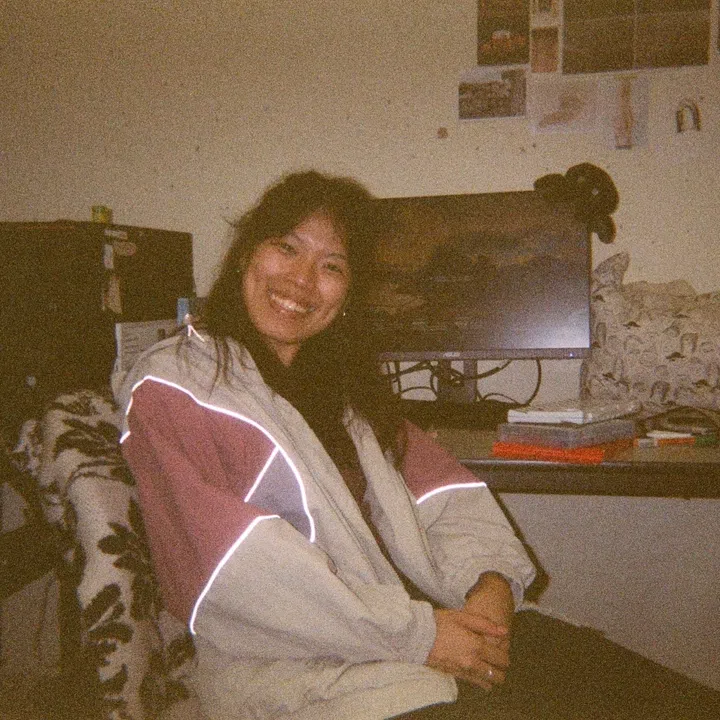
Recent animation graduate Grace Tan
A WORK THAT BEST REPRESENTS HER NOW:
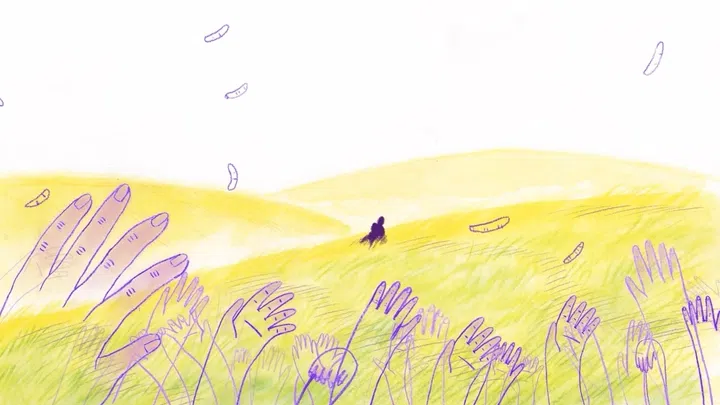
Nook & Cranny, Grace Tan’s graduation film, explores the bittersweetness of relationships through visual metaphors of nature and the body — from awkward beginnings and fleeting encounters to the possibility of genuine connection. Made with hand-drawn animation and watercolour, the film embraces the imperfections and unpredictability of both its medium and the relationships it depicts.
“My graduation film, Nook & Cranny! I worked on it with my dear friend and teammate, Jinsol Kim, who’s a wonderful artist. It’s about the bittersweetness of relationships, told through visual metaphors of nature and the body, and traces the experience of how relationships develop … It acknowledges that there are inevitably many tensions in pursuing relationships, but also encourages audiences to be vulnerable to these risks because that’s the first step to unlocking genuine connection.”
ON SINGAPORE’S ANIMATION SCENE TODAY:
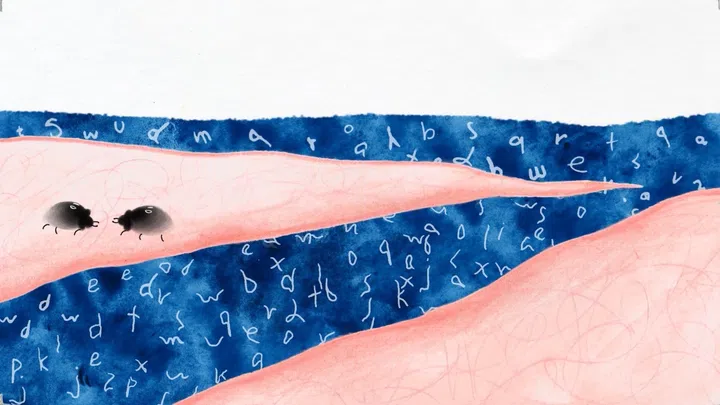
Grace Tan’s work brings together hand‑drawn animation, watercolour, words and imagery, often drawing on her love of literature and language.
“I personally would like to see animation being approached as more than a technical discipline, expanding outwards to interact with other art forms, as I strongly believe art forms don’t exist in silos. I, for one, don’t view myself as a traditional animator … What excites me is pushing the boundaries of what the medium can be, experimenting liberally, and making other art forms part of the conversation. In my case, this would include writing and photography!”
ON THE SUPPORT NEEDED NOW:
“My perspective as a fresh graduate: we would benefit from having more avenues for animation students to try and to fail! I was blessed enough to take a semester abroad, and the change in rhythm and environment helped me see just how important this is for developing artists. Our curriculum seeks to train students in technical skills as quickly as possible, but crammed deadlines leave little freedom to play – something I believe is so important in developing creativity and voice.”
NAH YEE CHERN, BACHELOR OF ARTS (HONOURS) IN ANIMATION ART, LASALLE COLLEGE OF THE ARTS
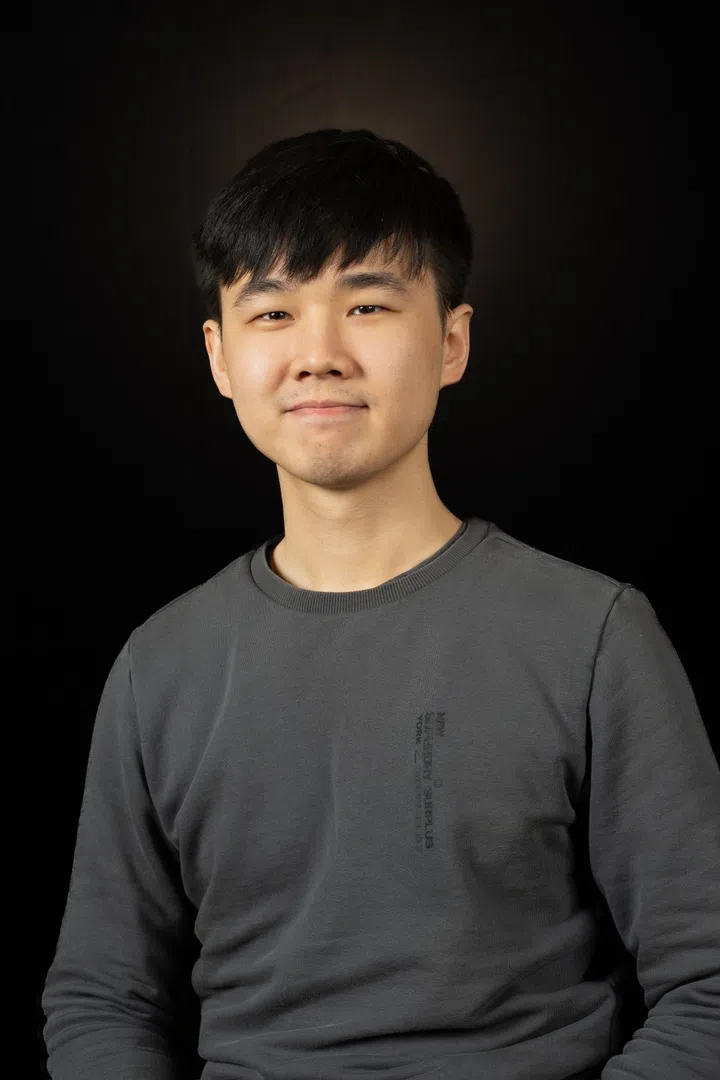
Recent animation graduate Nah Yee Chern
HIS ANIMATION STYLE:
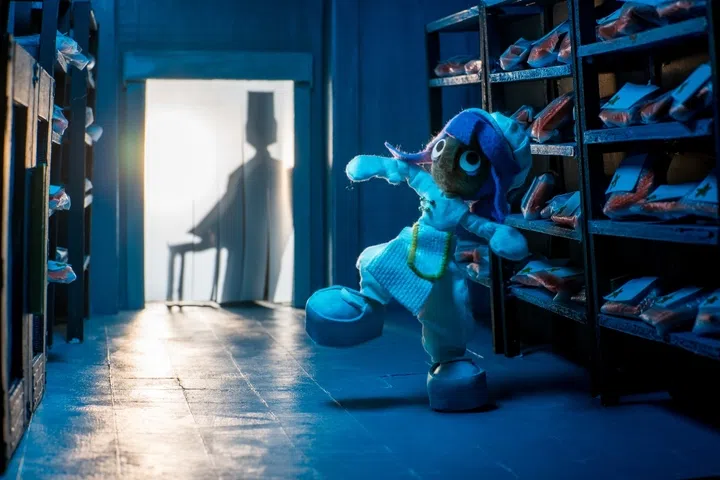
Nah Yee Chern’s graduation film, Everything’s Peachy, is a stop‑motion thriller created together with Belyta Yip and Katherine Lee Viryawira, and focuses on a junior cook who discovers that her idol chef is a cult leader.
“My friends often describe it as whimsical doodling. I love grabbing a brush pen and doodling weird critters on a page without thinking too much about it. That also often becomes my first step in ideation. Although the stories I’m interested in often lean towards horror, I really enjoy mixing horror with weird‑looking fellas. I think that tonal and visual contrast is such a fun way to come up with interesting stories.”
ON WHAT ANIMATION OFFERS OVER OTHER CREATIVE MEDIUMS:
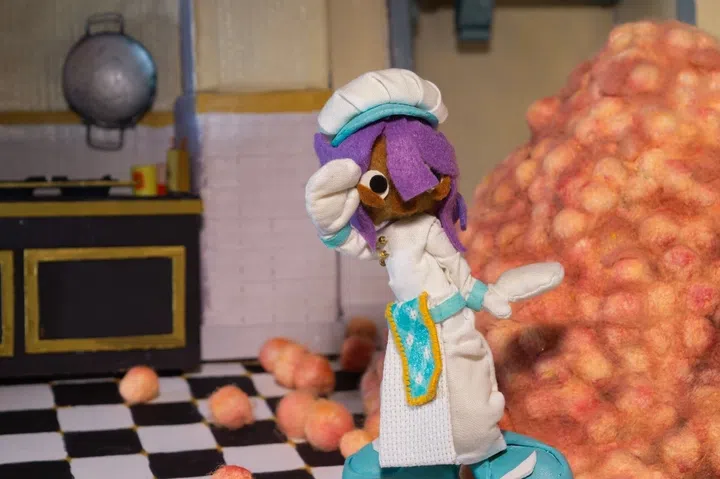
Loosely inspired by a friend, his film also explores the abuse of faith.
“My hot take is that animation is the best visual storytelling medium. It can literally combine every form of art – music, film, illustration, photography, performance – to create visual motion for any story, genre or form. But what I think is animation’s most impactful quality is its ability to make audiences form parasocial relationships with fictional characters – to make us feel like we really know and care about them. I think that alone makes animation the peak of human art.”
ON THE SUPPORT NEEDED NOW:
“More financial support; it would benefit the industry so much if there were more trust in what the local animation industry can achieve. While I think Singaporeans are becoming open to local productions, there’s still a sense of caution when it comes to national film grants funding risky projects or new local film‑makers, especially those in animation.”
ELLA CONTRERAS, BACHELOR OF FINE ARTS IN MEDIA ART, NANYANG TECHNOLOGICAL UNIVERSITY
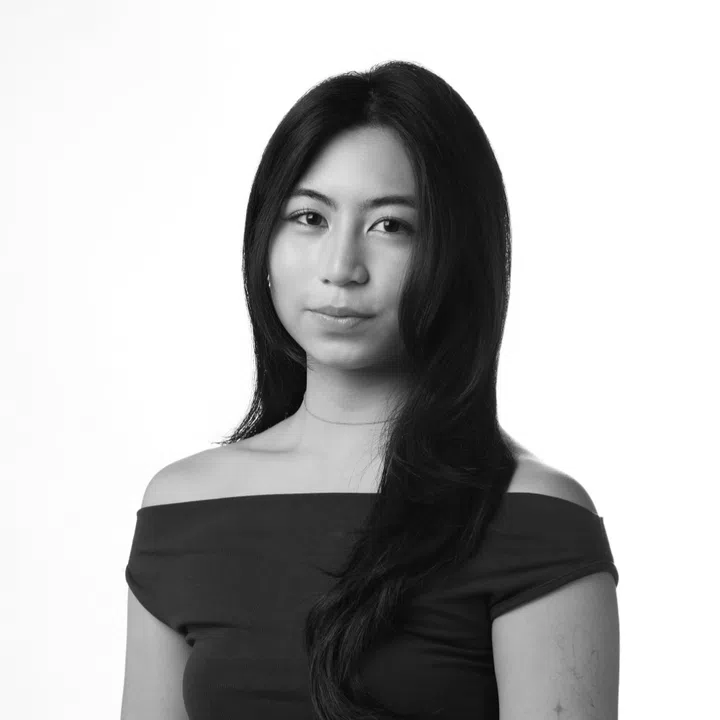
Recent animation graduate Ella Contreras
A WORK THAT BEST REPRESENTS HER NOW:
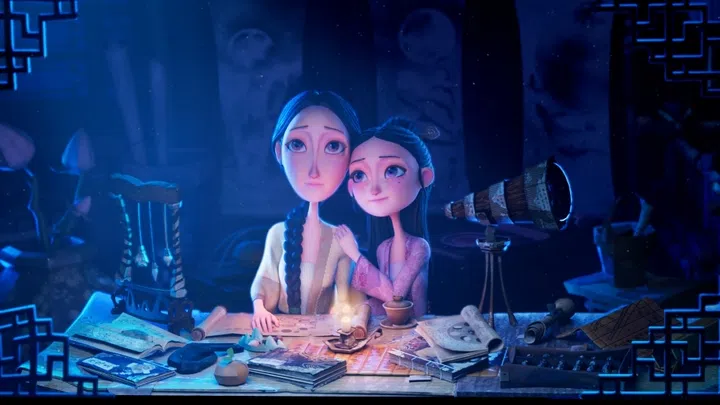
Ella Contreras’ 3D graduation film Distance to the Moon explores the tension between chasing your dreams and staying close to the people you love.
“I’ve just wrapped up my final thesis film, Distance to the Moon, which my team and I have been working on tirelessly for the past year. It’s a 3D animated film about an astronomer who dreams of climbing to the moon, but has to choose between reaching for her dreams or staying grounded on Earth with her lover. I was inspired to make this film because I feel like a lot of young people like myself are at that stage of life when we’re thinking about where our priorities lie and making decisions about how we want our lives to look like.”
ON SINGAPORE’S ANIMATION SCENE TODAY:
“Stepping into the animation landscape now definitely calls for a big leap of faith. There’s a lot of fear and scepticism from both my peers and seniors. Seeing my peers pivot to other industries after graduating, witnessing the increasing amount of content generated by artificial intelligence, and dealing with the constant pressure and competitiveness is incredibly daunting … But I feel passionate about what I’m doing, and all I can do is keep pushing myself and adapting, and put myself out there with confidence in my craft.”
WHAT SHE LOVES ABOUT THE ANIMATION SCENE HERE:
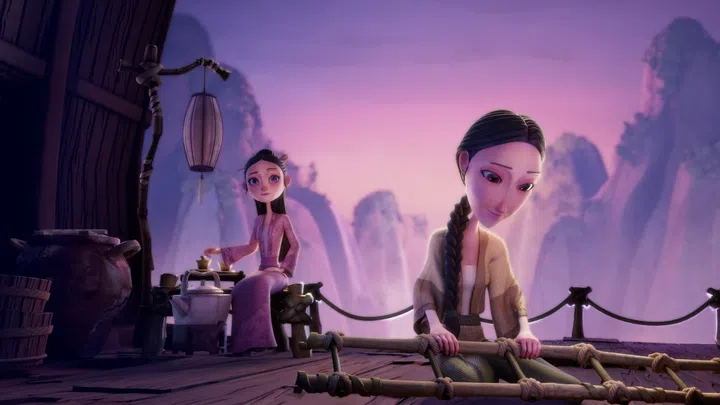
Ella Contreras’ work is often dreamy and slightly abstract, and she sees animation as a way to capture little moments and feelings that can be difficult to put into words.
“How supportive and tight‑knit the community is! I’m so thankful for the immense support, mentorship and advice I’ve received from seniors in the industry. People are really willing to offer their insights, whether it’s helping to review your work, exchanging information about new software or just having a chat about their experiences.”
LIM SZE NI, BACHELOR OF FINE ARTS IN MEDIA ART, NANYANG TECHNOLOGICAL UNIVERSITY
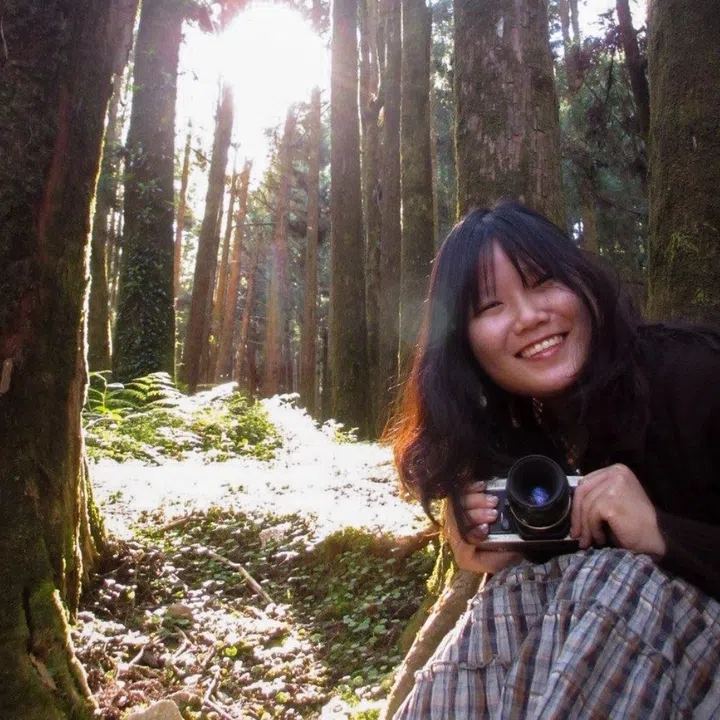
Recent animation graduate Lim Sze Ni
ON WHAT DREW HER TO ANIMATION:
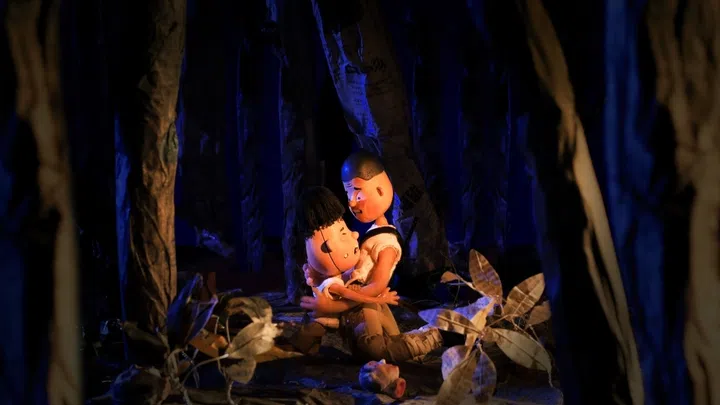
Lim’s graduation film, Paper Trails, follows a young boy who ventures into a forest made of newspapers in search of his missing father, uncovering the darker realities of the Malayan Emergency along the way.
“Growing up, I’d binge‑watch anime like Death Note and The Promised Neverland, as well as Studio Ghibli and Laika films, but these big studios always seemed out of reach. What really drew me to making animation was when I saw what my seniors created, especially their stop‑motion films. They really inspired me with the beauty of their works and their dedication to the craft. It’s a cosy community where those who’ve graduated are always happy to help guide us younger ones. If they can do it, maybe I can too?”
ON SINGAPORE’S ANIMATION SCENE TODAY:
“The government encouraging the use of artificial intelligence (AI) is scary … I’ve heard of animation companies incorporating AI into their pipelines to make things more efficient, which I understand is necessary especially when you have a tight budget or timeline. But seeing companies use AI to generate badly animated ads and display them on huge LED screens really irks me. I really hope we don’t lose the human touch in animation.”
ON WHAT ANIMATION OFFERS OVER OTHER CREATIVE MEDIUMS:
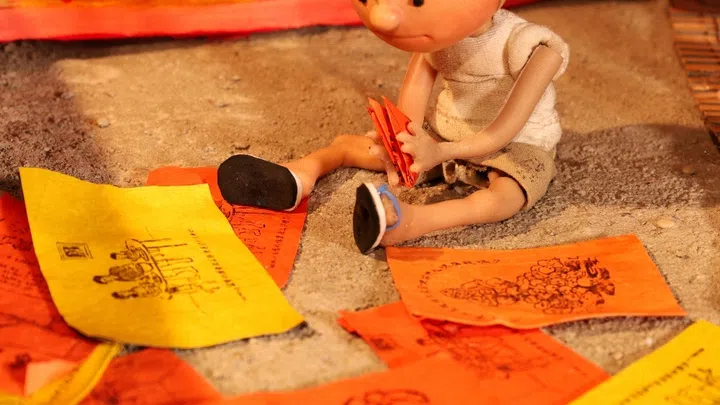
Working across stop‑motion, handmade puppets, and materials such as clay, wire and paper, Lim Sze Ni’s work is all about the charm of things made by hand.
“The materiality of stop‑motion animation is something other mediums cannot imitate. From the huge hand‑built set to the fibres of the puppet’s clothes, everything is built with materials the viewer is familiar with, and that translates emotionally too. That’s why it was important for me to make my graduation film Paper Trails in stop motion … There’s also something charming about the slight imperfections that come with the format.”
CHRISTINA FU JIAYI, BACHELOR OF FINE ARTS IN MEDIA ART, NANYANG TECHNOLOGICAL UNIVERSITY
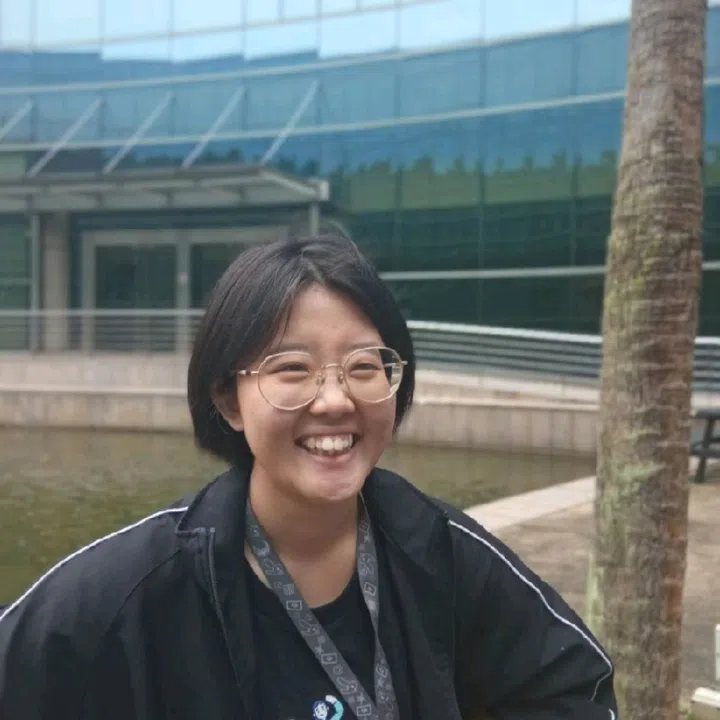
Recent animation graduate Christina Fu Jiayi
ON THE RISING TREND OF FASHION HOUSES WORKING WITH ANIMATORS:
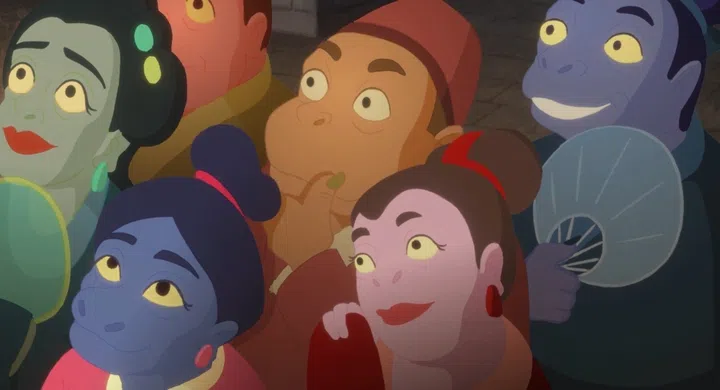
Fu’s thesis film, The Mask, reimagines Chinese ghost stories through a contemporary lens, following a boy who flubs his first performance and must learn how to win over his audience.
“When (German artist) Karlotta Freier’s Lunar New Year campaign for Hermes came out, my immediate reaction was: ‘Dang, this is absolute cinema.’ It felt so different in comparison to the standard celebrity‑driven ad. In my opinion, fashion brands are about storytelling and creating fantasy. They aren’t just selling items. They’re offering an authentic world for people to inhabit. That aligns with animation, because in this field, every single frame depends on craftsmanship, emotion and precision.”
ON HER HOPES FOR SINGAPORE ANIMATION:
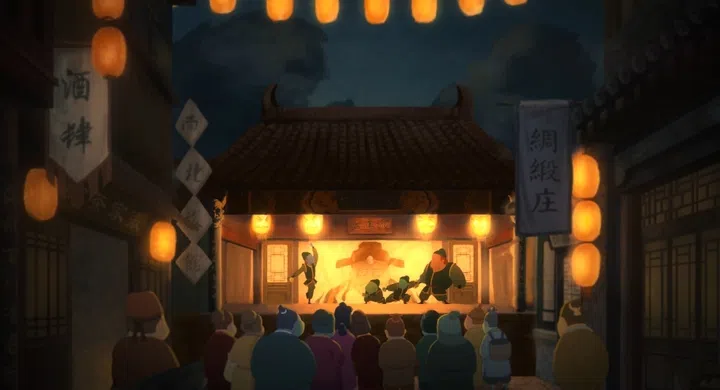
Inspired by classic Disney and Ghibli films, Fu’s work leans into a slightly old‑school, illustrative feel.
“Whenever people talk about animation, titles like Spider-Man: Into the Spider-Verse and Studio Ghibli films pop up. When we bring up local films, people can easily name Ah Boys to Men or Ilo Ilo. But when it comes to Singapore animation, it still feels like there’s a huge gap in the public’s perception.
I once chatted with an uncle at an event about being an animation student and his instant reaction was: ‘You can survive doing animation in Singapore? You might as well be a Grab driver after you graduate.’ It was pretty funny, but it says a lot about how invisible the local animation scene feels to the average person. My hope is that scepticism won’t be the default reaction. I want locally produced animation titles to be the first thing that springs to people’s minds whenever Singapore animation is brought up.”
TAN FANG TING VALERIE, BACHELOR OF FINE ARTS IN MEDIA ART, NANYANG TECHNOLOGICAL UNIVERSITY

Recent animation graduate Tan Fang Ting Valerie
A WORK THAT BEST REPRESENTS HER NOW:
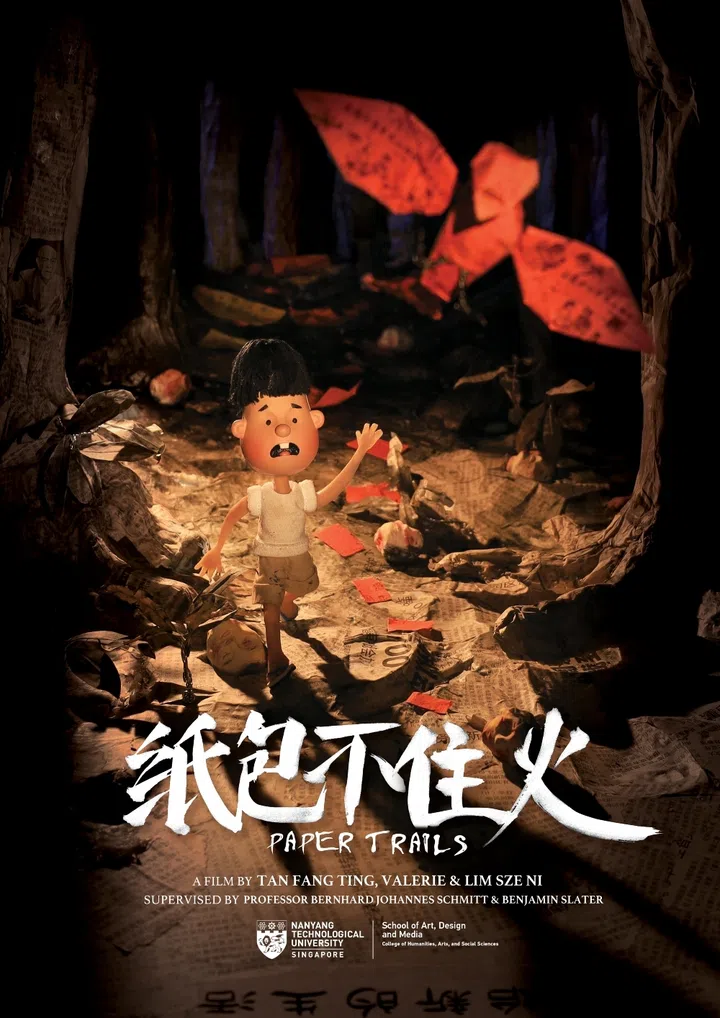
A poster for Tan’s thesis work, Paper Trails, a co-production with Lim Sze Ni (mentioned above). A stop-motion historical fiction film set during the Malayan Emergency, following a young boy who ventures into the rainforest with a mysterious paper bird, only to uncover the dark realities of war.
“My final-year thesis film, 纸包不住火 (Paper Trails, the film mentioned earlier in this story, which is a co-production with Lim Sze Ni). Not only because my group mate and I have been working on it for over a year, but because it’s everything we’ve learnt about stop-motion and storytelling, all brought together in one film. More importantly, it’s a story about empathy, about exploring perspectives we rarely hear or even disagree with, and just finding the shared humanity in the midst of conflict. I think it’s an important sentiment in today’s world, and it best represents where I want to continue to go as an artist: to make works that create meaning in the world, somehow.”
ON ENTERING SINGAPORE’S ANIMATION SCENE:
“I’m scared I will not have a job and not be able to do anything animation-related anymore. But on the flipside, I’m excited about how to integrate my interest in stop-motion, puppets and mixed media into whatever space I enter. I think animation doesn’t have to be confined to a bubble itself; creative ideas and what I’ve learnt from animation can be applied in whatever space we enter if we believe in our ideas and work hard for it. I hope this isn’t wishful thinking.”
ON THE VIOLINIST AND THE FUTURE OF LOCAL ANIMATION:
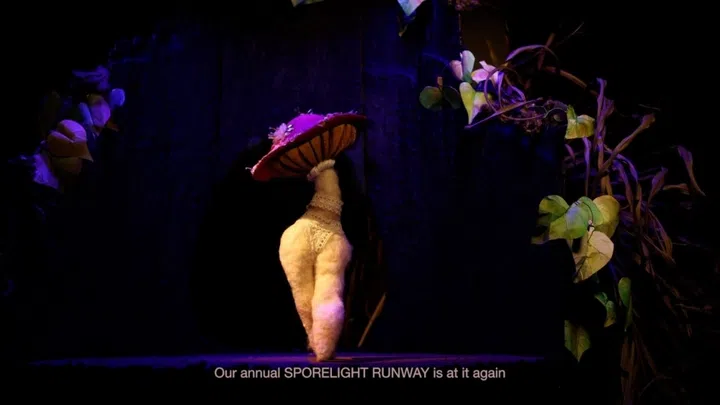
Another example of Tan’s humour-laced practice is the short film Sporelight, which imagines a mushroom-filled fashion world where two rival models go head-to-head on the runway. Naturally, there can only be one star — and the film leans into the ridiculousness with a healthy dose of mushroom puns.
“I was so amazed to see the Singapore animated feature film The Violinist make it so far on the international stage! The news also came to my group mate and me at the right time, when we were on the brink of giving up on my final-year thesis film.
We had been working on it for over a year and were starting to lose hope that what we were doing would amount to anything good or even significant. And then we learnt that The Violinist had been more than 10 years in the making, and there was so much dedication, work and patience behind its success.
It reminded me to keep going, and that impactful work takes time, persistence and heart. The Violinist is also based on our local history, the same as my historical fiction thesis film, and it gave me encouragement that our local stories are important and can stand out on the international stage. So even though I haven’t been able to catch it yet, the journey behind its creation has already inspired me lots!”
LEOW MAY GWEN VERONICA, BACHELOR OF ARTS (HONOURS) IN ANIMATION ART, LASALLE COLLEGE OF THE ARTS

Recent animation graduate Veronica Leow
A WORK THAT BEST REPRESENTS HER NOW:
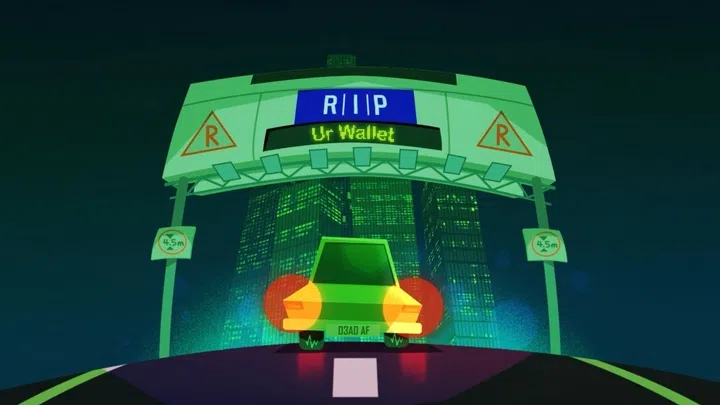
Part dark comedy, part meditation on mortality, Leow’s thesis work I Hit A Deer follows a young girl who begins seeing visions of death after a family road accident.
“I would say it’s my thesis film! I worked on a short film with two of my other teammates (shoutout to Yu Jiale Melody and Riqqa Faizal!) called I Hit A Deer. It’s more of a dark comedy — a dad is driving home with his young daughter and accidentally hits a deer. The girl then begins to see visions of death around her in her distress. The film was based on one of our fears of death, and explores how adults can sometimes be indifferent towards something that is intrinsically tied to human life.
It pushed us out of our comfort zones in terms of our illustrative and animation skills. I particularly enjoyed working on the colour script, storyboards, environmental and character designs, and learning new animation software. We also had a lot of fun coming up with more unhinged ideas and jokes related to Singaporean driving and some of our own dads’ gripes.”
ON THE VIOLINIST AND WHAT IT MEANS FOR THE LOCAL ANIMATION SCENE:
“I do think that with The Violinist’s recent win at Annecy, it puts Singapore’s animation scene on the global stage. Not too long ago, the same studio that worked on The Violinist, Robot Playground Media, collaborated with another local studio, Chips and Toon Studios, and Aum Animation Studios India. They produced the first Tom and Jerry series localised in Singapore. This project was apparently done as part of a partnership between Warner Bros. Discovery and the Singapore Tourism Board.
Additionally, we have had prestigious nominations and awards for our studios producing and directing animated series, such as the Emmy-nominated Oddbods, produced by One Animation, and PBS Kids’ Dinosaur Train, produced by Sparky Animation.
I believe that the potential of Singaporean animation is continuing to be tapped into, which would hopefully help the local animation scene to blossom and thrive. I can’t say for sure, but I do hope it also incentivises our local arts councils to take further steps for our local animation scene and provide the necessary funding, partnerships and support to bring Singaporean animation to the worldwide stage.”
ON WHY LUXURY BRANDS ARE TURNING TO ANIMATION:
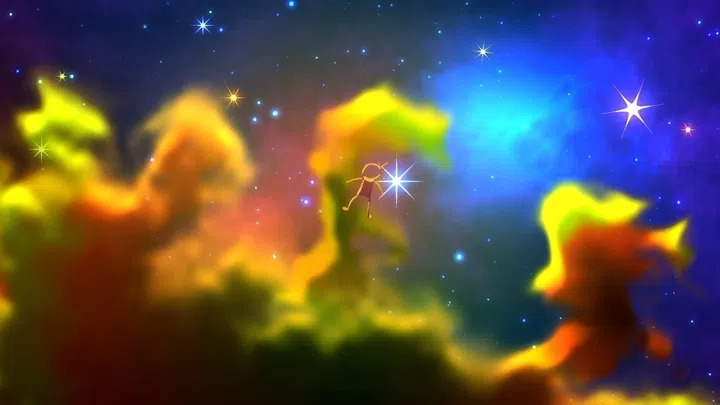
Inspired by the mood, colours and geometric style of the video game Night in the Woods, Leow’s practice mixes atmospheric world-building with humour, hidden jokes and a love of shape-driven design.
“I think the authenticity and stylisation of design and animation can attract a following, and can also be a marketing tool for luxury brands such as Hermès and Loewe. With the rise of AI, brands may also commission animators as a way to counter AI saturation and showcase human artistry.
Animation is a softer, nostalgic entry point for younger consumers — for example we’re seeing luxury and lifestyle brands collaborate with anime franchises on product lines, which allows them to reach broader audiences and fans of animated media.”
An adapted version of this article first appeared in Volume 10 of F ZINE.