
Still: The Platform Making Us Rethink What Counts As Art
Through experiential showcases, Singapore-based platform Still is challenging the idea that craft and ceramics can only be functional, positioning them as art in their own right.
Functional objects such as ceramic tableware are often valued for how they look or how they can be used, but less often for the artistic intent behind them. Still, a contemporary arts platform founded last April by art workers Chlo Hew, Jasmine Leong and Kaye Tan, is working to change that.
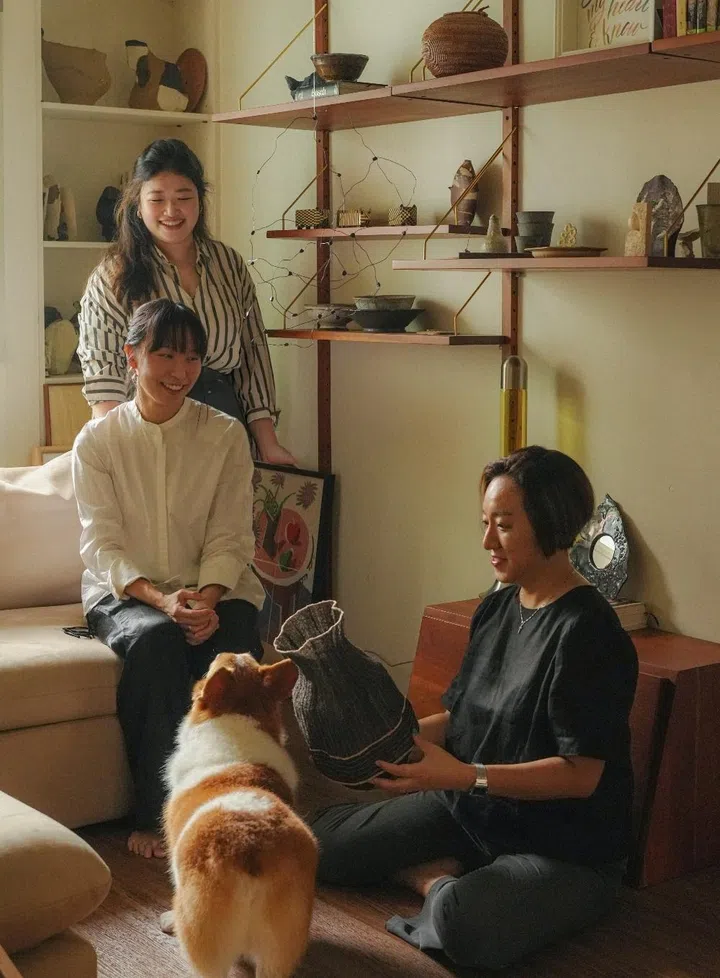
The three founders behind contemporary art and craft platform Still: (from left) Jasmine Leong, Chlo Hew, and Kaye Tan
“A ceramicist, for example, has also gone through a rigorous process of material exploration, refinement and continual making – much like any fine artist,” says Leong. “The difference between a craftsman and an artist often lies not in the depth of practice, but in how the resulting work is positioned and perceived.”
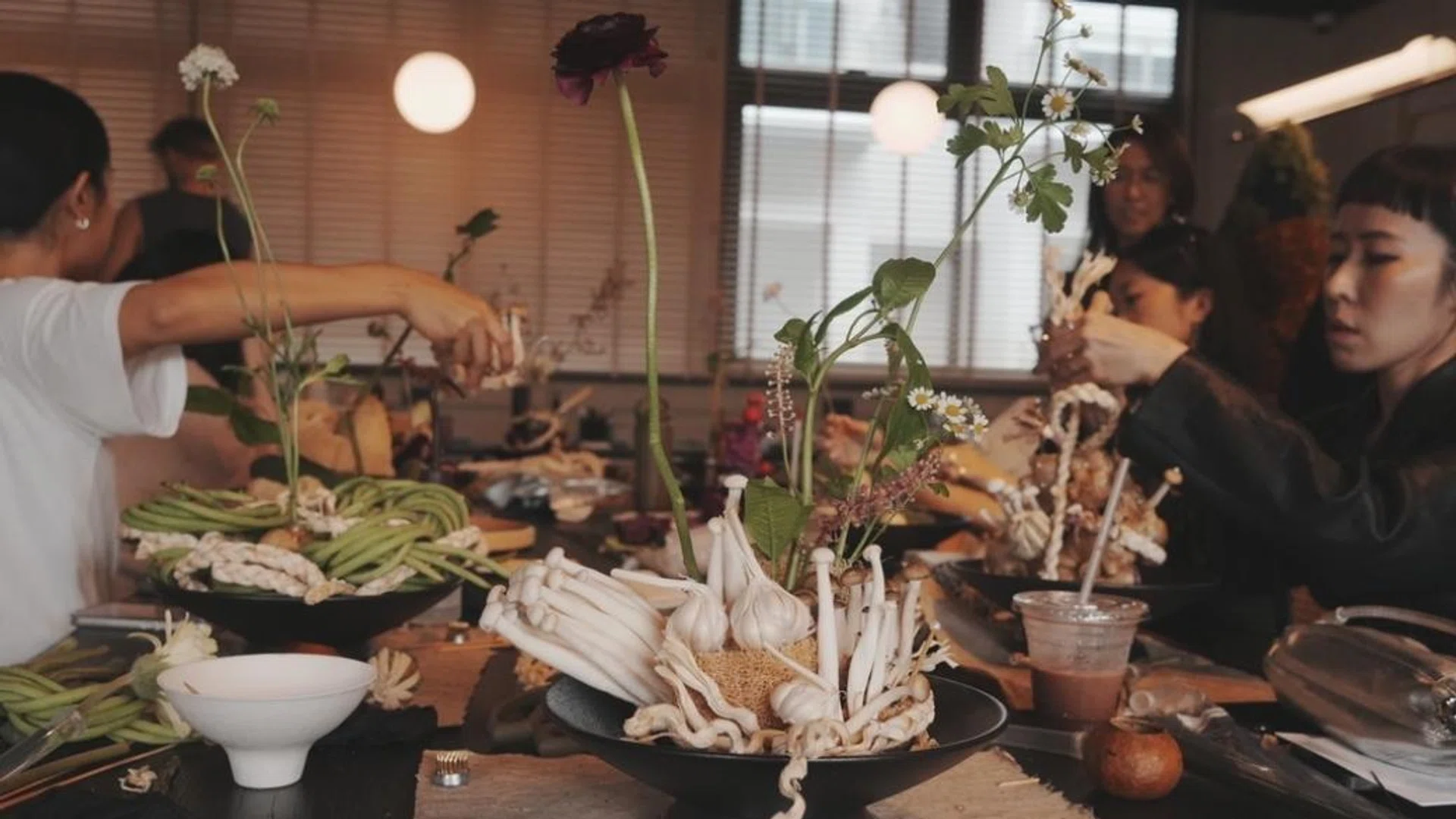
Through the platform’s signature StillScape exhibition series, the trio create experiences in which people get to encounter objects in lived‑in settings. Take, for instance, its second edition staged last November: a workshop led by ikebana practitioner Zoe Chen and food artist Gong Hua at the New Bahru serviced apartment Alma House.
Through multi‑sensory, hands‑on experiences such as a workshop inspired by food and ikebana (pictured here), contemporary arts platform Still invites people to slow down and notice the care, labour and artistic intent that go into handcrafted objects, blurring the line between what we see as purely functional and what we traditionally think of as art. It also aims to connect different makers and provide them with a platform to showcase their works.
Guided by the ikebana principles of balance and form, participants were encouraged to treat materials – flowers, vegetables and quotidian objects – with the same care as art objects, slowing down to notice their form, detail and composition.
Their next showcase is set to be held end June at The Glasshouse cafe on Neil Road, and will utilise ceramics and illustrations to try to shift how we view our relationships with animals. Intrigued? So are we.
Here, the trio share more on the platform:
How did the idea for Still first come about? Was there a specific gap you felt in Singapore?
Chlo Hew (CH): “Still started as a personal itch to scratch. As a maker, I realized that unless you’re already a household name, finding a stage in Singapore is tough. I was really moved by the micro-showcase culture in Japan, where retail shops host rotating art pop-ups throughout the year. It’s a perfect loop: the space stays fresh, the artist gets eyes on their work, and collectors find a hidden gem. I just wanted to bring that same hopeful exchange home and give the ‘undiscovered’ a playground. But visibility wasn’t the only gap we saw. There is also this tricky perception hurdle between what’s considered ‘functional art’ and ‘craft wares’.”
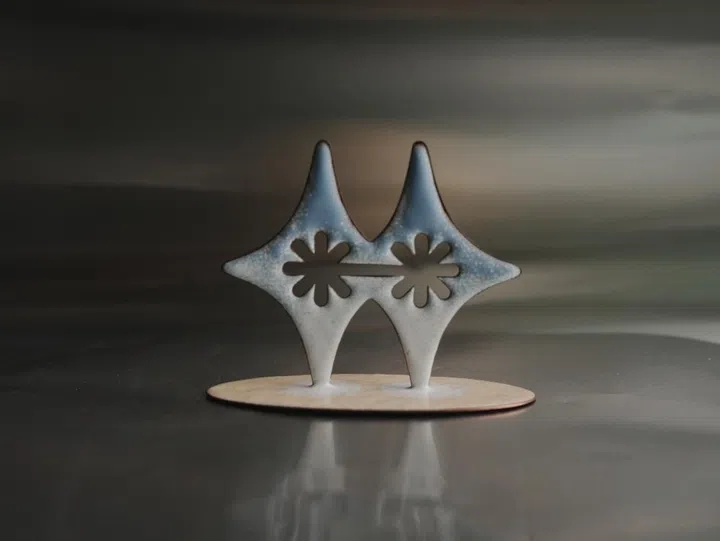
Artists spotlighted through Still include South Korean artist Seongyeong Jeong, who works with metal and enamel to create sculptures and “art jewellery”.
Jasmine Leong (JL): “When Chlo first asked me to be part of Still, I think we both recognised a gap between those who purchase handmade objects and those who collect art. Functional pieces like ceramics are often appreciated for their use or aesthetics, but are seldom considered at the same level as fine art.
Through Still, we hope to bridge this gap by reframing how these objects are seen. A ceramicist, for example, has also gone through a rigorous process of material exploration, refinement, and continual making—much like any fine artist. The difference is not in the depth of practice, but in how the work is positioned and perceived.
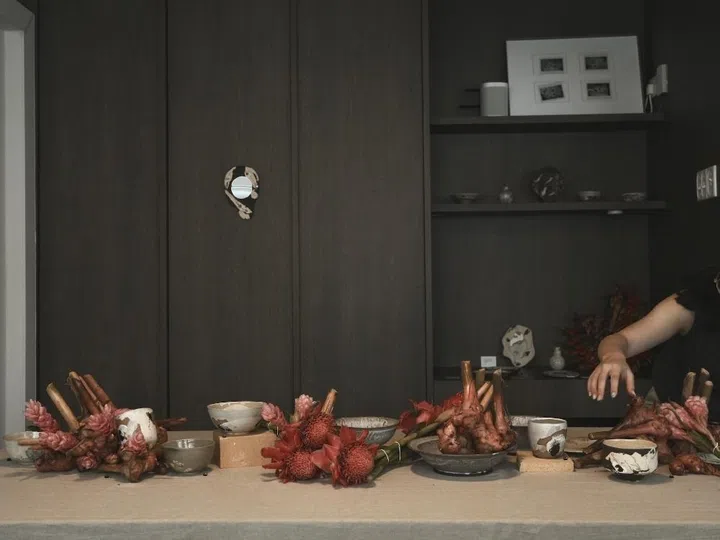
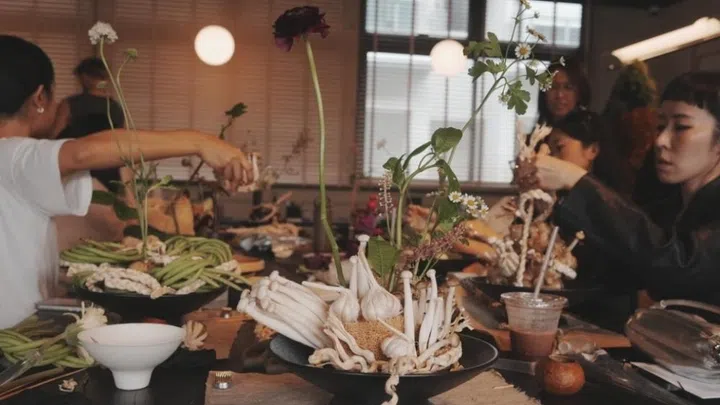
Pictured here: a scene from an experiential showcase Still organised last year, which meshed ceramics with food.
By placing these objects in a more considered context, we hope to encourage collectors in Singapore to see everyday pieces not just as functional items, but as works that carry artistic intent, authorship and process.”
Your shows typically pair up an international maker with a local one. What’s the thought process behind this approach?
JL: “I think the intent was to see if there will be any interesting chemistry that happens when pairing artists with different backgrounds and practice together. The cross-collaboration is also a way for the artists we collaborate with to reach out to a new market that they otherwise might not have access to.”
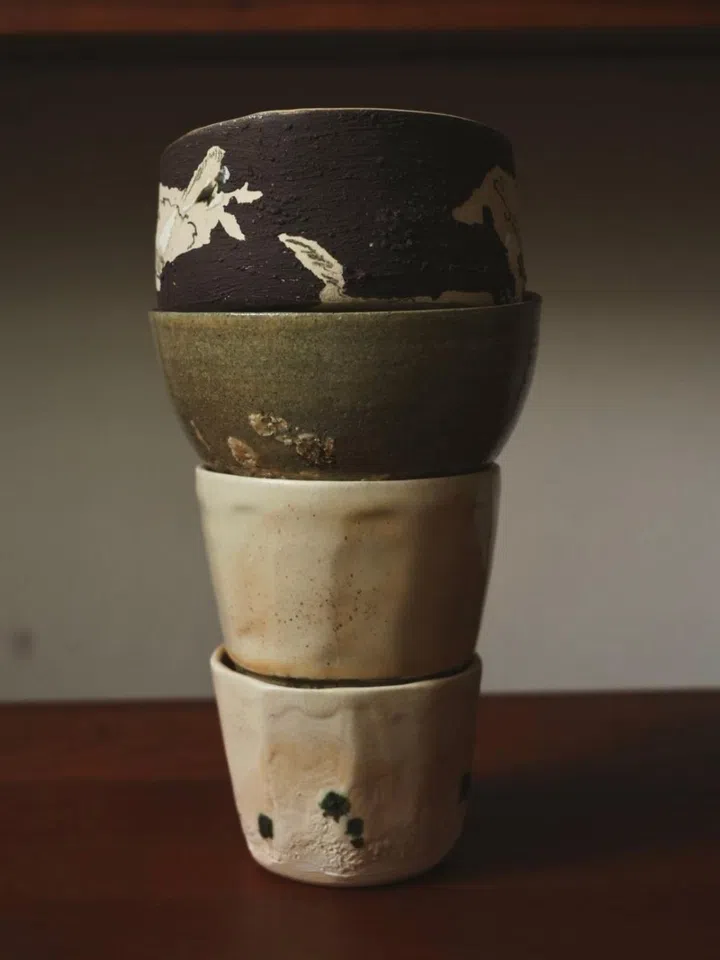
With Hew being a ceramicist (her works pictured here) and illustrator herself, she says that personal experience of being a maker allows her to be extra-empathetic when planning a Still exhibition. “I only curate spaces I’d actually want to show my own work in, which usually means prioritising honesty and tactility over market hype or noise,” says Hew.
CH: “Part of it is pure convenience. A lot of the artists we unearth aren’t exactly mainstream, so bringing them here saves our Singapore audience the hunt (and the airfare). There’s something so refreshing about pairing a local creative with someone from halfway across the world, seeing how a different culture shifts the way someone handles their medium. It forces a new dialogue and stops us from just nodding at the same ideas in our own little bubble.”
How do you guys find and curate artists/creatives to put together?
CH: “Sometimes it starts with a theme we’re excited to explore, for example, our upcoming showcase is all about animals. When I’m scouting, I look for makers who already have a natural connection to that world, whether it’s through their current work, an open mind to create a new collection with the theme or just seeing that they’re genuine animal lovers. That makes the collaboration feel much more authentic when there’s a shared passion...
But regardless of the starting point, the non-negotiable rule is that we have to genuinely love their creation. Even if the theme fits perfectly, the craft has to resonate with us first. If it’s not something we’d want to live with in our own homes, it’s probably not a fit for Still.”
What’s missing in how people currently engage with the idea of craft?
JL: “I think what’s missing is an understanding of both the value and process behind craft. In Singapore, craft objects are often judged at face value, so the price can feel hard to justify when compared to mass produced alternatives. At the same time, many aren’t fully exposed to the making process—the material exploration, and time involved. Without that context, craft is rarely seen with the same lens as art.
Kaye Tan (KT): “What I personally feel is missing is a deeper understanding of what craft really entails. The word craft is still frequently seen as something decorative, trendy or easily replicable, rather than the result of years of skill, material knowledge and labour. The wide availability of craft workshops also unintentionally creates the impression that these practices are easily attainable after a brief experience. With online shopping and image-led platforms so prevalent, objects are flattened into photographs, the texture, weight, imperfections and character of handmade work are increasingly overlooked.”
Tell us about your upcoming show:
CH: “The exhibition is titled Meet at Eye Level, and it looks at our relationships with animals—both the ones we live with, and the ones we carry within ourselves, through the mediums of ceramics and illustration. We’ll also have two activations highlighting each artist’s practice, plus a special limited-edition collaborative work. Do follow Still on Instagram (@_wearestill) for more details.”
An adapted version of this article first appeared in Volume 8 of F ZINE.