
What If Singapore Were a Living Prototype for the Future of Design?
Prototype Island, Singapore’s showcase for Milan Design Week 2026, brings together 15 designers and their takes on how we might live a little differently in the future. It pops up in Milan’s Brera Design District from 21–26 April, looking at how design can actually respond to real-world messiness — from healthcare and technology to heritage and everyday life.
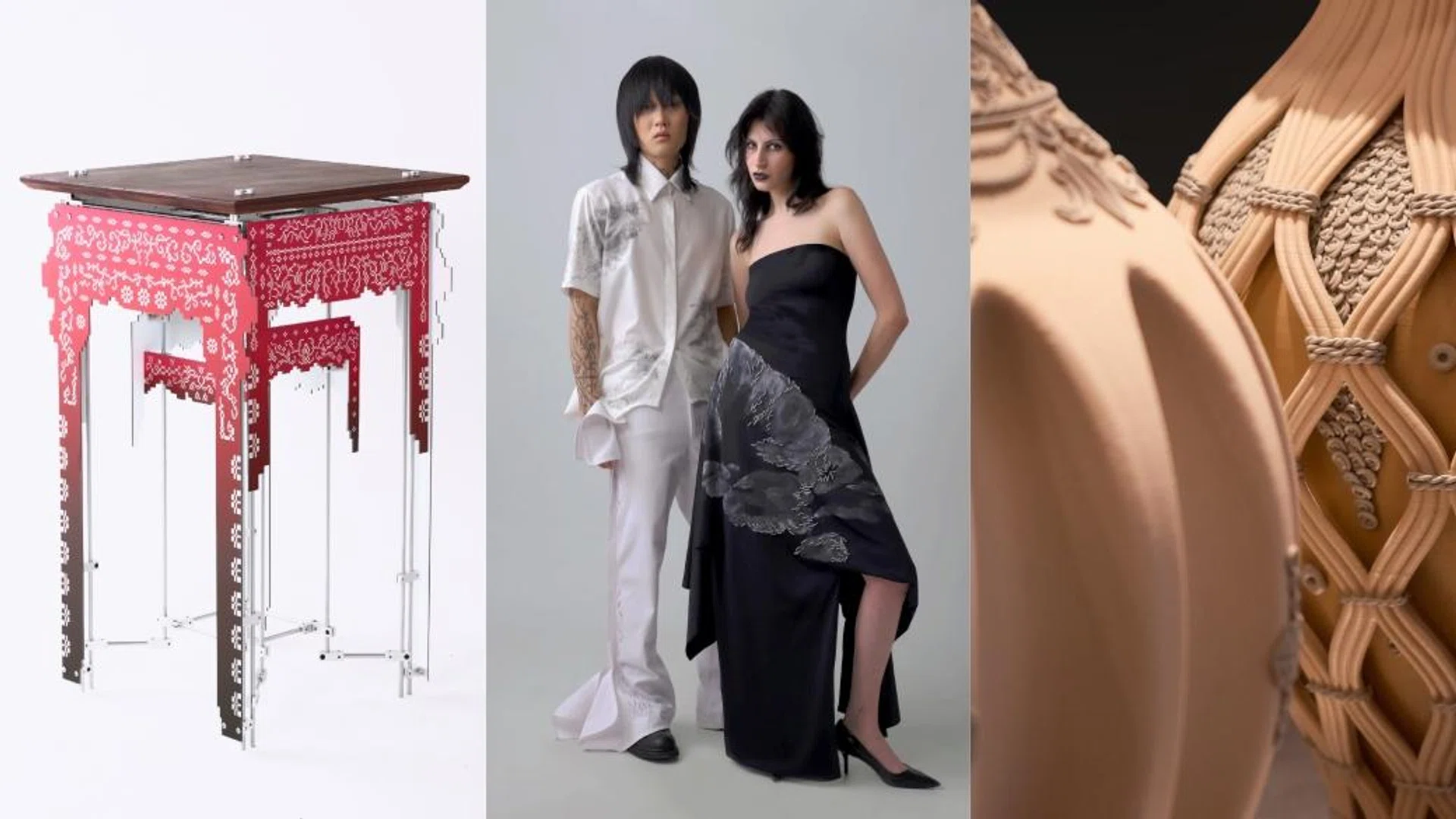
Think of April in Milan as the ultimate design pilgrimage: Milan Design Week is when over 300,000 industry obsessives descend on the city annually to clock the latest in design movements. Singapore, for one, is making the case that purpose-driven design should be the way forward.
Returning to the city’s Brera Design District from 21 to 26 April, this year’s showcase of 15 Singapore-based emerging and established designers is titled Prototype Island, casting our little island as a living laboratory where ideas are constantly being built, broken, and refined to see what actually sticks.
As the showcase’s lead curator Hunn Wai explains, it is an “ongoing act of world-making” where the goal isn’t a perfect, final answer, but the “sustained capacity to recalibrate” under real-world pressure. He is joined by assistant curator Eian Siew, an award-winning designer who actually debuted his own work in last year’s show, alongside renowned curator and author Maria Cristina Didero, who joins as Global Perspectives Advisor. Together, the trio has sharpened the show’s outward-looking lens, ensuring these very local “test bed” ideas resonate on a much larger stage.
Inside Prototype Island’s space at Foro Buonaparte 54, you will find 15 curated works grouped into three big-picture themes: Care Infrastructures & Cultural Continuities, which rethinks craft preservation and care systems; Technological & Material Ecologies, exploring modern challenges through experimentation with materiality; and Everyday Infrastructures, which focuses on reshaping the future of urban living.
Here, a closer look at some of the works that caught our eye:
Lustre Series & Earth Deity Altar by Roger Ng Wei Lun
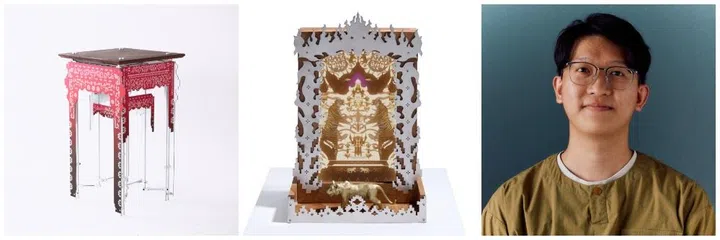
The traditional Peranakan tea table gets a digital soul here. Multidisciplinary designer and technologist Ng reimagines those intricate mother-of-pearl motifs using UV-printed aluminium panels and pixel-based patterns. It is a masterclass in keeping heritage alive by making it feel entirely relevant for a modern, industrial living room. Keep an eye out too for his speculative Earth Deity Altar, which reimagines spiritual rituals for a future of dense, vertical urban living.
Rememo by Celeste Seah
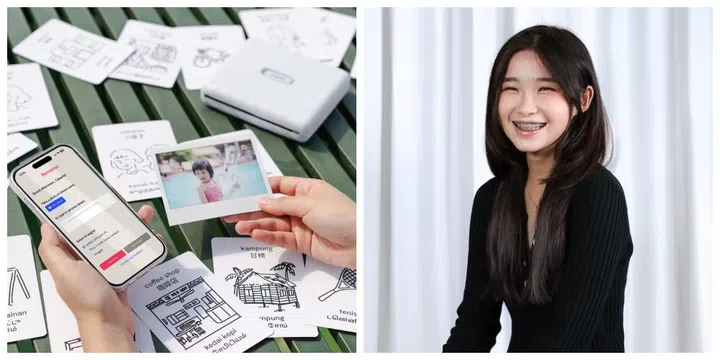
An industrial designer who bridges complex tech with intuitive, heart-led experiences, Celeste Seah is using AI to fill the gaps where memory fails. Her tool, Rememo, supports “reminiscence therapy” (using guided conversations about past experiences to promote comfort, pleasure and mental stimulation) by generating AI images to act as gentle prompts — especially when a patient’s personal photos are missing or no longer recognised.
Developed alongside occupational therapists in Singapore nursing homes, the system helps facilitators jump-start memories and keep a conversation moving so it feels natural and easy for the patient.
Language System by Serina Lee
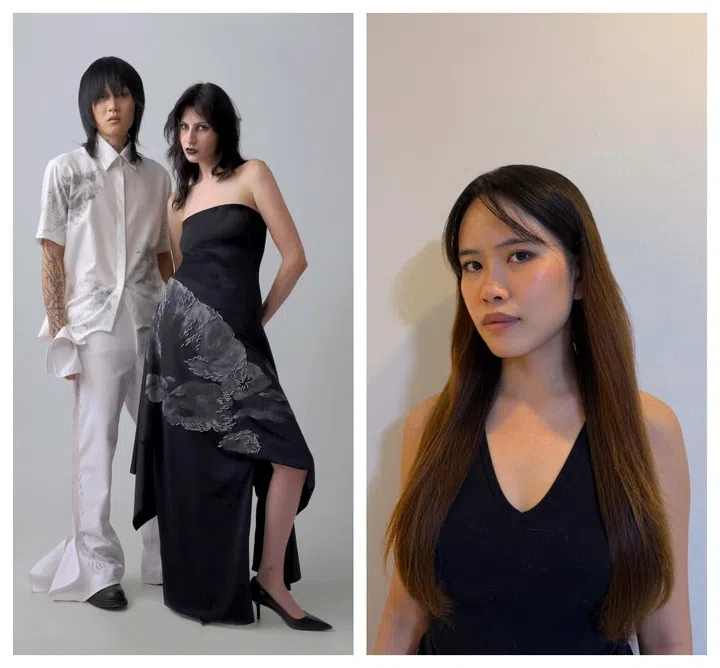
Serina Lee isn’t your typical fashion designer. Trained in Chinese calligraphy since the age of seven, her work sits at the intersection of art, language, and the body, often treating garments less like clothing and more like extensions of a brushstroke.
That thinking comes through clearly in her work Language System, which blends traditional Chinese calligraphy and painting with fashion. Using Chinese clerical script as a starting point, calligraphic strokes guide the design, pattern, and materiality of garments
At the same time, she introduces a bilingual system that merges English letters with Chinese characters, creating a kind of hybrid visual language that reflects layered cultural identities. The project also extends into the virtual realm, imagining how these ideas can exist across both physical and digital environments.It sounds complex, but at its core, Language System is about rethinking tradition as something flexible and alive, rather than fixed in the past.
Threads of Becoming by Melvin Ong, Shervon Ong, and Andy Yeo
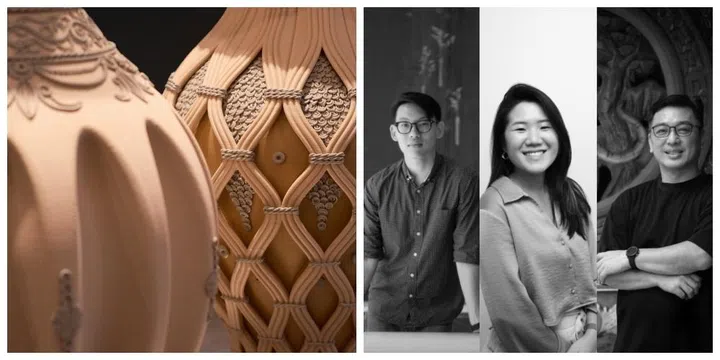
This collaboration brings together Melvin Ong, Shervon Ong, and Andy Yeo, three practitioners with a shared interest in materials, making, and the meanings embedded in craft. Their work spans design, objects, and heritage practices, looking at how form and process can shape more thoughtful, emotionally grounded experiences.
At the centre of the project is lacquer threading (qi xian diao), a rare traditional craft technique still practised in Singapore by Andy Yeo, one of the few remaining artisans working in this method. The final works take the form of vessels, first shaped using 3D printing before being finished with hand-applied lacquer threading. Together, the trio bridges contemporary design with traditional craft, exploring how heritage techniques can evolve through new collaborations and contexts.
Of Curves and Hands by Aditi Neti
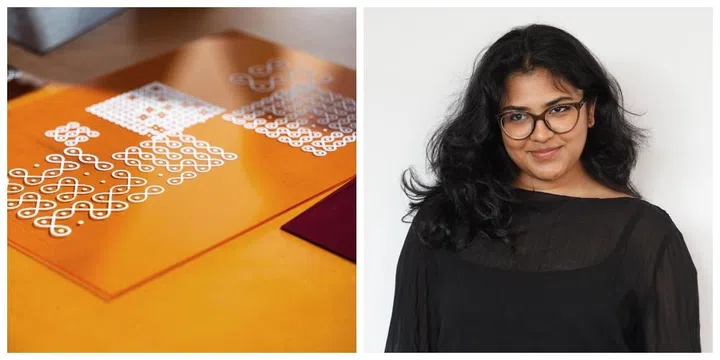
Aditi Neti is a Singapore-based creative technologist and design researcher originally from Bengaluru. Her work often sits in the space between culture and technology, looking at what happens when traditional practices are translated into contemporary systems.
For this work, she turned to kolam — a traditional South Asian drawing made daily at thresholds using rice flour. Here, kolam is reworked through computational and mechanical systems, raising a simple but loaded question: when something so rooted in touch and ritual is translated through machines, what stays intact, and what changes?
TessaCast by A*STAR Innovation Factory@SIMTech for Castomize
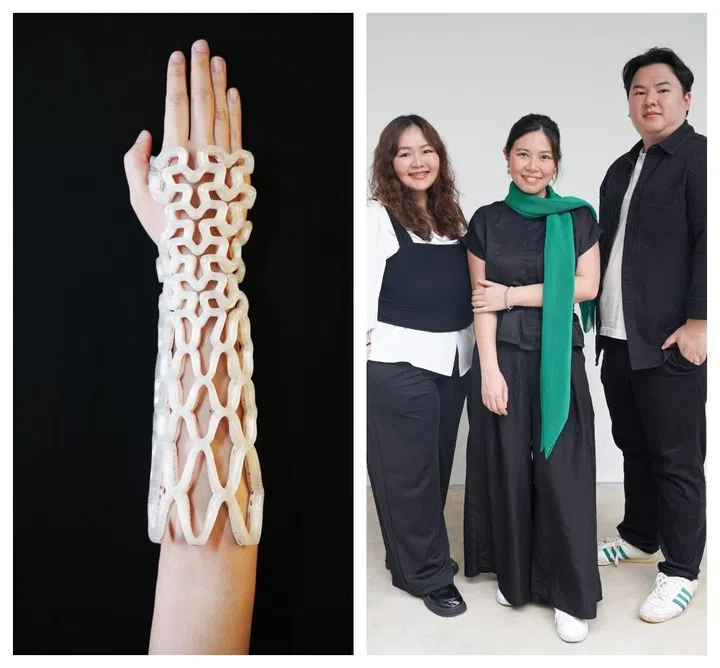
What if a broken bone didn’t mean a heavy, uncomfortable cast?
TessaCast is a new 4D-printed (basically 3D-printing, but with materials that can change shape over time in response to their environment) orthopaedic cast system developed by Audrey Ng, Rachel Ng, and Jasper Chua from A*STAR Innovation Factory@SIMTech.
It reimagines the traditional fibreglass cast as something lighter, breathable, waterproof, and shaped to fit the body more comfortably. Instead of one rigid structure, it uses a strong outer frame for support and a more flexible inner pattern so the cast can move with the body. A simple clasp keeps everything secure during recovery. The cast is also reusable and designed to reduce waste, offering a more comfortable and practical way to support healing — and might we add, it’s also infinitely more stylish than a traditional cast?