
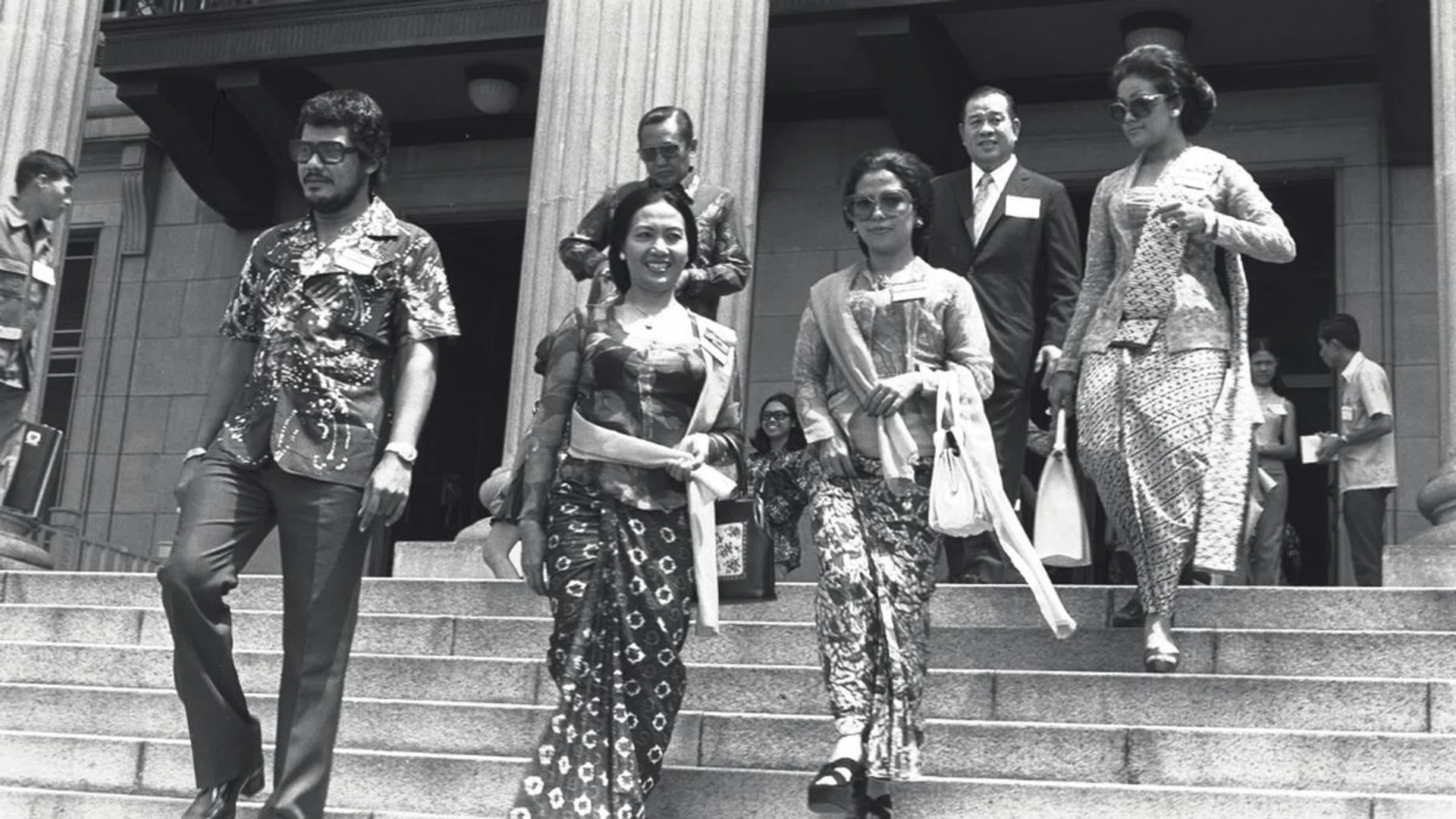
If a Merlion kebaya sounds like a trippy idea, spoiler alert: it actually existed. That piece of fashion trivia popped up on our social media recently when the Instagram account Kebaya Societe uploaded a post on Sep 15 to highlight the 50th year anniversary of the Singapore icon which was designed in 1964 but officiated in 1972.
We’re talking about handprinted images of the Merlion on a buttercup yellow kebaya which had been cut in the silhouette of a short body-hugging kota bahru style, which is known for its square-shaped collar. This mini fashion history bite is just one of many riveting posts on Nusantara fashion in Singapore, Malaysia, and Indonesia from the turn of the 20th century right up to the '80s that Kebaya Societe is reputed for since it began earlier this year.
The brains behind the account are Paris-trained fashion designer Sufiyanto A.S. (Sufi), who has worked in the creative teams of couturiers such as Stephane Rolland and Elie Saab, and Afiq Juana, a fashion business consultant interested in the intersections of fashion, data and web 3.0. While Kebaya Societe may be best known for sparking online discourse in March for questioning designer's Ong Shunmugam definition of progressiveness of Malay women which she made during a panel discussion, the account has become a veritable resource for vintage Nusantara fashion. Just clock their vast clippings from the now-defunct Malayan fashion magazine Fesyen and the collection of archival kebaya designs they have amassed.
At a time when vintage is a hot commodity and the resale and pre-loved market is buoyant, Kebaya Societe's approach on the people and stories behind the clothes – in the same vein of fashion accounts like Luke Meagher of @hautelemode and Brynn Wallner of @dimepiece.co fame – puts it in a special anthropological bubble. "We try to bring our pieces to life because museums tend to focus on the piece itself without the wearers and their story. If you look at our posts, we share the stories of the owners who wore the kebaya," says Sufi.
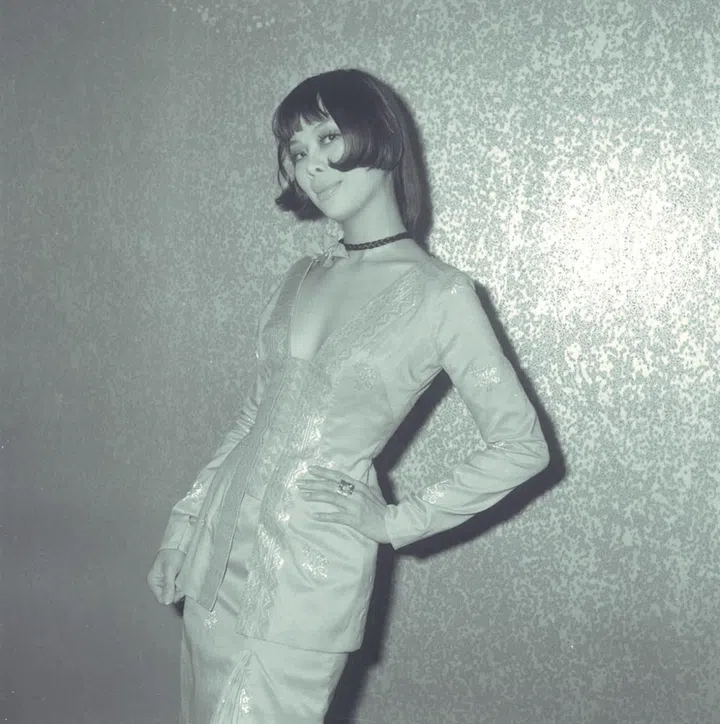
Model Chan Mei Ling in a 1970 photo, wearing a sarong kebaya designed by Roland Chow. Today, when we think of the kebaya, one image usually comes to mind: fitted, sheer, and intricately embroidered. But its story is far more diverse — and that’s exactly what the team behind Kebaya Societe wants to celebrate and share.
First things first, what is Kebaya Societe’s origin story?
Sufi: "I started collecting vintage European pieces when I was in Europe, because I'm a tailor. I collect these pieces to refer back to the way clothes were made back in the '40s (such as the soutache lace kebaya with batik wiron skirt pictured) and the '50s. When I returned to Singapore, I was still collecting Western pieces, but we noticed that there's a lack of local Malay fashion. When we think of the Kebaya today, there’s only one version: something that's fitted, sheer or embroidered. But that's not true. Just collecting the kebaya from the 1900s to the '80s from all over Nusantara, there’s a huge, diverse definition of what the kebaya is, with different styles, cuts, silhouettes and motifs.
Afiq: "I think local archives that are made public lack a certain vocabulary on the Nusantara and the Malay world. The birth of the page was to educate and share the diversity of not just the kebaya, but fashion, in the Malay world."
As your focus is on the broader fashion in the Nusantara world and some of these clothing are from way back in the archives, how do you go about your research process?
Sufi: "Most of our collection comes from families and the women who wore the kebayas. I have some pieces that belong to my mother from the '70s that have stories behind them. We try to bring our pieces to life because museums tend to focus on the piece itself without the wearers and their story. If you look at our posts, we share the stories of the owners who wore the kebaya."
Afiq: "It’s important to understand the context in which the kebaya existed, so the research comes firsthand from the families that we acquired them from. We also speak with our network of collectors so we can corroborate findings."
Could you share some of your favourite pieces from the archives?
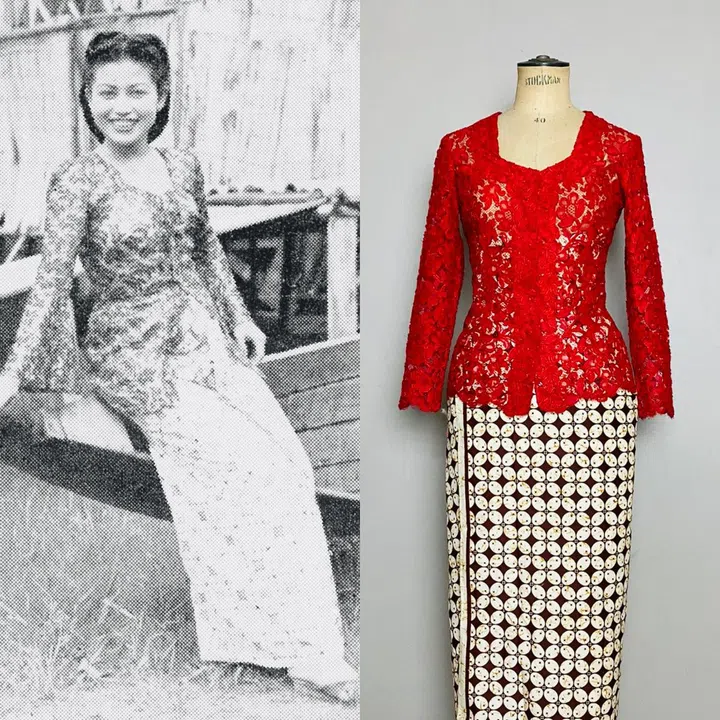
Veteran Malay actress Kasma Booty (left) wearing a dress with a sweetheart neckline, reminiscent of the kebaya style on the right.
Afiq: "This red soutache lace piece (right) is from the '40s. It has a sweetheart neckline at the front (similar to the one seen on veteran actress Kasma Booty on the left). The closure made it easier for women not to worry about the kebaya opening up or ripping from the kerongsang (a brooch that is used to pin together the kebaya). This piece gives a sense of how the kebaya is not stuck in time. Our interest is specifically how the kebaya has grown."
Sufi: "Even though the kebaya is from the '40s, yet we have followers who say that it’s something [they] would wear today! The nature of the kebaya is evergreen – it's supposed to be worn on a daily basis by women in [the past]."
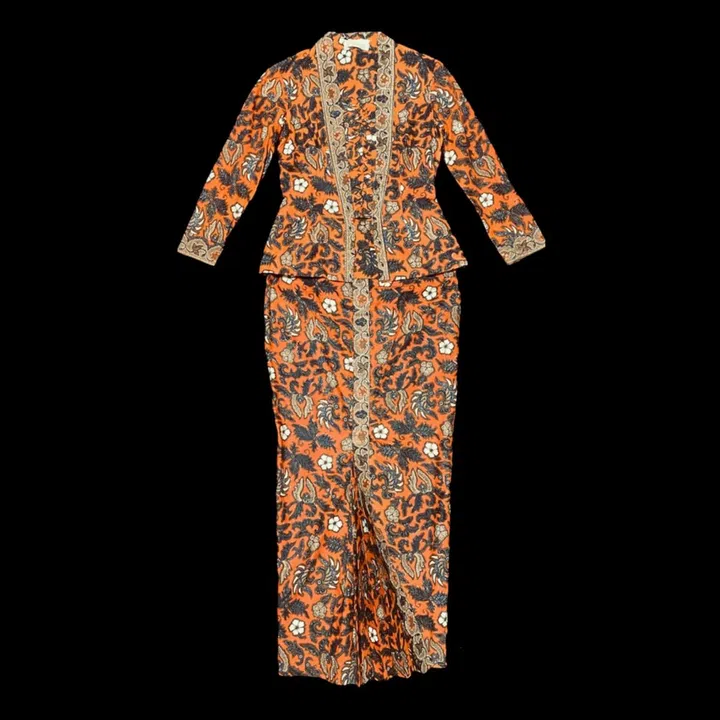
Kota Bahru–style kebaya
Sufi: "This is a kota bahru made locally, with the Vogue Dress Shop label. It was sold in the original John Little's – you can see the five digit phone number. This was very popular in the '60s. In terms of the batik print here, we’ve always joke that the batik makers in the '60s were probably high when they were experimenting with batik because the base colours tend to be brighter and more colourful."
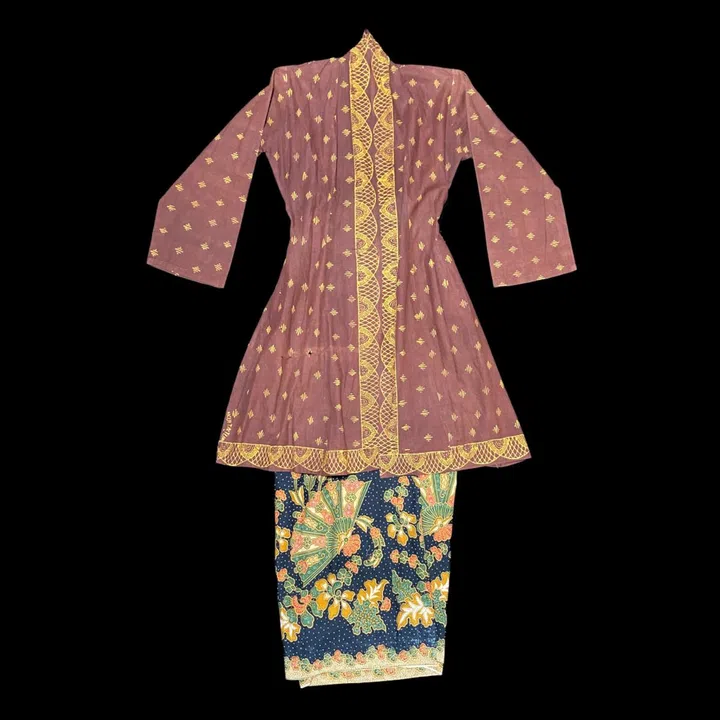
A vintage kebaya labuh from Kebaya Societe’s archive.
Sufi: "This kebaya labuh ends at the knee and is longer than your usual kebaya. One interesting detail is the batik tjap, with patterns and motifs that are not typical of batik. The dressmaker recreated lace and kerinkam, which are typically very luxurious and high maintenance. By mimicking these elements, this kebaya is perfect for daily wear. These pieces really give the breadth of what the kebaya is and show that it's not just one narrative of what the kebaya is. We want to share the diverse racial groups, the different communities who wore kebayas that are unique and identifiable to each of these groups."
A lot of people are viewing traditional attire both as a way of going vintage and as a means of conscious consumption. What are your thoughts on the broader significance of the kebaya in today’s world?
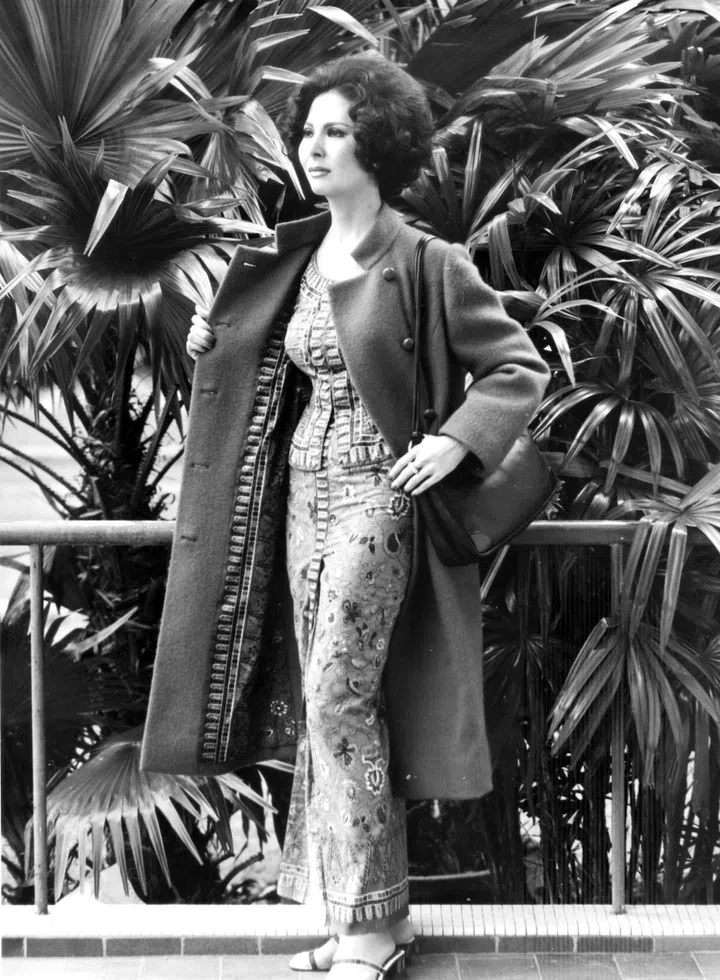
See Biew Wah modelled the iconic Singapore Airlines sarong kebaya for Pierre Balmain in 1972.
Afiq: "Whether there's a connection between conscious consumption and a love for tradition, I’m not sure. But we have to be aware that the nation resonates with the kebaya because our national brand has been built on the Singapore Girl (pictured above is the original Singapore Girl See Biew Wah in her Pierre Balmain-designed kebaya). When you talk about conscious consumption, it's also a question of identity and how your relationship with your clothes and your culture shapes that. What we've noticed after the Ong Shunmugam incident was that more people were trying to find ways to reconnect with their culture. When youths go to thrift shops, they don't just buy any random thing. They buy things that are aligned with and express their identity."
Sufi: "Just last Hari Raya, when we posted the images of different kebayas, we got many requests from our younger audience to make kebayas that they didn't know were part of Malay culture. I feel overwhelmed because, when we started this page, that was exactly what we wanted to do. We wanted people to see the kebaya as something wearable as opposed to costumey. Many followers have thanked us because they realise the richness of our heritage and fall in love with it again. The kebaya is now something that they can see themselves wearing over and over again instead of only during special occasions. Sustainability, right?"
Looking at the future now, there's a lot of talk on NFTs, metaverse and a very tech-enabled future. I was wondering where you see the kebaya situated in all of this.
Afiq: "I personally have been on platforms like Zepeto where digital garments are uploaded, so I think the move towards tech [for the kebaya] will be the same as every other garment that we see. Will there be people uploading the kebaya as a digital garment? Will there be people creating kebaya NFTs? I don’t know but I'm sure we can start. I think there's a space for traditional things in tech. The digital world is at its nascent stage, but I won't be surprised if 10 years from now, the SQ kebaya becomes a digital garment that’s sold. If anything, I would assume that would be the first Singapore digital garment because of its strong brand. It's not difficult to translate clothes into a digital garment. I've met artists who can do it in half a day. I think we’ll eventually move past Zoom to talk to each others’ avatars with headsets on. As someone in the local fashion industry, I've seen steps in that direction."
What are some local designers, fashion houses, or tailors like yourself, who incorporate the kebaya and other silhouettes from the Nusantara?
Sufi: "Firstly, Oniatta of @bajubyoniatta (pictured). She is a cultural entrepreneur who really dissects the kebaya, making it something wearable and modern that can be worn daily. Aqilah from Studio Gypsied also looks at a different kind of silhouette. She calls it a jacket, but we can see the essence of the kebaya. This is more boxy and appeals to a younger crowd. I think she's very smart in getting the younger crowd to fall in love with the batik quite successfully. Finally, we have Kiah’s Gallery. They promote a lot of modern batiks, with beautiful whites and indigos. They have an eye for selecting batik that appeals to diverse backgrounds. They also make a diverse range of styles, from the traditional kota bahru to the modern kimono. They’re very low key but do great work. We try to acquire pieces from them to showcase. Ultimately, we do what we can on our part, as the kebaya is part of Singapore's history that we need to document."
This interview has been edited for brevity and clarity