
So... You Want To Go To Fashion School?
Fashion school won’t magically turn you into the next Jonathan Anderson. But it might teach you how to survive criticism, find your point of view and realise the best ideas rarely come perfectly stitched together. We asked Singapore’s newest fashion design graduates what the experience was really like.
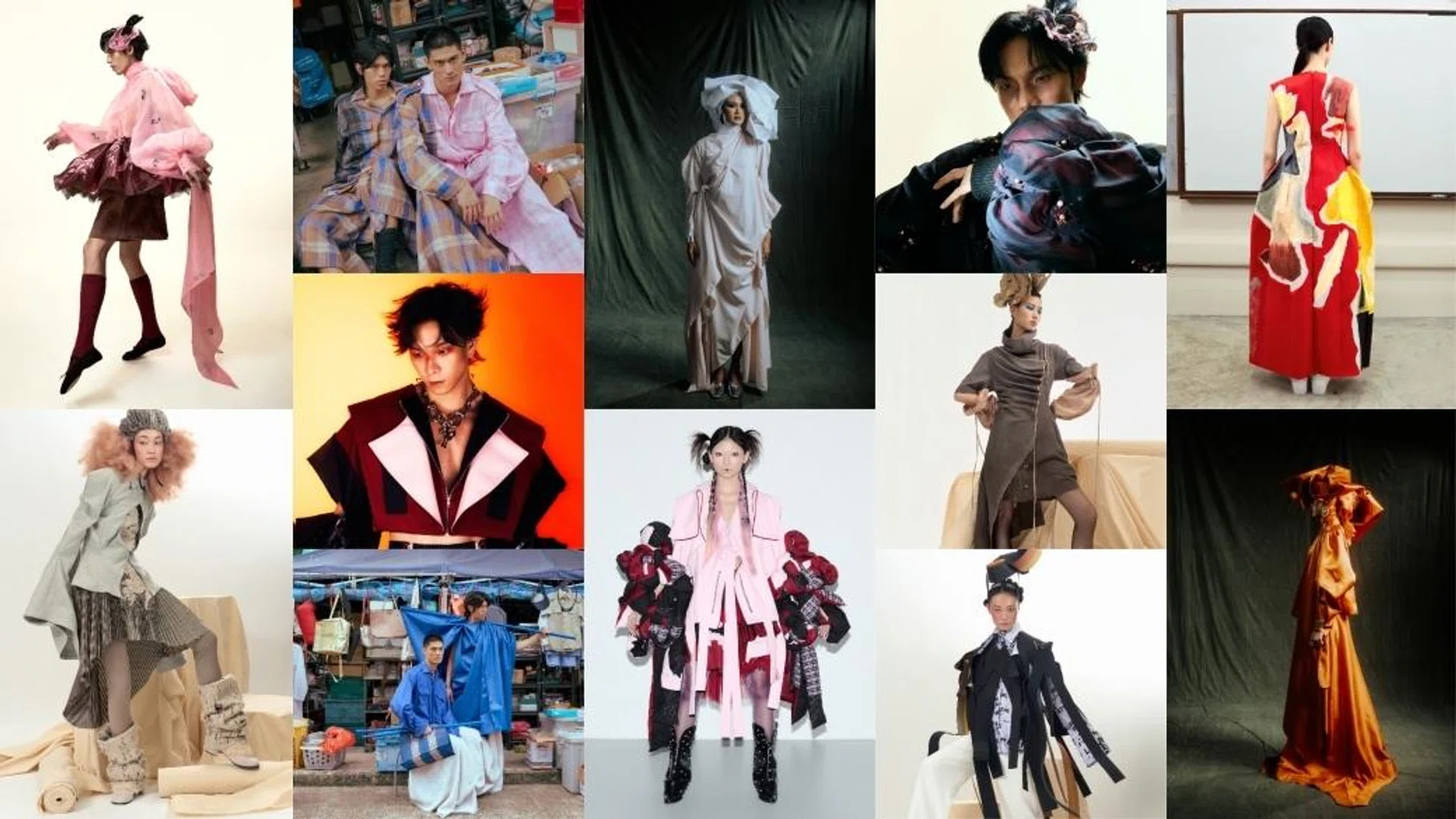
It’s never been more complicated to become a fashion designer. Beyond making clothes, today’s graduates are expected to think like storytellers, content creators, brand strategists and entrepreneurs—all while carving out an original point of view in an oversaturated industry.
With graduation season recently wrapped up, we asked students across Singapore’s design schools what they learnt, what they wish they’d been taught and how they’re preparing for fashion’s next chapter.
Ahmad Hanif, Lasalle College of the Arts
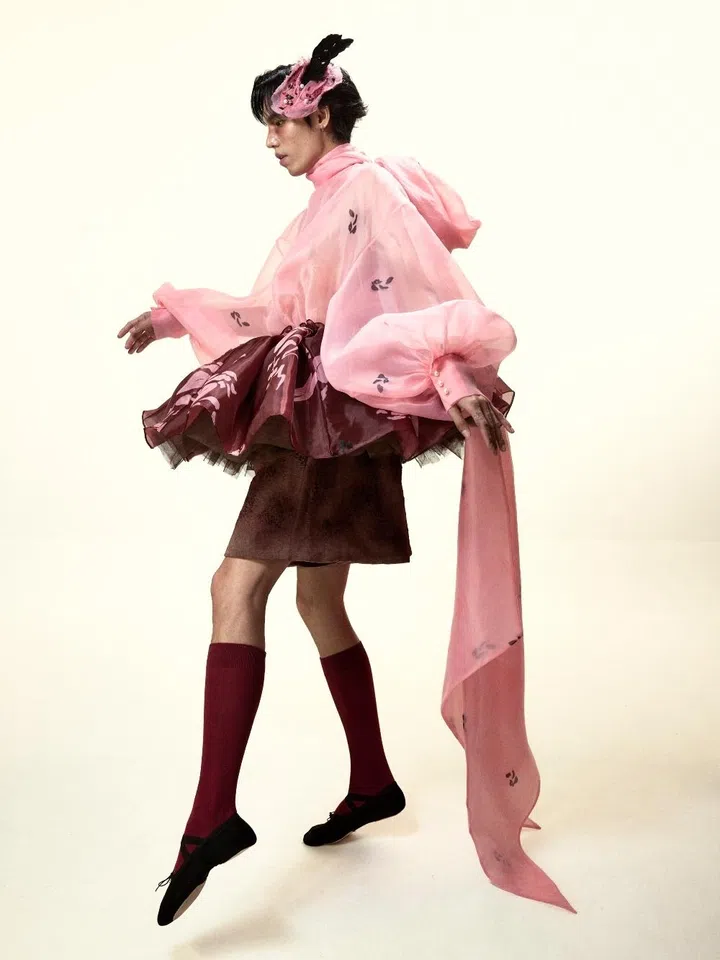
Inspired by Ahmad’s childhood dream of becoming a ballet dancer, his collection Silent Pirouette explores identity through the lens of gender and performance. Taking cues from Simone Rocha’s romantic approach to menswear, the collection pairs traditionally feminine silhouettes with richly textured textiles inspired by the bruises and physical toll of ballet—proof that beauty often comes with a few battle scars.
What made you decide to study fashion design in the first place?
“My first dream was actually to become a ballet dancer, but it wasn’t a path I could pursue because of my background and circumstances. Fashion design became the next creative outlet that felt right for me. My interest grew after discovering the work of Alexander McQueen. Seeing how fashion could tell stories and express emotions inspired me to study fashion design and develop my own creative practice.”
Best piece of career advice you’ve received?
“The most useful advice I received was that mistakes are part of the learning process. During my studies, I learned that not every idea will work out the first time, but experimenting and making mistakes helps you understand your work better. Especially in textiles, the process of testing different techniques and materials allows you to discover new possibilities.”
What’s one thing you wish fashion school had taught you?
“I wish there was more focus on developing your own creative identity and trusting your process. Fashion school teaches you many skills and techniques, but learning how to define and shape your own voice as a designer is something that takes time and experience. I think having more guidance on that would have helped me understand my direction earlier.”
The fashion industry needs more...
“Appreciation for craftsmanship and creativity. I think fashion should continue to value the process behind each piece, especially the time and skill involved in textiles and making. There is also a need for more openness in fashion, where people are able to express themselves beyond traditional ideas of identity and style.”
Follow Ahmad’s work here
Eng Li Wen, Lasalle College of the Arts
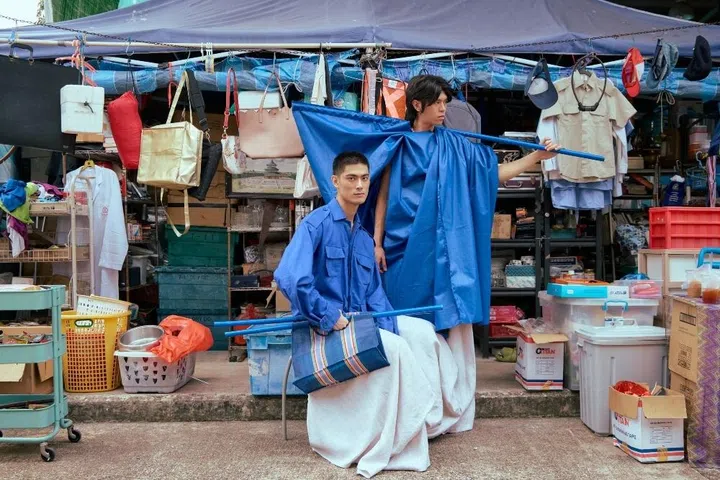
The closure of The Projector last year prompted this designer to reflect on graduating into an increasingly uncertain creative landscape. That train of thought led him to the now-defunct Sungei Road Flea Market—not just for its history as a space of cultural exchange, but for its personal ties to his own family. Drawing from 1980s army uniforms, workwear and tarp shelters, Eng’s collection transforms everyday symbols of labour, protection and memory into quietly emotional garments.
What part of the course helped you grow the most as a designer?
“The most productive part for me was definitely the making side of things. Draping, pattern cutting, and working through garments physically helped me understand design in a much clearer way. I tend to think better when I’m solving things through fabric rather than just on paper, so that process was where I learned the most. Research projects were also useful because they pushed me to think beyond aesthetics and consider context more deeply. We had a research checklist to ensure we explored our work more thoroughly.
What was less useful for me were the parts that felt a bit too removed from actually making clothes. I think I work best when ideas and construction are happening together, so when things became too theoretical, it was harder for me to connect them back to my practice.”
Best piece of career advice you’ve received?
“’Kill your baby.’ It’s about learning to let go of ideas you’re attached to. For me, I tend to research a lot of different things and get excited by many directions at once. But I’ve learnt that even if I like all of them, I can only really develop one properly within a project. Letting go of the rest is what allows the strongest idea to come through.”
What’s one thing you wish fashion school had taught you?
“I wish there was more guidance on how to present and communicate yourself after graduation, especially when it comes to employment. A lot of the focus is on developing your work, but less on how to clearly talk about your strengths or position yourself in the industry once you leave school.”
The fashion industry needs more...
“More thoughtfulness in how we make, consume and value clothing. I think the industry needs more respect for craftsmanship, labour and the stories behind garments, as well as more space for slower, more intentional ways of designing... At the same time, I think we also need more informed and knowledgeable consumers—people who understand what goes into making clothing and what actually determines its value beyond just price. That awareness also plays a part in shaping the direction the industry moves in.”
Follow Eng’s work here
Nurul Izza Binte Rahmat, Lasalle College of the Arts
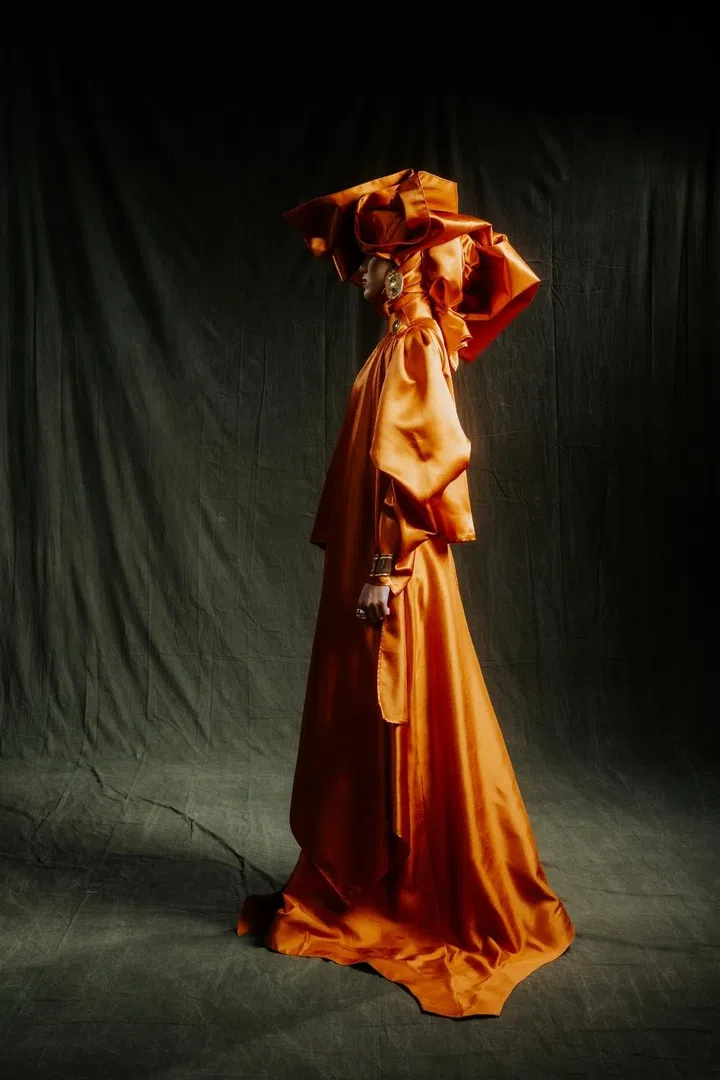
Growing up as a hijabi (a Muslim woman who wears the hijab, a head covering that veils the hair, neck, and chest), Nurul often found herself searching for clothes that felt both modest and modern. That experience became the starting point for ModestScape, a collection that brings together the soft drape of a hijab and the bold geometry of brutalist architecture to imagine a more expressive take on modest dressing.
What part of the course helped you grow the most as a designer?
“The most productive part was the hands-on development process: experimenting with fabrics, garment construction and concept building. It really helped me understand how to translate ideas into tangible outcomes.
What felt less useful at times was the constant back-and-forth around limiting the use of my signature colour, orange. While I understand the importance of balance, it sometimes disrupted my creative flow, as I became more focused on restricting the colour than fully exploring my design direction.”
Best piece of career advice you’ve received?
“To design with intention, not just for trends. Creating work that has meaning, a clear identity and a strong point of view will always stand out more than following what’s popular.”
What’s one thing you wish fashion school had taught you?
“I wish there was more focus on building a brand in the real world, especially understanding business strategy, production processes, and how to sustain a label long-term, not just create collections. Gaining deeper insight into production chains and how garments move from design to manufacturing would have been especially valuable.”
Now that you’ve graduated, what’s next for you?
“I plan to continue developing my brand, BYNIBR, while exploring modestwear in a more contemporary and sustainable way. I’m interested in building something beyond seasonal collections, focusing on thoughtful, long-lasting pieces that carry cultural relevance and a strong design identity.”
Follow Nurul’s work here
Quek Yu Tong, Lasalle College of the Arts
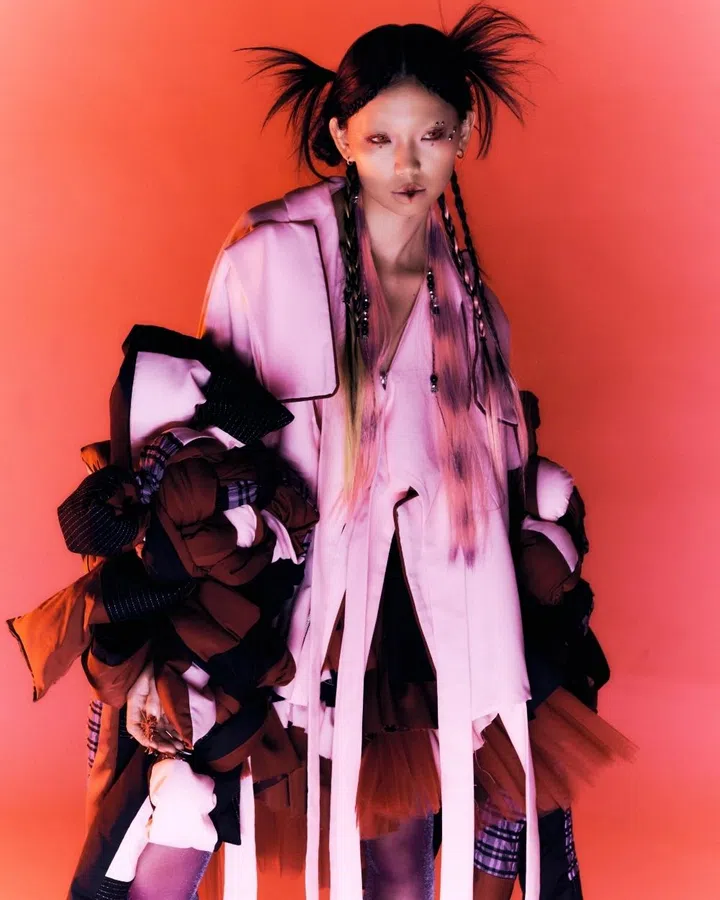
For Quek, Ne Zha (the popular Chinese film series about the deity known for being defying authority) wasn’t just a great film—it became the starting point for a collection about identity, destiny and cultural heritage. Drawing from her heritage and Buddhist beliefs, the collection blended traditional Chinese aesthetics with her long-running interest in sci-fi influences and EDM, imagining a future where heritage and innovation exist side by side.
Best piece of career advice you’ve received?
“If you never try, you’ll never know.”
If a friend was thinking of applying to fashion school, what would you tell them?
“I would tell them to go for it if they’re genuinely passionate about fashion or eager to explore something new. Fashion design can be incredibly rewarding, but it’s also challenging and requires dedication, resilience and a strong mindset. There will be setbacks and moments of self-doubt, so it’s important to stay focused on your goals and keep believing in yourself. Most importantly, don’t let negativity or fear of failure hold you back. Follow your curiosity, trust your instincts and give it your best effort. After all, “if you never try, you’ll never know”, right?”
The fashion industry needs more...
“I think the fashion industry needs more designers with a strong and authentic voice. It’s easy to be influenced by others’ opinions early on, and while feedback is important, I believe designers should also protect their original vision. Otherwise, there’s a risk of losing their individuality in the process.”
Follow Quek’s work here
Vanessa Lim, Lasalle College of the Arts
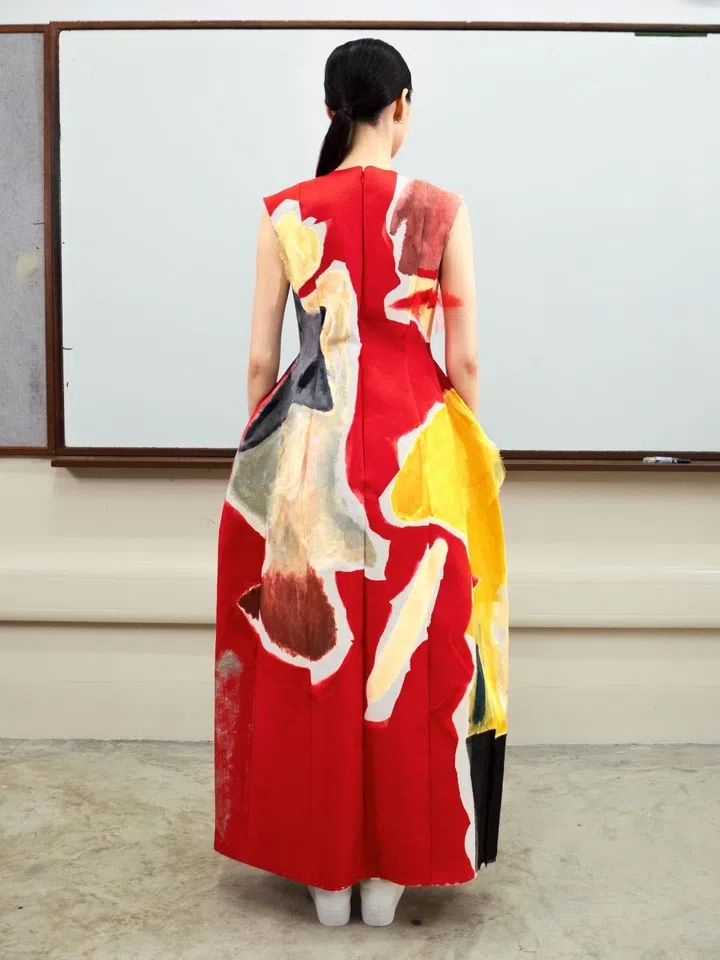
What does class privilege look like in Singapore? For Vanessa Lim, it became the starting point for a graduate collection exploring how wealth can open doors to better education, healthcare and opportunities, while others begin life with fewer advantages. Through research into meritocracy and inequality, she transformed those ideas into hand-drawn prints and design details inspired by everyday class markers.
Class privilege is an interesting point of inspiration. How did you get there and how did that translate into your collection?
“It came from a personal place of reflection, as whenever I scroll through social media and come across posts by non-profits like UNHCR, UNICEF or charitable organisations, I feel this deep sense of guilt and bafflement because I don’t understand how people’s lived realities can differ so vastly simply because they’re born into privilege.
This propelled me to look into privilege in Singapore, or more specifically, class privilege. I had to do quite a bit of research on the topic, which also led me to explore meritocracy and inequality in Singapore, as they are closely linked. To translate these ideas into a collection, I took inspiration from everyday life and class markers in Singapore, as well as quotes from my research and my own personal reflections on the topic. There was a lot of ideating, drawing, painting and collaging, as I worked to turn those artworks into prints and design details that could communicate the message behind my collection.”
What’s one thing you wish fashion school had taught you?
“I feel like fashion school could have taught us more about what it’s really like to work in the industry. I love that school taught us to dig deep and cultivate our identity as designers, because that’s so important.
But at the same time, more often than not, when you’re actually in the industry, you’re designing for a brand rather than your own collection. Most of the time, you’re working with existing silhouettes, tweaking them before they’re ready to be sold. And honestly, you don’t have that much time to develop a collection either. Every three months, you might be launching a new collection, and the designs are produced en masse. These are things we don’t really learn in school.”
Follow Lim’s work here
Tan Xuan Qi Natalie, Nanyang Academy of Fine Arts
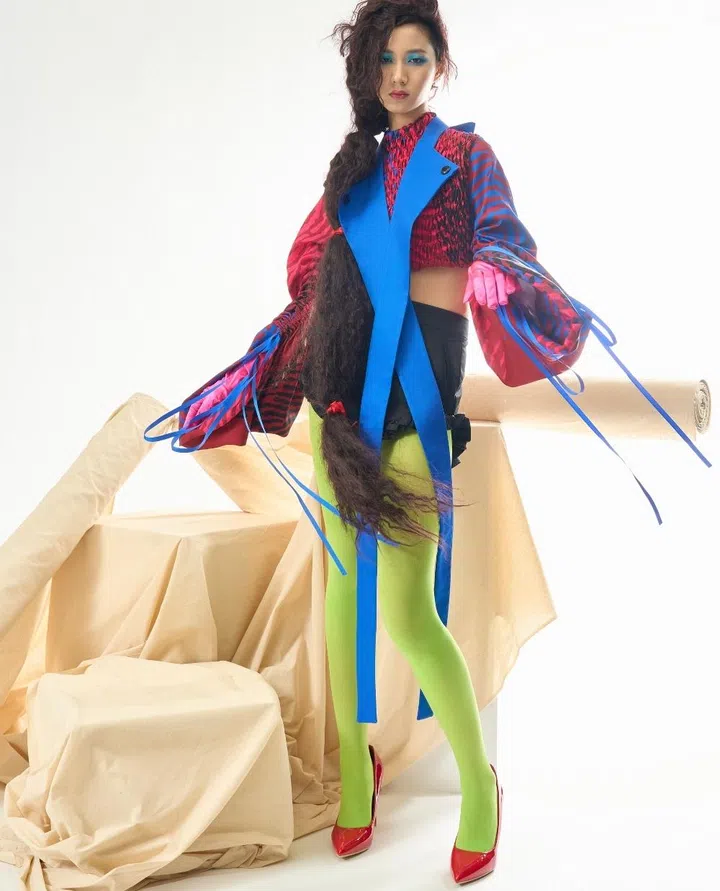
Some collections begin with a trend. For Tan, the kick-off point began with a person much closer to home: her mum. Traces of Her explores the lasting influence a parent can have, transforming her mother’s fingerprint, alongside symbolic design details and silhouettes, into a wearable story about growing up, trust and unconditional support.
Best piece of career advice you’ve received?
“One of the most valuable pieces of advice I received at NAFA was never to think that you’re falling behind. Everyone moves at a different pace and in a different direction, and just because your journey looks different from someone else’s doesn’t make it any less meaningful.
In a creative field, it’s easy to compare yourself with others or feel that your work isn’t good enough. I’ve learned that what matters most isn’t whether someone is ahead of you, but whether you’re continuing to learn and improve.”
The fashion industry needs more...
I think the fashion industry needs more authenticity and individuality. With trends moving so quickly and social media constantly influencing what we see, there’s often pressure to create work that follows what’s popular rather than what’s genuine.
The work I admire most comes from designers who draw on their own experiences, perspectives and stories. Fashion has the power to communicate ideas and connect with people on a deeper level, and I’d love to see more emphasis placed on storytelling and thoughtful design. I also hope the industry continues to embrace diverse creative voices and different definitions of success. Not every designer needs to follow the same path, and I think that’s what makes fashion such an exciting and meaningful industry.”
Laura Pareece Satrio, Nanyang Academy of Fine Arts
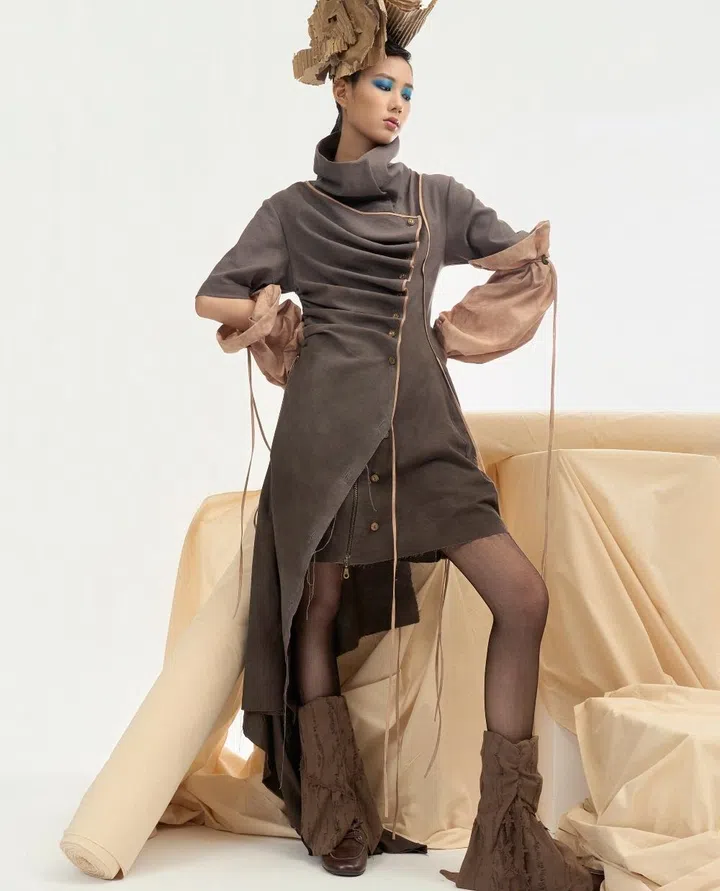
The devastating floods caused by the tropical cyclone clusters that swept across Southeast Asia in late 2025 became the starting point for this graduate collection. Rather than focusing on the disaster itself, Satrio turns her attention to the people who lived through it: their resilience, vulnerability and determination to keep going.
Your collection was inspired by a natural disaster. How did you translate that into your designs?
“I explored the relationship between people and their environment during moments of crisis, translating these observations into design details and construction techniques. For example, layered structures reflect the contrast between resilience and fragility, while asymmetry, exaggerated proportions, raw edges and dyed hems echo the disruption caused by flooding.
Mismatched button placements and cinched elements symbolise the unpredictability of rising waters, while raw edges and dye concentrated from the hip down reference the visible marks left behind by flood damage. Draped fabrics and hanging cords add physical and visual weight to represent emotional distress and the psychological burden carried by displaced families. Contrast binding along the seams highlights fragile “cracks” in the garments, symbolising damaged infrastructure.”
Best piece of career advice you’ve received?
“One piece of advice that has stayed with me is: ‘Don’t be afraid to ask for help.’ Throughout my studies, I often preferred working independently because I believed it would help me build confidence in my own abilities. A lecturer reminded me that seeking guidance isn’t a sign of weakness, but an important part of learning and growth.
That advice encouraged me to become more open to different perspectives and to see collaboration as an opportunity rather than a dependency. It also taught me to embrace constructive feedback as a valuable part of improving my work while trusting my own judgement and creative vision. Finding that balance between listening to others and believing in myself has been one of the most important lessons I’ve learned.”
The fashion industry needs more...
“I believe the fashion industry needs greater accountability and a long-term commitment to sustainability. Sustainability shouldn’t be treated as a passing trend, but as a core value that shapes the future of fashion.
To me, sustainability goes beyond reducing textile waste or adopting more ethical production methods. It also means rethinking the life cycle of garments, especially at a time when the industry is facing significant clothing surplus and textile waste. I hope to see more innovation in how existing products can be reused, repurposed and given a second life to create lasting environmental impact.”
Tan Chong Wei, Nanyang Academy of Fine Arts
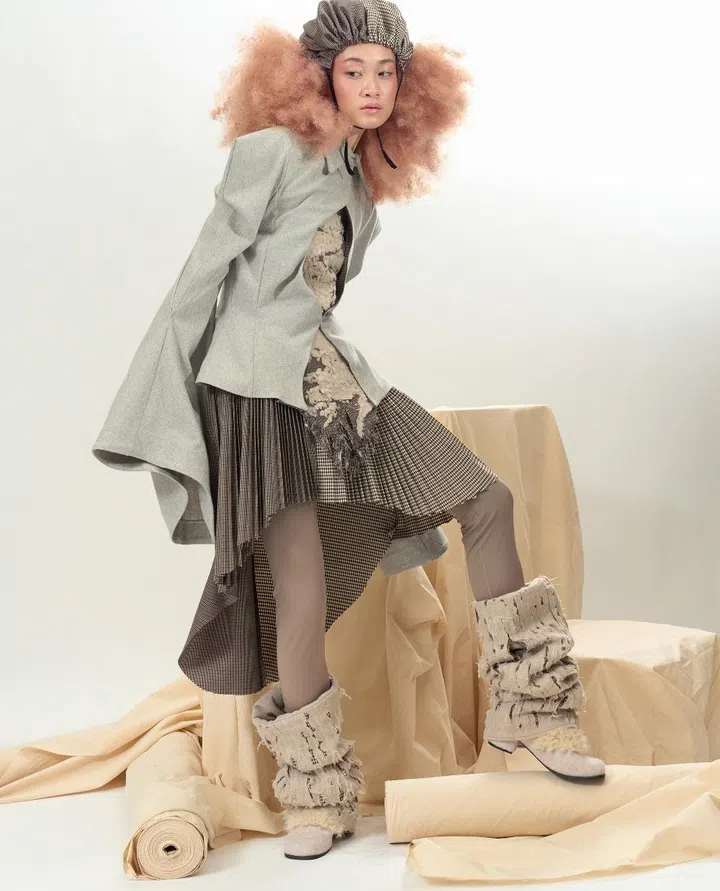
For Tan Chong Wei, identity isn’t something we’re born with—it’s something that’s constantly shaped over time. His graduate collection, Genetic Mosaic, explores the relationship between genetics and personal experience, reflecting on how inherited traits and lived memories combine to create a unique sense of self.
Best piece of career advice you’ve received?
“One lesson that has stayed with me is that every collection should have a clear purpose. Before creating anything, I should understand why I want to make it and how I want to communicate that idea. That advice has shaped the way I approach every project; rather than focusing only on the final garment, I think carefully about the concept, research, materials and emotions behind each design.”
The fashion industry needs more...
“I believe the fashion industry needs more meaningful creativity and stronger storytelling. While trends and fast-moving consumer habits influence today’s industry, I think designers should also focus on creating work with purpose, where the ideas behind a garment are just as important as its appearance.”
Wei Hao Acosta Peh, Nanyang Academy of Fine Arts
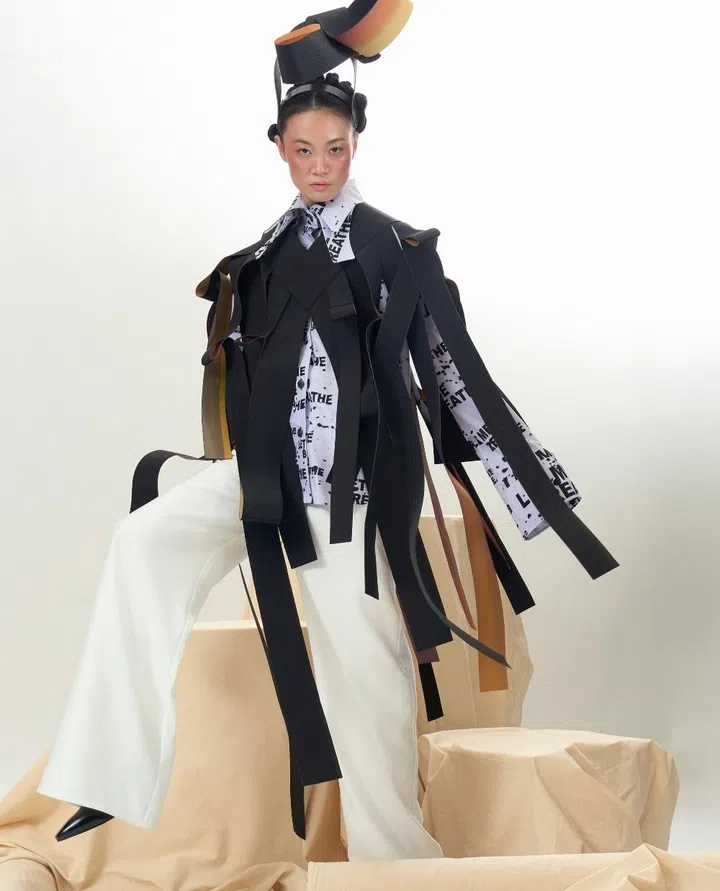
Moving to a new country isn’t always the fresh start people imagine. In Drowning in Change, Wei Hao Acosta Peh draws on his own journey from a small mountainous town in the Philippines to Singapore, transforming the excitement, uncertainty and loneliness of starting over into a deeply personal graduate collection.
What prompted you to study fashion design in the first place?
“I grew up in a mountainous area in the Philippines, where life was simple and surrounded by nature. We didn’t have much access to technology, and I didn’t even know what fashion was back then. One day, my cousin was watching the Miss Universe pageant, and I remember being mesmerised by the gowns. I was fascinated by how dramatic and beautiful they were.
That was the moment my interest in fashion began. When I moved to Singapore in 2017, I was introduced to a whole new world of fashion. I started learning about designers, collections and the creative process behind them. One designer who has had a lasting influence on me is Robert Wun. I admire how each of his collections tells a powerful story, and I’m especially drawn to his couture and avant-garde approach. His work showed me that fashion can be emotional, theatrical and deeply meaningful.”
Best piece of career advice you’ve received?
“One piece of advice from my lecturer has stayed with me: be daring and keep exploring. Fashion has no limits and there are always different ways to approach a design. Stepping outside my comfort zone and experimenting often leads to unexpected discoveries, and that’s where the most meaningful work begins.”