
SuppCultures: How Local Designer Elon Koh Is Reweaving Culture Into Our Everyday Wear
We spoke with 27-year-old Elon Koh about SuppCultures, a passion project that explores heritage storytelling, cultural appreciation, and the power of slow fashion.
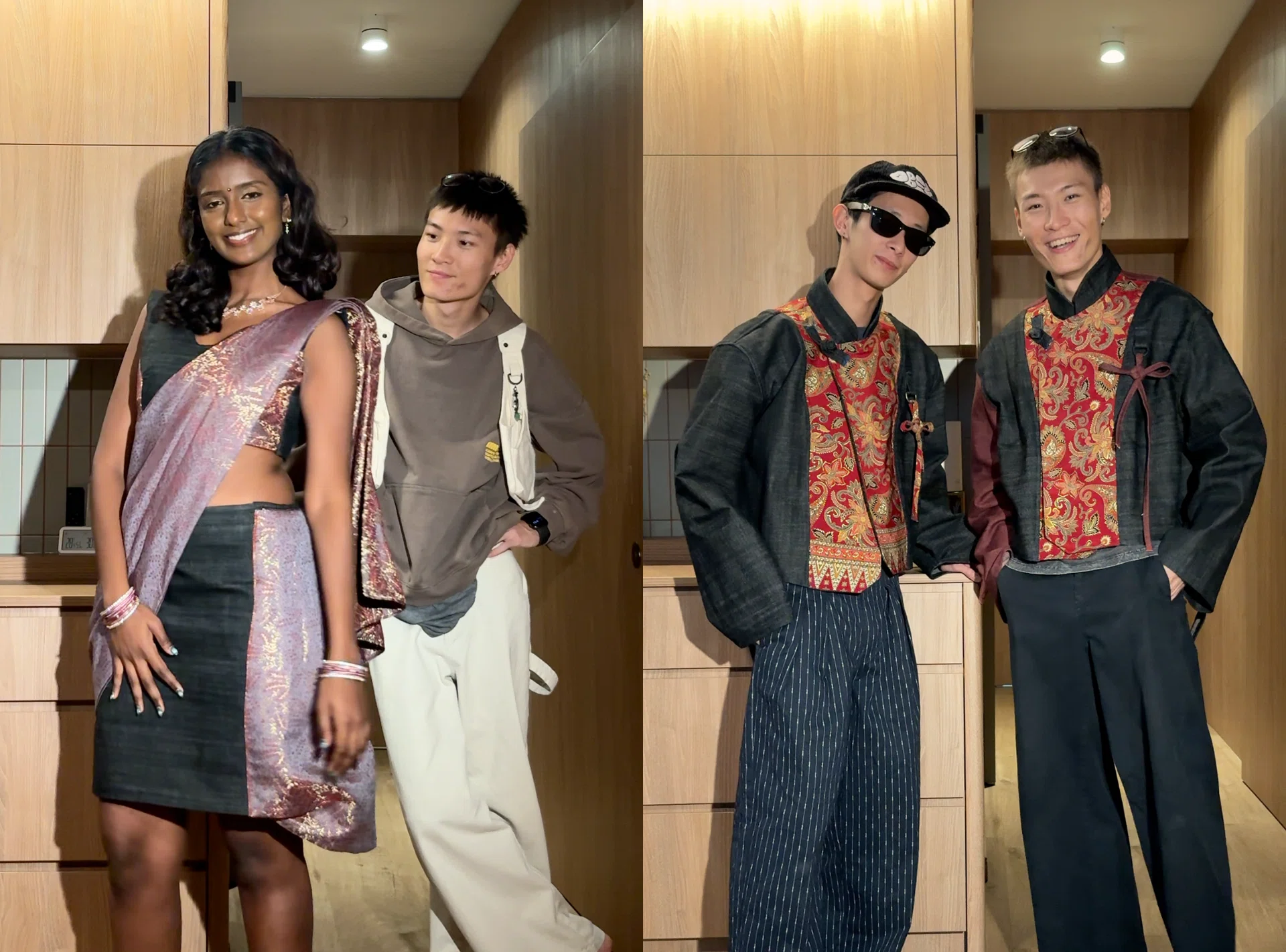
In the cultural melting pot of Singapore, locals typically wear traditional outfits on special occasions like Chinese New Year, Hari Raya, Deepavali and so on. But outside of those designated dates, how often do we actually celebrate our cultures through clothing? In a world increasingly clouded by globalisation, fast fashion and fleeting trends, a young Singaporean designer looks to the past for answers.
Meet Elon Koh and his latest creative venture, SuppCultures. Created in tandem with his clothing label Supp Design, SuppCultures is a TikTok and Instagram series that reimagines cultural attire through a modern streetwear lens. Each episode begins with Koh posing the titular question to his guest: “How do you wear your culture?”
Drawing inspiration from their cultural backgrounds and personal experiences, he turns to textiles and fabrics to translate heritage into modern-day silhouettes.
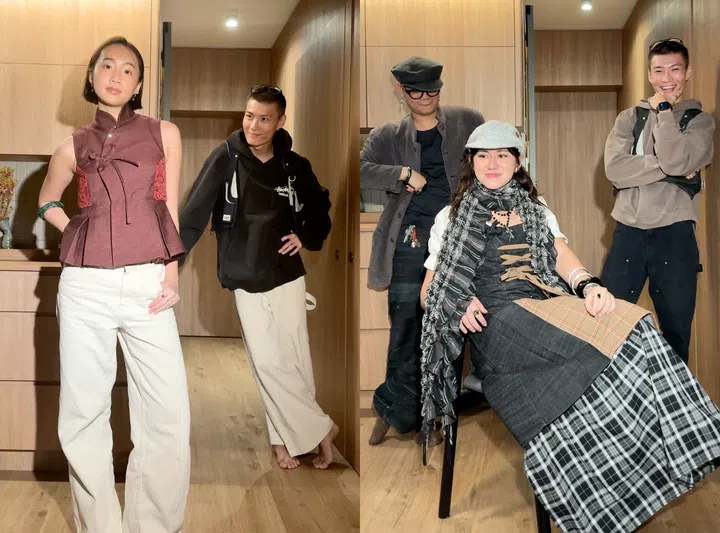
From a Qipao-style summer blouse to a Chinese-inspired German dirndl, his work seamlessly blends both cultural heritage and contemporary style. But naturally, in using culture as his artistic medium, he soon found himself navigating the complex discourse between cultural appreciation and appropriation.
We sat down with Elon to find out more about his journey as a fashion designer, his creative processes and inspirations, and his thoughts on culture, fashion and identity in Singapore.
Hi Elon! Tell us a bit about your background – how did you first get into fashion design?
“I needed a form of medium to perform storytelling, and it just so happened to be garment-making – telling stories of people’s cultures through clothing.
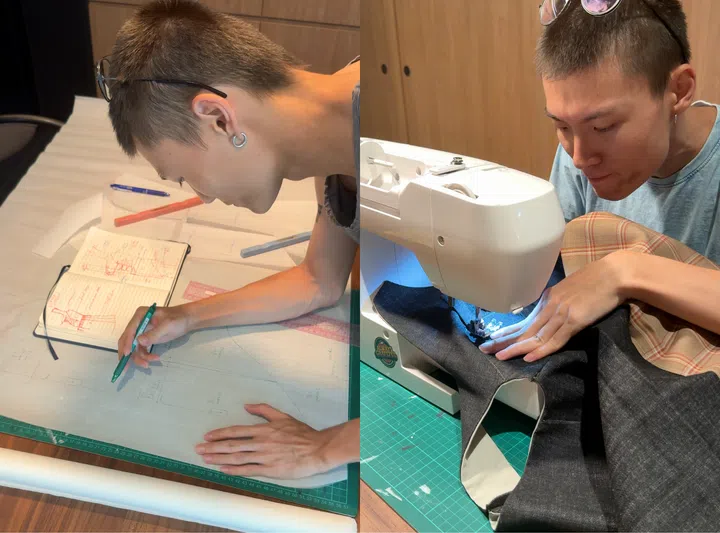
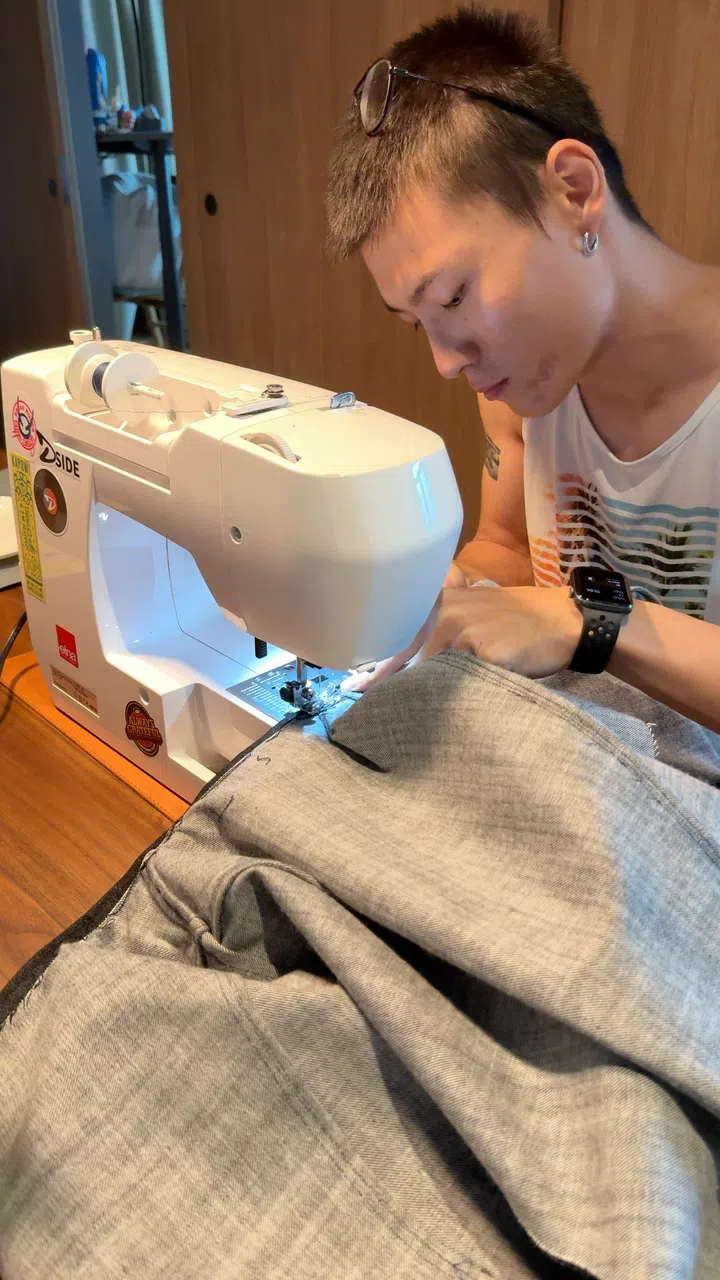
I learnt the basics with Hailey, co-founder of FashionMakerspace, and she did an amazing job encouraging me to think out of the box and challenge design principles…From there I started doing things on my own, applying what little understanding I have of garment-making to draft easy but intricate patterns [and] learning what else I don’t know through online resources – YouTube Shorts tutorials are a godsend. So really the viewers are watching me learn in real-time as I document my process through my silly videos.”
What led you to start SuppCultures?
“[SuppCultures is] a play on the word Subcultures…Supp is short for supplementary, which I believe is on brand with my design philosophy, to add-on to culture and lifestyle. To supplement what already exists. Despite how it might look, I’m not ‘reinventing”’ or ‘recreating’ cultural garments…The goal is to look past the surface, [to] tell stories that you won’t find easily online, the stuff that resides only in the memories of those that lived through it, and doing it through real, human conversation.
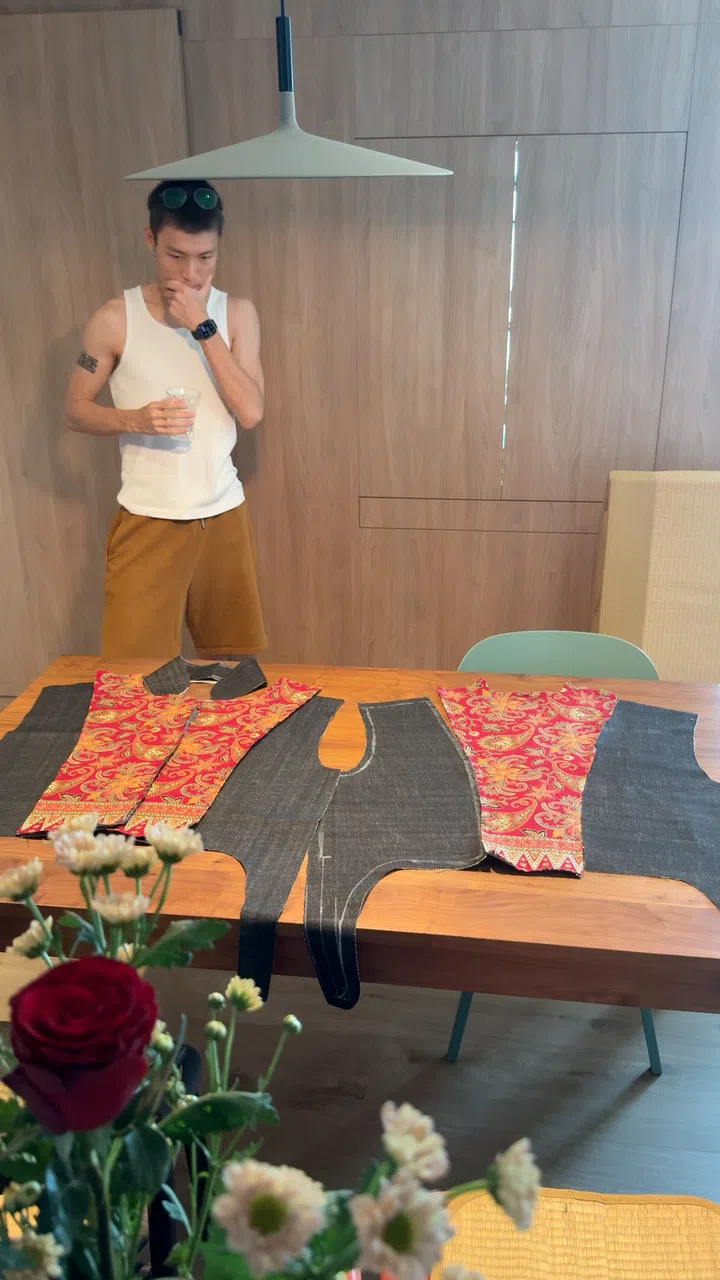
Honestly, with the rise of AI and data centers clouding the pool of authenticity, we barely know where things come from anymore…What I’ve observed recently as I work on understanding people’s cultures is the lot of noise, rather than substance, in public communities – we actually know far less than we think. Look at Peranakan culture today, its definition has been so diluted across generations that we’re losing its core historical significance. I am absolutely of the opinion that [while] we should not live in the past, we have a responsibility to understand and learn from it.
I strongly believe the first step to evolving the future of culture is to look to the past and understand the very foundations that hold it up.”
Tell us more about your creative process, from start to finish.
“I like to start with a story, and usually that comes in the form of someone’s culture. My goal is to squeeze every bit of inspiration from them that I can then curate into elements in my pieces, that means asking about their favourite colours, textures, shapes, songs, childhood memories, food, [and so on]. I also do like to ask about favorite existing pieces in their wardrobes, then, I’ll find fabrics that best represent that – usually a simple versatile base, then a nice traditional high-quality patterned one.
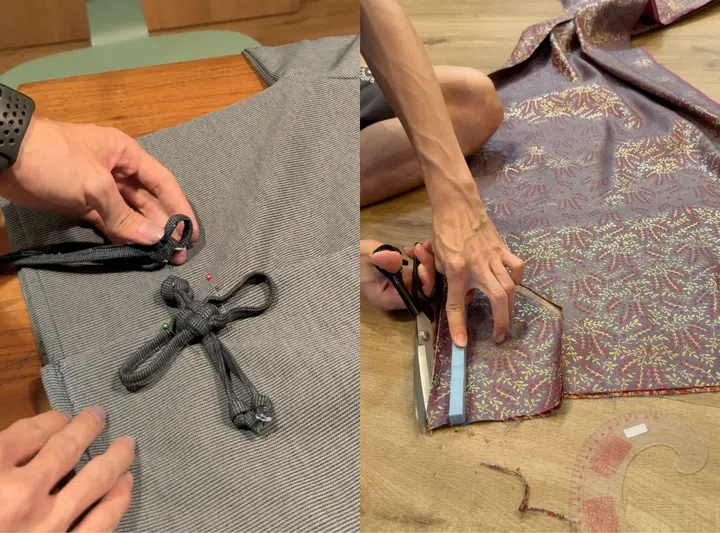
The actual design process is usually the quickest part for me, it’s the conceptual research and storytelling that takes the longest time. I challenge myself to add as many elements I’ve learned previously into a modern “streetwear” silhouette, and usually I do a lot of the planning in my head (understanding seams, where to add cuts, darts, pleats etc). Sometimes I make changes on the fly, draping on a mannequin or on myself and making design changes that I think would look interesting.”
Which piece has been the most memorable to make, so far?
“The baju for sure, the first piece I made for someone on video, and it was for a very dear friend who is truly as supportive as they come. It’s nothing special pattern-wise, but [it was] my first foray into designing something more refined, and I still very clearly remember the look on his face when he saw it for the first time…We actually went to a dance rehearsal right after wrapping the shoot and kept the jackets on, debuting [them] out in the world for the first time.”
What inspires you as a fashion designer and a creative?
“I think if you’re gonna make something, make something different. Different enough to add value and stand out. We have enough graphic tees and the same cropped button-up out there. Fast fashion has completely distorted our understanding of the cost and value of clothing - the labour behind crafting clothes should never be frivolously undervalued. I honestly think we should normalise knowing where and who exactly made your clothes. So I choose to make things ‘slow’, and with intention, not just mass-produced to cater to whatever is in trend now. I hope my works stay in people’s wardrobes for a long time, and hold a unique memory for them and only them.”
How do you navigate the fine line between cultural appreciation and appropriation?
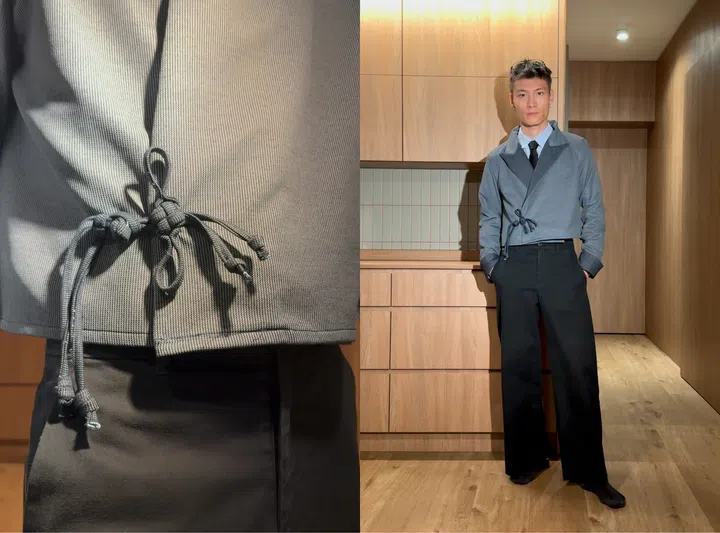
“Research, research, research! Not just in the ‘Googling’ sense, but talking to people, and trying my best to visit information hubs. Honestly, nobody can seem to understand this line either. Someone in my comment once said appropriation doesn’t exist because everything we’ve ever known was an evolution of culture. Someone else said ‘it’s not appropriation if it looks good’. So really, who knows. Just be respectful, understand the roots, and try your best to keep within some rules that have been well-established. Without getting pedantic, a popular example I keep bringing up is knowing what the lapels of the hanfu represent, and knowing that wearing it a certain way is insulting to the dead. Some things we [can] change, but other things, like the lapel configuration, we don’t.”
Through this journey, how has your idea of culture, identity and fashion evolved?
“Don’t want to sound too cliche but, I’ve gotten better at ignoring the fear of judgement, or worrying about my lack of experience. Just do, definitely ask questions, and worry about it later on. Life is way too short to hesitate and not do what you want to do.
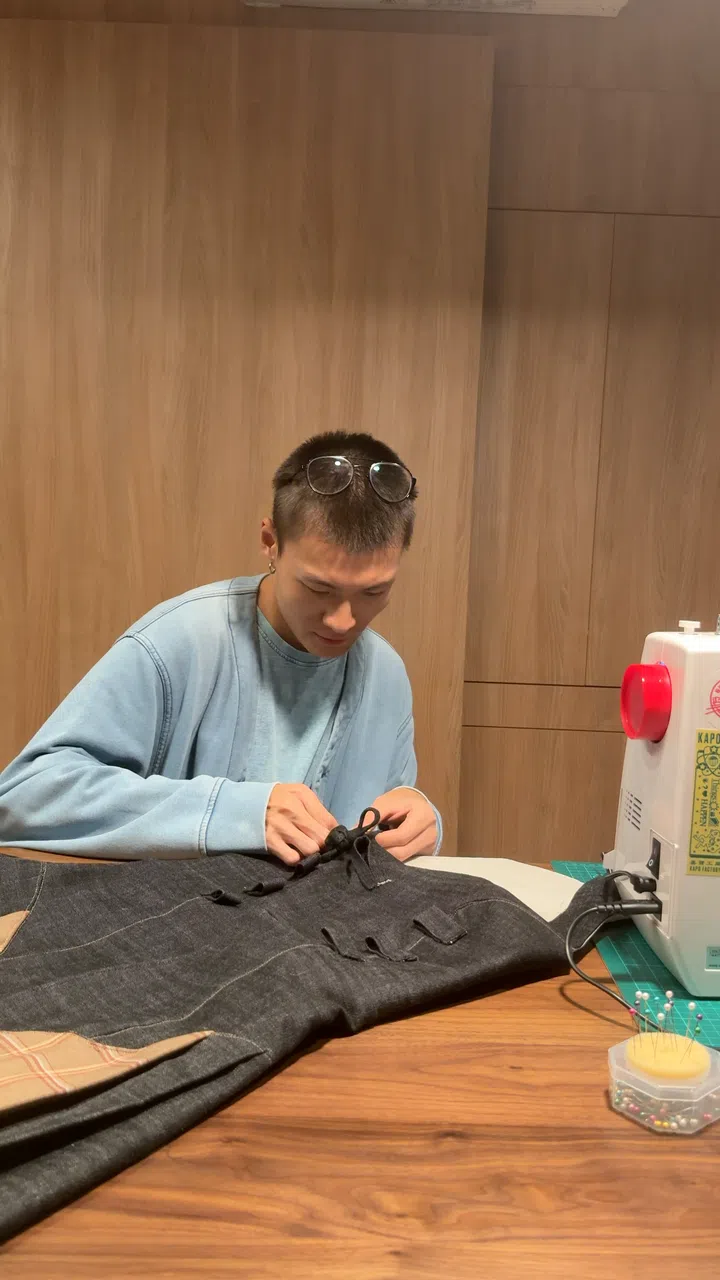
I definitely have a better appreciation for garment construction, I started treating clothes as pieces of craftsmanship rather than just a commodity, and now try my best to be sustainable, reduce waste, and stick to a small operation. I would hate to see any of my works in a landfill.
I’ve come to realise that culture is one of the most underutilised reservoirs for creative inspiration, and there’s no better place to look than in your backyard. Ask the aunty wearing the saree that’s been in her family for generations, or the kid wearing a Buddhist necklace…the inspiration is already right here, [we] just gotta look up from [our] phone[s].”
Where do you envision SuppCultures going from here?
“From the very beginning [of] SuppCultures, I’ve wanted it to go global, do it full-time, and translate cultures all over the world. Right now, my energy is directed towards building community, and curating a modern streetwear collection that celebrates cultural heritage…The goal is to disrupt the current landscape with an authentic concept that pushes boundaries. By blending meticulous couture craftsmanship with authentic cultural narratives that come from a wide range of different communities. To create high-impact works that not only stand out but also drive cultural conversation and get people in the streets talking. [To] have people feel part of a community again, and know how they wear their culture.”