
Out Of Office: Chin Shiying, The Artisan Behind Leather Accessories Label Yanmaei
Out Of Office is a series following Singaporeans who’ve logged off the standard career script to chase their own versions of success—consider this a study of work, ambition, and life beyond the default settings. This week: Chin Shiying, the local artisan behind leather accessories label Yanmaei, who after nearly a decade of running her workshop in Singapore, recently uprooted to set up her own studio in Kyoto.

WHO: Chin Shiying, 37, founder of the artisanal leather accessories label Yanmaei, which you might know better under its previous incarnation as Senkoubou.
WHAT SHE DOES: Chin started the label in 2018 (then known as Senkoubou) and her leather accessories are typically crafted out of vegetable-tanned leather, which is typically said to age more beautifully over time and develop a patina unique to each user, as compared to conventional leather. Her designs have since garnered a small but loyal following among aesthetes for their unpretentious air and solid quality.
After running the label for nearly a decade, the Singapore artisan decided to revisit Kyoto; she’d previously done an apprenticeship with a leathercraft master in the ancient Japanese capital, and decided to establish her new studio there in 2024.
In the midst of it all, she also expanded her formerly one-woman show into a small team and rechristened the label to become Yanmaei - but as she tells us, the ethos remains the same: to create products that serve their user well.
Here, she tells us more about her path to Kyoto and growing her label:
Hi Shiying! You’ve recently rebranded from Senkoubou to Yanmaei. What prompted the name change?
“Senkoubou was a solo journey I started. The ‘Sen’ is the Japanese pronunciation of my surname (Qian in Chinese), and ‘Kobo’ means workshop. But as the label grew, I realized I wanted to build a team; a small family of four or five people, and I wanted a name that reflected that collective identity.
I happened to chance upon a tree bursting with fruit: the Chinese bayberry. It’s a strong, healthy fruit full of antioxidants. In Japanese, it’s called yamamomo, but a friend remarked that the name sounded like it catered specifically to women and children. Since I want everyone to feel comfortable with the brand, I decided to go with the Chinese name for the fruit: Yang Mei. It sounds similar to my new brand name, Yanmaei, and it perfectly captures the thought I want people to keep in mind as they journey with our products—staying healthy, resilient, and connected.”
You’ve moved your studio from the heart of Singapore to a machiya in Kyoto. Beyond the change in scenery, why did you decide to uproot your life and business to Japan, and how has the new environment impacted your work?
“The environment you step into every day truly matters. In Kyoto, I can customise my space easily; since the walls are wood, I can simply twist a hook into the wall to decorate or plaster the surfaces with a texture I love. It helps me get into a creative flow more naturally.
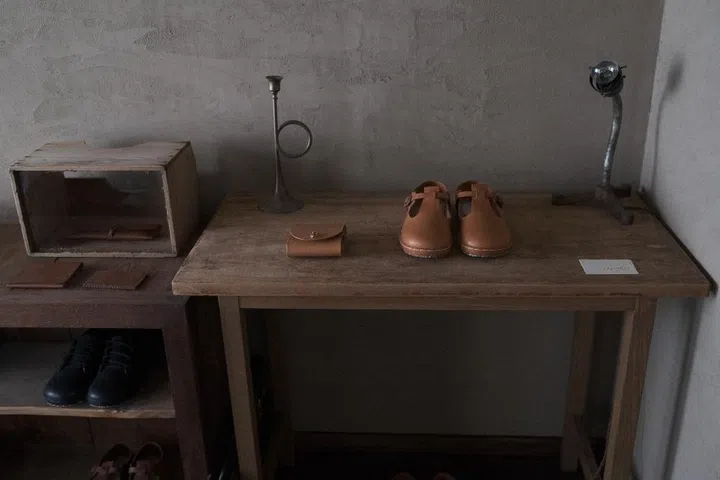
A look within her studio
On a more practical note, the cost of space is much lower here. For a traditional wooden studio in Kyoto that I previously stayed at, I paid between $500 and $900, whereas in Singapore, I’d be paying double or triple for something similar. This lower rent allows me to relax a little more and focus on the craft without the constant pressure of just trying to survive.
I am also situated a lot closer to high-quality materials, specialised tools, and reliable suppliers; for example an order (for special equipment and materials) arrives in three days at most. Plus, being surrounded by other craftsmen is incredibly motivating; it reminds me that I’m not special and that many others are working just as hard with their hands.”
Your work focused more on leather bags and accessories previously. Now barefoot leather shoes seem to be a bigger emphasis for you. What inspired that shift?
“I’m actually still making bags and wallets, but the primary focus has shifted to shoes because it’s tied to my business design in Kyoto. To stay here on a business manager visa, I had to submit detailed proposals to the authorities for approval. There was a lot of back-and-forth, and they wanted to see something new that hasn’t been done before.
I decided to use the skills I learned at shoe-making school in Tokyo to pivot into barefoot leather shoes. It’s a fascinating technical challenge—merging the anatomical benefits of natural movement with the craftsmanship of vegetable-tanned leather.
While conventional shoes often have tapered toes and raised heels that restrict the foot, barefoot shoes feature a wider toe box and a ‘zero-drop’ sole to mimic walking naturally. (Barefoot shoes are said to strengthen your arches, correct your posture, and let your toes spread naturally to create a more stable base for the body). This satisfied the visa requirement for innovation, but it’s also about my core philosophy: making everyday objects that help people feel at ease.”
That visa sounds difficult to obtain. What are the practical realities of being a Singaporean artisan in Japan?
“It’s strict. I have to renew my visa annually and prove I’m contributing to the economy and doing exactly what I promised. The Japanese government even updated the terms last year, so you now need at least an N2 language proficiency level (for the Japanese-Language Proficiency Test). Language is the biggest hurdle; as the saying goes, ‘the limit of your world is the limit of your language.’ Without it, you can’t build truly personal relationships with people.”
What does a typical day look like for you in Kyoto?
“I usually wake up at 5:30 for exercise and get back around 9:00 for breakfast. After I wash up, the workday starts, though every day is different. I actually split my time between my studio and a separate factory space where the heavy machinery lives. Because the factory has a lot of dust and strong smells from the glue and leatherwork, I tend to switch back and forth depending on whether I am replying to emails or doing the actual crafting.”
Your shoes are made to order with a four month wait time. Why did you decide to go with that model instead of keeping stock?
“It is mostly for sustainability and because we are such a small team. There’s something deeply fulfilling about bringing an object to life, especially when it’s created because someone wished for its existence. Production is a long process, so making them to order saves energy and ensures every pair is fresh.”
Being alone in a studio all day can be isolating. How do you stay motivated and keep your mind stimulated?“
“I go for walks or even window shopping to see what other people are creating. Seeing others work hard to make good products really encourages me. Since I work alone in the studio a lot, it’s nice to be around other people and seeing life happen. Going to the Kamogawa river or my favourite streets helps to stimulate my mind. Hanging out with friends is also vital. I have a mix of Singaporean, Japanese, and international friends here, and just grabbing a cup of tea or having breakfast together makes a huge difference.”
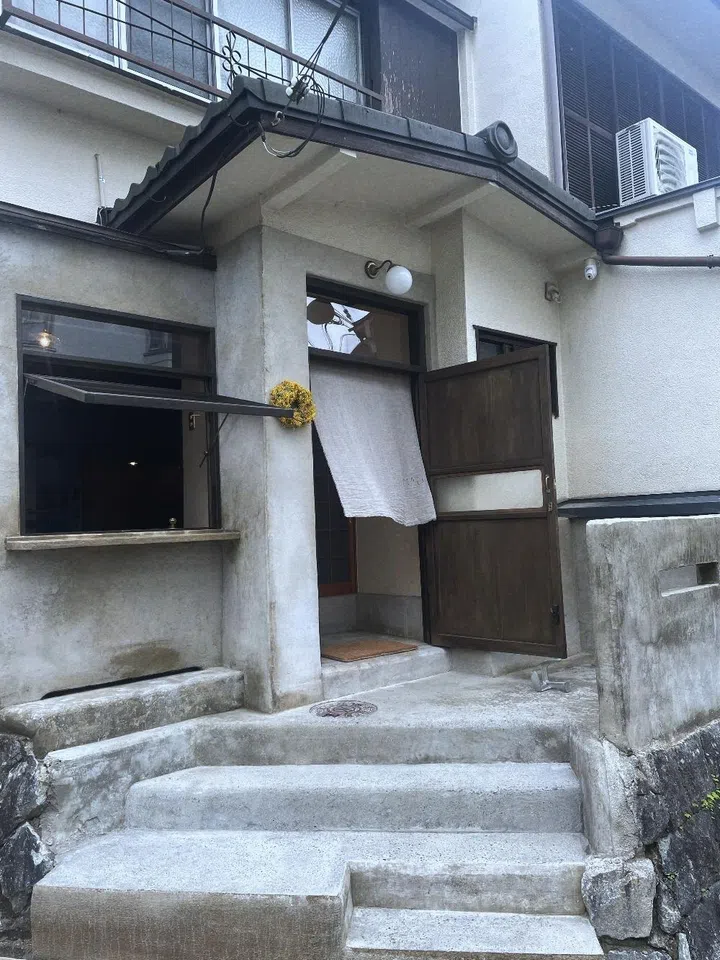
The entrance to Chin’s shop, which is located in Kyoto’s Jodoji neighbourhood, not far from the famed Philosopher’s Path, though she’s currently in the midst of moving to a new space a 100 metres down the road.
How do you define success at this stage of your life? Is setting up a studio in Kyoto the big milestone?
“To me, success is more of a mindset than a specific achievement. It is about being able to enjoy what you do and having respect for your own work. I often hear people in corporate roles say things like, ‘Oh, I am just a salaryman,’ as if their job is minor or uninteresting. But every part is essential to keep the machine running. We sometimes forget that our work, no matter how small, is helping someone else get their task done more easily.
I feel the same about my label. My products are not ‘must-haves’ that will save the world, but if they allow someone to feel at ease or make their journey a little smoother, then I have made a difference. Recognising that value in yourself and your work, instead of seeing it as something small, is what I consider successful.”
Who are some young creatives taking a “path less trodden” that we should talk to next?
“The first name that came to mind is Sideway, the new store opened by potters Keneth and Yasha. They actually visited me here in Kyoto recently! I think it’s lovely what they’re doing to support and showcase the works of small independent makers, definitely go and check them out at Tiong Bahru Market!”