
Franky Slater On Learning To Belong
For F ZINE’s latest issue, we asked five Gen Z creatives to interpret its theme, Coming of Age, through a personal essay. Next we have online cultural commentator Franky Slater (aka @frankyslates on social media), who has already gained a cult following with her eloquent and thoughtful takes on the sociocultural issues shaping our city. Having spent much of her formative years in the UK while most of her extended family resided in Asia, the 23‑year‑old British native moved to Singapore earlier this year to reconnect with a part of her heritage she has long felt disconnected from. For this essay, she turns the analytical gaze on herself and questions: what does it really mean to belong to a place?
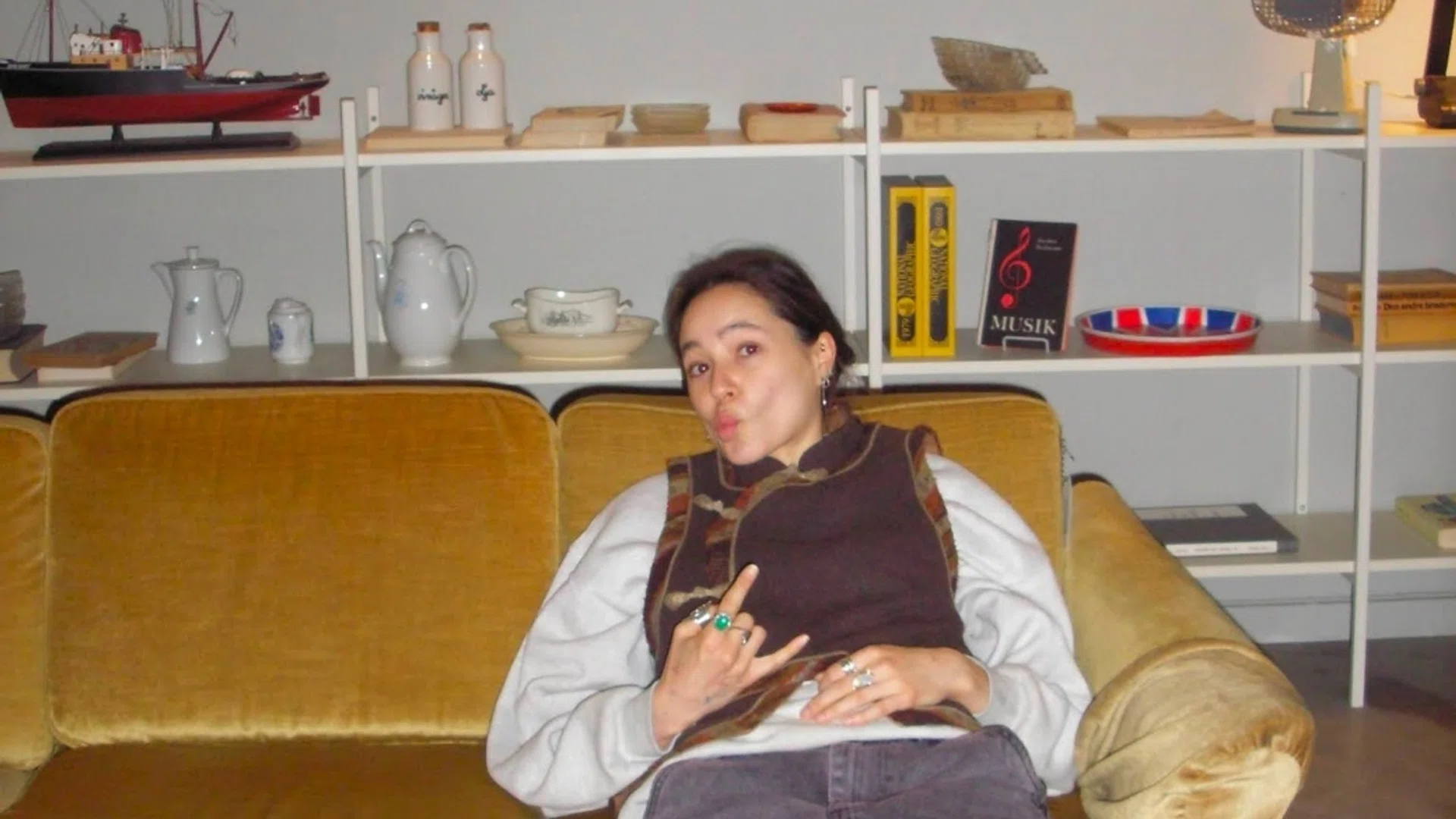
“I walk this land with the angst of an unreciprocated lover, each step a surrender, hoping that in emptying myself, Singapore will pour its heart out to me.
That this place would validate my presence simply because I had given myself to it is something I now know to be untrue.
I have devoted enough mornings weaving through East Coast Park to know that this city will not answer you just because you ask; the pavement I pound with increasing ferocity refuses to give beneath my feet. Yet, I find myself running anyway. I cling to the belief that, in spite of the pavement’s defiance, I might one day dent this path and that itself is a kind of hope.
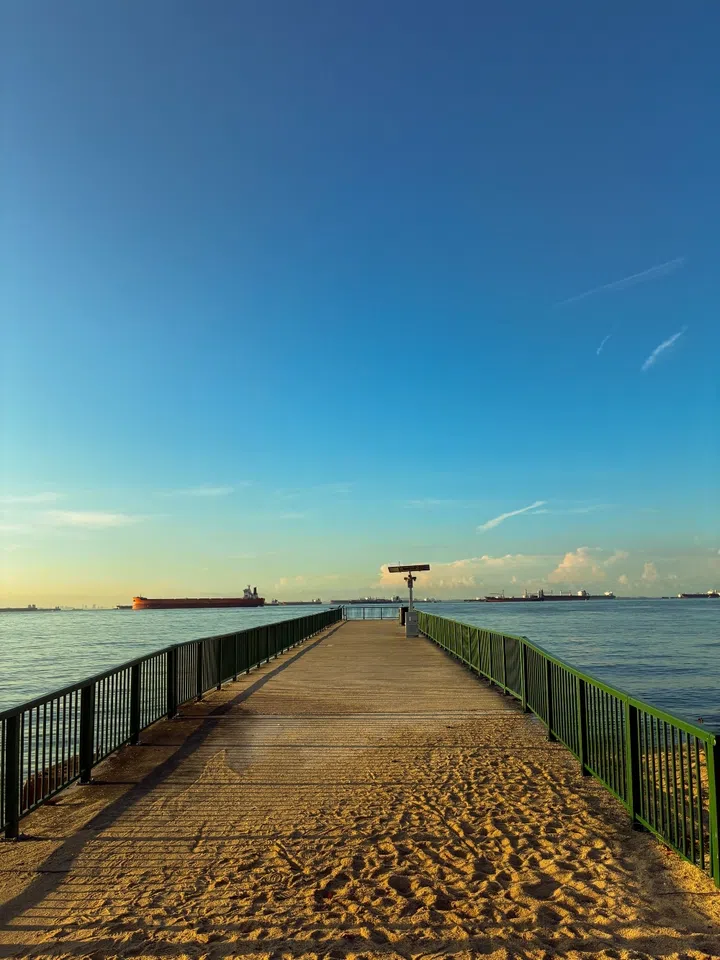
A photo taken during one of Slater’s solitary morning jogs at East Coast Park
Intoxicated on the red blur of these mornings, the koel’s call beckoning me, the same stretch of steaming tarmac, those distant ships frozen on the horizon, I am realising that “belonging” is not bestowed upon you by a place. It is something you contribute to continuously, that you keep writing upon, each time partly erased or tarnished, and yet, despite this, have the faith to inscribe yourself upon it again and again.
A palimpsest.
This is what a place is: an old manuscript scraped clean to be written on again, except that what was written on it before never fully disappears. Its history lingers, a phantom text bleeding through the new one, endlessly superimposed.
I did not arrive at the shores of a blank page, I stepped into the current of an inherited history that continues to yawn before me: It stretches ahead like a vanishing point.
I have never identified as an artist, I only look at my fruitless hands with disappointment, hear a voice whose words fall flat, or glare through blurred vision at the slaughter dealt by the careless violence of my tongue. I came to Singapore, or rather fled to her, to outrun this crippling misalignment of self in the blind optimism that geography and previously unacknowledged Singaporean blood might heal a body so disconnected from itself.
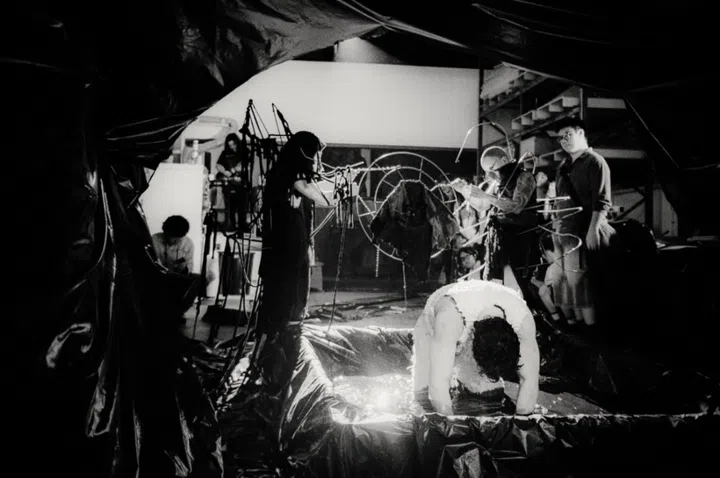
A show curated by emerging Singapore fashion designer Axel and staged at Kii Workshop this May that Slater attended as a gues
Beneath the soporific silk film of these humid nights, metallic residue and dust settle on a congregation of eclectic bodies. The crowd that have turned up for the emerging Singapore fashion designer Axel are seated together, hunched on benches and united by a desire to support the presentation of his collection titled Again, Immortal. It was an unflinching experience that also featured elements of butoh dance and pulsating electric sound, all of which made the densely packed air throb with dissonance.
Again, Immortal: a collection of contorted beauty with silhouettes that distort the human body; a collection meant to be symbolic of rebirth and imagination beyond the realms of flesh. As I watched the show, I began to wonder whether this distinction was even useful to me.
But perhaps I had been asking the wrong question.
You don’t have to make art to contribute to a culture. The way you move through spaces, interact with people and participate in a community is itself a form of creative contribution.
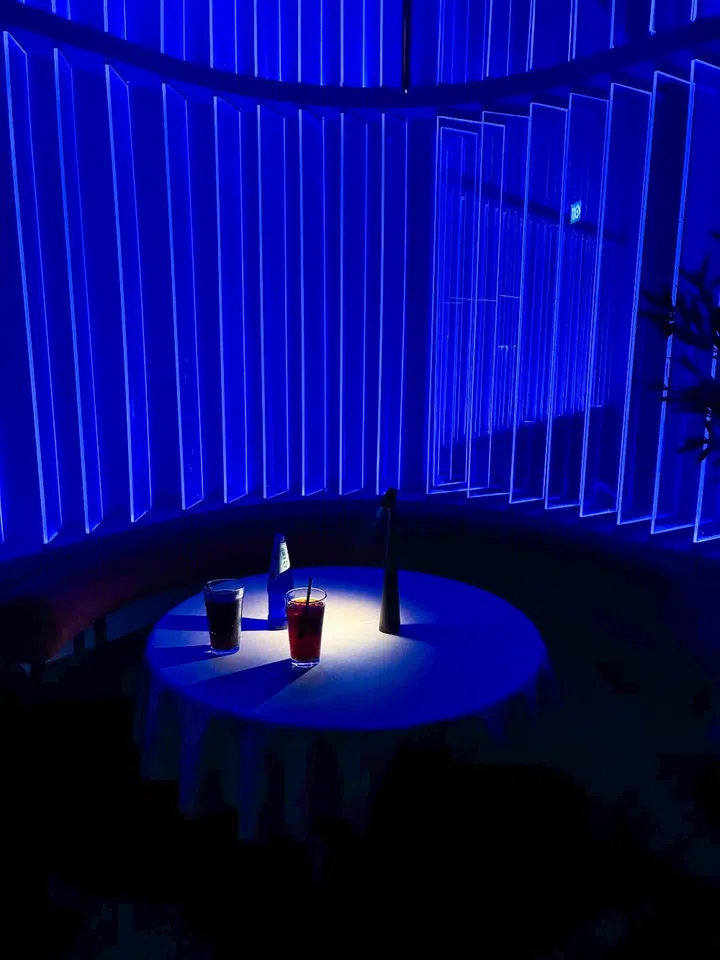
Evidence of Slater’s attendance at techno legend Jeff Mills’s set at Rasa Space
My friend Duo Yan and I are at Rasa Space. It’s dark, but I can still see the condensation on our cold colas pooling on the coasters. As we lose ourselves to the hypnotic techno music, we feel every beat pulsating. And with each beat, I am reminded that I’m allowed to be here, to take up space in this shared place.
I think we overestimate how a sense of belonging arrives; perhaps we can never truly arrive at a point of belonging, but only sustain an ongoing feeling of it.
I wonder whether the moment you announce “I belong” is the moment you obliterate yourself from the very concept itself; and the world and people around you will never cease unfolding. We imagine belonging as a single decisive moment, something documented: a citizenship, a fluency in a new language, a “finally, I get it”.
And while these may be tangible markers of recognition, I can’t help but fear that their promise of closure neglects to fulfil that deeper and more urgent desire for ongoing commitment or proof of belonging.
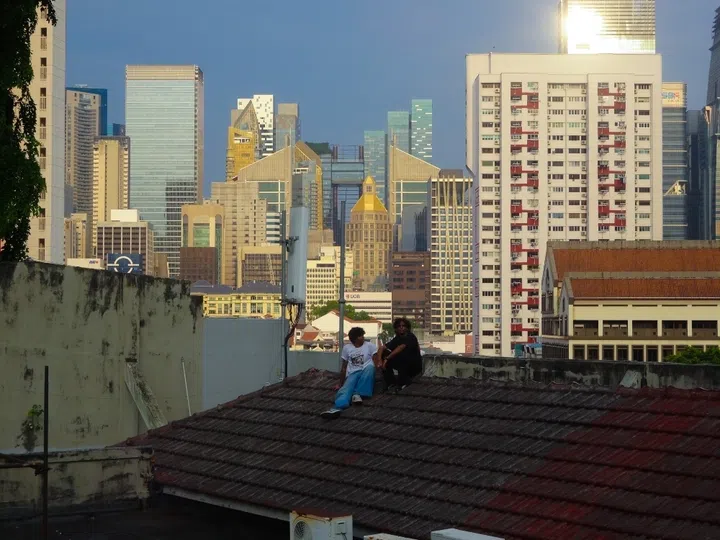
A behind-the-scenes look at the filming of a music video for Singapore musician Ranvir’s upcoming album, Love Life. Slater was there to help out.
Belonging, I’ve learnt, happens gradually. It builds in fragments – collected, deposited, bestowed upon you by others the way the city’s dust settles, or the way you pick up the affectations of those who surround you. Until, in the exhaustion of sleeplessness, you stand before a mirror and realise that you have become someone different, shaped by the people and experiences you’ve encountered along the way, including those you’ll never fully know.
So often, the writing of who you are is not authored alone; dare I be so bold as to say, it never can be?
Watching Singapore musicians Ranvir and Vedant Srihari move together in the shadows of Pearl’s Hill Terrace to film a music video for the former’s upcoming album Love Life was sobering: the quiet choreography of two souls who possess such faith in each other. I now recognise that belonging can also mean witnessing. Sometimes, belonging arises simply by being present for someone else, by yielding and surrendering the agency we’re taught to guard so closely, and exchanging it for a little more passivity.
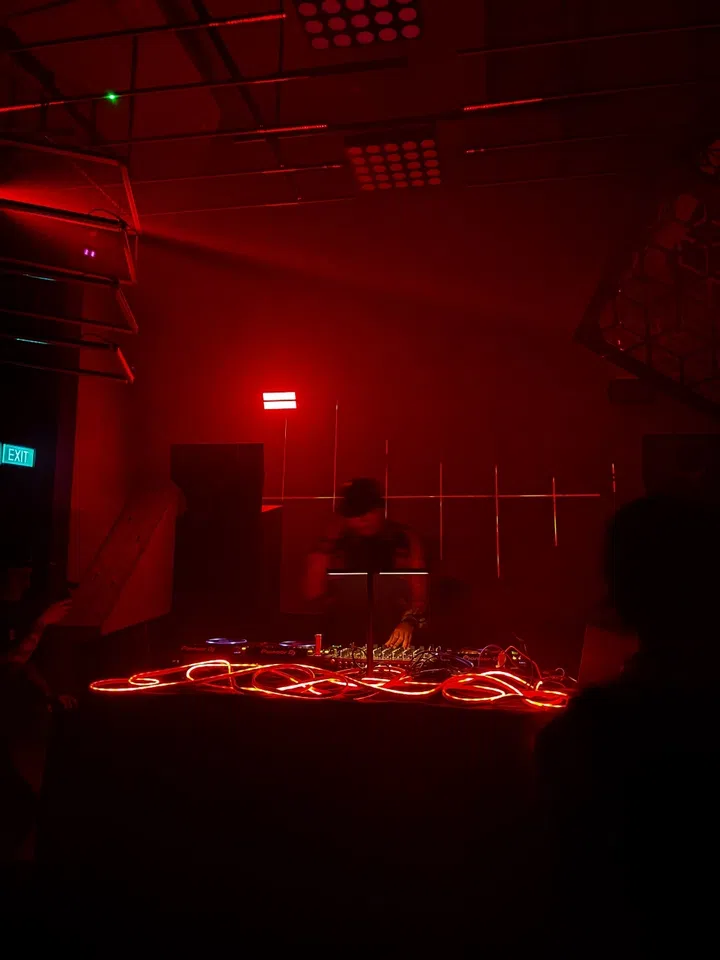
DJ Zig Zach behind the decks at Rasa Space this June 6 – the nightlife/cultural space has become one of Slater’s go -tos
Friction is never felt more than on the dance floor, in a room bustling with bodies writhing to a pulse. To dance is to give the imagination a body.
It is to be enveloped in the narratives of others: I move from running alone along East Coast Park to being consumed by a collective of voices and synchronous movement in the club.
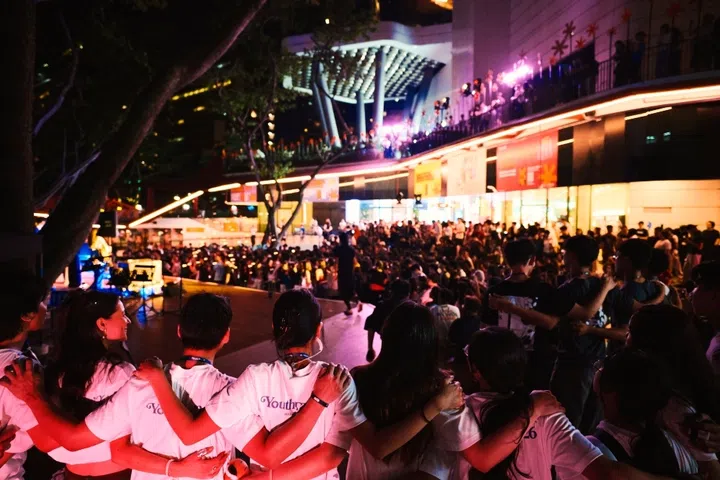
Youth Day at *Scape: a massive two -day event in July this year that brought together youth groups and young people from across Singapore, inviting them to dwell, connect and spend time with one another in real life. Slater is part of the collective The New Normal, which co -organised it.
I do not believe belonging is something we simply inherit, or something we can create alone. It’s ongoing, collectively authored and revised, erased and rewritten; a palimpsest of people who yearn to exist alongside one another and see themselves as part of the place they inhabit.
It asks us to open ourselves to the people and experiences around us. While the desire to belong might come from a private ache, it finds stronger resolve when it’s shared with others. The land we tread on has been shaped by a deep history of those who came before and, here, I have the privilege of becoming a part of that story, alongside everyone else who, with each step, adds their own narrative of belonging.”
THIS ESSAY FIRST APPEARED IN F ZINE’S VOL 10 ISSUE. IT WAS SLIGHTLY EDITED FOR LENGTH, CLARITY AND STYLE. THE VIEWS EXPRESSED ARE SOLELY THOSE OF THE AUTHOR.