
A Safe Space For The LGBTQIA+ Community At Proud Spaces
For the first time, the LGBTQIA+ community in Singapore has a permanent, physical space where they can head to any time of the year to seek both advice and solace, network, attend activities that educate and empower them, and even stage their own.
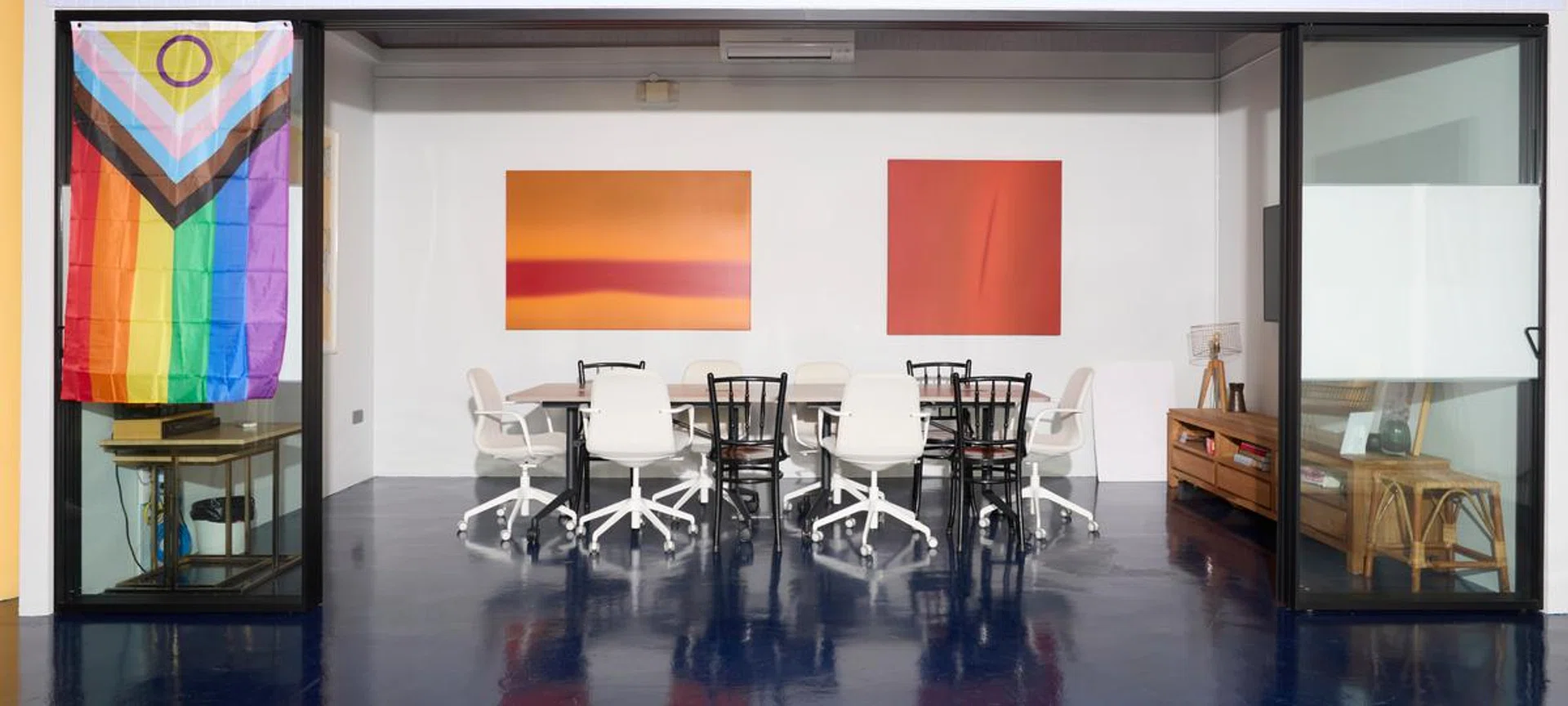
Head down to Alexandra Road one of these days and you’ll likely be struck by the fifth‐floor windows of one of the industrial buildings on it, across which hang pink fairy lights spelling out the word “proud”. Proud – or more specifically, Proud Spaces – is the name of the organisation that resides in the space to which they belong. Proud is also how its founders feel – it’s unmistakable from their explanation of what the 1,500‐sq‐ft location, which opened this March, is all about.
“There are more than 80 LGBTQ+ community groups in Singapore, and this is a place for them to meet, network and learn from one another. I think that’s something we’ve never really had before and something we really need here in Singapore,” says Alan Seah, advertising whiz and a founding member of Pink Dot SG who’s on the Proud Spaces executive committee, or exco. Chiming in and reinforcing his message is theatre veteran and fellow exco member Harris Zaidi: “Having a symbolic physical space that says ‘We’re here 365 days a year’ is important. This physical presence shows we’re a part of this nation. We’re visible and we’re supporting one another.”

The simple yet chic and thoughtful design of Proud Spaces – located in an industrial building on Alexandra Road – was based on feedback solicited from 40 groups in the LGBTQ+ community in Singapore. Tables and chairs are easily moveable, for example, so that rooms can be customised to suit various events.
On Google, Proud Spaces is described as offering “safe, welcoming spaces for Singapore’s LGBTQ+ community and allies to gather, collaborate, and hold events”. “Events space” or even “community centre” would, however, be terrible misnomers. Step inside and you’ll immediately notice the high ceilings and roomy layout that’s accented by a charming mishmash of furniture and artwork – nearly all of which can be moved around to cater to different needs and events. According to centre manager Joanne Chen, this flexibility – along with how most of the whole space has been designed – was the result of input solicited from 40 LGBTQ+ community groups over the past year. This is a place that’s not just for the people, but also by the people.
READ MORE: Drag Newbies Find Their Voice In The Fruit Basket Incubation Programme
Its colour scheme is rainbow reimagined to pop and please at the same time: electric blue floors and ceilings, lemon yellow columns, and walls in sage, coral and olive. There’s a reading corner with queer literature to be read at Proud Spaces only, along with donated non‐queer books that are available for swopping. Another corner offers free resources from the community, including self‐care tips, a guide for parents with trans children and a collection of short essays by local LGBTQ+ writers. The bathroom is labelled with a sign that reads “Whichever” – a playful way of saying that all, regardless of gender, pronoun and identity, are welcome.
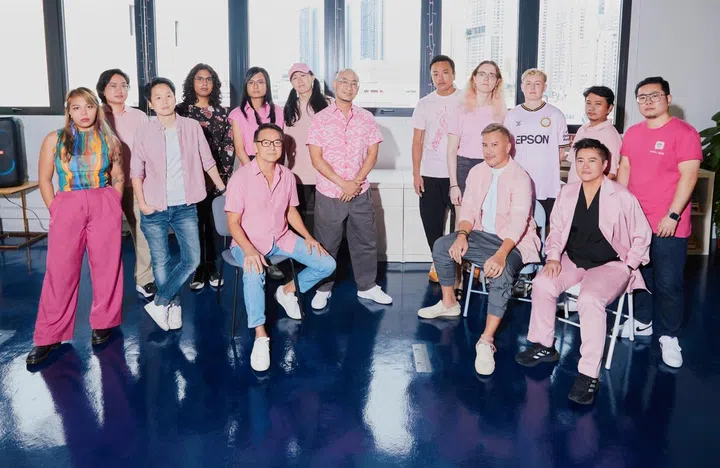
The setting up of Proud Spaces can be said to be symbolic of how the LGBTQ+ community in Singapore has grown and is driven in supporting itself and its members. Pictured here along with the founding team of Proud Spaces are members of Pink Fest, Quasa, Rainbow Lapis Press and Transbefrienders – just four of the many LGBTQ+ community groups that have found a home in Proud Spaces. Standing, from far left: Co‐founder of Quasa, Irie Aman (They/Them); founder of Rainbow Lapis Press, Koh An Ting (She/They); Proud Spaces centre manager Joanne Chen (She/Her); Transbefrienders members Kyra (She/Her), Domi (She/Her) and Aderyn Kang (She/Her); Proud Spaces exco member Alan Seah (He/Him); Pink Fest committee member Bjorn Yeo (He/Him); Transbefrienders members Mae Nova (She/Her) and George Coates (He/Him); and Transbefrienders co‐founders Rafa (He/Him) and Coen Teo (He/Him). Seated, from far left: Proud Spaces exco members Glen Goei (He/Him), Harris Zaidi (He/Him) and Kathy Teo (She/Her).
The creation of Proud Spaces is the result of collaboration among prominent figures in the LGBTQ+ community here. The list reads like a who’s who of the creative industry: Besides Seah and Harris, there’s film‐maker Glen Goei; Kathy Teo, founder and CEO of digital marketing company Xpointo Media; artist Jason Wee; editor Rei Kurohi; and Clarence Singam, co‐founder of the non‐profit organisation Oogachaga, Free Community Church and the community group IndigNation. All are exco members of Proud Spaces and together, they’re effectively transforming the site into a vibrant hub of activity and support.
READ MORE: 17 LGBTQIA+ Creatives And The New Voices And Perspectives They Bring
To date, Proud Spaces has hosted more than 100 community‐initiated events. Those with a creative or lifestyle bent – think pottery classes, writing clubs, zine‐making sessions and even yoga classes – are complemented by workshops on topics such as homeownership for LGBTQ+ individuals, financial planning and career development. Many of these are free with registration; some are pay‐as‐you‐wish; and the rest come at a small fee. Visitors can also book the spaces at Proud Spaces to hold their own events at a nominal fee – or simply pop by during their opening hours to work or study.
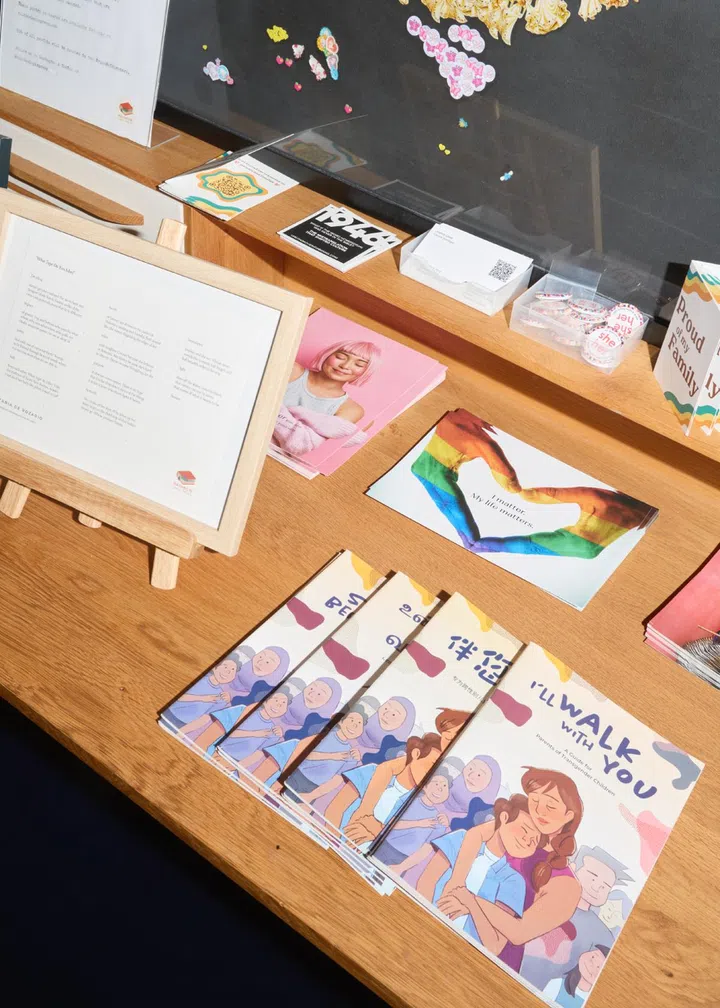
Proud Spaces offers free resources from the community, including self‐care tips, a guide for parents with trans children and a collection of short essays by local LGBTQ+ writers.
Says Irie Aman, co‐founder of Quasa, a peer support group for queer Muslims that has used Proud Spaces for its activities: “The fact that this space is so accessible to the community – one can just step in and utilise it without having to navigate different loopholes – is incredibly helpful.” For groups that are less established or just starting up, it could mean even more. As Coen Teo, co‐founder of Transbefrienders, which offers support to trans youths and has likewise worked with Proud Spaces, shares: “It’s important to have a place to gather and organise ourselves.”
Ahead, some of Proud Spaces’ exco members and centre manager Chen share more about the realities and hopes of building a permanent home for the LGBTQ+ community in Singapore.
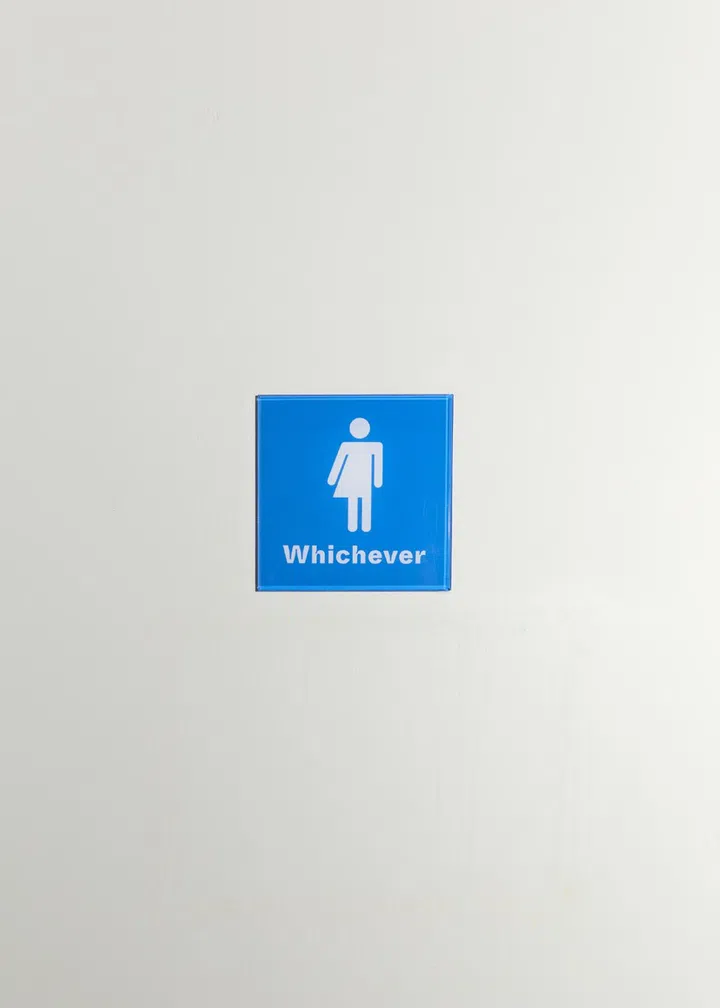
The bathroom is labelled with a sign that reads “Whichever” – a playful way of saying that all, regardless of gender, pronoun and identity, are welcome.
This a first‐of‐its‐kind initiative. Why set up proud spaces now?
Glen Goei (GG): “There’s still bullying and violence at work, in schools and at home. These issues of discrimination still persist, and a space like this allows people in the community to come together and feel that they’re not alone.”
Alan Seah (AS): “Our community had been very focused on repealing 377A previously ... Now, with it gone, we can move on to addressing the issues that Glen mentioned, as well as those related to housing and media censorship. Why not empower all these community groups that have emerged over the years so they can help take care of the community in all these different aspects?”
Harris Zaidi (HZ): “Because previously, we didn’t necessarily have a space where we could build capacity, and we need a place where we can support one another in various ways, whether it’s through counselling or just coming together to provide one another moral support. Being able to congregate in one spot is something non‐LGBTQ+ Singaporeans take for granted. Proud Spaces is important because it shows our community that we can help ourselves. That’s very empowering, and how we’ve always done things. It’s also how we’ll continue to do things for the foreseeable future.”
What sets Proud Spaces apart from other LGBTQIA+ organisations in Singapore?
AS: “It’s important to acknowledge the great work that other groups have been doing – Oogachaga, for instance, offers counselling services, while Pelangi Pride Centre acts as both a community space and a LGBTQ+ resource centre – but being an umbrella organisation allows us to be effective in a different way ... Most of the 80‐plus groups in Singapore aren’t even registered as legal entities. How do they fundraise? Where do they meet? How do they sign a lease to get a space? People often overestimate how well‐resourced the LGBTQ+ community is when in reality, the majority of the groups are really underfunded and under‐resourced. They’re all run by volunteers. Proud Spaces is our way of giving these groups a bit of structure, and a scaffold to build their own resources and capabilities.”
Kathy Teo (KT): “Having a space like this – one that’s available, safe and accessible – removes the logistical difficulty for groups needing a friendly space to organise their activities. We hope this space will be a catalyst for more of our community to come together, and initiate diverse activities and programmes.”
Can you elaborate on these activities or programmes?
Joanne Chen (JC): “For the first three months, the events at Proud Spaces were community groups‐led to introduce the LGBTQ+ community to the space ... Our own programming started only in July after a comprehensive survey designed to identify gaps in the community’s needs. For example, some support groups need help registering as a Company Limited by Guarantee or a non‐profit, or with managing finances. Others have mentioned that their volunteers lack certain skills and need development. We want to bring together groups with expertise and those needing it so that they can learn from one another. That’s the kind of programming we aim to provide.”
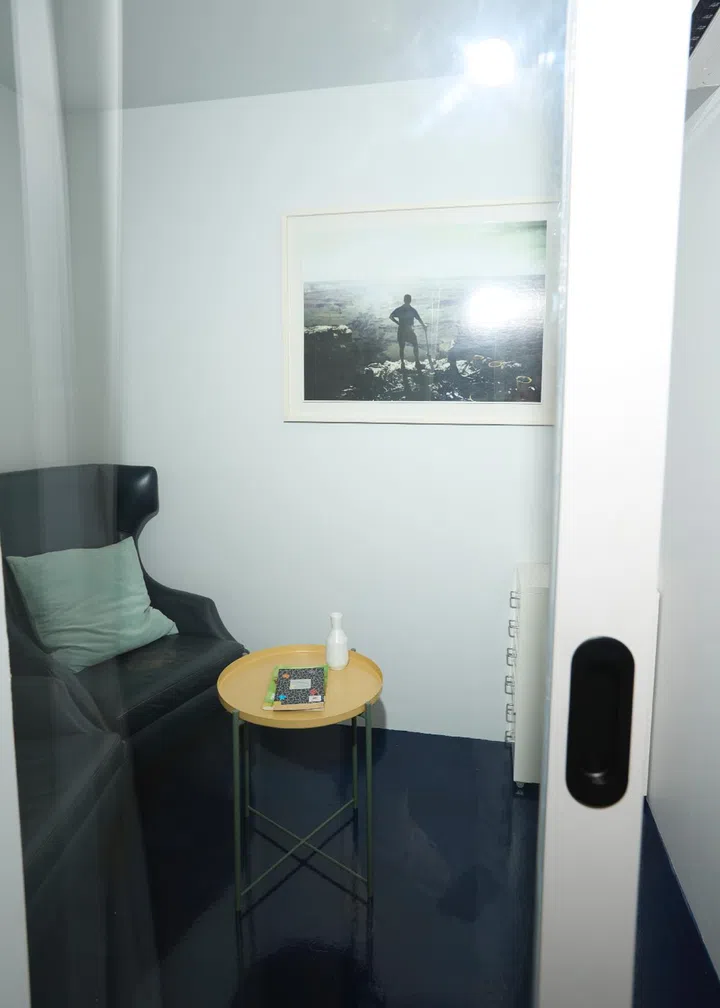
The whole point of Proud Spaces, says centre manager Joanne Chen, is to create an environment that’s comfortable for a community that previously never had such a resource and was used to congregating in smaller, more private spaces such as one’s home.
Since most of you are volunteers, how is proud spaces run and funded?
HZ: “A few of us realised that funding is a chicken‐and‐egg situation, so we got things going by pooling our resources together to secure the lease and start the renovations. It’s much easier to talk about it, gather support, and elicit more funding once we have the concept and the physical space ... We’re also planning outreach, crowdfunding and fundraising events. For example, we’ve had Pam Oei and Julian Wong perform here, and sold tickets as well as staged auctions to raise funds. We have more of such events lined up for the rest of the year and into next year.”
AS: “Down the road, we’re looking to attain Institution of a Public Character status, which we know is a long process, but we intend to prove ourselves worthy of it. We believe that we’re starting to grow and will continue to grow in terms of how we support our community.”
READ MORE: The Queer DJs Shaping Singapore’s Rave Future
What are some challenges you faced in creating this permanent physical space?
JC: “One of the main challenges is actually the fear of visibility. There are many LGBTQ+ individuals who have not come out to their families and are very afraid that being seen in this space – even if just on social media – might out them. Everyone involved in this shoot is quite lucky because our families are accepting of us, or we’re OK with being outed. For many though, such as those in Quasa, for example, they want to be at Proud Spaces and be themselves, but they can’t. Convincing people that they’re safe here and that using the space doesn’t equate to coming out has been challenging ... Even within our own community, this fear can be hurtful because it prevents people from using the space. We hope that this space will gradually help change mindsets, especially among youths, and make people feel more comfortable and safe.”
AS: “Another challenge is the overall fear that still exists in Singapore. Our community has been disadvantaged and considered taboo for so long. When I tell people we’re opening a LGBTQ+ space like this, they often ask, ‘Is that even legal?’ Isn’t it outrageous that in this day and age – especially with 377A repealed – there’s still that fear that we might not be allowed to do something like this to help ourselves? There’s an element of doubt over whether we can do this because of the discrimination we’ve faced our entire lives. This stigma still exists in Singapore and it’s something we need to refute. We need to help ourselves because if nobody else is going to help us, we have to. As this community hub, Proud Spaces is a big step in that direction.”
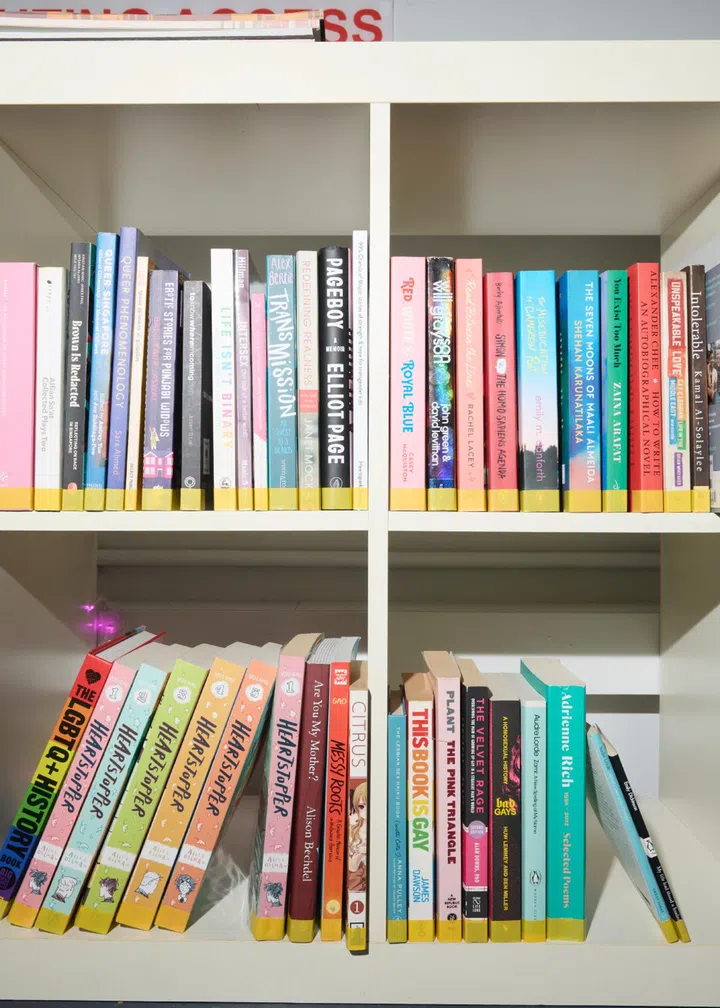
There’s a reading corner with queer literature to be read at Proud Spaces only, along with donated non‐queer books that are available for swopping.
What else do you guys see this space doing?
KT: “One of the projects we want to undertake is to document Singapore’s LGBTQ+ history, which hasn’t been properly recognised or memorialised. It’s crucial for us to come together and tell our own story about our community’s evolution ... This space is also for celebration. For example, we hosted an event organised by Q Chamber – Singapore’s LGBTQ+ chamber of commerce – where Glen and Ivan Heng spoke. Both are cultural icons celebrated in different spheres, and we recognise them as heroes and visible role models within the community. The event was inspiring for those pursuing careers in the arts and theatre, or simply those inspired by their work ... Events like this highlight the importance of recognising and celebrating achievements within our community.”
How do you see Proud Spaces evolving in the next five years?
HZ: “I envision it evolving into a multi‐storey building at least four or five storeys high. The ground floor could feature a fabulous cafe by day that transforms into a cocktail bar at night. The second floor could offer rehearsal spaces for performances, including drag shows, and perhaps a co‐working space. There could be a library, a resource centre, and even a space for families and childcare. I see this space buzzing at the weekends not just with counselling and support activities, but also as a place of celebration.”
AS: “I hope to see Proud Spaces as a reflection of our country accepting and giving LGBTQ+ people their space in Singapore. Right now, we can’t really claim our own space here. We aren’t seen as occupying an important role or having our own space – in both the literal and figurative sense. I hope that Proud Spaces will be the physical manifestation of acceptance and the growth of our country; a recognition of how important and valuable we are to society.”
READ MORE: Singapore’s Ballroom Scene Is Getting Bigger And Breaking More Boundaries
KT: “I want Proud Spaces to encourage LGBTQ+ people to be out and proud, to embrace their authentic selves, and to connect with other LGBTQ+ individuals and allies. I hope it helps people feel that they’re part of a wonderful community and that they should be celebrated. Its impact should go beyond bricks and mortar. It should encourage the community to embrace who they are and to thrive.”
GG: “I envision Proud Spaces as a lighthouse. People will know where we are and everyone in the LGBTQ+ community – especially those who feel alone – will know where they can find us. We’ll be a beacon, 365 days a year, spreading light and hope for the future.
JC: “Hopefully, we’ll become the go‐to place when people need a space, for any reason ... Right now, there’s still a lot of active bridging needed among community groups because they’ve been working in their own silos for so long ... I hope that in future, there won’t be a need for someone to play middleman. Instead, people will naturally come here, find out who’s who, and collaborate. Such organic interaction will help the various groups come together, forming a truly united LGBTQ+ community.”
THIS INTERVIEW HAS BEEN EDITED FOR BREVITY AND CLARITY.
COORDINATION ROHAIZATUL AZHAR PHOTOGRAPHY ATHIRAH ANISSA ART DIRECTION JONATHAN CHIA
This article first appeared in the August 2024 Passion Edition of FEMALE