
By Rebecca Rachel Wong,
It’s no secret that Singaporean chefs have been making waves overseas. Noma, the famed Danish restaurant, is helmed by Singapore’s Kenneth Foong. Re-Naa, the only Norwegian restaurant with two Michelin stars, named homegrown talent Mathew Leong its head chef in 2021. Fellow local chef Jimmy Lim ventured to Taiwan to establish JL Studio, which serves Singaporean cuisine infused with Taiwanese ingredients. In 2020, it became the first restaurant in Taichung to be awarded two Michelin stars.
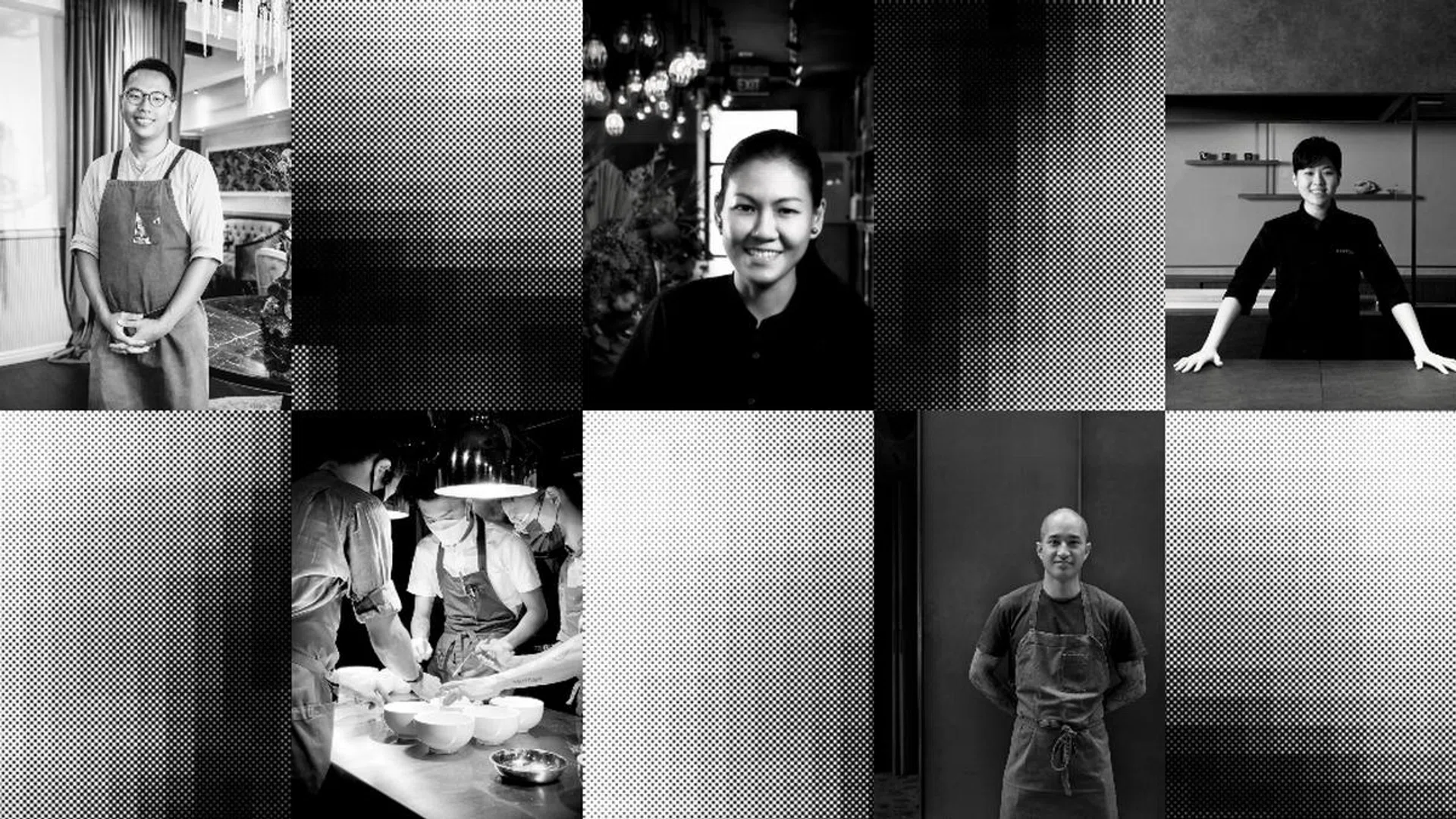
Recently, an article in The Straits Times went further to pose the question of whether our local chefs have to leave our shores to gain the validation of diners – eliciting plenty of reaction from supporters of the industry and practitioners alike. Ahead, five accomplished – and proudly – homegrown culinary talents give us their take on being a Singapore chef.
“Absolutely [travel overseas], but go for the experience – recognition is just a by-product of being excellent at what you do. When I left Singapore in 2010, the predominant mentality towards being a chef was that it is left to the uneducated and the lower rungs of society. To be honest, I am not entirely sure if that mindset has changed significantly. That for me is perhaps the biggest barrier of entry most budding chefs will have to overcome. Unfortunately, due to geographical factors, Singapore has to import a large amount of produce as well. This puts a damper on the variety of interesting products that you can work with. It’s like looking at the world only in black and white − it lacks nuance. On a base level, moving overseas has provided me with perspective. The opportunity to see how different cultures view food, and the uniqueness of each landscape and the ingredients that it offers. A uniquely Singaporean dilemma exists here; one in which locals are very quick to celebrate and welcome Singaporean chefs who exhibit foreign pedigree, but are generally unimpressed by individuals who have only paid their dues locally, even though they might be equally competent professionals. However, we are also seeing a shift towards private dining, with chefs holding private dinners in their own homes. There, they have a little bit more control over their own narrative. That is, at the very least, encouraging.”
KENNETH FOONG, head chef at Noma
“The Singapore F&B industry is so exciting at the moment. There is so much diversity and talent. You have all the homegrown talents who are constantly pushing the boundaries, as well as foreign talent who have decided to put down roots and call Singapore home. Given its accessibility, you also have all these world-renowned chefs setting up outposts here. The sheer number of cultures and nationalities co-existing in this tiny island nation makes for a very interesting community and a vibrant food scene. We all contribute and learn from each other. I don’t think I’ve lived anywhere else in the world where so many cuisines, even regional versions, are not just represented, but present in such variety and high standards as in Singapore. Also, the infrastructure and logistics are top-notch. You can get anything from almost anywhere, and if you have the resources and will-power, pretty much get anything done. Competition is stiff, but overall that’s good because it encourages everyone to continually improve and evolve. There is also an amazing and supportive culinary community with a discerning and educated palate, that encourages everyone in the industry to keep on improving.”
JOHANNE SIY, head chef at Lolla and Female Chef of the Year at Singapore’s World Gourmet Awards 2021
“'There has been many exciting and encouraging growth in our industry and therefore there are more opportunities now and it’s more common to have female chefs leading kitchens. But it is still a male-dominated industry – especially those with 10 years or above of experience under their belt. More can be done to raise the profile of female Singaporean chefs and feature them as role models and mentors for younger women who aspire to be chefs. This job requires passion, grit, physical strength and stamina and they have to be mentally prepared for the long hours and stresses in the kitchen. Plus, having a private life and kids can be challenging due the demands of the job. I’m sure that in the near future, we will hold more leadership positions in this industry. It’s my dream to train, mentor, empower and inspire individual who want to be a part of the big family of the food scene. It would also be good if Singapore can invite other female chefs from all over the world to do collaboration and cross learning events here and overseas. This would create more awareness and raise the profile of female chefs, given that there are too few of us at the moment.”
AERON CHOO, chef-owner of Kappou and Singapore’s first female omakase bar chef-owner
“There is plenty of young talent in Singapore. The prevalence of fine dining concepts in Singapore, deemed as the pinnacle of cooking, makes it easier for local talents to hone their skills and evolve their abilities. This rings true even in the age of the pandemic, where travel to other countries and visas are much more limited than pre-Covid. There are lots of opportunities here for aspiring chefs to be successful. With restaurants in Singapore earning Michelin star accolades and ‘World’s 50 Best’ and ‘Asia’s 50 Best’ awards, one does not need to look far in terms of quality and level of cooking. In terms of supporting local talent, restaurants like Fleurette, Willow, Tigerlily and Mustard Seed, just to name a few, are helmed by Singaporean chefs. This gives hope to young talents that the opportunity and support is there for them to possibly open up their own place. When it comes to training, I do wish studying culinary as a full-time career would be a more accessible option earlier in one’s schooling life. Instead of just Food and Nutrition in secondary school, there could be more in-depth education about the industry, or more subsidies for culinary schools in Singapore.”
MARCUS LEOW, chef de cuisine of Naked Finn’s group of restaurants. He also helms F&B incubator Magic Square 2.0, where young chefs are mentored in running their own restaurants.
“The local F&B industry has improved tremendously in the last 10 years. It is exciting to be carving a career here at this time. The local scene has become more diverse. It has grown to not only include more and different kinds of cuisines, but the quality and standard of food has also improved. Now, Singapore can be considered as one of the top dining destinations to visit. We have everything from hawker fare, cafes and eateries, to casual and fine-dining restaurants, showcasing different cuisines and heritage – all amazing in their own right. I also feel that people nowadays are more adventurous and open to trying new ingredients or flavour combinations. As such, we as chefs can express ourselves creatively and try novel flavour combinations that are out of the box. It’s also exciting that Singapore is gaining more international recognition, with guides like the Michelin Guide and World'S 50 Best Restaurants. It does give chefs something to be excited about when those come around.”
MARK TAI, head chef of Cloudstreet and Singapore’s First Michelin Guide Young Chef awardee