
Longchamp Just Hosted Its First-Ever Art Festival in Paris
Nearly 30 artists, three days, and not a handbag in sight – we go inside Longchamp’s debut art festival in Paris to find out what the fourth-generation family business is really trying to prove.
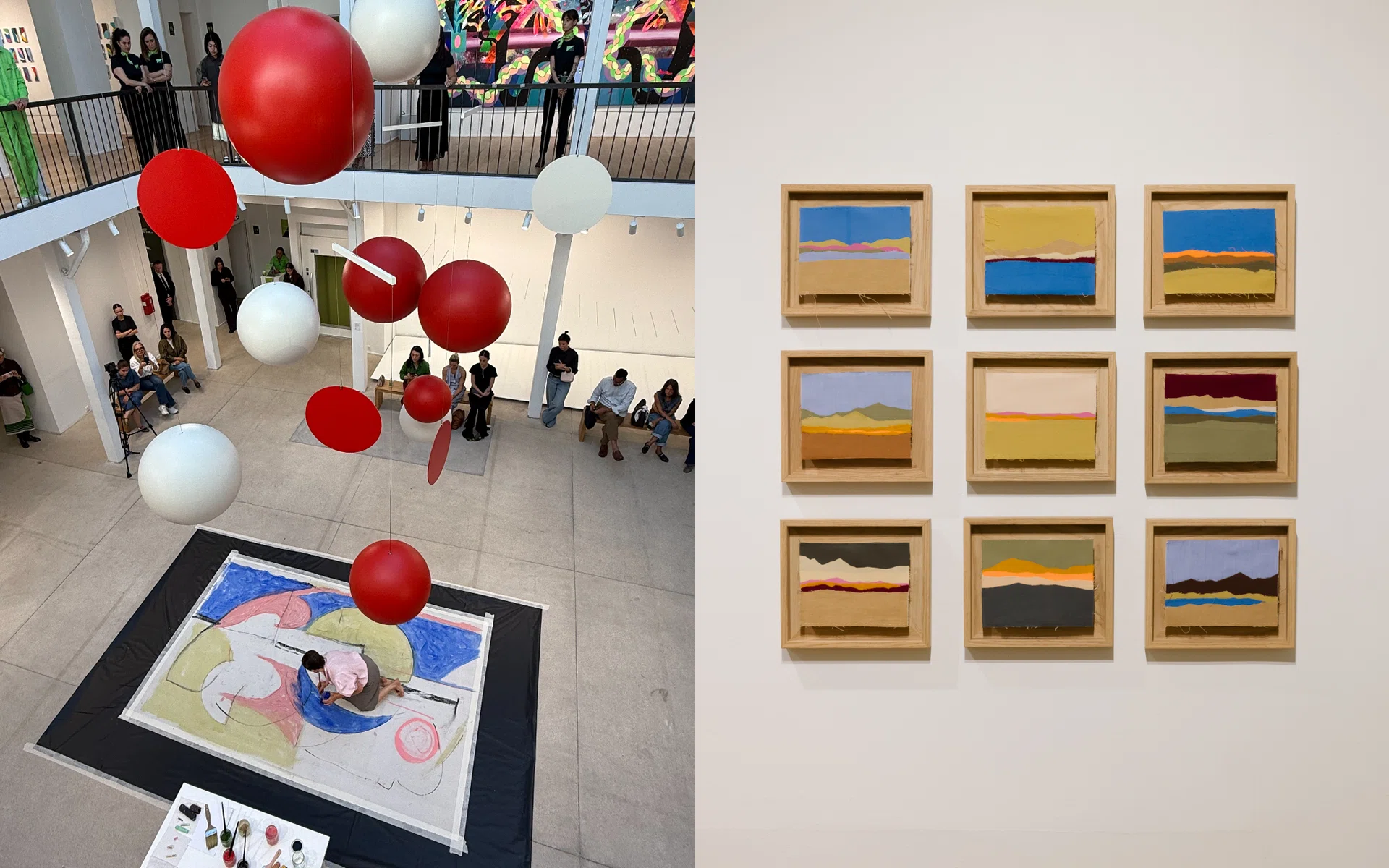
Staging cultural events has become de rigueur for fashion brands in an age when many are hankering for real-world experiences, and hating anything hard-sell. In this increasingly crowded scene comes the Longchamp Art Festival, a first-time initiative that launched in Paris on Sept 3 to invited guests before welcoming the public from Sept 4 to 6.
Nearly 30 artists across disciplines featured at Longchamp’s inaugural Art Festival, held over three days in the heart of Paris’s Marais.
To call it an experiential marketing endeavour, however, would be to belittle it. In a talk on the opening day, Longchamp creative director Sophie Delafontaine explained that her family, which founded the business in 1948 and continues to own and run it independently, has always had an appreciation for the arts.

Longchamp’s latest artist collaboration is with the textile artist Caroline Helain and translates her hand-cut fabric landscapes onto the likes of the Daylong handbag
Her grandparents were art lovers, she pointed out, and Longchamp collaborated with artists as early as 1971. That was the year it commissioned the Franco-Russian divisionist painter Serge Mendjisky to customise a leather patchwork design for its handbags, marking what’s reportedly one of the first partnerships between an artist and a leather goods house.
Not a Marketing Stunt
Taking over a spacious gallery in the lively Marais neighbourhood, the Longchamp Art Festival can be said to be more of a CSR (corporate social responsibility) effort in two ways. Firstly, it’s a way for Longchamp to spread its passion and curiosity for the arts. Secondly, it’s meant to offer greater visibility to artists.
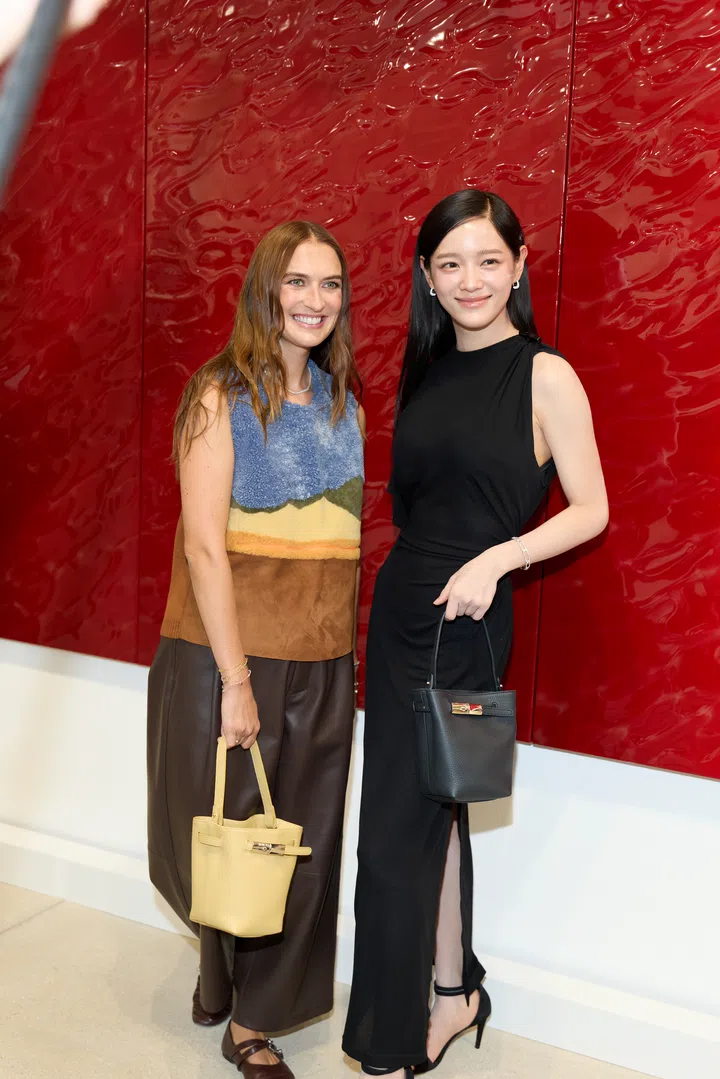
Juliette Poupard Delafontaine, Longchamp’s director of events and the maison’s fourth-generation scion (her mum’s Sophie), with global brand ambassador Kim Se-jeong at the opening party.
In the words of Delafontaine: “With Jean (Cassegrain – her brother and the maison’s CEO), I am the third generation of this family-owned company. Our children like Hector (Cassegrain’s second son and Longchamp’s general manager in France) and Juliette (her daughter, who’s director of events) are here too, making them the fourth generation involved.
“Together with them, we are here to build the future – and, to me, without creativity, there is no future.”
Free, Unpretentious, and Open to All
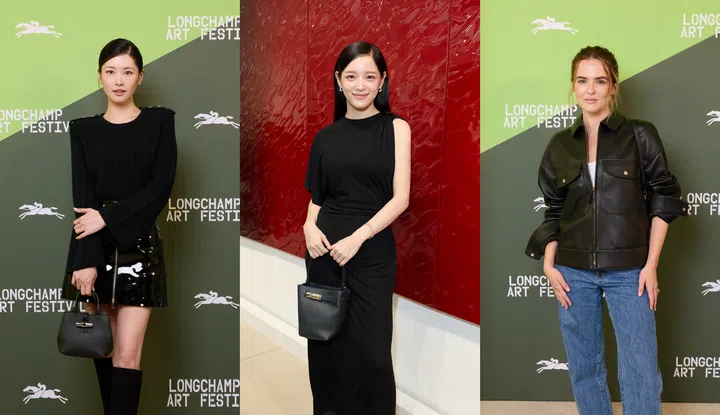
From left: Jung So-min, Kim Se-jeong and Zoey Deutch at the Longchamp Art Festival’s opening night.
Indeed, the three-day-long public festival seemed to have been designed less for clicks and commerce than to connect ordinary visitors with contemporary art. Sure, the opening party included celebrity guests for that virality boost: global ambassador Kim Se-jeong was there; ditto South Korean actress Jung So-min and rom-com royalty Zoey Deutch. And there was a pop-up cafe on site hawking affordable coffees and confectionery that’s the stuff of #creatorlife moments.
Accessibility, however, remained the priority. The location on bustling Rue Saint-Merri was chosen for its unpretentiousness, and entry was free – registration on the brand’s website was encouraged, but so were walk-ins. Exhibited throughout the airy, four-storey space were the works of nearly 30 artists and not a single Longchamp product. (The entrance printed with the festival name and a few room dividers in the brand’s trademark green was as Longchampian as it got.)
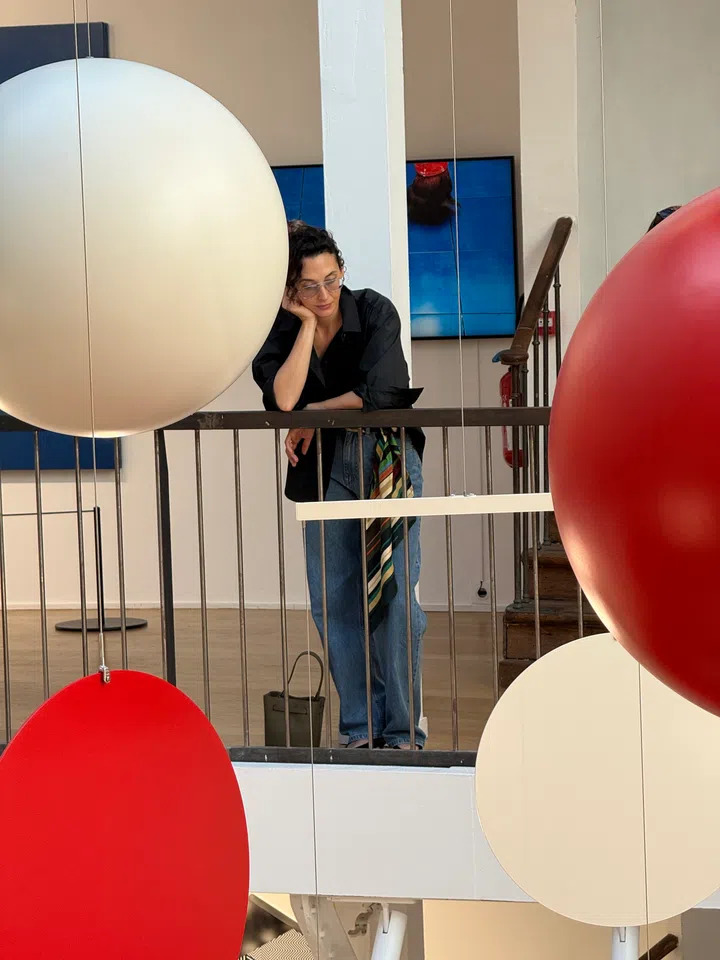
The only Longchamp products in the building throughout the festival were whatever guests happened to be wearing or carrying.
Even the festival’s central theme of movement kept things approachable. After all, it’s at the heart of Longchamp since it started producing luggage and passport cases in the ’50s (handbags came only in the ’70s) – from its logo of a jockey riding a horse, to the active women it designs for. Working with the performing arts curator and producer Olivier Bassuet, Delafontaine selected artists from around the globe whose works interpret movement, sometimes literally, other times less so.
From Xavier Veilhan to Poush’s Rising Names
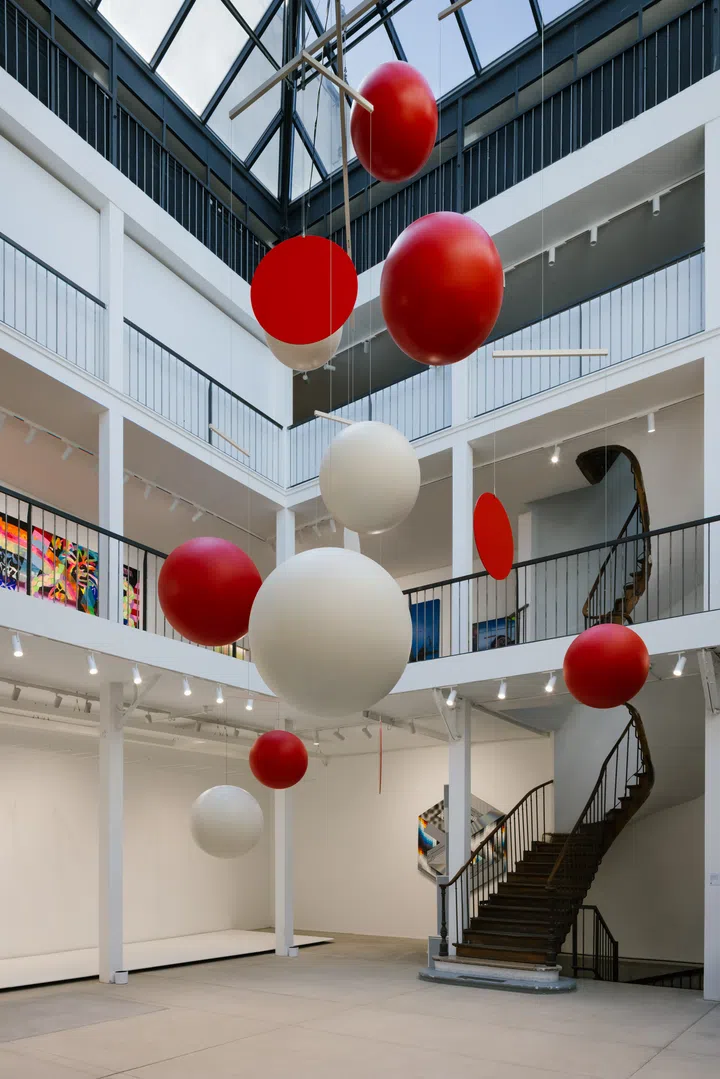
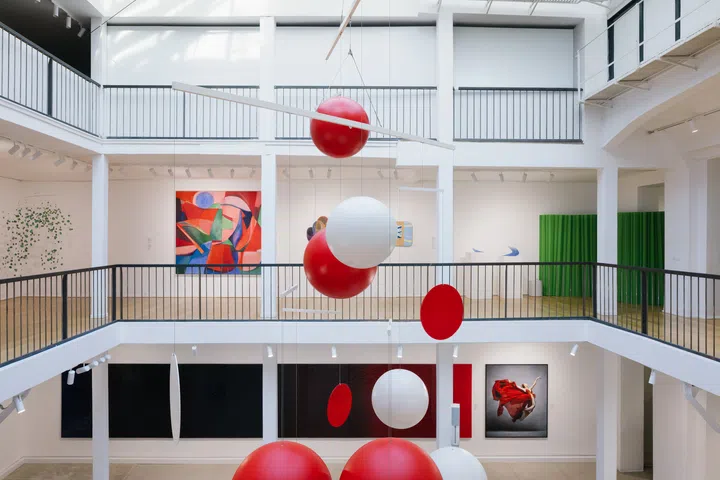
Xavier Veilhan’s Mobile No. 3, suspended beneath the gallery’s glass roof, uses height and air currents to keep its forms in constant reconfiguration.
The centrepiece, for example, was blue-chip French artist Xavier Veilhan’s Mobile No. 3, a soaring mobile of red and white spherical forms suspended from the glass roof, its arrangement meant to challenge perceptions of space and movement. A pair of British designer Thomas Heatherwick’s Spun chairs – modelled after spinning tops so one can whirl around while seated – proved popular among visitors. So too was Carlos Cruz-Diez’s Physichromie 2710, which comprises fine plastic strips on an aluminium plane that capture and reflect light, resulting in the appearance of different colours as viewers move.
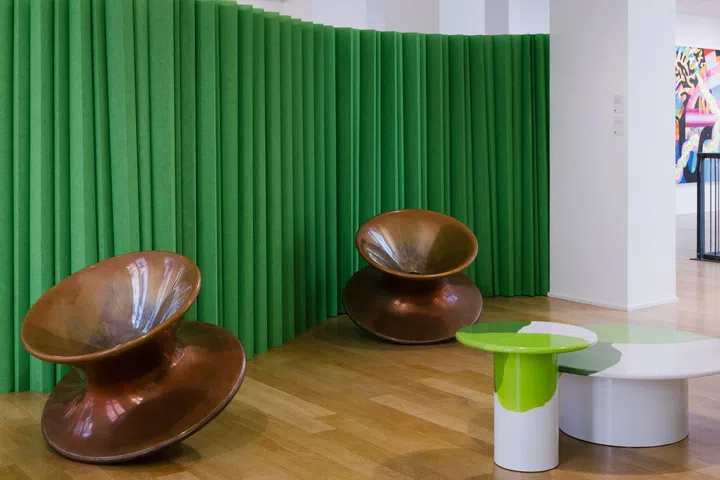
Thomas Heatherwick’s Spun Chairs (on left and in middle) beside a hand-enamelled steel collection by Patrick Jouin, originally created for Longchamp’s Milan Design Week presentation this year.
Featured alongside such works by art world heavyweights were creations by lesser known, often younger artists, some of whom are part of the Aubervilliers-based artist incubator programme Poush. Doing so would hopefully help the public to discover them, said Delafontaine.
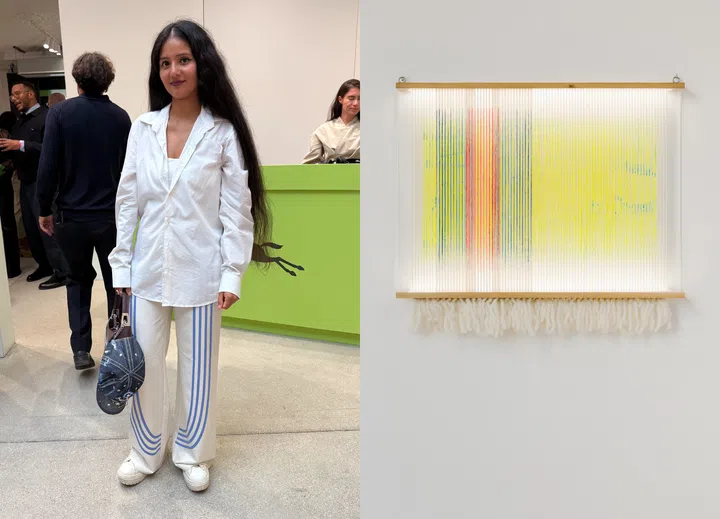
Bolivian artist Kenia Almaraz Murillo (left), who’s behind El Pajaro Dormilon, a wall sculpture combining Andean weaving techniques with LED light and recycled urban materials.
One of these, for example, was El Pájaro dormilón by the Bolivian artist Kenia Almaraz Murillo, which combines LED lights and plexiglas with alpaca and wool threads woven on a century-old loom. The tension and uplifting colour of the resulting wall sculpture were inspired by the migratory swift, which is able to sleep for brief periods during flight. In the basement, motion came to life in a completely different form through Volume, a hypnotic audio-visual installation that draws from the imagery of medical scanners – the brainchild of the Strasbourg-based studio, 1024 architecture.
No Boundaries, No Hierarchy
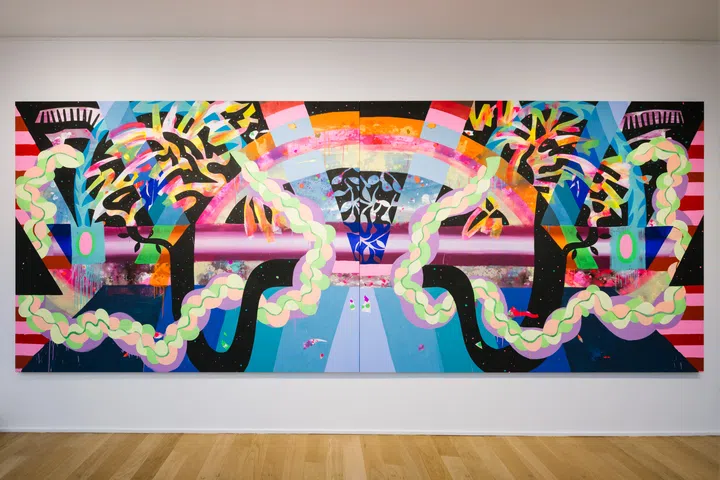
Maya Hayuk’s Head Light #1, a diptych that channels the Ukrainian-American artist’s large-scale street murals into a densely patterned canvas.
According to Delafontaine, about half of the physical artworks showcased were from the Longchamp family’s own collection while several others were by artists who have a working relationship ith the house. Names such as Ukrainian-American street artist Maya Hayuk and French-Japanese painter Tiffany Bouelle have commissions in Longchamp boutiques (another way the brand makes art accessible, she was quick to point out). The hand-cut and assembled textile works of Caroline Helain, which depict dreamy, seemingly animated landscapes and have been translated into Longchamp’s latest artist collaboration, were also presented.
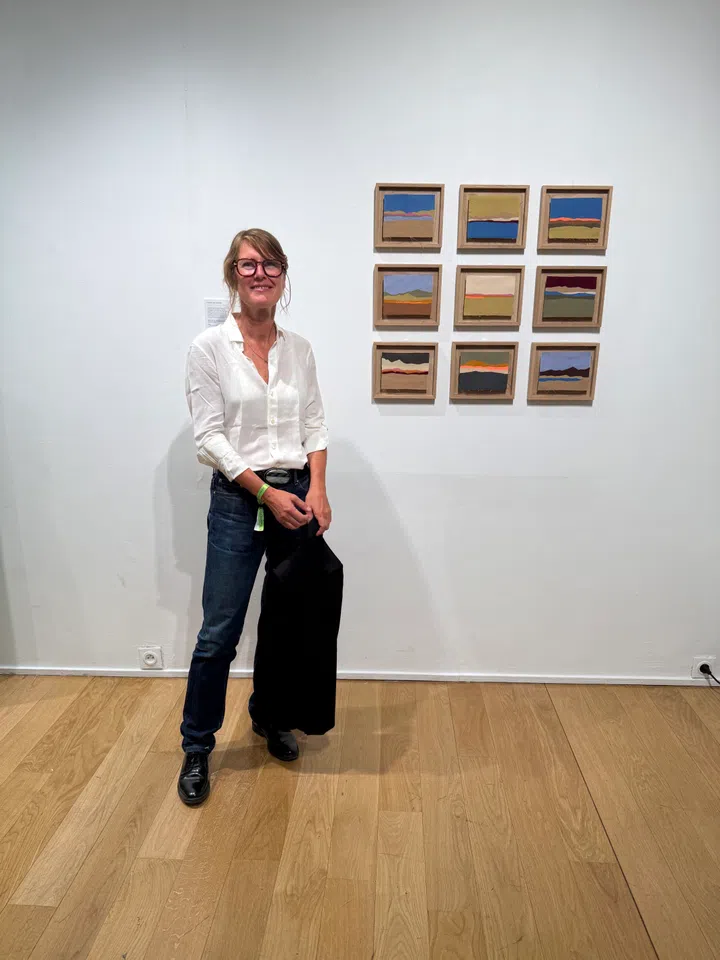
Textile artist Caroline Helain beside the series of her freehand-cut fabric compositions – built around landscape, memory and colour – that show up in Longchamp’s latest artist collaboration.
If that all sounds like a melange of artistic names, styles, and disciplines that don’t usually belong in the same room, that’s the point. The Longchamp Art Festival is meant to dissolve boundaries and, in turn, make the art world feel more open and less intimidating for both audiences and artists – and I’ve not even mentioned the performing arts part of its programme.
Throughout the three days, the atrium on the ground floor became the stage for live performances by an equally diverse range of talents – from Marie-Agnes Gillot, a principal dancer of the Paris Opera Ballet; to the movement artist duo Neffah Twins; to the soul and R&B choir We Are One. The convivial meeting of multiple genres under one roof is why the initiative is more festival than art show, says Delafontaine.
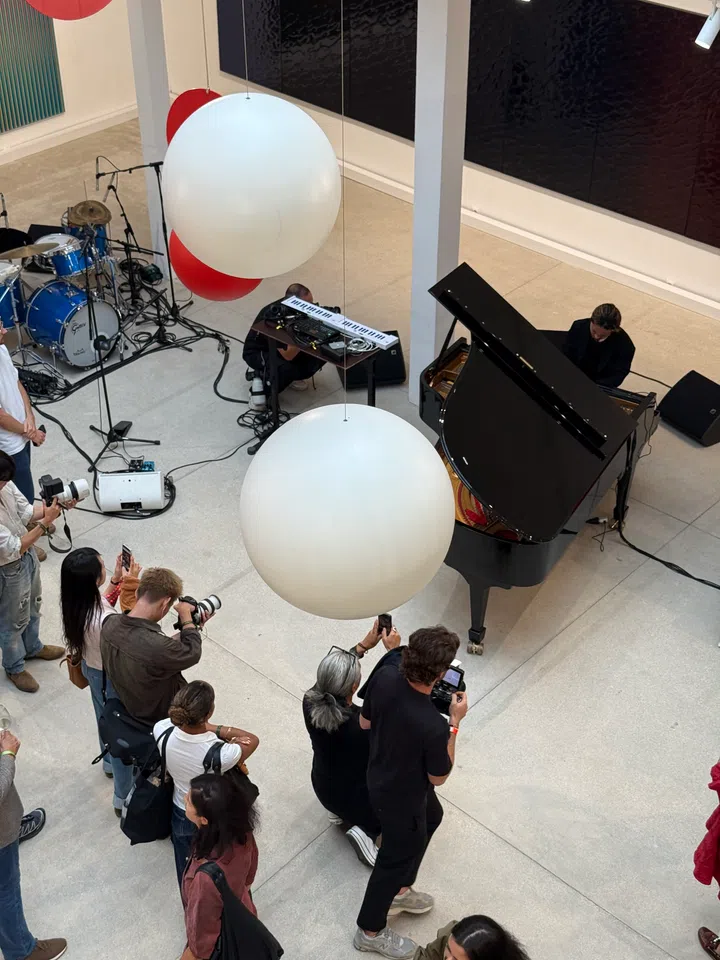
Pianist Koki Nakano performing at the festival’s opening night.
An independent art consultant from Hong Kong who had also been flown in to attend the festival opening shared that it was fresh for her to see art presented through the eyes of a fashion house. I told her that, based on my years of covering fashion, the Longchamp Art Festival had felt like anything but an event by a fashion house – these days often a manic affair more focused on driving consumerist hype and content creation than curiosity.
In making art an equaliser and successfully bringing us together to discover and discuss it, Longchamp must be doing something right.
Scroll down to see more of our favourite works that were spotlighted at the inaugural Longchamp Art Festival in Paris.
Volume by 1024 Architecture
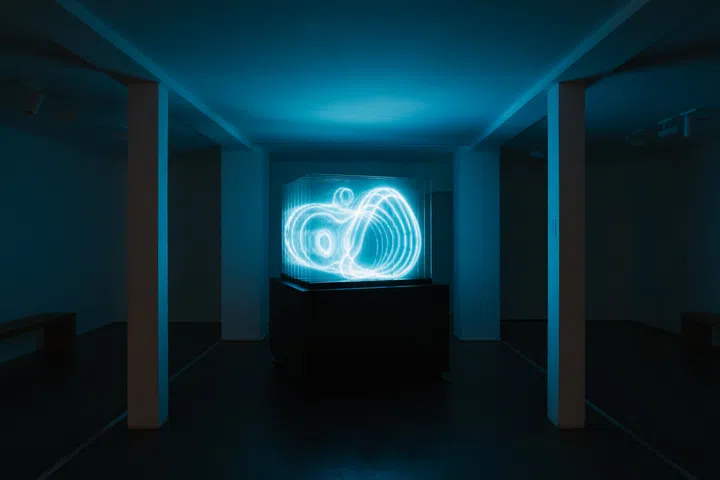
Built from stacked LED planes, this installation by the Strasbourg-based studio, which specialises in architecture and visual art, reconfigures constantly and is inspired by medical-scanner imagery.
Waves by Yunsoo Kim
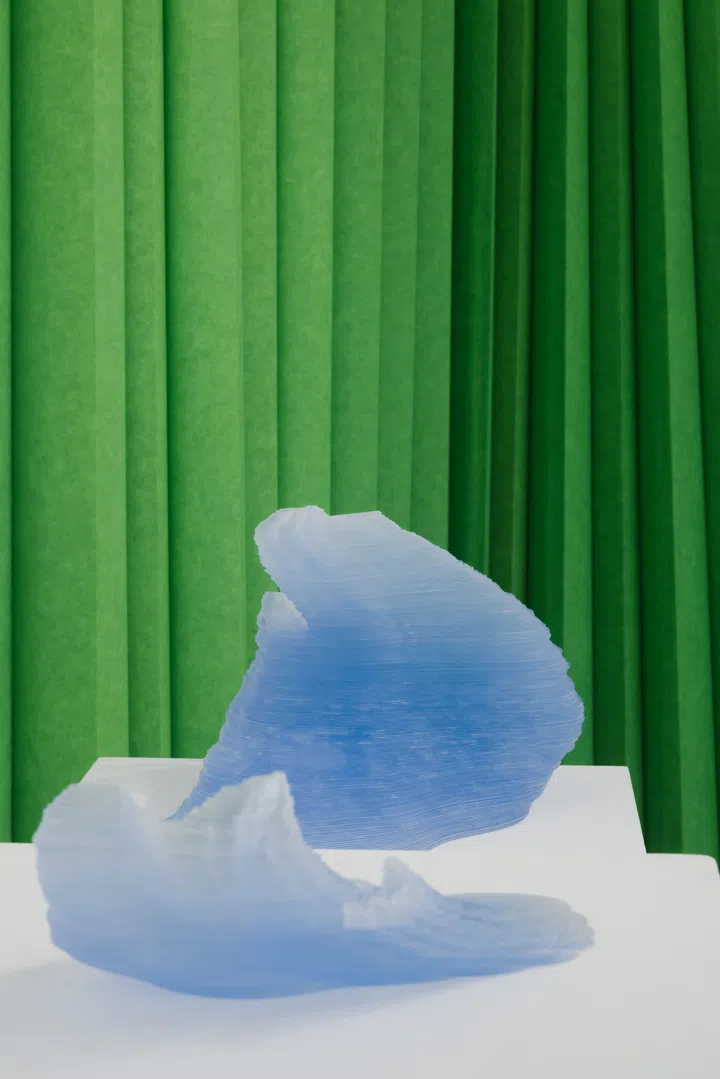
The South Korean artist collects human footprints and transforms them into sculptures made up of layers of transparent vinyl. This finished work evokes the motion of water, and is Kim’s way of blurring the boundary between nature and humans.
Mindo Cloud Forest by Yuko Nishikawa
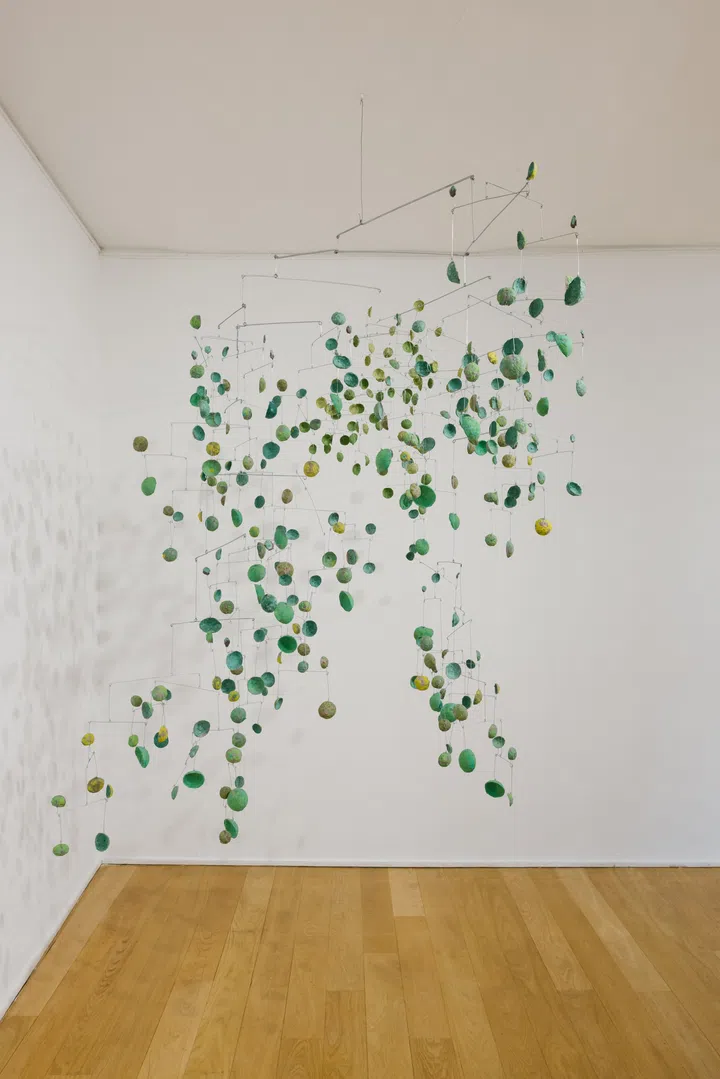
Made from paper pulp and wire, this airy mobile – inspired by Ecuador’s Mindo cloud forest – shifts shape with the slightest breath of air.
Bric a Bric by Damien Poulain

An interactive installation of colourful foam modules that visitors were free to stack, move and dismantle, producing architecture that’s in constant transformation and a form of play for all to participate in.
Munpei by Soo Kyoung Lee
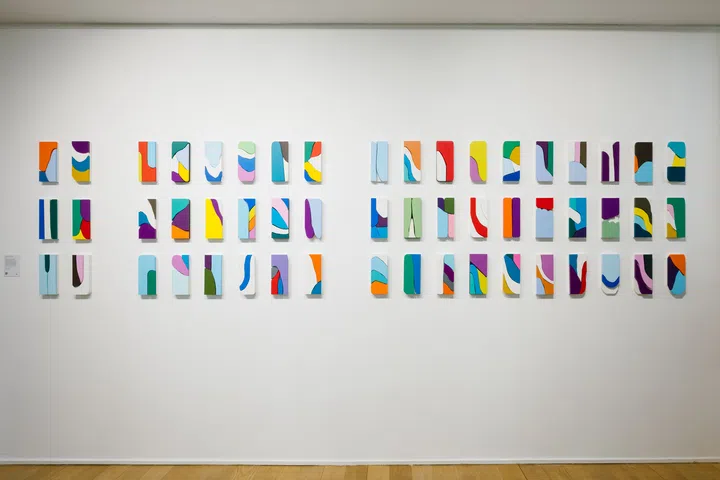
A series of fifty-four acrylic-painted wooden panels that reinterpret the Korean tradition of munpei – wooden plaques placed at the entrance to homes to identify their occupants – as an abstract visual score
Plano Flexionante 7 by Elias Crespin
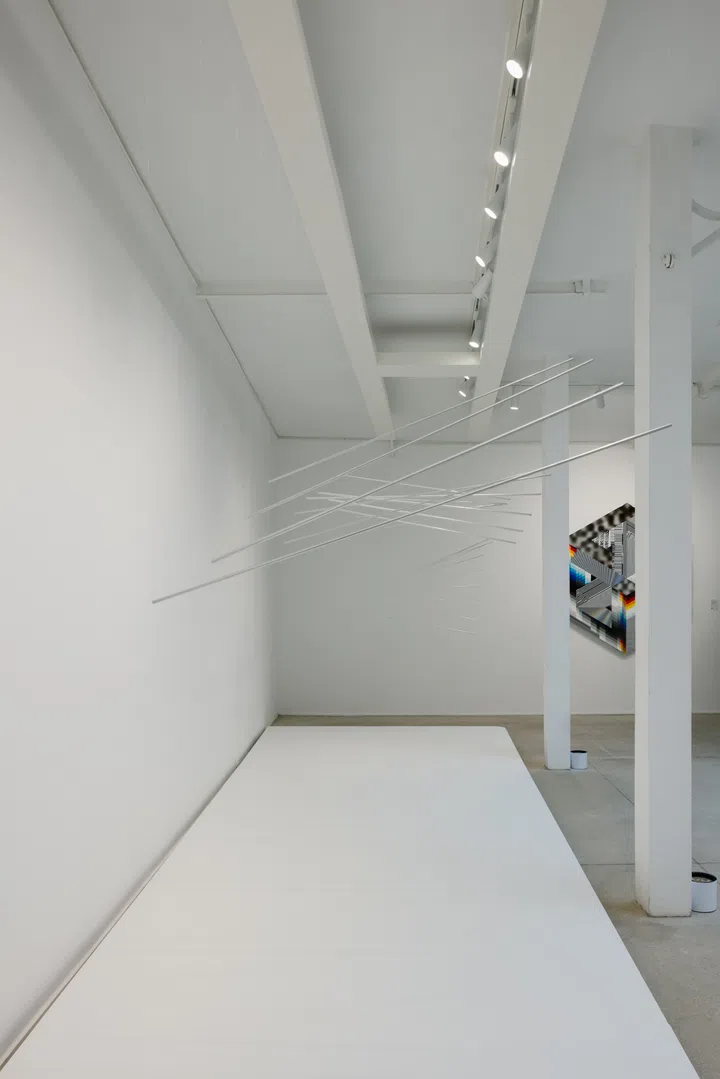
A kinetic sculpture by the celebrated Venezuelan kinetic artist featuring aluminium elements that move with both meticulousness and near-imperceptible slowness, inviting viewers to slow down themselves in order to appreciate it.
Eclipse VI by Simone Pheulpin
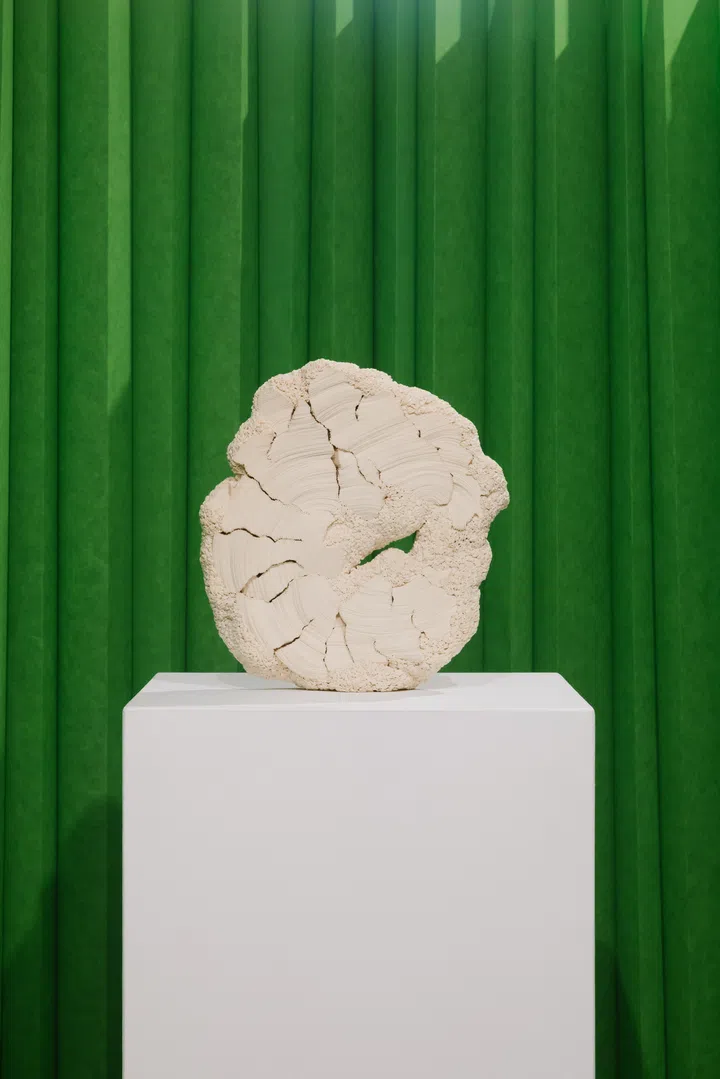
Made by the Grand Prix de la Ville de Paris winner from strips of raw cotton held only by pins, its slow, folding forms evoke fossils, geology and organic growth – matter shaped by time.