
The Iconic Reverso Watch Turns The Big 9-0
Jaeger-LeCoultre chief executive Catherine Renier reflects on the making and meaning of an icon.
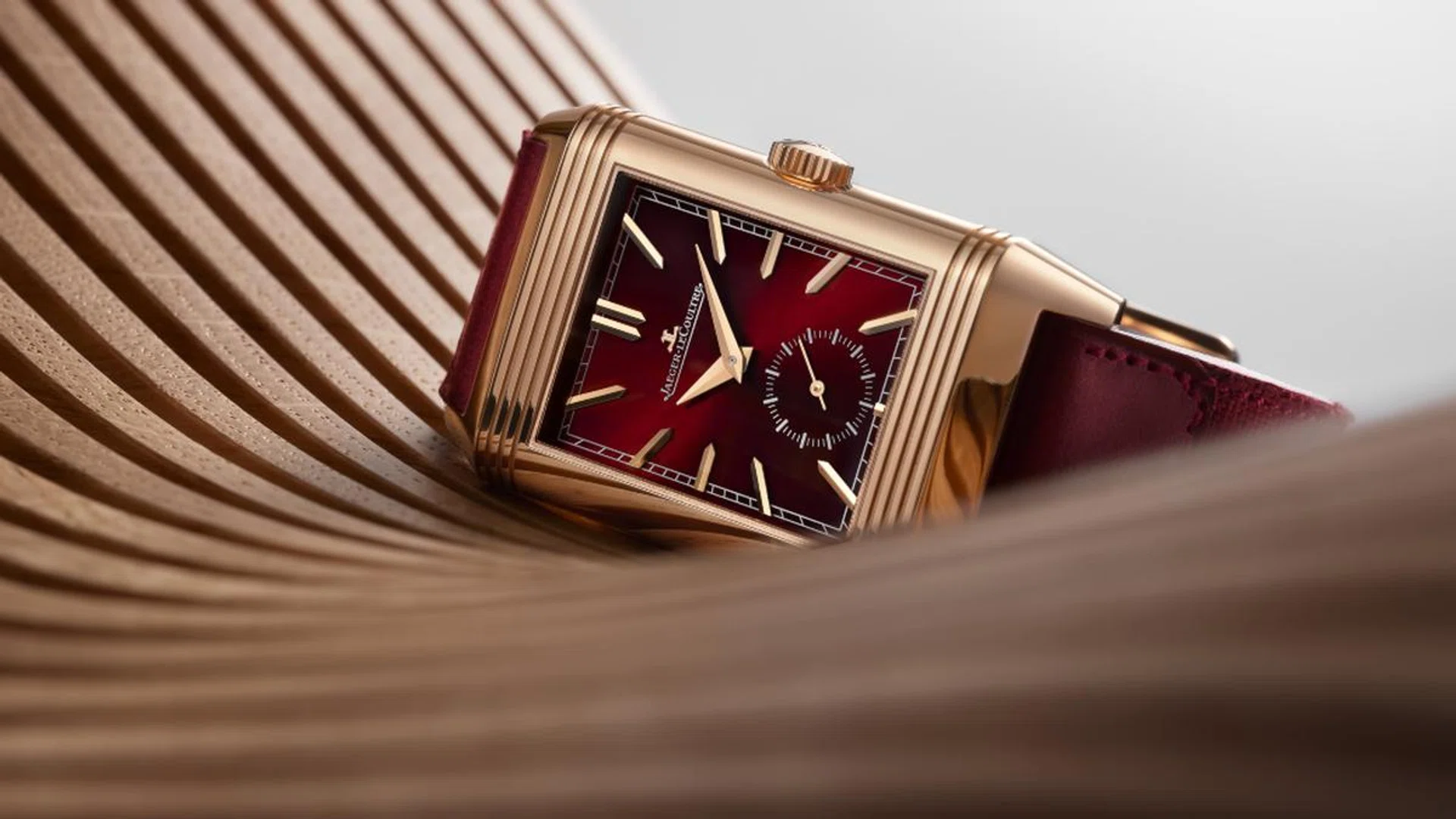
Reverso by Jaeger Le-Coultre is an undisputed icon with its inimitable swivelling case that was designed to protect the watch glass during polo games.
Ahead of its 90th anniversary this year, CEO Catherine Renier made it a point to share the anniversary model last December. Via Zoom, Renier spoke to The Peak from the Jaeger-LeCoultre manufacture in Vallee de Joux, Switzerland.

Jaeger-LeCoultre chief executive Catherine Renier
What highlights can we expect from the Reverso’s 90th anniversary year?
"Firstly, of course, there is the Tribute model. There will also be a Hybris high-complication model, which we will reveal in April, and there will also be a beautiful Metiers d’art piece. There is a new colour coming, but I can’t say more right now."
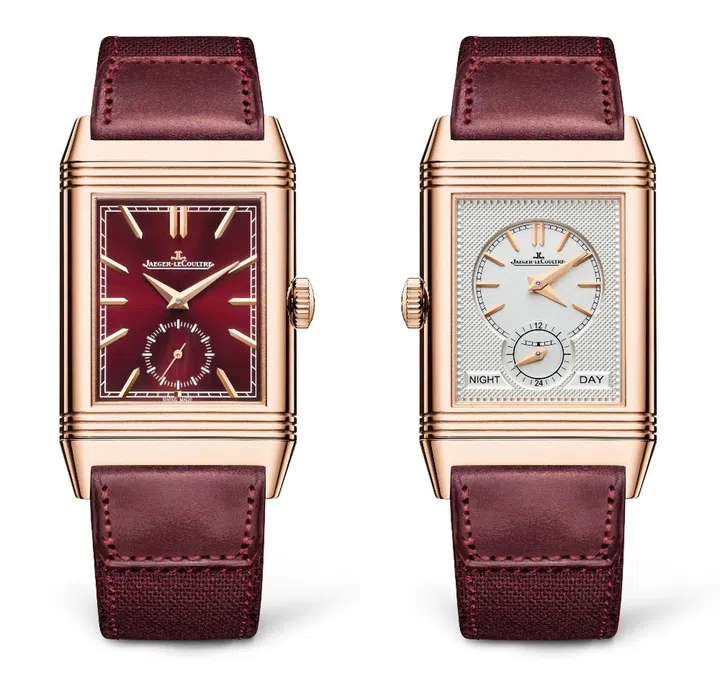
Issued in a limited edition run of 190 pieces, the Reverso Tribute Duoface Fagliano features a burgundy-red dial (left) and pink gold case and a reverse dial (right) with the stippled texture of Clous de Paris guillochage that displays a day-night indication.
What do you think makes this model such an icon?
"It has a certain simplicity yet is complex in its construction. Today, its design remains loyal to the original from the 1930s. We have kept its gadroons (the horizontal etched lines at the top and bottom of the case) and the clean lines and dials.
The Reverso has also lent itself to creativity in terms of colours, complications and metiers d’art. In 1994, for example, we launched the Duoface, which saw the Reverso having two dials instead of one, through which the watch could show a second time zone."
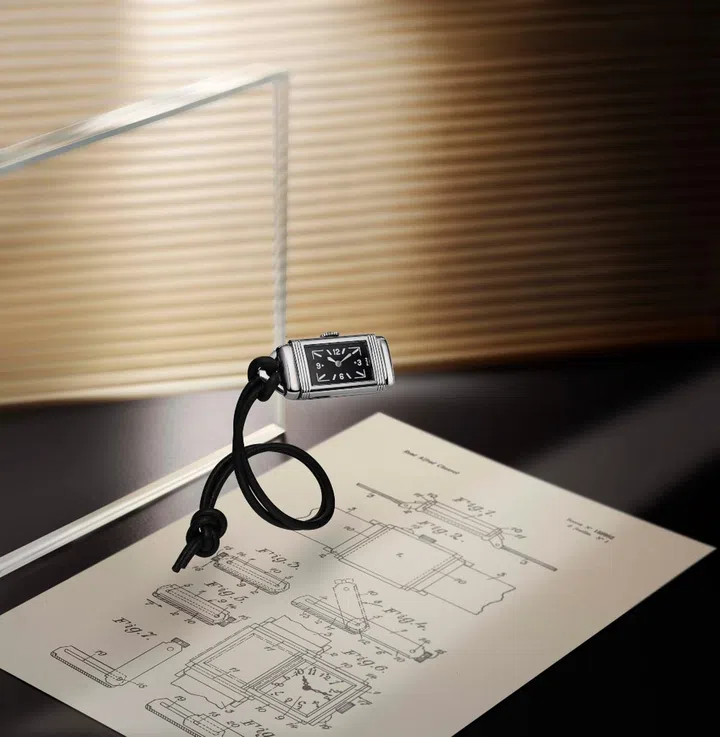
Almost immediately after its debut the Reverso became a fashion statement, and various models were created to offer women alternative ways of wearing it. This steel model from 1931 comes with a small leather cord to be attached to a handbag.
Many horological icons have been copied in some form, but the Reverso is an exception, with few imitators. Why do you think this is so?
"I think it’s the complexity of the swivelling case that is only made in our manufacture. It has more than 50 components. To copy a typical case and dial is pretty simple, but to make one that can turn and click while being waterproof and made to high-watchmaking standards?
The complexity is high. There are other watches with cases that can turn but they use different mechanisms – and none of them have the strength of the Reverso’s identity."
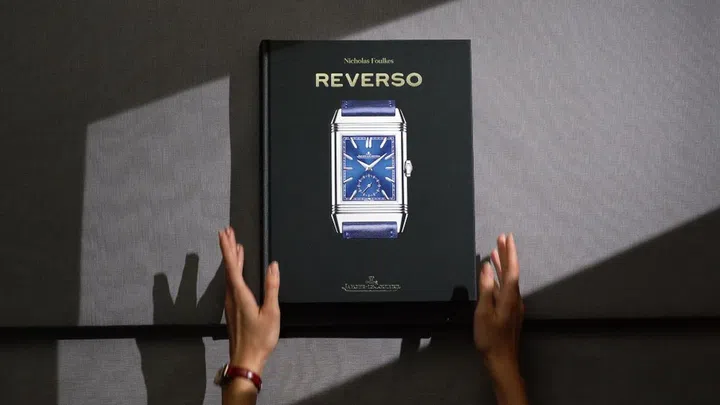
In February this year, Jaeger-LeCoultre launched the 200-page tome Reverso with luxury publisher Assouline to trace the story of one of the wristwatches and explore the social milieu and cultural changes that provided the backdrop to its creation and continued reinvention.
With a back that can be engraved, the Reverso has lent itself to meaningful personalisation through the decades. Do you have a personal story to share about this watch?
"I own the burgundy Reverso Tribute we launched in 2019 that marked my beginning with Jaeger-LeCoultre (Renier became CEO in May 2018). I intend to have my Tribute engraved with the initials of my family and, in the future, I will give one engraved Reverso Tribute watch to each of my three children when they turn 16."
Ahead we chart the key moments of this horology icon.
This article first appeared in The Peak
One would think that wearing a mechanical watch during a vigorous polo match would be a fool’s errand and best avoided. But a British army officer wore his timepiece during a match in the winter of 1930 in India. Predictably, either by an errant ball or a wayward mallet, his timepiece was damaged. Or so the story goes.
Swiss entrepreneur and watch dealer Cesar de Trey was also at that match.
The officer showed him the broken watch and asked if he could design one that could be worn during a polo match. A less ingenious man would have told the officer to stow away his watch when on horseback. De Trey, however, returned to Paris and approached Jacques-David LeCoultre with this engineering conundrum.
The duo turned to French industrial designer Rene-Alfred Chavot, who came up with an elegant solution – a watch with a dial that could be flipped. Before a polo match, the wearer could turn the fragile glass crystal case around so that the more robust steel back faced the front. After the match, he could reverse it.
In 1931, the Jaeger-LeCoultre Reverso was born (pictured).
The original iteration of the Reverso was a hit, partly because of the extra real estate on the back of the dial. A Reverso was engraved and lacquered to commemorate Amelia Earheart’s famous non-stop 1935 flight from Mexico to New York. King Edward VIII of England had his name and a crown stencilled on the back. And General Douglas MacArthur, the mastermind behind America’s victory in the Pacific during World War II, had his initials (“D MAC A”) monogrammed.
Today, while the Reverso remains one of the most popular models in Jaeger-LeCoultre’s portfolio, few people know that it actually fell out of fashion in the 1950s. Customers favoured the round sports watches of the day. The Reverso’s Art Deco design philosophy, with its rectangular case, minimalist aesthetics and geometric lines, did not resonate with the post-war baby boomers.
Then, in 1972, an Italian watch dealer Giorgio Corvo visited the watch manufacture and noticed the unused Reverso cases. He bought all 200 of them, installed movements and they sold out within a month in Italy. Convinced that a relaunch of the Reverso would be a success, Corvo implored the maison to recreate the timepiece. It did, first with quartz movements before dispensing them for mechanical variants instead.
Jaeger-LeCoultre finally brought the production of the case in house and assigned one of its engineers, Daniel Wild, to redesign it to modern technical standards. In 1985, the brand unveiled a new water- and dust-proof case with a new flip mechanism and redesigned lugs and carrier. The fresh case comprised 55 parts, more than double the original, which only had 23. However, it remained unchanged stylistically.
Over three decades later, the Reverso has expanded and become a well loved collection. Any watch collector worth his or her salt will have at least one Reverso in their collection.
There is the Reverso Duoface. Created in 1994, it featured the local time on the front dial and the home time on the reverse. Three years later, Jaeger-LeCoultre designed a feminine interpretation and called it the Reverso Duetto (pictured). There are Reverso watches with tourbillons and skeletonised dials as well. And another that was designed in 2012 and tied in with the popular Mad Men TV series. This writer’s favourite, only 25 were made.
These examples reflect the profound and indelible impact the Jaeger-LeCoultre Reverso has had on watchmaking and popular culture. Passing through two World Wars, universal suffrage and a plethora of other global and societal movements, the iconic rectangular shape of the Reverso remains unchanged. It’s a testament to the watch’s timelessness.
This year, the Reverso celebrates its 90th anniversary and Jaeger-LeCoultre has lined up a series of releases and activities to celebrate the nonagenarian.
And, yes, despite all this time, polo players still wear the Reverso watches during their matches.