
The Rolex Oyster Turns 100, And It’s In For The Long Game
One hundred years ago, Rolex introduced the Oyster, its first waterproof wristwatch. In doing so, it didn’t just solve one of watchmaking’s biggest technical challenges – it laid the foundations for almost every iconic Rolex that followed. As the Oyster turns 100 this year, we explore why this one watch still defines the brand a century later.
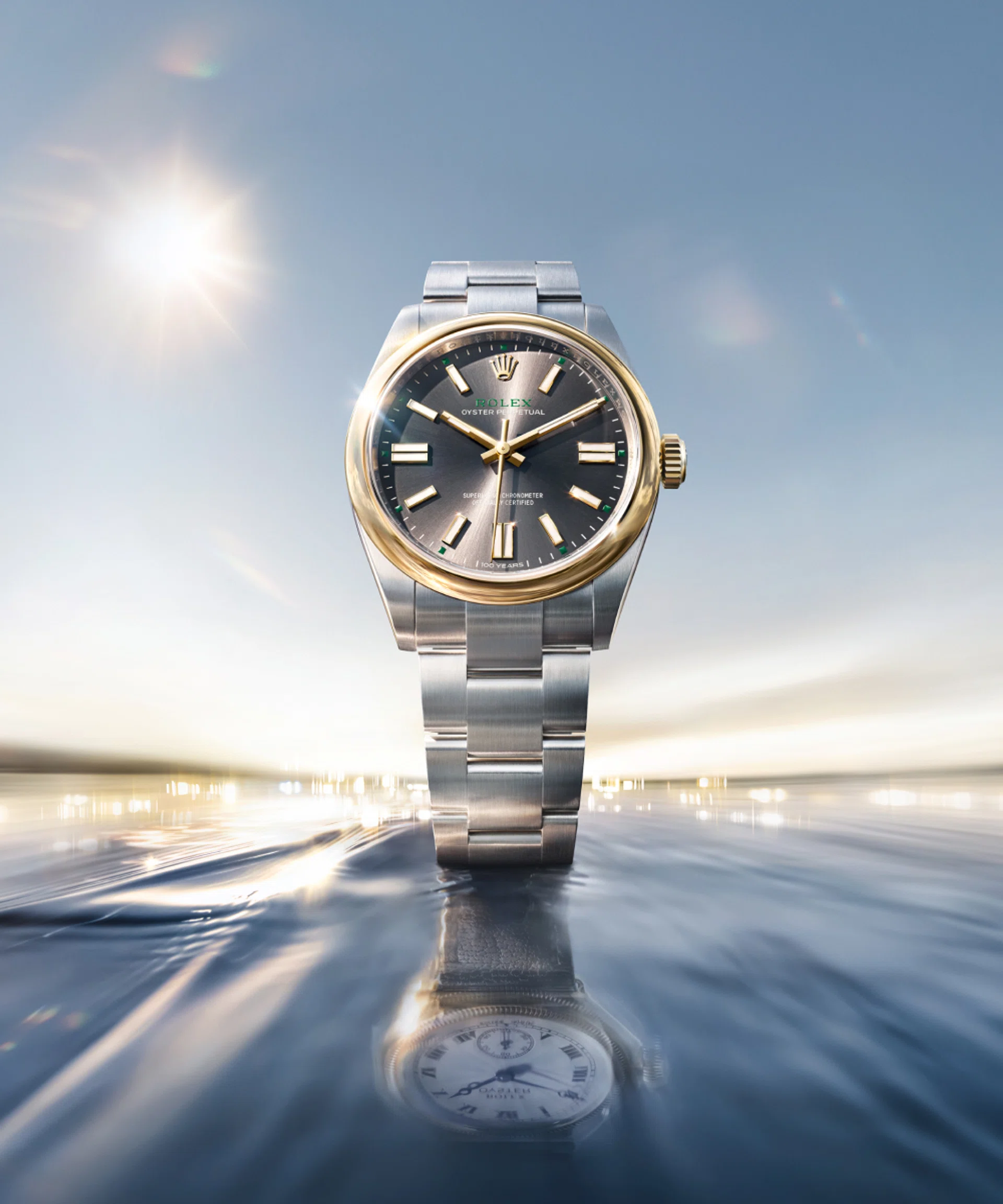
There are plenty of famous watches. Then there are the watches that changed what a timepiece could be. The Rolex Oyster belongs firmly in the second camp.
It’s easy to take waterproof watches for granted today, but a century ago, they simply didn’t exist in the way we know them. Introduced in 1926 as Rolex’s first completely waterproof and dustproof wristwatch, the Oyster marked a major breakthrough in watchmaking. By screwing the bezel, caseback and winding crown tightly against the middle case, Rolex created a sealed watch that protected its movement from water and dust, pioneering a new era of reliable, element‑proof timekeeping.
See also: All The Shiny New Rolex Watches We’re Eyeing In 2026
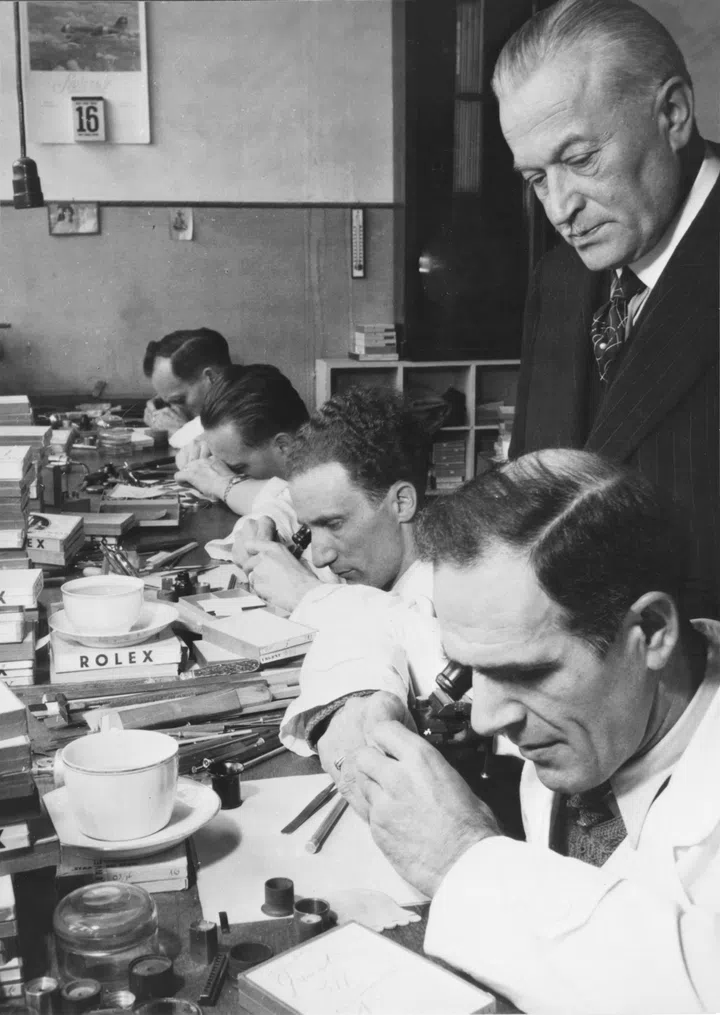
Rolex founder Hans Wilsdorf (pictured standing) in the brand’s workshops in 1942.
Five years after that came another milestone. If the Oyster solved the problem of keeping the elements out, the invention of the Perpetual rotor, a self‑winding system with a free‑spinning weight, patented in 1931 meant that the Oyster could wind itself through the natural movement of the wearer’s wrist, turning it into the Oyster Perpetual – a combination of waterproofness and self‑winding that still defines the brand today.
These two innovations became the foundation for almost every modern Rolex. From the Oyster Perpetual Explorer to the GMT‑Master, Submariner, Cosmograph Daytona and Yacht‑Master, generations of watches have been built on the same principles first established by the Oyster a century ago.
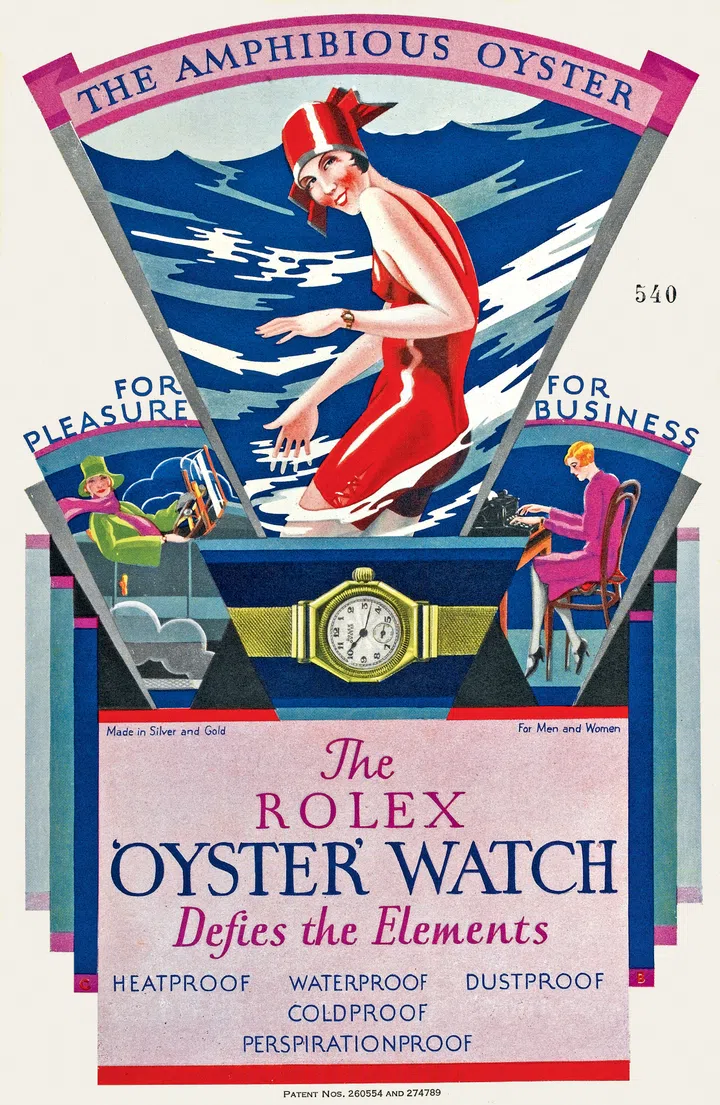
A Rolex Oyster advertisement from 1927
Rolex has always believed these innovations should prove themselves outside the workshop. Founder Hans Wilsdorf famously championed proof by trial – testing watches in real‑world conditions rather than relying solely on laboratory results. In 1927, that philosophy made headlines when British swimmer Mercedes Gleitze wore an Oyster while swimming across the English Channel, demonstrating the watch’s waterproof reliability. In the decades since, Oyster timepieces have accompanied explorers, scientists and adventurers into some of the world’s most demanding environments, shaping the watches that followed.

Mountaineers Sir Edmund Hillary (pictured left) and Tenzing Norgay on the 1953 Everest expedition, for which Rolex officially supplied prototype Oyster Perpetual watches to key team members for real‑world testing of waterproofness and self‑winding capabilities.
To mark the Oyster’s centenary, Rolex has chosen perhaps the most fitting model of all: the Oyster Perpetual 41 – a watch that strips away intricate complications to showcase the exact twin innovations that built the brand. Quietly referencing early Oyster watches, the anniversary edition comes in yellow Rolesor, the brand’s proprietary combination that pairs steel with yellow gold. Breaking from traditional two‑tone conventions, this reference restricts the yellow gold purely to the bezel and winding crown, teaming them with a case and bracelet rendered entirely in Oystersteel. Subtle centenary details reward a closer look: The winding crown features the number “100” in relief, while the slate dial boasts the inscription “100 years” at 6 o’clock, in place of the usual “Swiss Made”. Adding a discreet flash of vibrancy is Rolex’s emblematic green, which colours the pad‑printed brand name and accents the minute track as small squares at every five‑minute interval.

Actress and Rolex Testimonee Zendaya wearing one of the brand’s timepieces at this year’s Oscars.
This edition is also among the first models to showcase Rolex’s strengthened Superlative Chronometer certification. Alongside the existing standards for precision, waterproofness, self‑winding performance and power reserve, the certification now incorporates three additional criteria: resistance to magnetism, reliability, and sustainability. As with the Oyster itself a century ago, it’s less about reinventing the wheel than continuing to refine it.

British racing driver Jamie Chadwick, a Rolex Testimonee who continues to demonstrate her exceptional talent and ability to break barriers for women in motorsport.
For a brand often associated with timeless design, that’s perhaps the Oyster’s greatest achievement. A hundred years after its debut, it remains less a museum piece than a living platform for innovation – proof that sometimes, the biggest milestones aren’t about changing everything, but about getting the fundamentals right from the very beginning.
This article first appeared in Volume 10 of F ZINE.