
Cartier Has A Message for Younger Customers: It Makes Great Bags
We speak with the maison’s creative director of leather goods, Marlin Yuson, about its latest bags – the monogrammed C de Cartier chain bag and utilitarian-cool C de Cartier East-West – and how it’s raising the stakes as a luxury accessories maker.
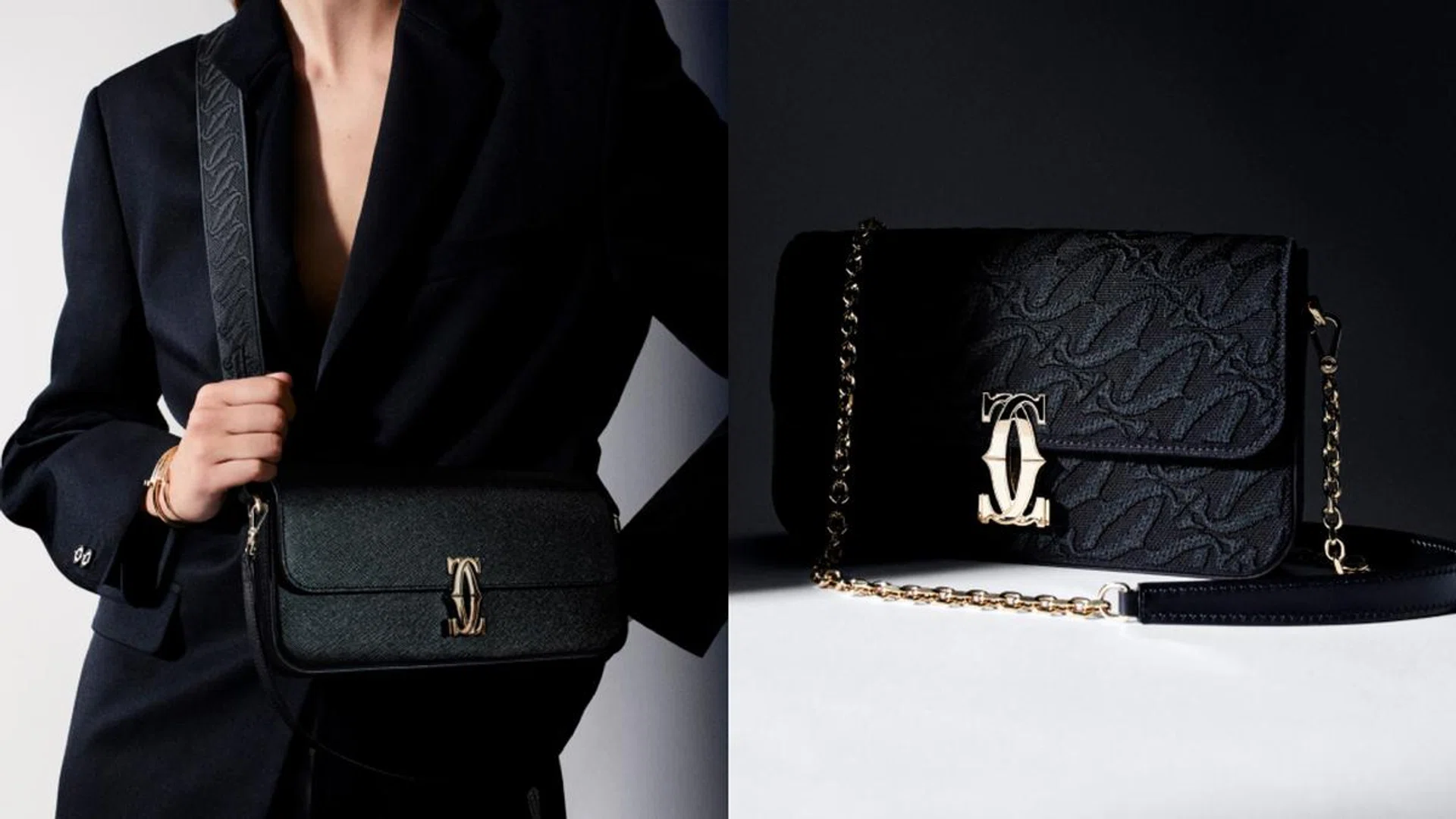
What Cartier wants to next make big business? Bags – something the French jeweller has been doing since the beginning of the 20th century. Don’t be mistaken though: It’s not trying to become a fashion house. Ahead, Yuson shares more.
The two new C de Cartier bags released mark the first time Cartier is applying monogram patterns onto its bags. What was the idea behind this?
“My aim was to create a fabric with a motif that exudes a sense of preciousness and in which our monogram is subtly integrated. (This monogrammed fabric is used for the exterior of the new C de Cartier Chain bag as well as the wide shoulder strap of the new C de Cartier East-West bag, a leather pochette with an extended length.) Initially, we experimented with a woven fabric, but it appeared flat and lacked visual interest. Eventually, we decided to embroider the pattern and – in the case of the chain bag – onto every panel of the bag. I envisioned the result as a contemporary type of lace – when you mention lace, most people instantly think of a grandmother so I wanted to modernise that perception.

Marlin Yuson, Cartier’s creative director of leather goods, has been with the French luxury maison since 2002. (Before that, the Manila‐born, Paris‐based designer worked at fashion houses such as Salvatore Ferragamo and Calvin Klein.) Under her watch, Cartier has released well‐loved bag collections such as the Panthere de Cartier and C de Cartier.
At the same time, the shape of the C de Cartier bag is highly graphic with a rigorous feel. The use of fabric is intended to give the perception of a softer bag by contrasting this structured form with some fluidity. This is why I chose to have the embroidery done on the bias instead of vertically. From a design standpoint, the latest C de Cartier styles combine the graphic nature of the original shoulder bag with the organic, wave-like pattern of the monogram. In the past, one could say it was the thing to combine the masculine with the feminine, but nowadays, terms such as masculine and feminine are no longer relevant. Instead it’s about creating this visual tension.”
READ MORE: 10 Iconic Designer Bags Given A Festive Glow-Up
What to you is the appeal of monograms and how is your approach to designing a monogram bag uniquely Cartier?
“There are people who take pleasure in demonstrating that they’ve invested in a distinctive product, signalling their membership within a segment of the population that can afford a designer item that comes at a certain price point. They believe that this item says something about them. Nevertheless, I believe we at Cartier are moving towards the quiet luxury segment, which is precisely where we aim to be. For us, quiet luxury means focusing on the quality, details and precision that go into crafting a bag. Our expression of the monogram is complementary to the design (and not the main event).
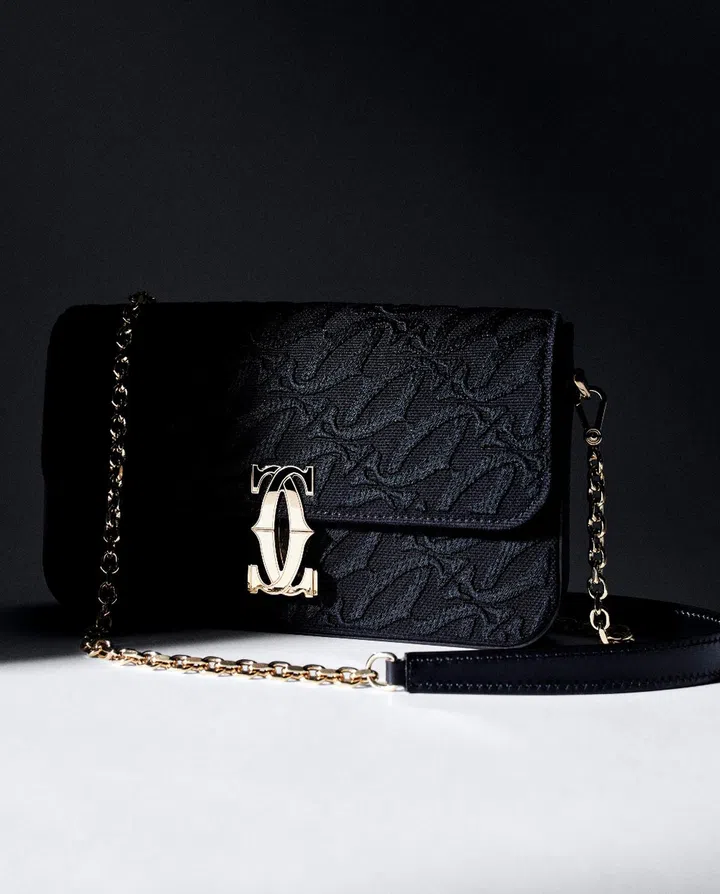
The latest iterations of the C de Cartier include a chain bag featuring a fabric exterior embroidered all over with the maison’s monogram on the bias – the first time Cartier has come up with a monogrammed bag.
Furthermore, the Cartier logo is already featured on the front clasp and thus quite obvious. Too much of something is not good. While many are exploring techniques to make their monograms more prominent, we take the opposite approach. Our embroidery technique is already a departure from how most people perceive monograms. We aim to make it more discreet. I don’t always feel that discreet is more elegant or refined, but for the most part, we’re not aiming for a super flashy look – at least not in leather goods. This, I would say, is how we distinguish our monogram bags from others in the market.”
Tell us a more about the craftsmanship involved in creating these new C de Cartier bags.
“If you were to assess the cost of the C de Cartier chain bag (with a fabric exterior), it would be almost as expensive – if not more so – than a leather bag due to the craftsmanship and manpower involved in its creation. Even though the embroidery is executed by a machine, we have to manually trim all the loose threads and ensure a smooth surface on the underside of the panels without any unwanted bumps. I liken this to the challenge of removing strands of hair that might adhere to sticky tape. This phase of the process is akin to crafting a made-to-measure design. Each panel alone takes up to an hour to embroider. Assembling the bag adds another three and a half hours, and that doesn’t even include polishing all the metal components or the additional reinforcements that go into the interiors. Overall, creating this bag is quite a lengthy process.”
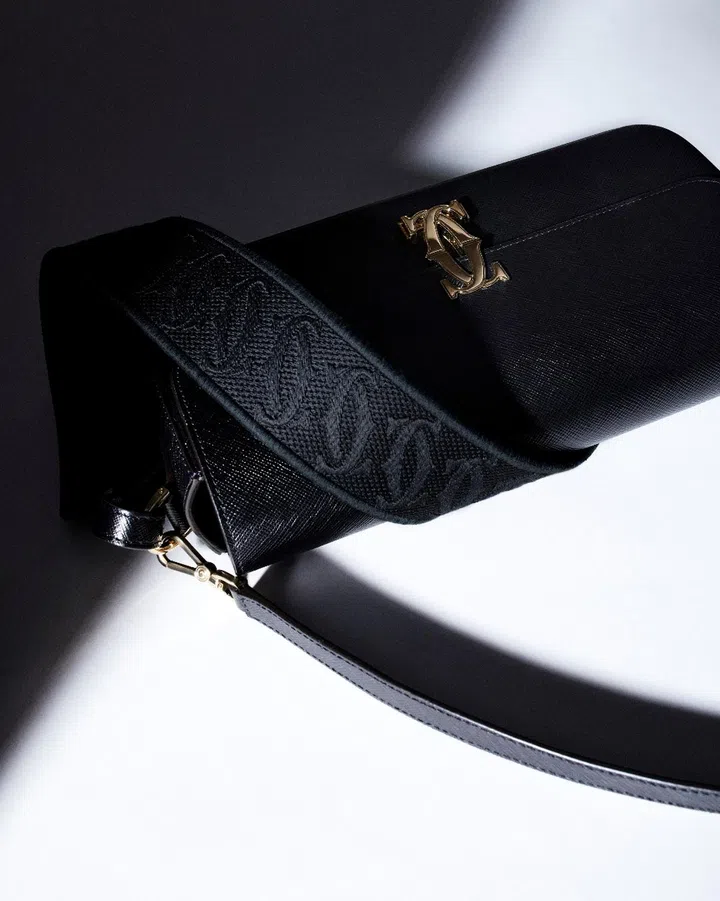
Another addition to Cartier’s C de Cartier bag line is the C de Cartier East‐West: an extra‐long leather pochette with a wide and embroidered fabric strap.
We get the sense that you are steering Cartier’s bag designs towards a more youthful direction. Might we be right?
“‘Shifting paradigms’ was in fact a term we had on our moodboard. The change in direction for our leather goods stems from our strong credibility in the area. Cartier excelled in leather goods particularly during the ’80s and ’90s. We still offer the classic leather goods that remain highly sought after – they’re stored in the boutique drawers for those who specifically inquire. We have a dedicated space for them.
READ MORE: Your Gucci Bag Now Comes In Vegan Leather
This unique aspect of being a jeweller with a legitimate history in leather goods sets us apart. Some jewellers have only recently delved into bags whereas Cartier has had a long‐standing tradition and an extensive archive of bags that dates back to the beginning of the 20th century. We also actively purchase older bags and the collection spans various eras.
This historical background motivates our decision to reclaim a prominent space in the leather goods market and position ourselves as pioneers alongside, say, Gucci in the ’70s. While we couldn’t go full-on given our core identity as a jewellery maison, we are testing and incorporating recognisable elements. This helps convey the message that we would like to reintroduce our rich history in leather goods, especially to a younger generation that might be unaware of our legacy."
How are you specifically reaching out to a newer generation of bag enthusiasts?
“We are delving into contemporary shapes, constructions and functionalities, and exploring the concept of offering multiple ways to carry a bag so as to complement various outfits. The strap on the new C de Cartier Chain bag, for example, can be unhooked to transform the bag into a clutch. Our moodboard was inspired by people and their modern and diverse fashion choices – think men and women who like to wear long coats and oversized sneakers. We considered who we envision dressing and the kind of bag that would complement their style, which marks a departure from the usual way we put our moodboard together.
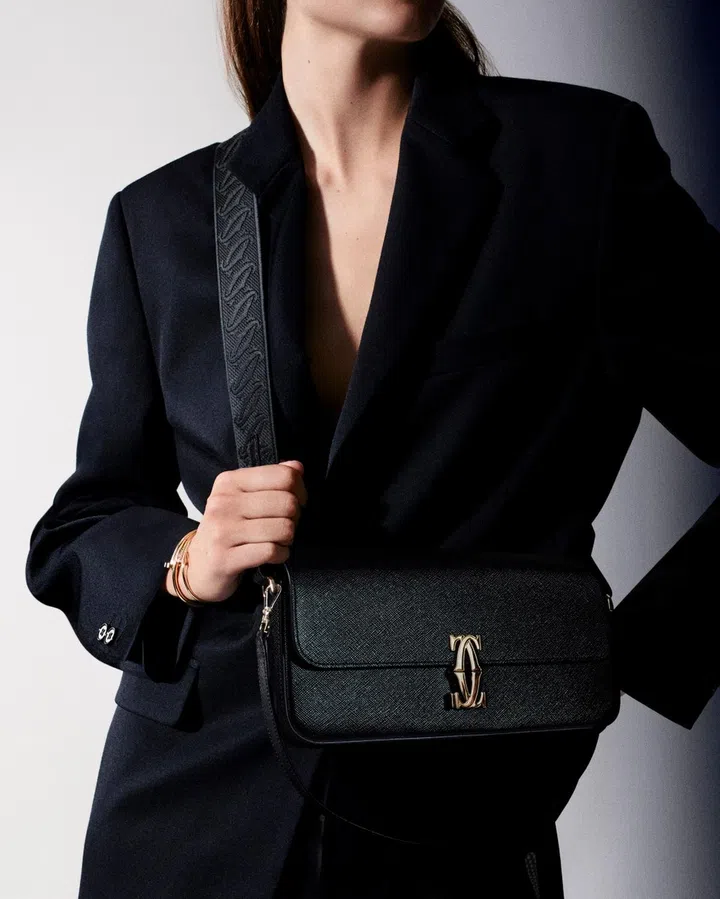
This strap is meant to lend visual interest and an element of strength. Says Yuson: “It feels almost like a piece of a uniform or a royal sash that someone such as Princess Kate would wear at royal events.There’s something very regal, ceremonial and powerful about it.”
For the C de Cartier East-West bag, we went with a wide embroidered strap that would also serve a decorative purpose and enhance the bag’s overall aesthetic. The strap of a bag holds significant importance, particularly for women – there are those who prefer not to use bags. Take my friend Carine Roitfeld, who often carries everything in her hands or in a small clutch because she thinks it disrupts the silhouette of what she’s wearing. This motivates us to design our crossbody bags in an interesting way, or to incorporate a chain strap that would sit like a piece of jewellery and not alter the shape of an outfit.”
What’s your take on vintage designs, which have grown steadily in popularity among the younger generation of fashion lovers whom you seek to attract?
“A vintage bag is not just an accessory. It has its own story; a provenance that allows you to narrate its history. While I'm not equating a vintage Cartier bag to a work of art, I am suggesting that opting for a vintage piece offers rarity, uniqueness and perhaps a touch of history. In an era in which many people carry the same bag thanks to extensive marketing and brand influence, choosing a vintage bag also signals a desire to be different. Carrying one is a way to stand out and differentiate oneself from the masses…
READ MORE: These Burberry Bags Capture That British Charm
As for me as a designer, I appreciate looking at the archives because it’s interesting, but I prefer to focus on making them more contemporary. Most of the time, directly incorporating a vintage element into a bag today doesn’t work. Some tweaking is required. For example, I draw a lot of inspiration for details from fabric bags and translating them onto leather involves various challenges. I try to avoid creating too much of a vintage feel also because people still desire something new and fresh.”
How is a Cartier bag different from a bag from a luxury fashion house?
“We don’t release extensive collections (like most fashion houses do). Instead, we focus on a single aesthetic and know that we only have one chance to get it right. This makes the functional aspect of our bags as paramount as the design. We place significant emphasis on factors such as the weight of the bag and how easy it is to open and close it. These actions should be effortless and achievable with just one hand. Consider how, for instance, when rushing through an airport, there might not always be a convenient spot to pause and set your bag so that you can secure it. The closure of our bags has to facilitate what I refer to as a ‘blind gesture’ – you can open or close it without needing to look, and rely on the sound of the clasp to know whether it’s been securely closed. Yes, I even study this sound in my design process.”
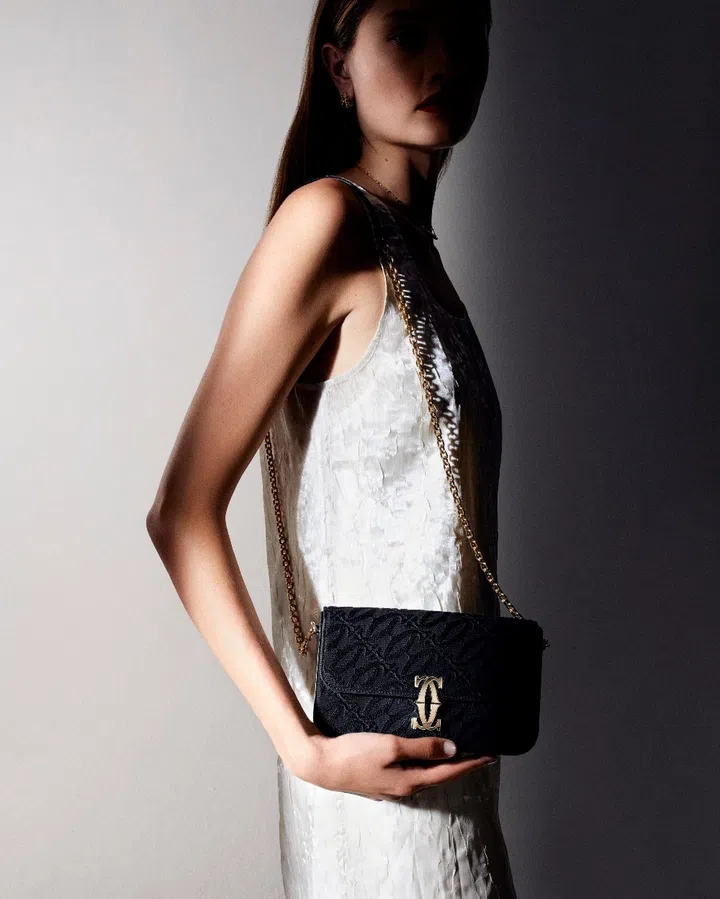
According to Marlin Yuson, Cartier's creative director of leather goods, the chains of all its bags, including the new C de Cartier monogrammed design above, are soldered, ensuring that they cannot be pried open.
That’s very interesting. Are there other details about Cartier’s bags that people might not know about or are often overlooked in bag design?
“The chains of all our bags are soldered, ensuring that they cannot be pried open. This soldering process is carried out link by link, guaranteeing sturdiness and preventing the risk of breakage. Not all competitors adhere to this standard. And while the chains are not made of gold, they undergo the same treatment as vermeil plating (as used in sterling silver jewellery). The thickness of this plating is minimally two microns, surpassing that of many other brands. This ensures lasting colour as well as conceals the base metal.
Another fact that I’m going to share with you is one I haven't shared with most people: The small D-rings attached to the chains of our bags feature tiny screws that each measure 2mm. Screwing them in is a delicate process as any slip or scratch means the ring has to be polished all over again. Our screws also differ from that used by the competition, which often opts for star-shaped screws that are easier to screw on. In my view, if a screw is visible, it must resemble those on the Santos watch or Love jewellery – it must be aesthetically pleasing.”
Which bag trends are you predicting for the year 2024?
“I don't know how much longer the micro bag trend will last, but I do sense a shift towards hobo-ish bags – a feeling I've had for a few years. Take, for instance, the Jackie at Gucci or the Sardine at Bottega Veneta. It’s amusing that in design, everyone somehow magically does the same thing even in terms of colours.”
THIS INTERVIEW HAS BEEN EDITED FOR CLARITY AND BREVITY.
A version of this article first appeared in the Dec 2023 This Great City Edition of FEMALE