
Inside Singapore’s New Wave Of Youth-Focused Third Spaces
The young people of Singapore yearn for a fresh set of Cs: connection, community and collaboration. Meet the new-age collectives revitalising old-school ways of interacting and simply having a good time.
The kids want third spaces on this island. Ask what that actually means, though, and the answer is less about form than feeling. According to a survey of nearly 600 people aged between 15 and 35 conducted by local urbanism collective Urban Kakis in May 2025, what makes a place a third space ultimately boils down to its impact on them emotionally.
It’s where they sense belonging and safety, and have agency – qualities that make them want to return. In other words, what many young people are searching for isn’t simply another venue to spend time in, but meaningful opportunities to connect, participate and feel part of something larger than themselves.
Welcome to a new era of community building, where collectives such as Urban Kakis are encouraging people to get together IRL through a whole range of activities – many of which might surprise you – and simply be. Fancy attending a lecture on urban policy over drinks at a bar, for example? Or partying to underground DJs in a bouldering gym?
What binds these collectives is their ability to rally people around a shared desire to get outside, try new things and contribute to something bigger. If loneliness is a condition of our time, then consider what these groups are doing to be a counter-movement: organising intimate, DIY-style events that aim to get more of us to touch grass and play with others – not unlike how we did as children.
Ahead, we get acquainted with five collectives in Singapore building intentional spaces for learning, exploring and play.
See also: For The Girls: The Rise Of Women’s Social Clubs In Singapore
FIVE YOUTH-FOCUSED THIRD SPACES IN SINGAPORE
1. Softerfields
WHO’S BEHIND IT: JJ Tan, 30, who works in media and partnerships; Michelle Mei, 26, a professional photographer; and Shirley Tang, 23, a freelance project manager-slash-university student
STARTED: January 2026
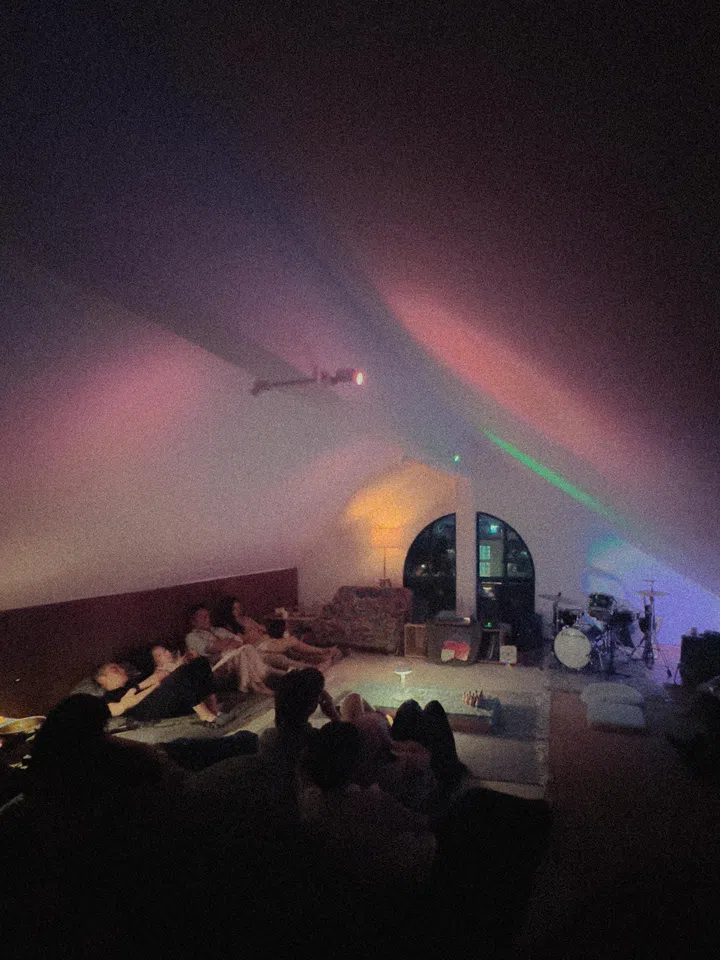
WHAT IT’S ALL ABOUT: Think of Softerfields as a listening club for those who wish to experience music a little differently. Held in homes, studios and other tucked-away spaces, its intimate sessions each centres around a carefully curated selection of albums or theme, often accompanied by scents, projections and even objects that deepen the listening experience. Past programmes have explored everything from post-punk Soviet records shaped by the regime and its dissolution to hypnotic albums that evoke the passage of time.
At its core, however, Softerfields is an attempt to create space for a slower kind of cultural participation. The idea began taking shape in 2025 during Tan’s travels, where he was struck by the ways people gathered for what he calls “quiet cultural experiences”, such as book clubs and listening sessions. Returning to Singapore, he became increasingly aware of how much everyday life was mediated through screens. Music, in particular, is often consumed in passing rather than fully appreciated, he points out. Softerfields emerged from a desire to change that: It’s a space that’s meant to give music the same attention afforded to film, literature and the visual arts.
Says Tan: “We wanted to create something more deliberate, during which people can slow down and experience music in a fuller way. The name itself points to an imagined space that feels softer and more reflective, something apart from the intensity of the concrete city.”
2. Playces
WHO’S BEHIND IT: Gena Soh, 28, who runs Playces full-time
STARTED: October 2025
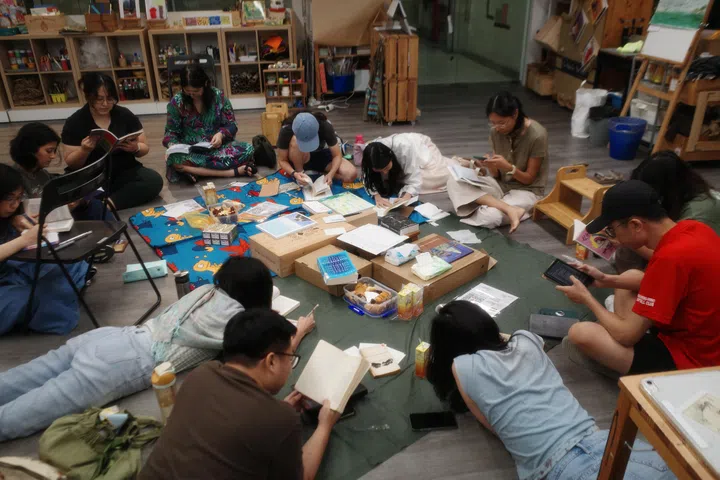
WHAT IT’S ALL ABOUT: Playces, in Soh’s words, is an experimentation of what community life could be if we were free from boundaries. Inspired by her vibrant university life at Yale-NUS College, which she says provided space, funding and institutional support that made it easy for communities to form organically, Playces takes that spirit and releases it into the wild. “Rent is expensive and is often the reason why a lot of collectives fail. If we can solve that problem, we don’t have to worry about how communities can survive,” says Soh. For participants, this means experiencing forms of community life that they think won’t stand the test of time but do, and for organisers, opportunities to platform themselves in unexpected places.
The result is a programming slate that’s slightly unpredictable. For starters, Playces has hosted a tech tuition centre (teaching the use of artificial intelligence (AI) agents to build creative micro‑apps – no generative AI brain rot here) as well as a rave spotlighting underground DJs and an art market, both set in a climbing gym.
The premise is simple: Anyone with an idea or a space to host one can become part of Playces. Organisers and participants fold into one another, forming a nebulous, ever-expanding collective. For Soh, the philosophy is rooted in play not as frivolity, but as a means of moving through the world. “A space only becomes a place when you can play within it,” she tells us. “Playing isn’t an act; it’s a spirit, an ideology. You believe in the ability to learn and grow through low-stakes banter. It’s a method towards excellence.”
3. FFIGS
WHO’S BEHIND IT: The folks behind FFIGS prefer to stay anonymous and describe themselves as “an amorphous, non-hierarchical ragtag bunch of cinephiles, programmers, writers, film‑makers, animators, performers, artists, and friends in between”.
STARTED: November 2025
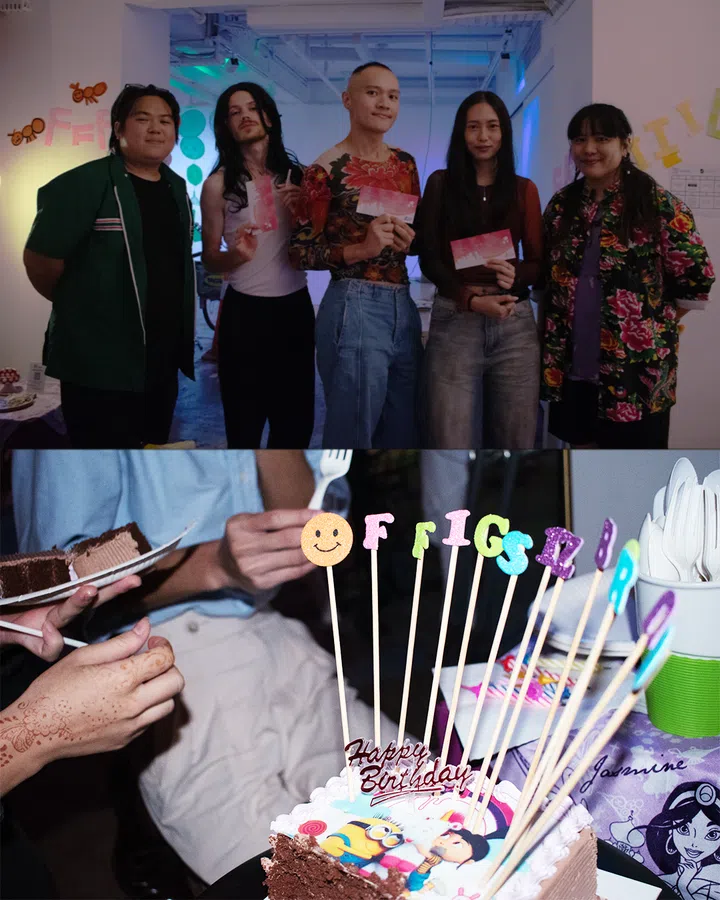
WHAT IT’S ALL ABOUT: Think of FFIGS as a rallying around film that places fun and playfulness at its core. Its goal? To turn the appreciation of cinema into an act that could be more casual, convivial and communal. Its first programme was launched alongside the Singapore International Film Festival, or SGIFF, last November and turned it on its head (read FFIGS backwards, thank you). Events included the Bring Your Rejected Film Potluck (screening films that didn’t make the SGIFF cut); the Cockeye Awards (an awards ceremony celebrating the quirky and often delightfully trivial – think best mole, best on-screen stare, most WTF sex scene, et cetera); and a Shu Qi lookalike contest (pictured above are some of its guests, including actress Nicole Lee, who starred in Amoeba and a couple of local vertical micro-dramas).
Since then, FFIGS has been running a monthly series of film gatherings at Goethe‑Institut Singapore (its first, held this March, was a snack‑film pairing where the food textures mirrored the environments shown on screen). This June, it hosted its own symposium with workshops including the slightly nonsensical “How to Tell Your Friend Their Film Is Mid” and the more practical “FutureSkills: Beginners’ Guide to Post-Production Supervision”, which sought to bridge knowledge gaps faced by those in the industry.
It’s all a little unserious, but that seems to be exactly what the FFIGS organisers wish for. “Whether through comedy or criticality, what underlies FFIGS programmes is the sense that we can engage audiences differently: more intimately, beyond institutional framing and even provocatively – but always in ways that are downright fun and honest to our own personalities,” notes the group. After all, who says cinema needs to be serious?
4. Urban Kakis
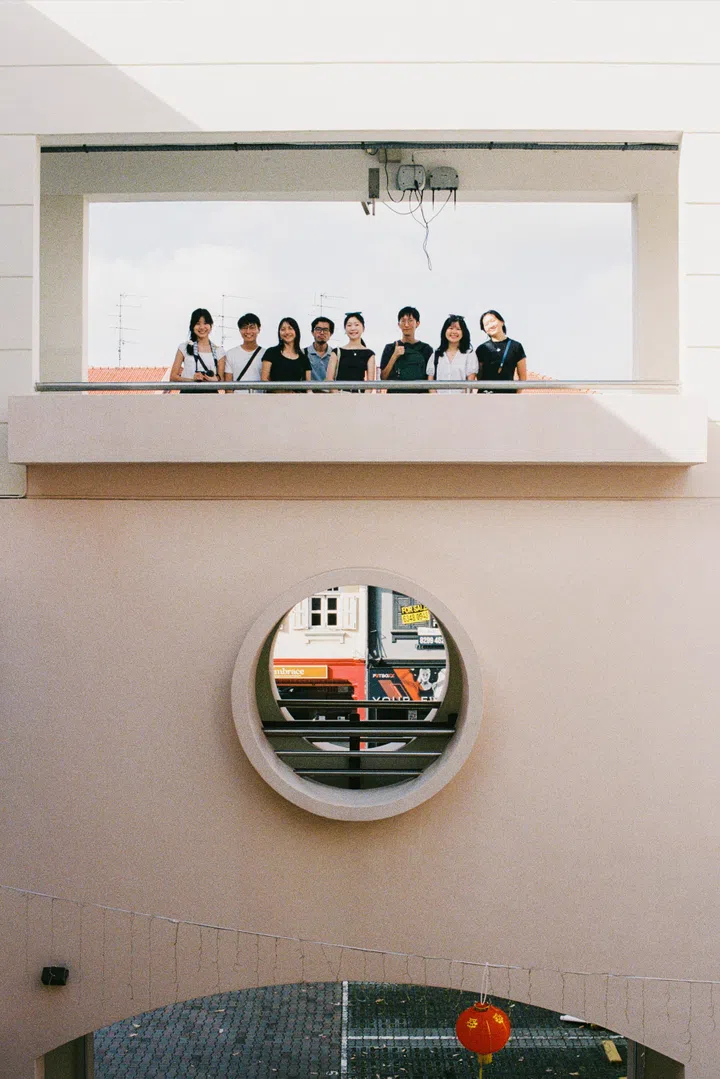
WHO’S BEHIND IT: Public servant Denyse Tan, 25, alongside a growing collective of Gen Zers from all walks of life (just read on)
STARTED: August 2025
WHAT IT’S ALL ABOUT: Here’s a ground-up group that’s passionate about urbanism and civic life, and its events aim to examine the city as a living, breathing ecosystem. No two Urban Kakis events look the same: think trivia nights about the city, a book club exploring literature about how built environments shape modern life, photo walks in different neighbourhoods, and discussions about urban policy over craft beer. (The best way to keep up is through its Instagram page @urbankakis.co.)
However the formats may vary, the intention remains the same: to get people to see Singapore differently and recognise their role within it. “We believe that kakis (Singlish for “close friends”) encapsulate the values that we try to embody: the importance of thinking about the human and non‑human, and what this means for how we inhabit and enact change in the city,” says the group. The insistence to respond to our questions and be represented as a collective reflect Urban Kakis’ focus on community and collaboration.
What began as Tan’s idea for a youth‑led urban collective has quickly evolved into an expansive network comprising peers, acquaintances and strangers all brought together by a shared curiosity about civic life. Says the group: “Our participants (some of whom are pictured on this page) can expect to see the city in a different way, leave with more questions than they came with, and meet interesting people! As it is with the city, you are not a passive observer – you’re an active actor.”
5. Remedial Kids
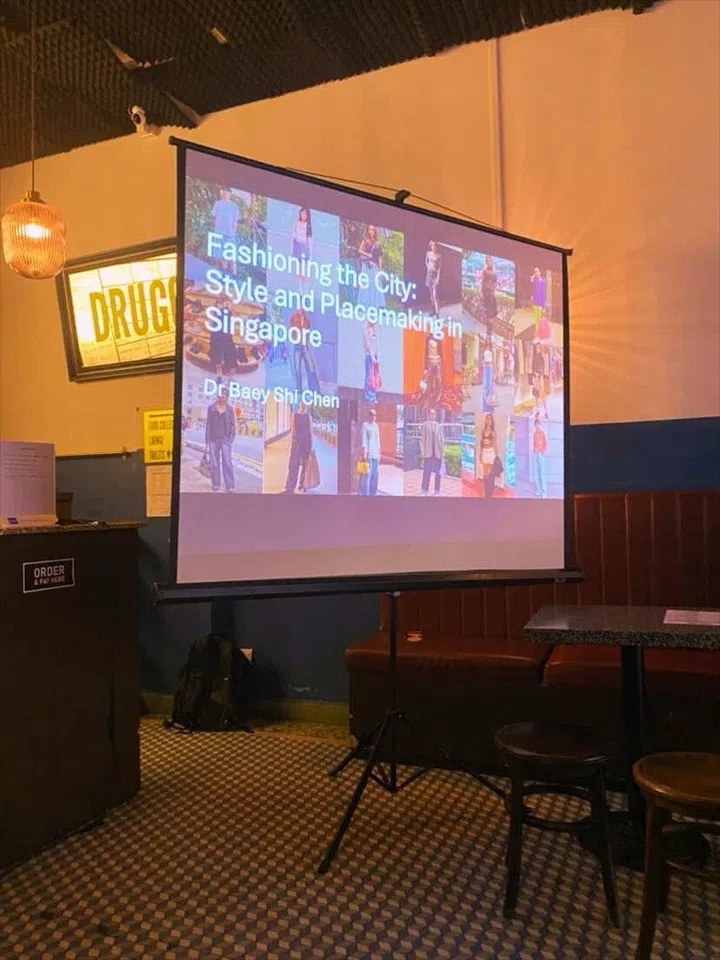
WHO’S BEHIND IT: Jo Lam, 38, who works in communications by day
STARTED: July 2025
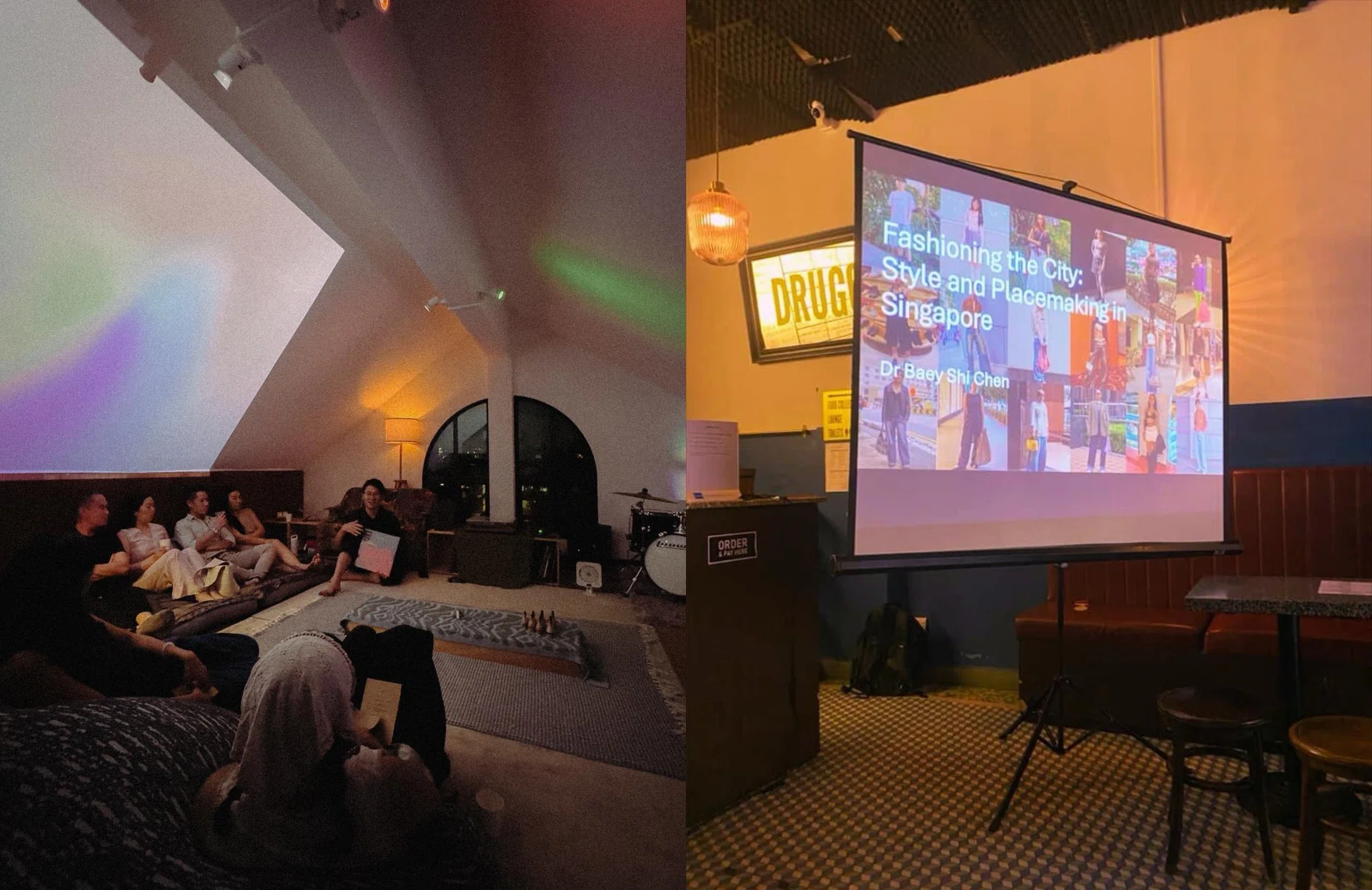
WHAT IT’S ALL ABOUT: Don’t be fooled by the name – Remedial Kids is anything but a throwback to the formal education most of us had growing up. Instead, it takes academic lectures out of the classroom and into bars across Singapore, transforming them into something far more fun and free. Inspired by the Lectures on Tap series held in New York City, Remedial Kids was born when Lam’s university friend Yuan Yin visited Singapore last July. An English professor based in California with a research interest in South Korean pop culture, Yuan was tasked with delivering a lecture on her work, and Lam has kept the series going since then.
At under an hour each, lectures are short but sweet, spanning a wide range of topics personally curated by Lam. Expect academics in Singapore to cover just about anything they’re researching – from Singaporean punk in the 1990s to bridal fashion, the Muslim identity in China and even the evolution of Thai Boys’ Love dramas. You’ll find them popping up at venues such as Druggists, The Coup and MyX – all chosen for their distinct atmosphere and character.
For Lam, the appeal lies in creating space for learning that’s driven by curiosity. “Remedial Kids grew out of the feeling that so much of life here is centred on professional development and productivity, which can crowd out our capacity for playful, almost pointless, learning and discovery,” she says. Plus, it gives academics and researchers an invaluable opportunity to share their work in an informal and accessible manner. In a city often defined by its relentless, unforgiving nature, Remedial Kids offers something increasingly elusive: the chance to learn for the joy of it.